James Turrell’s Largest Museum Skyspace: A Critical Analysis of Light and Space
On light treated as material, the museum is recast as a custodian rather than an owner, and as a perceptual object that refuses to resolve into a financial instrument.
The opening of James Turrell’s largest museum Skyspace at the ARoS Aarhus Art Museum is being read, almost everywhere, as an experience. This study reads it as a structure. When people search for a James Turrell Skyspace museum, or specifically for the largest James Turrell Skyspace, or more broadly for Turrell light installation art, they are directed toward a vocabulary of transcendence, contemplation, and the sublime. That vocabulary is not wrong. It is simply insufficient. Beneath the sky-framed oculus is an economic argument: a Material Singularity so total that it cannot be abstracted, fractionalized, or resold. Within the Post-Luxury Conceptual Functional Art framework, As Seen Below is not merely a light work. It is an Anti-Speculative Entity, and its central lesson concerns the Burden of Preservation that any institution assumes when it agrees to hold such an object in trust.
The Skyspace cannot be moved, flipped, or vaulted. Its value is welded to a single set of coordinates; and that immovability is precisely what the speculative market cannot metabolize.
The Descent, and What Was Actually Built
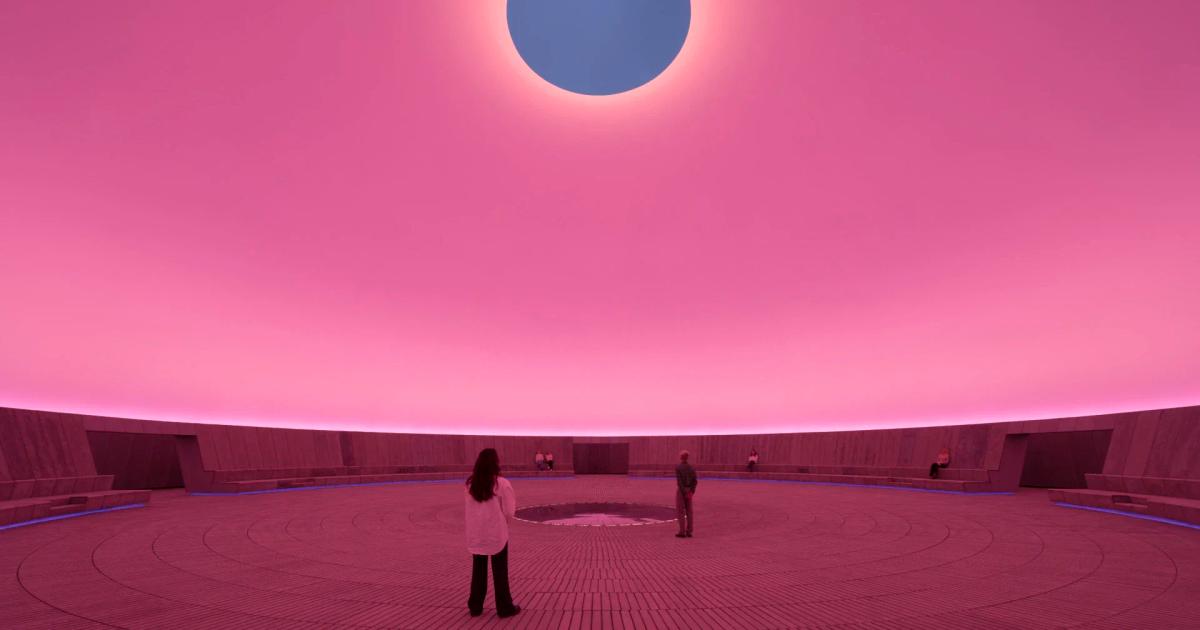
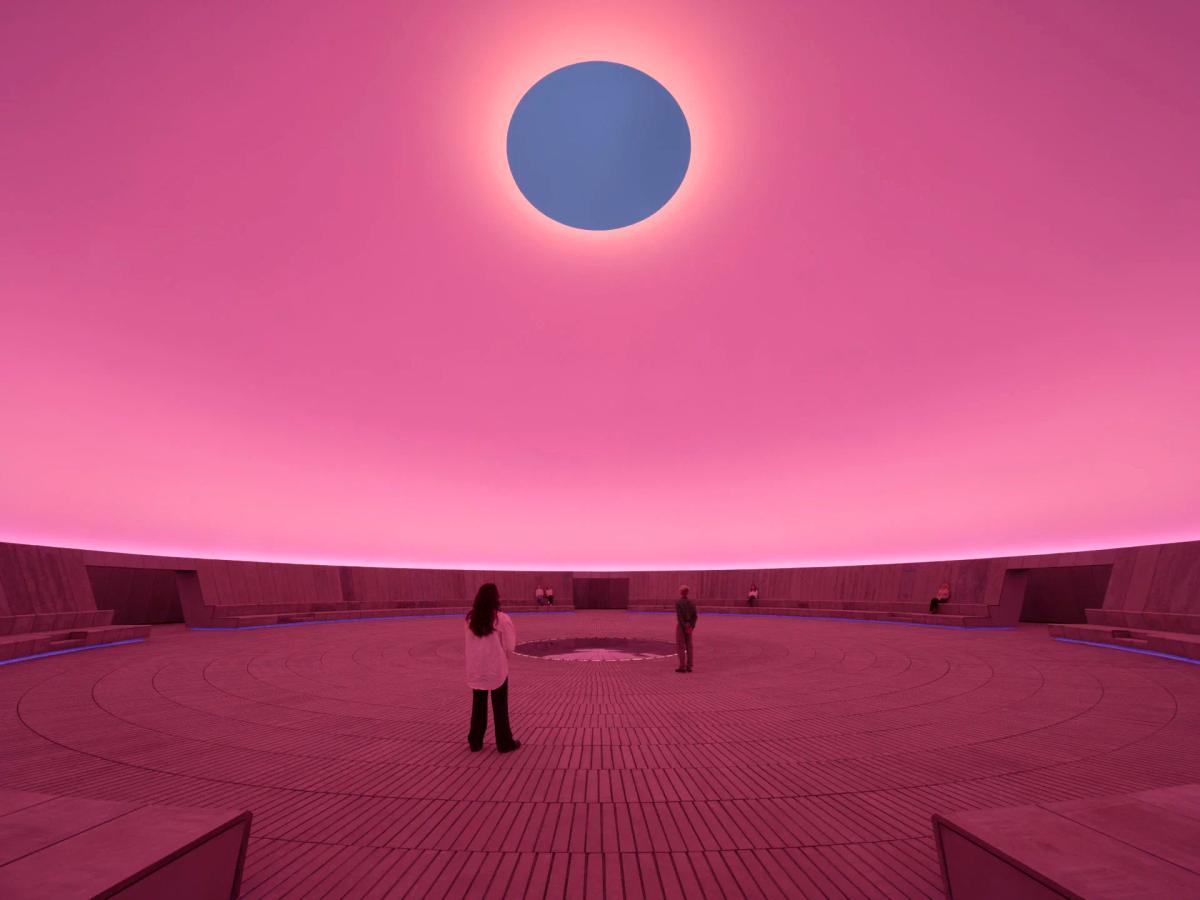
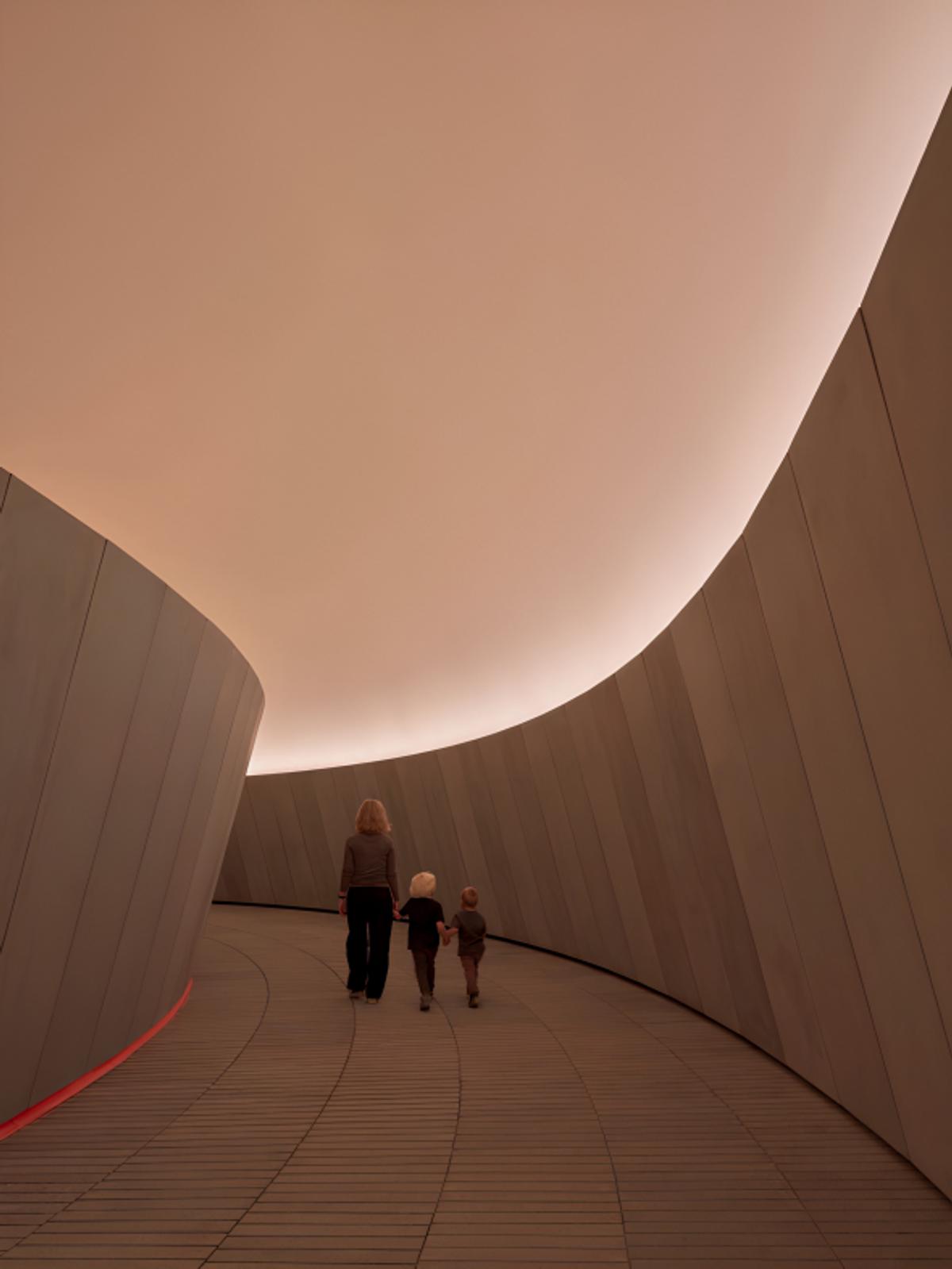
Precision first, because the argument depends on it. As Seen Below opened at ARoS Aarhus Art Museum in Denmark on 19 June 2026, timed to the long Nordic twilight around the summer solstice. It is a subterranean dome roughly forty meters in diameter and sixteen meters high (on the order of 130 feet across and 52 feet tall) capped by an oculus some six meters wide that opens directly onto the sky. More than 1,100 concealed light sources can wash its curved interior with programmed sequences. It is the final element of the museum’s decade-long underground expansion, The Next Level, and it was realized in collaboration with the architects Schmidt Hammer Lassen. It is, by consensus, Turrell’s largest Skyspace made for a museum, and by his own count somewhere near his hundredth in the genre.
To answer the question so many are typing: how does a James Turrell Skyspace work, the mechanism is deceptively simple and structurally demanding. A crisp aperture is cut into the ceiling. As the artificial light on the interior walls shifts, the eye recalibrates, and the flat disc of sky appears to advance, recede, and change color. The architecture does the perceptual labor; the sky supplies the material. This is why the Museum Architecture is not a container for the work. It is the work, which is the first fact the market has trouble pricing.
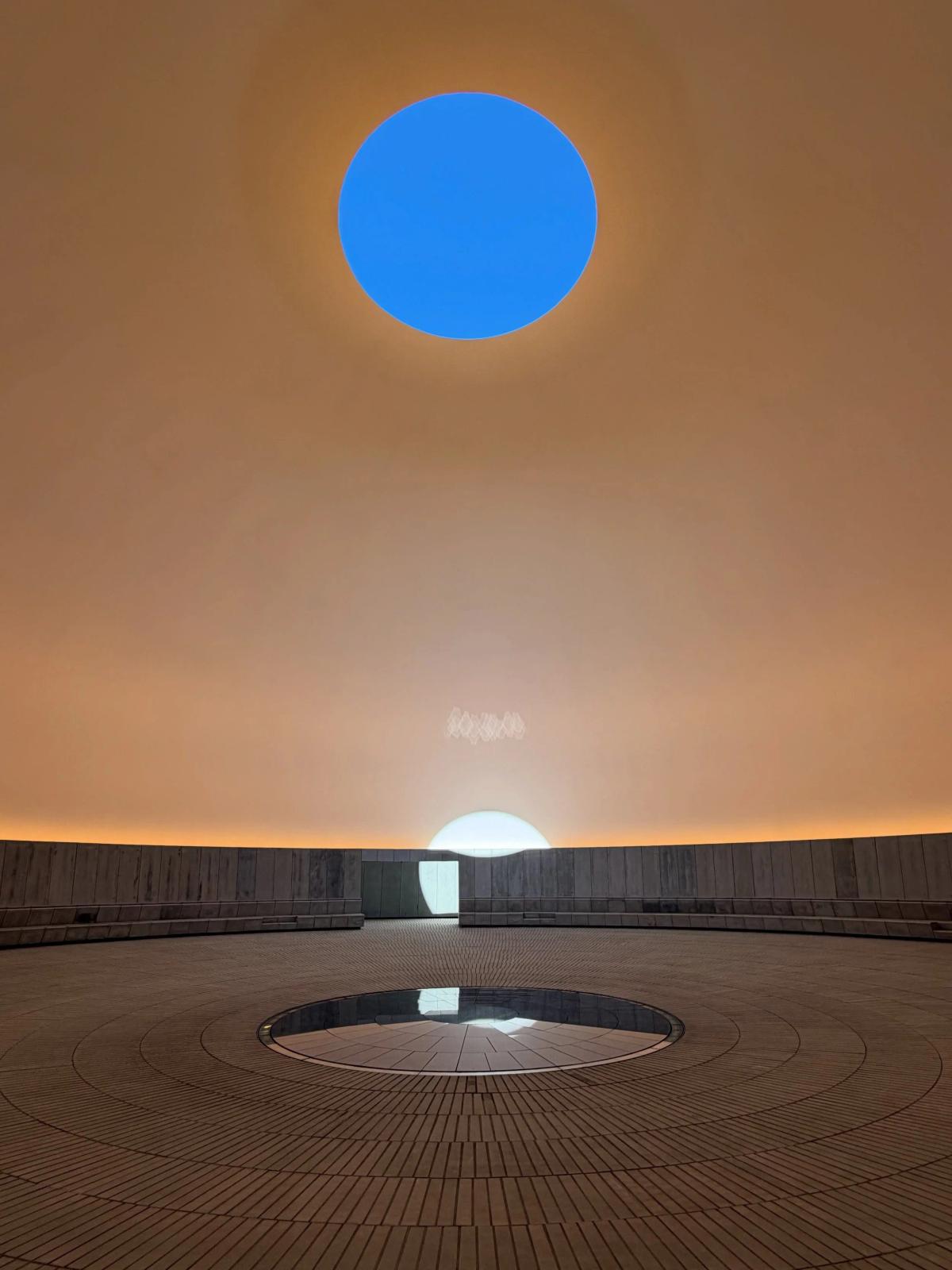
James Turrell’s "As Seen Below" (2026) demonstrates how the architecture does the perceptual labor. When the artificial interior light shifts, here to a golden-orange hue, the eye recalibrates, and the flat disc of blue sky supply supplies the material, appearing to advance or recede.
Light as Material: Against the Hollowed Object
The temptation, with any Turrell, is to file the effect under spectacle and move on. But Light and Space, the Californian tendency from which Turrell emerged alongside Robert Irwin and Doug Wheeler, was never about images. It was about the medium of perception itself. Perceptual Art of this kind treats light not as the illumination of a thing but as the thing itself. In PLCFA terms, this is the strongest possible defense against the Hollowed Object: a work whose meaning has been drained out and replaced by sign value.
A Hollowed Object is one that can be photographed, circulated, and consumed without loss, because there was never much there beyond its image. The Skyspace inverts this. A photograph of As Seen Below is not merely inferior to the encounter; it is categorically a different object because the work exists only in the durational recalibration of a body standing beneath the oculus at a specific hour of a specific sky. This is what it means to call the piece a work of Phenomenology rather than of representation.
You cannot screenshot a Skyspace. You can only screenshot the rumor of one.
The Quaker Lineage, and a Correction on the Record
One line of institutional critique, anticipated in the analysis that preceded this study, holds that a work like this appropriates Indigenous contemplative architecture and repackages it for a Western luxury audience, an instance of what this office calls Institutional Necrophagy. That charge, applied here, does not survive contact with the record, and intellectual honesty requires saying so plainly.
Turrell’s Skyspaces descend from two well-documented sources: the perceptual experiments of Light and Space, and his own Quaker upbringing. The Quaker Quietism of the silent meeting house, a room organized around waiting, attention, and unmediated light, is the acknowledged spiritual architecture of the entire body of work. To read the ARoS dome as extracted from another culture’s patrimony is to misapply a provenance framework where it does not belong. The genuine ethical question is not who the form was taken from. It is who will keep it working.
The moral weight of this object is not a question of its origin. It is a question of who has agreed to maintain it, in perpetuity, against the entropy of its own machinery.
The Anti-Speculative Entity
Here is where the work becomes useful to the framework rather than merely beautiful within it. The contemporary Art Market runs on Speculative Velocity: the speed at which an object can shed its material specificity and become a tradable claim. The clearest recent expression of this is the Financialization of Luxury, in which handbags and paintings alike are securitized into fractional instruments and held for appreciation rather than use.
As Seen Below is structurally immune to this. It cannot be delivered to a freeport. It cannot be split into shares whose underlying assets are held in a Geneva vault. Its site-specificity is absolute: move it, and you destroy it. This is the definition of a Sovereign Object, one whose Narrative Permanence is guaranteed by physics, not by contract. Where a canvas can migrate through a dozen owners and a dozen theories of value, the Skyspace has exactly one address and one condition of existence. It is, in the most literal sense the framework can offer, an Anti-Speculative Entity: an artwork that has opted out of liquidity.
This matters beyond Aarhus. Those searching for the cost to build a James Turrell Skyspace are, without knowing it, asking the right structural question. The cost is enormous, front-loaded, and unrecoverable through resale. There is no exit. A work with no exit cannot be a bubble.
The Burden of Preservation
Immunity to speculation is purchased at a price, and the price is maintenance. Those eleven hundred light sources are not eternal. LED arrays drift in colour temperature, controllers fail, firmware is orphaned, replacement components are discontinued. The perceptual covenant of the work, the exact calibration of hue and timing on which the illusion depends, is only as durable as the institution’s willingness to keep re-calibrating it. This is the Burden of Preservation, and it is the true content of what this office calls the Custodian’s Contract.
An oil painting can survive a century of institutional neglect and be rescued by a conservator. A technologically dependent Experiential Art work cannot. If ARoS stops funding the light system, the piece does not degrade gracefully into patina; it simply goes dark and becomes an empty concrete room. The maintenance of a Turrell installation is therefore not custodial housekeeping. It is the continuous re-authoring of the work. The Labor Density here is ongoing, not historical, embedded not only in the original construction but in every future recalibration.
For a work made of light, conservation is not repair. It is resurrection, performed on a schedule, forever.
Aura Transaction: The Oculus and the Feed
No contemporary account of the work is complete without the phone. Turrell’s installations have become enormously legible to social platforms, and the ARoS dome will be no exception. This is where the framework’s concept of the Aura Transaction earns its keep. The Aura that Walter Benjamin located in the here-and-now of the original is not destroyed by reproduction so much as it is transacted: converted into attention, tourism, and institutional prestige.
The Zero-Sum Aura thesis would predict that every circulated image withdraws something from the work. But the Skyspace is a peculiar case, because its resistance to reproduction is built into its physics. The image cannot carry the work, so the transaction is incomplete by design. What circulates is an advertisement for an absence: a Semantic Burden the museum must actively manage, lest the destination be consumed as content and the contemplative function collapse into The Spectacle that Guy Debord diagnosed.
The Museum as Custodian, Not Owner
All of this converges on a single institutional proposition, which is why the study sits within Systemic Stewardship. ARoS does not, in any meaningful sense, own As Seen Below. It has agreed to keep it alive. Ownership implies the right of disposal, to sell, to move, to deaccession. But a Sovereign Object with no resale value and no portability strips ownership of its usual privileges, leaving only its obligations. The museum is productively reduced to the role of custodian.
This is the model the framework has argued institutions must adopt across the board, and the Skyspace makes the argument concrete rather than theoretical. The Custodial Strategy is not a moral preference the museum could choose to ignore; it is the only relationship the object permits. Turrell has, in effect, engineered an artwork that forces its holder into stewardship by removing every other option.
Turrell did not ask the museum to be a good custodian. He built an object that cannot be owned in any other way.
Against the Roden Comparison
It is tempting to fold Aarhus into the long shadow of Roden Crater, Turrell’s decades-long earthwork in the Arizona desert, the project to which Kanye West reportedly donated some ten million dollars in 2019. But the comparison obscures more than it reveals. Roden Crater is a private, still-unfinished monument whose scarcity is its aura. As Seen Below is a public, completed, ticketed institution whose accessibility is its argument. The desert crater withholds; the museum dome admits. One is a promise; the other is a working machine with an opening date and a maintenance budget. The distinction is the whole point: the ARoS Skyspace is not a relic-in-waiting but a functioning demonstration that a Material Singularity can be built for the public and kept for the public.
Coda
The largest museum Skyspace ever built will be described, for years, in the language of wonder. Let it be. But the deeper significance of As Seen Below is not that it makes the sky feel close. It is that it makes ownership feel impossible, and in doing so it hands the museum a role the speculative century tried to abolish: not proprietor, not investor, but keeper. The object’s light will need tending long after the opening crowds disperse and the hashtags cool. That tending, unglamorous, perpetual, unrecoverable, is the real work. Turrell built the aperture. The Burden of Preservation is what comes through it.
A civilization is legible in what it agrees to maintain. This one has just agreed to maintain the sky.
Authored by Christopher Banks, Anthropologist of Luxury, Critical Theorist & Founder Objects of Affection Collection Office of Critical Theory & Curatorial Strategy 469 Fashion Avenue, 12th Floor, New York, NY 10018
Related OAC Studies
For readers approaching As Seen Below from adjacent questions of stewardship, perception, and the market, the following threads within the OAC archive extend the argument:
On the object that refuses the market: Anti-Speculative Entity and Sovereign Object
On light, aura, and reproduction: Aura and Walter Benjamin
On the museum as keeper: Systemic Stewardship and Custodial Strategy
On the drained image: Hollowed Object and The Spectacle
On perception as medium: Phenomenology and Light and Space