The Subcontracted Sublime: What Italy's Luxury Labor Probe Exposes
On subcontracting, the material covenant, and the labor a maison's story is built to keep out of sight
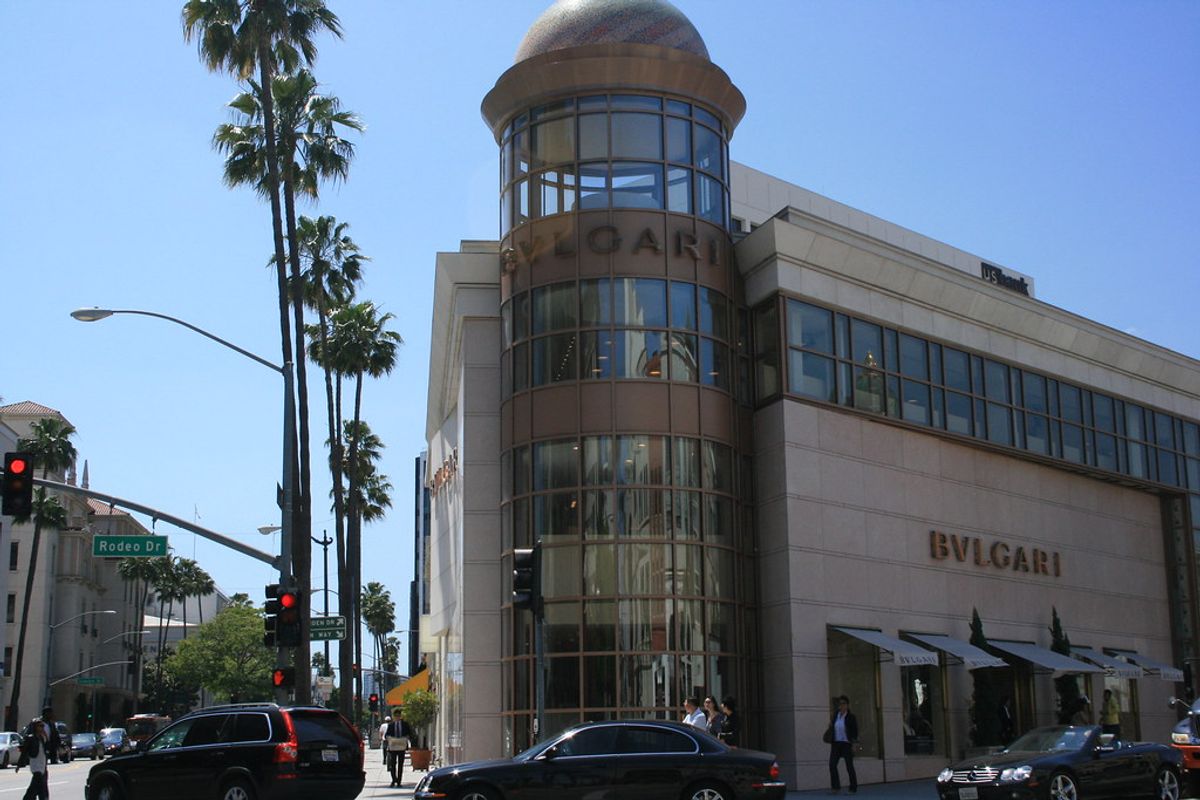
In July, Italian authorities widened one of the most consequential investigations the luxury industry has faced. Officers acting for Milan prosecutors visited the headquarters of a group of brands, among them Chanel, Goyard, Brunello Cucinelli, and Bulgari, as part of a probe into labor exploitation in the subcontracted supply chains that produce luxury bags, accessories, and their packaging. It is essential to state at the outset what the probe is and is not. The maisons themselves are not, as of this writing, under investigation, and no court has placed any of them under administration. The exploitation under scrutiny sits one or two tiers below them, in the workshops their suppliers in turn hired. That distance, between the name on the object and the hands that made it, is not a detail of the case. It is the case.
The Objects of Affection Collection reads the probe not as a scandal about particular houses but as an audit of the luxury model itself. What the investigation exposes is the gap between the story a luxury object tells about its own making and the conditions under which it was actually made, and that gap is where the entire critical apparatus of the Hollowed Object comes into focus.
The Visit
The mechanics are worth stating precisely, because precision is what protects the argument from becoming a mere accusation. In May, investigators raided two manufacturers, Moda Fashion Style and Isacco, to which a number of luxury brands had turned for production. There they reportedly found workers, many of them Chinese nationals lacking residence permits, employed in conditions and at wages that Italian law does not permit. In July the inquiry reached the brands that had, directly or through intermediaries, relied on those suppliers. The visit to the maisons was not an arrest. It was the moment an investigation into a subcontractor became an investigation into the structure that made the subcontractor useful.
This is the same Milan inquiry that has, over the preceding period, touched other names in the sector, including houses that were earlier placed under judicial administration when courts found their oversight wanting. The pattern is now too consistent to read as a series of isolated lapses. It is beginning to describe a norm.
The scope is what turns a compliance matter into an institutional one. This is not one supplier and one house; it is a chain of suppliers feeding at least nine names, part of a wider inquiry that has moved methodically through the sector for more than a year. When an investigation of this breadth keeps arriving at the same finding, undocumented labor a tier or two beneath the brand, the recurrence stops being evidence of individual negligence and starts being evidence of a shared method. The prosecutors are not, in effect, investigating companies. They are investigating an architecture.
The Story the Object Tells
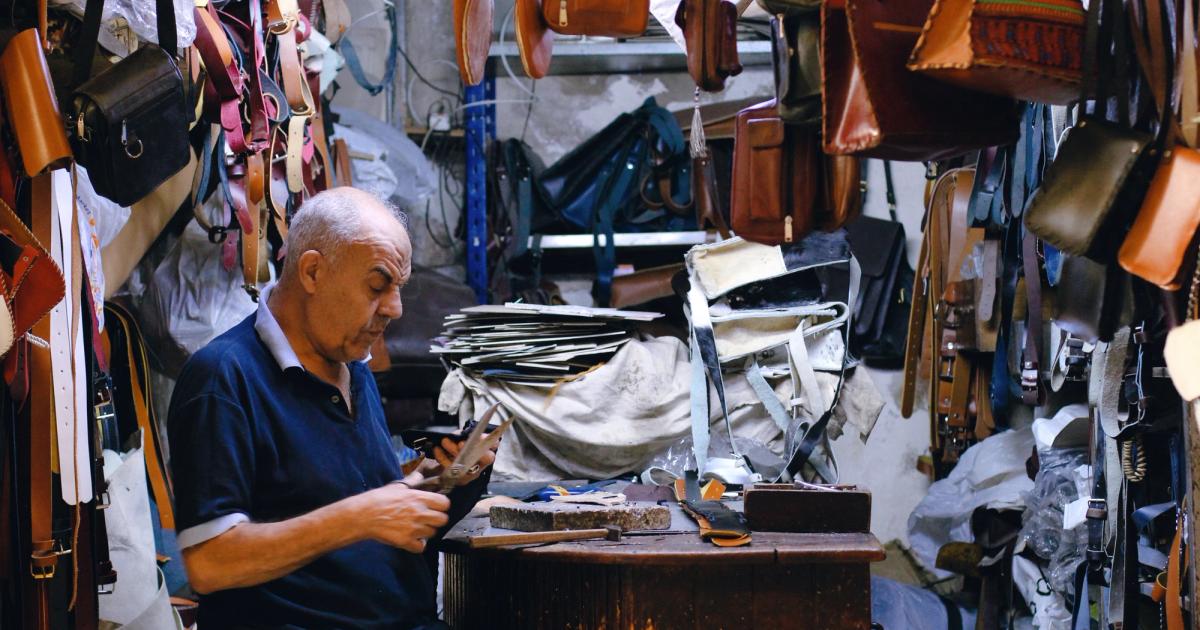
A luxury object is sold, above all, on the story of its making. The advertising vocabulary is one of hands, hours, ateliers, and heritage: the artisan at the bench, the leather selected by eye, the stitch counted. This narrative is not incidental to the price; it is most of the price. The OAC names the real thing this story points to Labor Density: the quantity of skilled, irreproducible human labor genuinely condensed into an object, which is the honest source of a luxury good's claim to worth. When the labor is real, the density is real, and the price has an anchor in something material.
The maisons named in the probe have built their identities on exactly this promise. It is the promise the OAC examined in the Metiers d'Excellence programs, in which houses stage and celebrate the artisan as the guarantor of value. The story is beautiful, and where it is true it is also correct. The problem the investigation surfaces is not that the story is told. It is that the story and the production have come apart.
The Labor the Story Hides
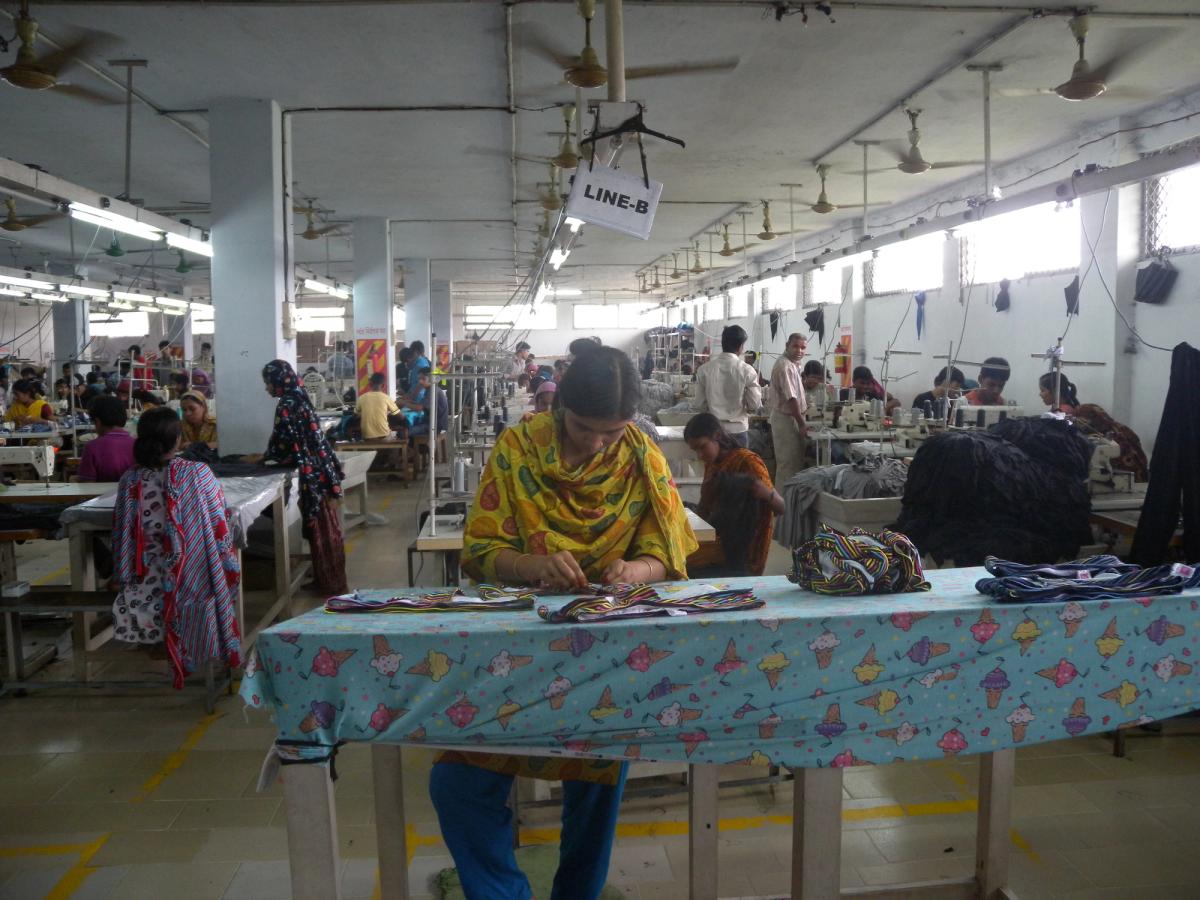
Subcontracting is the mechanism of that separation. Under margin pressure and with limited oversight, a house contracts production to a supplier, which contracts to another, which contracts again, until the object is made several tiers away from the name that will be printed inside it. Each tier is a layer of deniability. The artisan the advertising depicts and the worker who actually assembled the bag can be, and in the cases under investigation apparently were, entirely different people under entirely different conditions. The luxury object arrives at the boutique carrying the aura of the first and the wage of the second.
Italy has a specific geography for this. In districts built for textile and leather production, a shadow economy of undocumented labor has grown precisely because the luxury supply chain requires output that its stated ethics cannot openly account for. The "Made in Italy" label remains technically accurate, which is what makes it so useful: the object is made in Italy, by workers whose presence in the story is impossible, whose structural captivity in the lowest tier of the chain is the unadvertised condition of the price at the top.
The economics are not mysterious. A luxury house sells at a multiple that assumes artisanal cost, yet competes on volume and margin that artisanal cost cannot sustain. Subcontracting resolves the contradiction by hiding it: the brand pays a supplier a price that only closes if that supplier, in turn, finds labor cheaper than the story admits. The pressure does not have to be spoken. It is transmitted down the chain as a number, and at the bottom of the chain the number can only be met by workers with no leverage to refuse it. Exploitation, in this structure, is not a moral lapse that interrupts the economics. It is the economics arriving at their destination.
The luxury object arrives at the boutique carrying the aura of the first worker and the wage of the second.
Semantic Burden Transfer
What the brand does, in this arrangement, is take the meaning generated by labor it does not acknowledge and attach that meaning to an object it can sell at a margin the labor never sees. The OAC calls this a transfer of Semantic Burden: the cultural weight of "handmade," "artisanal," "Italian" is extracted from the workers who make those words true and banked by the house that prints them. The same structure the OAC traced in the economics of slow fashion and honest making appears here in its negative: where the honest maker earns the meaning of their labor, the subcontracting chain severs meaning from maker and routes it upward.
This is why the exploitation is not, morally, external to the object. A handbag whose value rests on a claim of dignified craft, and whose production rested on undignified labor, is not a good object with an unfortunate footnote. It is an object whose central claim is false, and whose price is therefore charging the customer for a covenant that was never honored.
The Hollowed Object, Confirmed
Here the probe meets the framework exactly. A Hollowed Object is one whose material covenant, the honest relationship between its advertised worth and its actual substance, has been severed, leaving a price attached to an absence. Most of the OAC's cases concern hollowing by technology or by speculation. The luxury labor probe describes hollowing by exploitation: the object is drained of the very labor density it advertises, because the labor that produced it was extracted under conditions that the advertised story is built to conceal.
The dialectic the OAC ran on the event resolved to this point with a conflict intensity near the top of its scale. The auction-block value and the boutique price of these goods rest on Material Singularity, the belief that the object is a genuine, irreproducible act of making. Systemic exploitation does not merely offend against ethics; it directly attacks that belief, because it decouples the advertised singularity from the conditions of production. The object still exists, still commands its price, but its claim to be what it says it is has quietly collapsed.
The party defrauded by that collapse is, finally, the customer, though the industry is careful never to frame it that way. A buyer pays the artisanal premium in good faith, believing the price purchases dignified making. If the making was not dignified, the buyer has been sold a certificate for a covenant that was never performed, at a markup justified entirely by that covenant. The exploited worker is wronged first and most gravely, and nothing here displaces that. But the object itself becomes the instrument of a second, quieter deception, in which the person best able to afford to care is kept from the one fact that would let them.
Why It Hides in the Accessories
It is not an accident that the exploitation surfaces in bags, accessories, and packaging rather than in the flagship garments a house most carefully supervises. These are the high-volume, high-margin, lower-visibility categories, the parts of the range where oversight is thinnest and the pressure to compress cost is greatest. The packaging in particular is instructive: the least essential, most disposable element of the object, the part no story is ever told about, turns out to be where the Custodian's Contract between maker and made is most completely abandoned.
This detail resolves the tension the arena could not close on its own: whether the exploitation is an intrinsic feature of the luxury model or an isolated oversight failure. The answer the pattern suggests is that it is intrinsic to the model precisely where the model stops looking. Oversight failure is not the opposite of a structural outcome here. It is the structure's chosen method.
Not Guilt, but Structure
The OAC's interest is not in the culpability of any individual house, and the point must not be mistaken for one. The maisons visited are not charged; several will, in all likelihood, be found to have relied in good faith on suppliers who deceived them. That outcome would not weaken the argument. It would confirm it. A model in which even good-faith houses routinely find undocumented, underpaid labor two tiers beneath them is a model whose ethics are administered by distance, in which not-knowing is a designed feature and plausible deniability is the product of the subcontracting architecture itself.
This is the paradox that makes the case so hard for the industry to answer. If the houses are guilty, the model can be defended as sound and the offenders punished. But if the houses are innocent, if they genuinely did not know, then the model itself stands accused, because a model that routinely delivers exploited labor to good-faith buyers has automated the wrong rather than merely permitting it. Innocence, here, is not an exoneration of the system. It is the system's most damning testimony about itself.
This is what raises the probe from a compliance story to an institutional one. When a court places a luxury supplier under administration, it is not correcting an aberration; it is briefly making visible the institutional necrophagy by which the sector feeds on labor it cannot afford to acknowledge. The investigation is, in effect, an external audit of a covenant the industry writes into its advertising and outsources out of its supply chain.

What the Probe Confirms
Set against the framework, Italy's luxury labor probe confirms that the material covenant of the contemporary luxury object is, structurally, at risk of being fiction. The industry's most valuable asset, the belief that its goods are dense with honest human labor, is exposed as a claim its own production methods are organized to undermine. Speculative Velocity plays its part here too: the same pressure to produce more, faster, at a protected margin is what drives the object away from the atelier and into the opaque subcontract where exploitation becomes efficient. The maison keeps the story of the hand; the chain disposes of the hand itself.
None of this means luxury cannot be honest. It means honesty is now the exception that must be proven rather than the default that may be assumed, and that the OAC's One Original Principle, the insistence that singularity be materially earned in the object by an acknowledged maker, is not nostalgia but a standard the industry is currently failing. The probe did not create that failure. It merely, for a moment, made it admissible as evidence.
Coda
The bags will remain in the vitrines, the prices will hold, and in most cases the law will find the houses formally innocent of the conditions two tiers below them. That is the quiet horror the investigation exposes: not a crime that will be punished, but a structure that functions exactly as designed, in which the meaning of the hand is sold at the top and the hand itself is worked out of sight at the bottom, and the distance between them is not a flaw in the object but the object's condition of possibility. What Italy's prosecutors have documented is not an exception to luxury. It is, increasingly, the way the covenant is kept: by not keeping it, and by ensuring no one with the name on the label ever has to look.