LVMH Métiers d’Excellence: Artistry’s Structural Captivity to Speculative Velocity
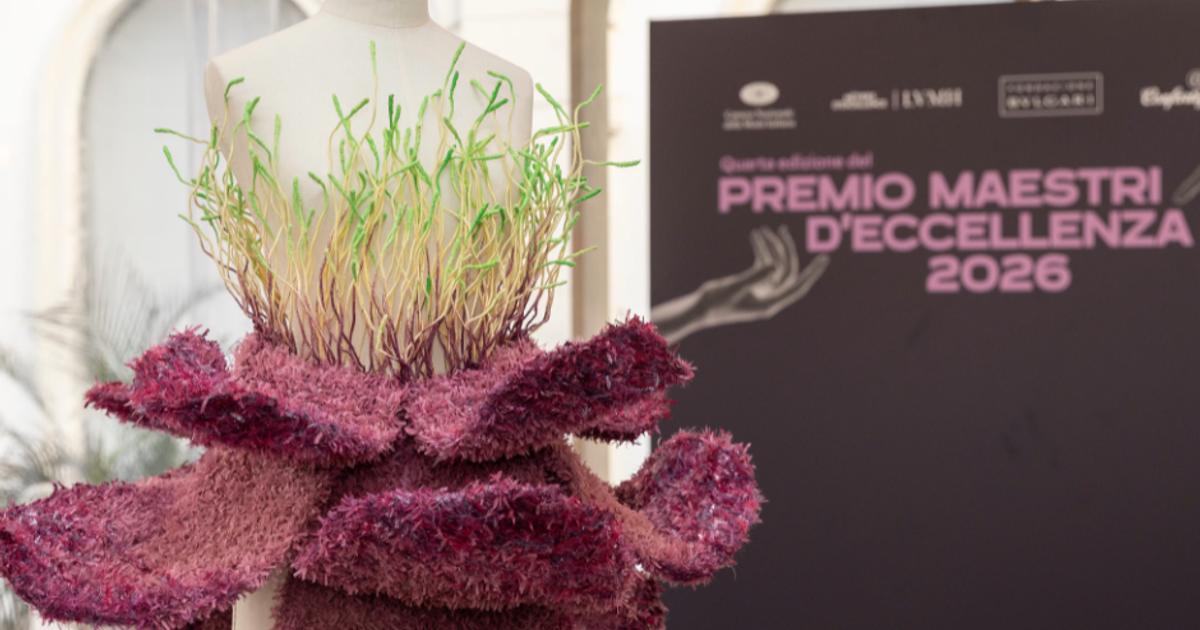
On the Premio Maestri d’Eccellenza, the aura harvested from independent hands, and the quiet distance between sustaining a craft and absorbing its name.
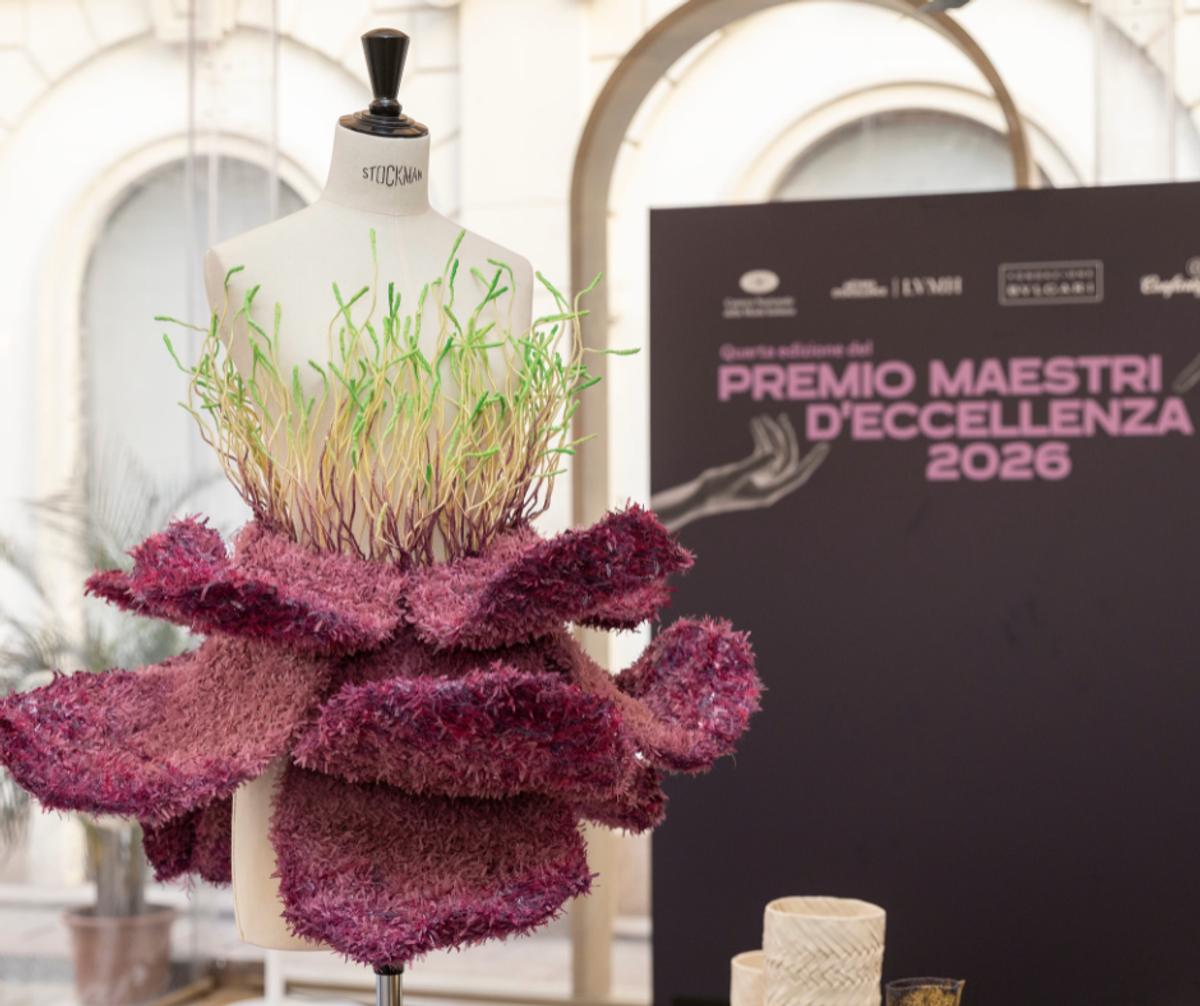
The Métiers d’Excellence LVMH Bulgari finalists were announced this month, and the industry read the news exactly as it was intended: as patronage. The nine names shortlisted for the fourth edition of the Premio Maestri d’Eccellenza, a "Bulgari craftsmanship program dedicated to Italian master artisans, arrive wrapped in the vocabulary of preservation. This study treats those luxury artisanal initiatives not as charity but as a transaction, one in which "Labor Density is converted into brand Aura. It asks what a conglomerate actually purchases when it funds a hand, and it names the mechanism precisely: Aura Transaction, Patronage Validation, and Root Marketing. It also, on the record, corrects the places where our own institutional instinct overreached.
The Announcement as Aperture
A shortlist is a genre. It manufactures a news cycle with a built-in sequel: finalists now, winners on September 14 at the Bulgari Hotel in Rome, and it distributes attention across two categories, established artisans with more than a decade of practice and emerging ones with less. Each eventual winner receives 10,000 euros to reinvest in their own business, along with mentoring and media coverage. On its face, this is generous, and it is important to say so plainly before saying anything else. Real money will reach real workshops. But generosity and strategy are not mutually exclusive, and the interesting question is never whether a corporate program does some good. It is what the program does "for the corporation, and what critical vocabulary it quietly borrows to do it.
The two-tier structure (established against emerging) is itself a piece of narrative engineering. It stages the "Artisan Economy as a meritocracy with a pipeline, a story of continuity in which the young are being ushered toward the old masters’ standard. That story is reassuring precisely because it obscures the underlying structural fact: the pipeline now runs through the conglomerate. A generation of Italian makers learns early that the path to visibility is sponsored, and that the sponsor sets the bar, then rewards them for clearing it.
The announcement functions as an aperture: a small, controlled opening through which the public is invited to look at Craftsmanship and, in the same glance, at the brand standing beside it. The artisan is real. The framing is the product. What looks like a window onto a workshop is, on closer inspection, a mirror angled to reflect the brand.
A shortlist is not a gift. It is a lens ground to a corporate prescription, through which the public is invited to see craft and, in the same glance, the brand standing beside it.
The Program, Correctly Named
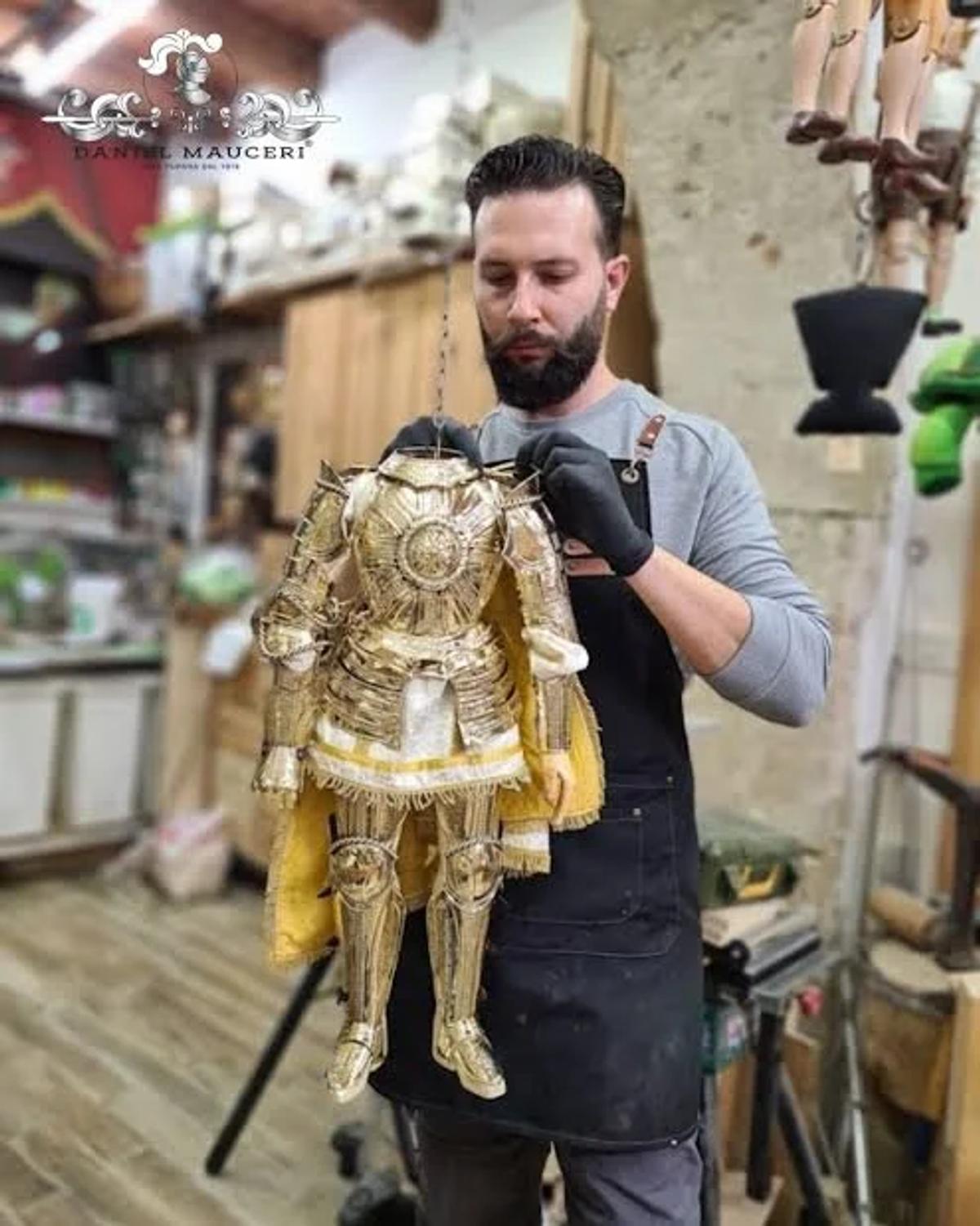
Precision matters here, because the loose phrase “LVMH absorbs artisans” is both rhetorically convenient and factually wrong. The finalists are not employees folded into an atelier. They are independent practitioners running their own firms: Carlo Colombo of the textile house Tessitura La Colombina; Daniel Mauceri of Arte Pupara dal 1978, who carves and dresses the Sicilian pupi; the gold-thread embroiderer Elena Ciarrocchi; the ceramist Federica Paglia; Verde Alfieri, who builds jewelry from paper; and the young fashion designer Lorenzo Seghezzi. The Premio Maestri d’Eccellenza, run by the Fondazione Bulgari, provides them with capital for their own practice. That is closer to a grant than to an acquisition.
The Italian framing is not incidental. Italian Fashion and design carry, in the global imagination, an almost pre-industrial guarantee of the hand, and a Roman jewelry house harvesting that guarantee is buying at a favorable exchange rate. Bvlgari’s own myth (Roman, gem-set, dynastic) is reinforced every time it is photographed conferring legitimacy on Italian makers, whether or not those makers have any material relationship to its production.
This distinction disciplines the entire analysis. A grant to an independent maker is not, by itself, Institutional Necrophagy. The consumption of a living body of practice into a dead corporate form. If anything, it sustains independence. The critique must therefore locate itself elsewhere: not in what happens to the artisan’s workshop, which may genuinely flourish, but in what happens to the "meaning of the words “excellence,” “heritage,” and “saper fare” once a conglomerate becomes their most visible sponsor.
The Aura Transaction
Walter Benjamin taught that aura is what a thing loses in reproduction: the here-and-now of an object, its embeddedness in tradition. "Benjamin could not have anticipated the reverse operation now standard in luxury: aura not lost but transferred, lifted from the singular hand and deposited onto the mass-produced portfolio. This is the Aura Transaction. A house that manufactures at scale cannot generate Material Singularity from its own operations; it must import it. The prize is the import mechanism. Ten thousand euros buys, at the level of the balance sheet, a rounding error; at the level of semiotics, it buys proximity to the one thing scale cannot fake: the slow, unrepeatable evidence of a hand.
The economy of this exchange is zero-sum in a specific sense. The legitimacy that flows toward the sponsor does not multiply the artisan’s standing in equal measure; it is a Zero-Sum Aura, where cultural authority pooled over centuries in independent Italian ateliers is drawn, through the thin straw of a sponsorship, into a single brand reservoir. Baudrillard would recognize the move: the sign of craft is detached from the labor of craft and made to circulate on its own, a Corporate Simulacrum of the workshop.
It is worth measuring this against the patronage it superficially resembles. Gilded Age Patronage was self-interested too, but it was legible: the Medici and the Morgans wanted their names on the thing itself, permanently fused to the object. The modern Aura Transaction is stranger and more efficient. Bernard Arnault’s group does not need its logo carved into Federica Paglia’s ceramics; it needs only to have been photographed nearby. Association, not ownership, is the currency, and association is renewable annually, at the price of a shortlist.
Ten thousand euros is a rounding error on the balance sheet and a fortune in semiotics: it buys proximity to the one thing scale cannot fake: the slow, unrepeatable evidence of a hand.
Root Marketing and the Architecture of Search
There is a discoverability logic underneath the philanthropy. Searches for “Italian craftsmanship,” “authenticity,” and “heritage savoir-faire” are early-funnel queries: the questions people ask before they know what they want to buy. A program like this is "Root Marketing: it plants the brand at the root of the search tree, so that the abstract desire for savoir-faire resolves, downstream, into a specific logo. To valorize “excellence” publicly is to claim topical authority over the entire category of the handmade.
This is where the program performs its most consequential work: not on the artisans it funds but on the language it occupies. When a conglomerate becomes the loudest voice pronouncing the word craftsmanship, it begins to set the term’s meaning: a soft form of "Institutional Lexical Hijacking. The Semantic Burden of “excellence” shifts from describing what a hand can do to describing what a brand can sponsor.
This linguistic capture is the quiet complement to the Financialization of Luxury. Once “heritage” and “excellence” are brand-owned search terms, they become assets: not metaphorically but operationally, feeding the topical authority that ranks a house above the very independent ateliers whose work justifies the vocabulary. The maker generates the meaning; the sponsor monetizes the search. That asymmetry is the engine of "Semantic Capture: value produced at the bench is realized at the top of the funnel, and the two are separated by a gap the artisan cannot cross alone.
The program’s most consequential work is done not on the artisans it funds but on the language it occupies: when a conglomerate becomes the loudest voice saying “craftsmanship,” it begins to own the word.
Where the Necrophagy Reading Fails
An honest study corrects itself in public. Our institutional reflex was to file this program under Institutional Necrophagyand to further reach for a charge of extractivism: the suggestion that a Bulgari-branded prize launders the trauma of gemstone supply chains. Both instincts fail the evidence and must be retired here. There is no gemstone in this story. The finalists work in cloth, clay, gold thread, wood, paper, and pattern; one of them, pointedly, makes jewelry out of "paper. To import a supply-chain indictment that the program would not touch is to do exactly what we accuse the sponsor of doing: attach a borrowed meaning to a material that never carried it.
Bulgari’s mining and sourcing practices are a legitimate subject. They are simply not this subject, and conflating them would weaken a critique that is stronger when it stays disciplined. The defensible claim is narrower and sharper: this is an Aura Transaction and a Patronage Validation exercise, not a corpse-eating and not a cover-up. The conglomerate is not the villain of the craft economy; it is a symptom of a condition in which independent making can no longer reliably fund itself and must rent the visibility of a larger body to survive.
Structural Captivity: The Grant as Soft Enclosure
If the program is not absorption, it is something subtler, which the study’s title names: Structural Captivity. The artisan keeps the workshop, keeps the tools, keeps the name over the door, and enters, nonetheless, an orbit. The prize sets the criteria for “excellence,” schedules the recognition calendar, and provides the mentoring that gently aligns an independent practice with the aesthetic and commercial logic of the group. Captivity here is not a cage; it is a gravitational field. The maker is free to leave and unlikely to, because the field is where the money, the press, and the legitimacy now sit.
There is even room within the field for a permitted, house-approved dissent. Seghezzi’s gender-bending sartorial work reads as a challenge to convention, and its inclusion lets the program absorb the energy of critique without the risk of it: a textbook "Spectacle of Dissent, in which opposition is invited inside precisely so that it can be curated. The rebel with a sponsorship is no longer entirely a rebel; he is a proof of the sponsor’s range.
This is the mechanism by which Speculative Velocity. The pressure to convert everything slow into something that moves at market speed, captures even those who define themselves against it. The craft’s tempo is set by the hand; the program’s tempo is set by the news cycle and the retail season. When the two couple, the faster clock tends to win.
Structural captivity is not a cage but a gravitational field: the maker remains free to leave and unlikely to, because the field is where the money, the press, and the legitimacy now sit.
Labor Density Against Speculative Velocity
What the artisans actually possess, and what no sponsorship can manufacture, is "Labor Density: the accumulated, non-compressible hours sedimented into an object. Richard Sennett’s account of the craftsman turns on exactly this incompressibility: mastery as the residue of ten thousand repetitions, unavailable to acceleration. A Sicilian "pupo is dense with the time spent carving it; a gold-thread embroidery is dense with the eyesight spent on it. This density is the true Regenerative Luxury, and it is precisely what a conglomerate’s core product lacks.
Tacit knowledge is the part of this that cannot be transferred by a check. The embroiderer’s judgment of tension in a gold thread, the puppet-maker’s feel for where balsa yields to a blade: these live in the body and pass only through years of doing, not through mentoring sessions scheduled around a launch. A program that treats such knowledge as a content asset produces, at best, a "Hollowed Object: the form of craft with the duration drained out. The finalists are not hollow. The risk is that the category becomes so, as its hardest-won meanings are lent out faster than they can be replenished.
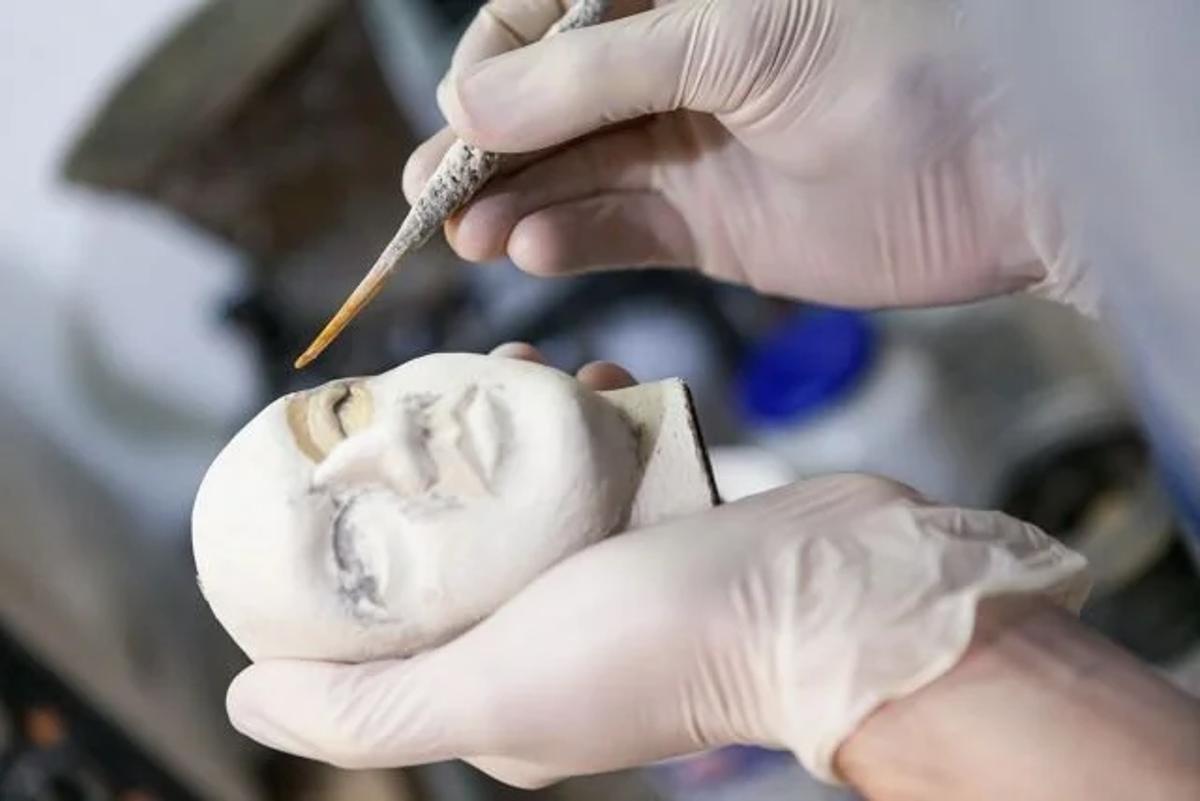
The program’s deep irony is that it celebrates the very quality its parent business model exists to escape. Scale is the flight from Labor Density; the prize is scale’s ritual of homage to what it fled. The Legibility of Labor that the finalists offer (work whose making is visible in its surface) is borrowed for an evening and returned to the margins by morning.
What Genuine Custodial Stewardship Would Require
To move from critique to standard: what would it look like for a program like this to be more than an Aura Transaction? Real Custodial Stewardship would accept the Burden of Preservation rather than its optics. It would mean multi-year funding untethered from a competition’s publicity value; transparent commitments that outlast a single news cycle; contractual protection of the artisans’ intellectual property and resale rights so that recognition cannot later be leveraged into extraction; and an Anti-Commodity Commitment that treats these practices as ends rather than as marketing inputs.
None of this is impossible for an entity of LVMH’s resources. Its absence is the tell. A ten-thousand-euro prize with a hotel ceremony is calibrated for maximum Artificationat minimum obligation: the smallest sum that still buys the largest possible narrative of care. The gap between what the program costs and what genuine stewardship would cost measures how much of this is "Root Marketing.
The distance between a ten-thousand-euro prize and the true cost of custodial stewardship is the exact measure of how much of “excellence” is marketing.
Coda
The finalists deserve their money, their mentoring, and their September evening in Rome. Nothing in this study begrudges them a euro. The argument is not with the artisans and not, finally, even with the sponsor, which behaves rationally inside a system that rewards the appearance of care more cheaply than care itself. The argument is contingent on an economy in which Material Singularity survives mainly by lending its aura to the very scale that endangers it. Métiers d’Excellenceis not the disease. It is the most articulate symptom the luxury sector has yet produced: a program that says, sincerely and strategically at once, that it loves the hand, while building the machine that makes the hand’s independence harder every year. To read the symptom correctly is the first custodial act.
Excellence, sponsored, is the sound a machine makes when it applauds the hand it is slowly replacing.
Authored by Christopher Banks, Anthropologist of Luxury, Critical Theorist & Founder Objects of Affection Collection Office of Critical Theory & Curatorial Strategy 469 Fashion Avenue, 12th Floor, New York, NY 10018
Related OAC Studies
For readers approaching this argument from adjacent angles, the following studies extend its terms:
On the financialization of aura: Artnet Auctions’ Monthly Obsessions: A Critical OAC Deconstruction
On icon status and speculative velocity: Frida Kahlo: How Five Portraits Defined Her Icon Status
On material singularity versus the hollowed object: Chrome Hearts Sterling Silver: Material Singularity vs. the Hollowed Object
On heritage, textile, and institutional spectacle: Bayeux Tapestry Loan: Critical Analysis of British Museum’s Spectacle
On custodial stewardship and authorship: Eileen Gray E.1027: Le Corbusier’s Violation of Material Singularity