Chrome Hearts and the Custodian’s Contract: How Handcrafted Silver Resists the Hollowed Object
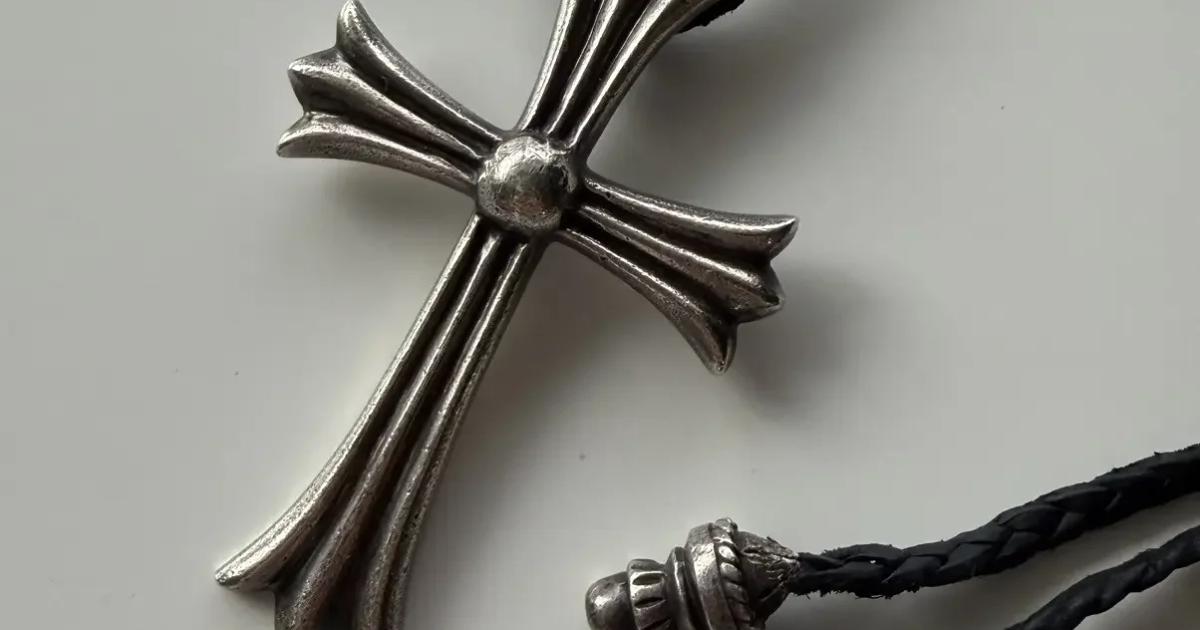
On a Los Angeles silversmith that made permanence its entire argument, a cross that outlives the hand that bought it, and what a piece of hand-cast metal still knows that the rest of luxury has agreed to forget.
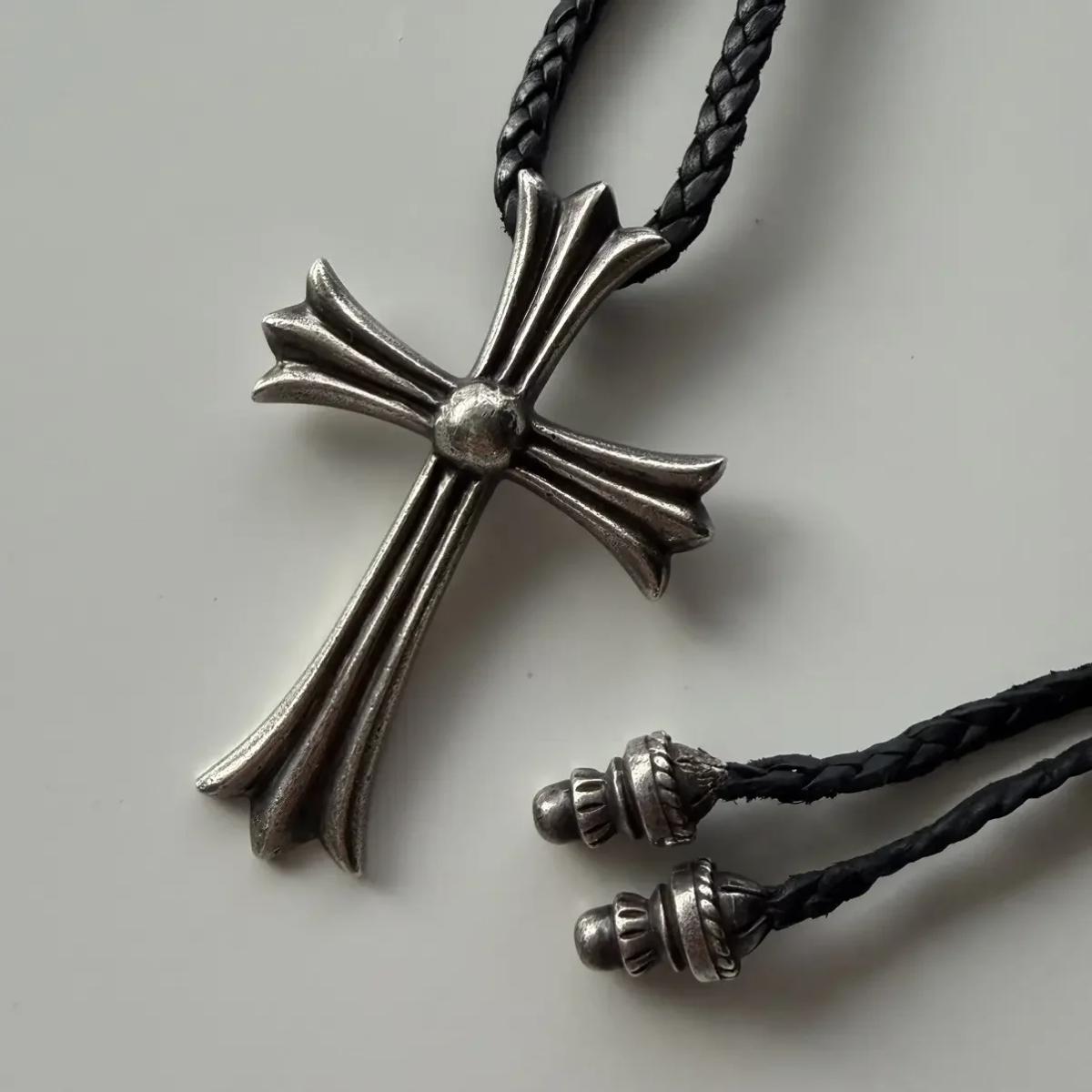
Chrome Hearts sterling silver is one of the few luxury objects of the present decade that becomes more legible the longer you hold it. Pick up a cross poured in .925 silver at the house’s own Hollywood workshop and the whole argument of this study is already in your hand: an object of extreme Labor Density and undeniable Material Singularity, built to outlast not only its owner but the company that made it. Chrome Hearts craftsmanship is not a marketing adjective here: it is a production method, and it is why Chrome Hearts resale value behaves the way it does, climbing and holding while so much of contemporary luxury quietly hollows out beneath its own logo. This is a study of that refusal to hollow, and of what a single durable object can still prove about where value actually lives.
The Case for the Cross
Chrome Hearts began in a Los Angeles garage in 1988, when Richard Stark, the leather manufacturer John Bowman, and the master silversmith Leonard Kamhout started making jackets and, almost immediately, the silver hardware to go on them. What the house became, a maker of hand-cast sterling crosses, daggers, and fleur-de-lis, co-owned since 1994 by Richard and Laurie Lynn Stark, has usually been narrated as a story about subculture graduating into luxury. This study proposes a different reading. Chrome Hearts is the clearest living proof that the materially singular, handmade object is not a nostalgia act but the working answer to the defining problem of contemporary luxury: the Hollowed Object, the thing that keeps its shell while its reason for being is quietly switched off somewhere else.
The proposition is almost embarrassingly simple. A Chrome Hearts object is heavy, handmade, and inert in the best sense: it depends on no server, no license, no update, no ongoing permission from its maker to keep being what it is. In the vocabulary of this collection it is close to a pure specimen of Object Permanence. And it arrived there not through theory but through habit: for nearly four decades the house has behaved, without ever calling it that, as if bound by the Custodian’s Contract.
Chrome Hearts never set out to prove a thesis about permanence. It simply refused, for thirty-eight years, to make anything that could be turned off from a distance. And permanence is what that refusal accumulates into.
The Ledger of the Hand
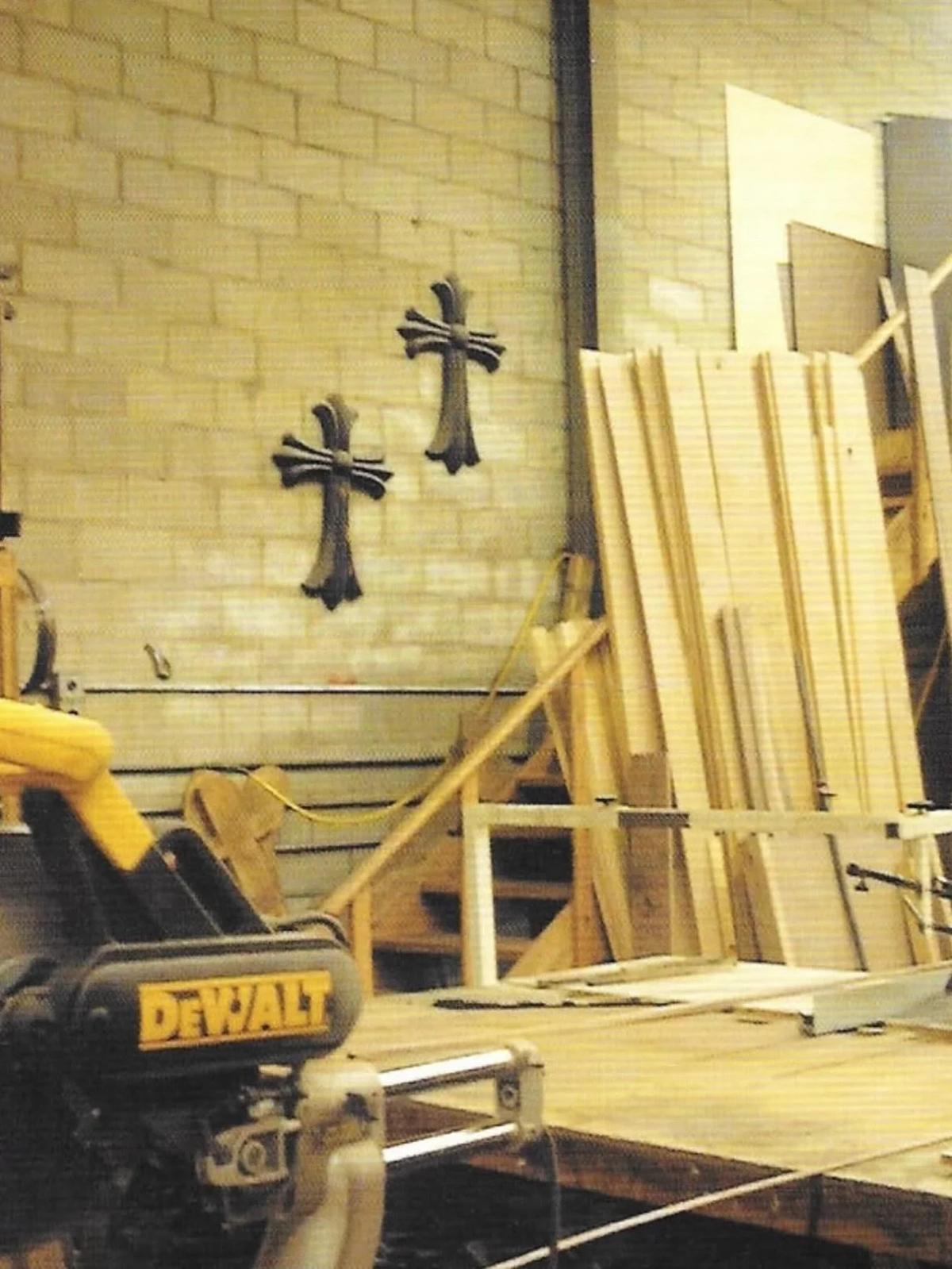
Everything the house sells is made in the United States at its own Hollywood facility by a workforce that has grown to over 1,000 skilled artisans. Every cross is engraved by hand; every stitch in the leather is set by hand; every casting of .925 sterling silver is poured, finished, and inspected by a person rather than stamped out at volume. Nothing is outsourced, and nothing has moved offshore in nearly four decades: a Made in USA discipline that has itself become a rarity at this altitude of the market.
In this collection’s terms, that is Labor Density in its most measurable form: the quantity of irreplaceable human hours sedimented into a single object. It is also what David Pye named the workmanship of risk, production in which the outcome is not guaranteed by the jig or the machine but is put in jeopardy, moment to moment, by the hand. An object made this way carries its making inside it. It cannot be copied losslessly because the labor that constitutes it was never abstract to begin with. This is handmade luxury in the strict and unfashionable sense: the hand is not a claim printed on the tag; it is the method by which the thing exists.
Silver Does Not Update
Labor Density is the one property an object cannot be granted after the fact. You either poured the hours into the silver or you did not, and the object always knows which.
To see why this matters, you have to name the thing Chrome Hearts is quietly standing against. The Hollowed Object is not a niche defect; it is the ambient condition of late luxury. More and more of what the market sells at a premium is tethered to something transient: a subscription, an app, a firmware timeline, a cloud record, a platform that will one day be sunset. When the tethering fails, the object does not age into an antique; it simply stops. Its form survives; its reason for being is terminated on a schedule set in another building. That is Planned Obsolescence not as an accident but as a business model, and it has crept steadily upmarket.
Sterling silver has no such tether. It requires no update, pairs with no ecosystem, answers to no license. Its worst-case degradation is tarnish, which a cloth reverses, and patina, which most collectors read as accrual rather than loss. There is no moment at which a Chrome Hearts ring stops working, because “working” was never delegated to anyone’s product roadmap. The object’s permanence is intrinsic, not licensed, and that single structural fact is what the rest of luxury keeps trading away.
You cannot engineer obsolescence into a bar of silver. There is no core to switch off because the metal has always been the whole point.
Scarcity Without the Server
Chrome Hearts does not advertise, does not discount, and does not mass-produce: a discretion it has held for more than thirty-five years. Distribution is deliberately narrow; celebrity adoption has been earned rather than bought. On the resale market, the result is stark: pieces routinely change hands on Grailed and The RealReal at one-and-a-half to two times their retail price, and the scarcer references command more.
Here the honest analyst has to slow down, because this is where the object is most easily flattered. Strong resale is not, by itself, a virtue. It can be the signature of Speculative Velocity(the financialization of an object into a pure trading vehicle, the fate this collection has diagnosed in everything from the Castello Cube to the Swatch-AP Royal Pop. The distinction that decides everything is what keeps the value intact. A premium manufactured entirely by drop mechanics and queue theater is a hollowing even as the price climbs. A premium that rests on) scarcity plus genuine Material Singularity, metal, hours, irreproducibility, is value banked in the thing itself. Chrome Hearts sits closer to that second pole than almost any house at its price, and the test is simple: if the brand vanished tomorrow, the silver would still be silver. Its refusal to discount is an Anti-Commodity Commitment with real teeth, and its worth was never a subscription.
A price that survives the brand’s death is called Material Singularity. A price that dies with the marketing is called Speculative Velocity. On the resale tag they look identical, right up until the day you test them.
The Gothic as Narrative Permanence
Chrome Hearts is inseparable from its iconography: the cross, the dagger, the fleur-de-lis, the floppy-hatted Old English script, the biker-gothic vocabulary carried over from its origins dressing rock musicians and a straight-to-video zombie picture in 1988. It would be easy to file this under sign-value: aesthetics borrowed to inflate a markup. The framework reads it differently.
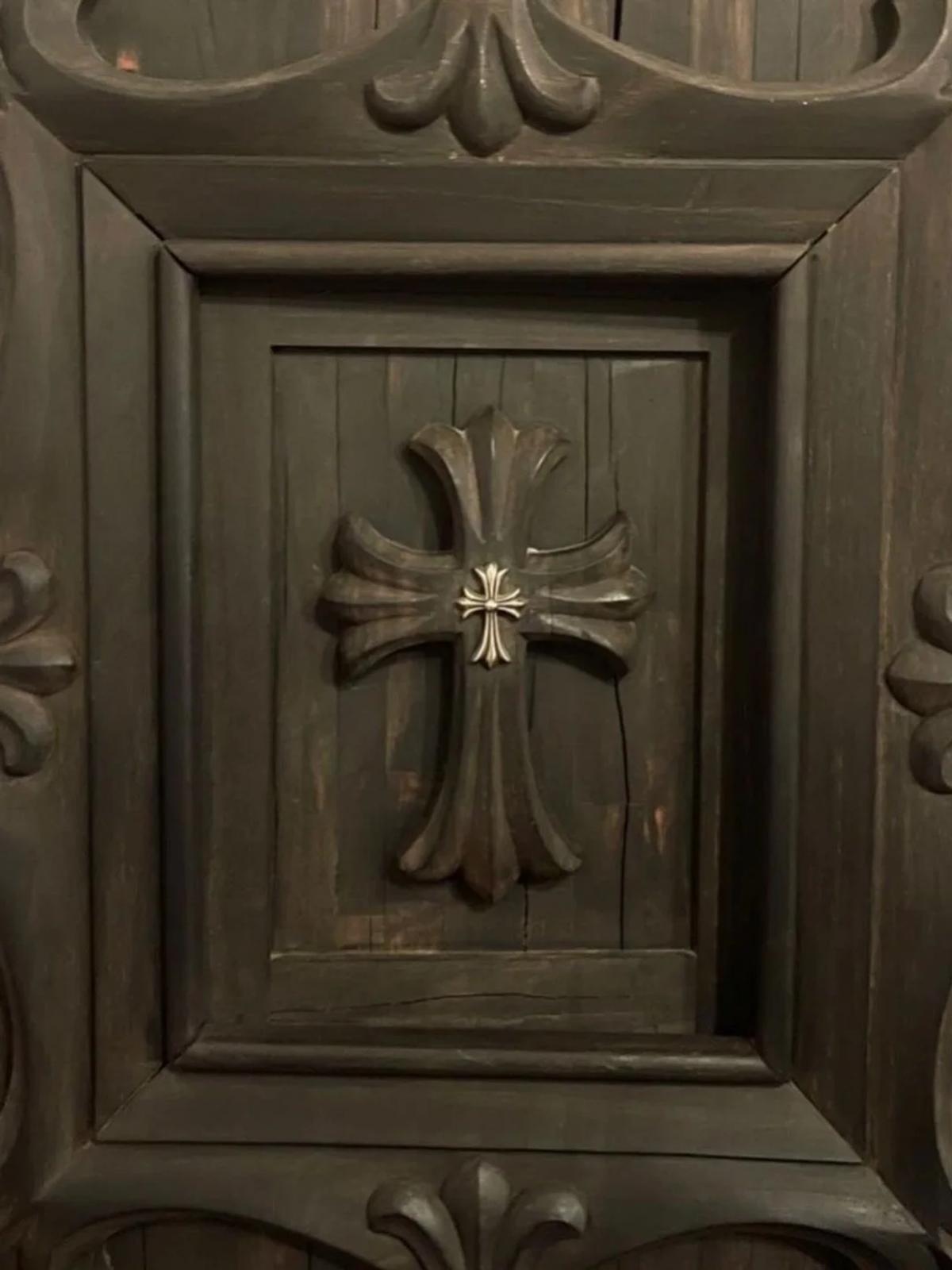
Because the motifs are hand-cut into the metal and repeated across decades, they function as Material Memory: the object accumulates meaning rather than shedding it. A Chrome Hearts cross bought in 1994 and one bought in 2026 belong to a single continuous narrative, engraved by the same house in the same city by the same technique. This is Narrative Permanence expressed materially: the story is not appended in a certificate or an app; it is physically inseparable from the surface. The dematerialized luxury object cannot do this. Its “story” lives in a software layer that will be retired, in cloud records that will rot, in an interface that will look dated within two product cycles. The gothic here is not decoration over a hollow core; it is the legible record of a Sedimentary Object that has been accreting the same meaning, by the same hands, longer than most technology companies have existed.
The Custodian’s Contract, Signed in Metal
The Custodian’s Contract, this collection’s model of ownership as stewardship rather than consumption, requires an object that can actually be kept, maintained, and handed on. Its Burden of Preservation is the weight the owner agrees to carry: the upkeep, the responsibility, the eventual transfer to the next custodian.
For the tethered luxury object, that burden is effectively infinite and ultimately futile; no amount of care can keep a discontinued device alive once its infrastructure is withdrawn, and stewardship collapses into e-waste management. For a Chrome Hearts silver object, the burden is almost trivially light: keep it dry, polish it occasionally, do not lose it. The contract is not merely honorable but easy to honor, which is exactly what makes the object heritable. Silver passes to a daughter; a dead device passes to a drawer. The deepest thing the house demonstrates is not craft or scarcity but this: it makes objects capable of entering the Custodian’s Contract at all, in a market increasingly full of things that structurally cannot.
The Custodian’s Contract cannot be signed by an object that requires its maker to remain in business to keep functioning. Stewardship assumes the thing can outlive the hand that made it. Silver can. Firmware cannot.
The Hollowing of Luxury
This is where the story gets bigger than a single house on Fashion Avenue. What Chrome Hearts throws into relief is a slow migration underway across the entire category: luxury value drifting off the object and onto everything around it, the sign, the drop, the membership, the app, the resale index, the story told about the thing rather than the thing. Each move is rational on its own terms, and each one lightens the object a little more, until what is being sold at a premium is a relationship to infrastructure the buyer does not own and cannot maintain. This is Institutional Necrophagy at the scale of an industry: the commercial machine consuming the very idea of the durable object while keeping its vocabulary, “heritage” “timeless” “investment”, as decoration.
Against that drift, Chrome Hearts is almost aggressively unglamorous. It offers no ecosystem, no roadmap, no experience layer: only a heavy, handmade thing you can hold, resell, lose, inherit, or be buried with. And that is precisely why it matters beyond itself. It is proof that the exit from the Hollowed Object is not some unrecoverable pre-industrial past but a set of choices any maker could make tomorrow: pour real material, spend real hours, cut the meaning into the surface by hand, and build nothing into the object that a company could later switch off. The house is not the argument. The silver is the argument. Chrome Hearts is simply its current, and unusually stubborn, custodian.
The exit from the Hollowed Object is not a lost art. It is a heavy thing, made by hand, with nothing inside it that anyone can turn off, and the fact that this now reads as radical is the whole indictment.
The Limits of the Case
None of this makes Chrome Hearts a saint, and a fair study has to say so. Its scarcity model shades, at the edges, into the same manufactured-desire machinery this collection critiques elsewhere; a hype premium is still a hype premium even when the underlying object is sound. Its resale market carries real Speculative Velocity, and some fraction of its buyers hold the metal as an asset rather than an affection. The iconography that works as Material Memory can also work as pure brand signaling, a logo to be counterfeited and flexed. The point is not that the house has solved luxury. It is that the object at the center of it, hand-cast silver, dense with labor, free of any expiring core, resists hollowing at the level of its material, whatever the market does around it. Chrome Hearts is not the cure for the Hollowed Object. It is the standing evidence of what the cure would have to be made of.
Coda
Hold the cross again. It is heavier than it needs to be, engraved deeper than efficiency would allow, and it will still be exactly itself long after the servers that run this decade’s smarter, lighter, more connected luxuries have gone quiet. That is not sentimentality; it is structure. The most radical thing an object can do in 2026 is to require nothing of the future except a place to sit and, eventually, someone to leave it to. Chrome Hearts has been making objects like that, by hand, in the same city, for thirty-eight years, and the longer the rest of luxury drifts toward the weightless, the more the silver looks less like a relic and more like a map.
Authored by Christopher Banks, Anthropologist of Luxury, Critical Theorist & Founder Objects of Affection Collection Office of Critical Theory & Curatorial Strategy 469 Fashion Avenue, 12th Floor, New York, NY 10018
Related OAC Studies
Further reading from the OAC archive, organized by the arguments this study leans on:
On Material Singularity and endurance: Structural Captivity of Material Singularity The Weight of a Thousand Years: Joe Doucet’s Columns and the Epistemology of Endurance
On the Hollowed Object: The Hollowed Prancing Horse: What the Ferrari Luce Actually Confirms Balenciaga’s Wellness Kick: Techwear and the Hollowed Object Audemars Piguet x Swatch Royal Pop: The Hollowing of an Icon
On craft, labor, and the hand: The Algorithm of the Hand: Human Imperfection and Labor as Ultimate Materiality The Hand Strikes Back: Generative “Slop” and the Luxury Artisanal Contract
On silver and the metalsmithing lineage: The Forging of a Legend: Goro’s, a Philosophy Embodied in Silver and Gold Robert Ebendorf: Found Objects, Philosophical Objects, and Post-Luxury Conceptual Functional Art
On the Custodian’s Contract and stewardship: The Custodian’s Contract: From Institutional Critique to Systemic Stewardship Institutional Necrophagy: How Speculative Velocity Destroys Object Permanence