Why Corporate Art Collections Are Rotting Inside Private Equity's $3.8 Trillion Dormancy Crisis: and the Kinetic Objects Built to Punish It
On Kinetic Obligation, Institutional Dormancy, and the Architecture of Penalized Stasis
Private equity's $3.8 trillion dormancy crisis (the record stock of unrealized assets now held across corporate portfolios at an average of seven years) has produced a structural void that the art market has not yet named, and the functional art object ecosystem has not yet filled. Bain's "12 is the new 5" mandate, the finding that today's private equity deals require 12% annual EBITDA growth to achieve historical return benchmarks, arrived not as a cure but as a confession: the system has institutionalized inertia. Corporate art collections, held in climate-controlled freeport vaults and empty penthouse inventories, are the purest expression of this condition: objects reduced to inert Speculative Capital metadata, stripped of the one property that justifies their existence as art: the capacity to be encountered. This study names the void and proposes the Inertia Penalty, a class of massive, functional kinetic works integrated with localized micro-mechanical actuators that monitor their own operational activity and initiate irreversible chemical or mechanical transformation when abandoned beyond a 12-consecutive-week dormancy threshold. Deploying the PLCFA framework's Fragility Mandate, Anti-Commodity Commitment (ACC), Zero-Sum Aura, and Hollowed Object as diagnostic instruments, this study argues that the corporate art collection's dormancy crisis demands objects that are structurally incapable of surviving passive capital storage: objects that physically penalize the institutional paralysis Bain named but could not resolve. This is OAC Study No. 012 and the first entry in the Void Series: taxonomies of spaces the PLCFA framework has identified but that no functional object class yet occupies.
The $3.8 Trillion Confession: What Bain's Mandate Actually Revealed
In February 2026, Bain & Company released its Global Private Equity Report, which included a structural finding that has since reshaped the asset management conversation. The central claim: the traditional five-year holding period at 5% EBITDA growth, which once reliably delivered a 20% IRR and 2.5x MOIC, is over. In today's environment (entry multiples at 14x, interest rates elevated, leverage ratios compressed) the same return threshold now demands 12% annual EBITDA growth sustained across that same period. Bain named this plainly: 12 is the new 5.
What the financial press read as a performance mandate, the PLCFA framework reads as a confession. The same report reveals that buyout funds are sitting on a record $3.8 trillion in unrealized value across roughly 32,000 companies. Average holding periods at exit have drifted to seven years, up from five to six years between 2010 and 2021. Nearly 40% of all portfolio companies are now held for more than five years, up from 29% in 2019. Distributions as a percentage of NAV have held below 15% for four consecutive years, an industry record. The telecom and media sector records the longest average holding period at 7.27 years. Energy and utilities follow at 6.96.
The mandate arrived to cure a disease it named but did not diagnose. Corporate portfolios are not stagnating because managers lack ambition. They are stagnating because the structural incentives of an environment defined by paper gains, unrealized positions, and artificial hold periods make dormancy the rational default.
The 12% mandate was issued precisely because the system had already settled into institutional inertia as its operating posture. And within that settled architecture, corporate art collections, acquired at peak market valuations, held to avoid realizing paper losses, stored in facilities optimized for zero encounter, have become the most expensive and least examined expression of the Hollowed Object condition: objects stripped of every dimension of value except the financial one, retained on balance sheets as assets while functioning as metadata.
The Freeport as Structural Endpoint: Where Corporate Art Goes to Become a Number
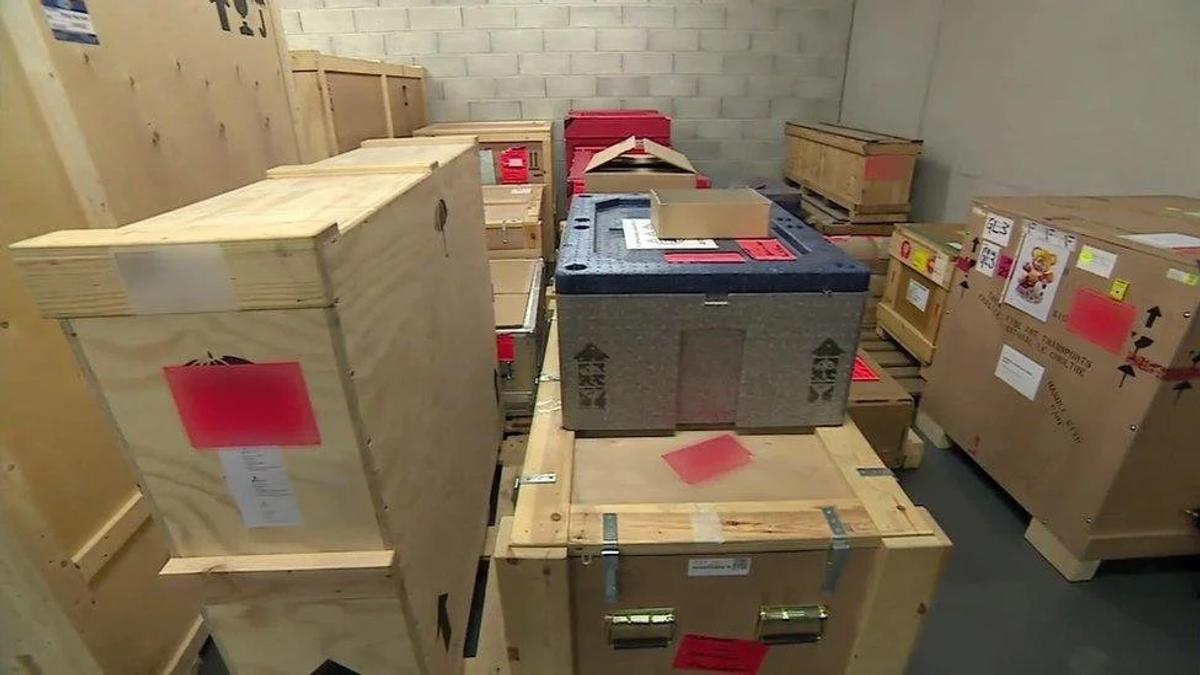
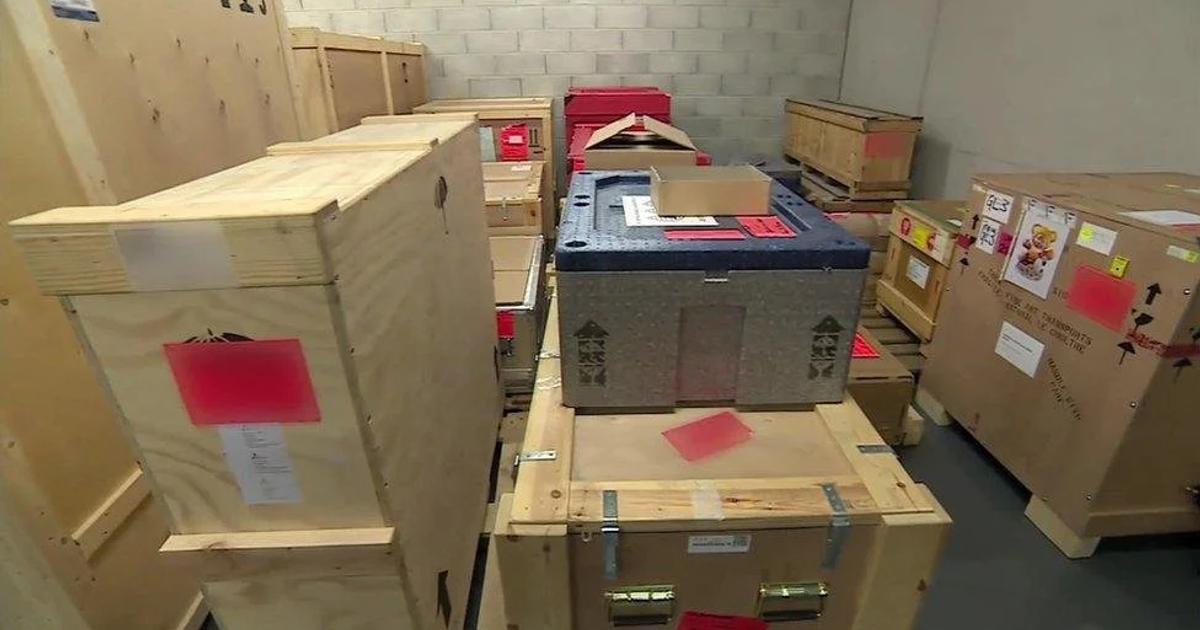
The art storage market reached $2.66 billion in 2025 and is projected to nearly double to $5.22 billion by 2035. Approximately 68% of high-net-worth collectors now prefer professional storage facilities over any form of active display. The Geneva Freeport alone holds an estimated 1.2 million pieces across two locations, an insurance value of $100 billion, the overwhelming majority of which has not been seen by a human in years. The European Parliament estimates that tax evasion facilitated by freeports reaches €825 billion annually across the EU. Deloitte's analysis found that 63% of surveyed wealth managers have already integrated art into their wealth management offering.
These are not fringe behaviors. They are the settled institutional logic of the corporate art collection in the post-cheap-debt era. Art acquired as a Hard Assets allocation within a diversified portfolio is managed as a financial instrument rather than as an object. Its curatorial logic is indistinguishable from its tax logic because the two have become structurally identical. The viewing room is a tax filing. The freeport is the balance sheet made physical.
The Freeport does not store art. It converts art into its financial double: an object that retains every property of value while surrendering the one property that justifies it: the capacity to be encountered.
The PLCFA concept of Zero-Sum Aura names this dynamic precisely: the concentration of an object's value in one dimension, financial, extinguishes value in all others. An object held in a climate-controlled vault for seven years to avoid realizing a paper loss does not simply fail to generate an Aura Transaction. It actively destroys it. The vault is not neutral. It is the most aggressive operating form of Institutional Necrophagy currently functioning in the art market: the conversion of living cultural practice into inert financial property, conducted at an institutional scale, with legal cover, and almost no critical vocabulary to name it.
The Inertia Penalty: Naming the Void
The PLCFA framework has produced a taxonomy of object classes, the Sovereign Object, the Affective Object, the Anti-Speculative Entities that constitute OAC's design practice, the Sedimentary Object that accumulates Trauma Provenance across custodial history. Each addresses an existing pathology in the luxury and art market system. A specific void has remained unnamed: the space for objects that do not merely resist financialization but physically penalize it. Objects that are structurally incapable of surviving passive capital storage. Objects that decay, transform, or permanently alter when denied the one condition the freeport system cannot provide, regular, direct human contact.
This void has a precise theoretical address. It sits at the intersection of the Fragility Mandate, which holds that the object's vulnerability is a structural and moral feature, not a flaw to be engineered away, and the Anti-Commodity Commitment (ACC), which holds that an object must embed structural resistance to its own commodification into its material architecture. An object that cannot be vaulted without consequence operationalizes both principles simultaneously. The Inertia Penalty names this object class.
The Inertia Penalty is not a punishment imposed from outside the object’s logic. It is the object’s logic. The penalty is not a threat. It is a material condition: human engagement sustains the object’s fluid state; human absence initiates transformation. The custodian is not incidental to the object’s existence: the custodian is structurally constitutive of it.
The twelve-week threshold is calibrated to the same temporal architecture as the system it penalizes: the quarterly reporting cycle that governs every corporate portfolio decision. An object that begins its irreversible transformation at week thirteen is an object operating within the same clock as the institutional dormancy it addresses. This is not symbolism. It is structural correspondence.
Tinguely's Ghost: The Historical Precedent the Corporate Collection Forgot
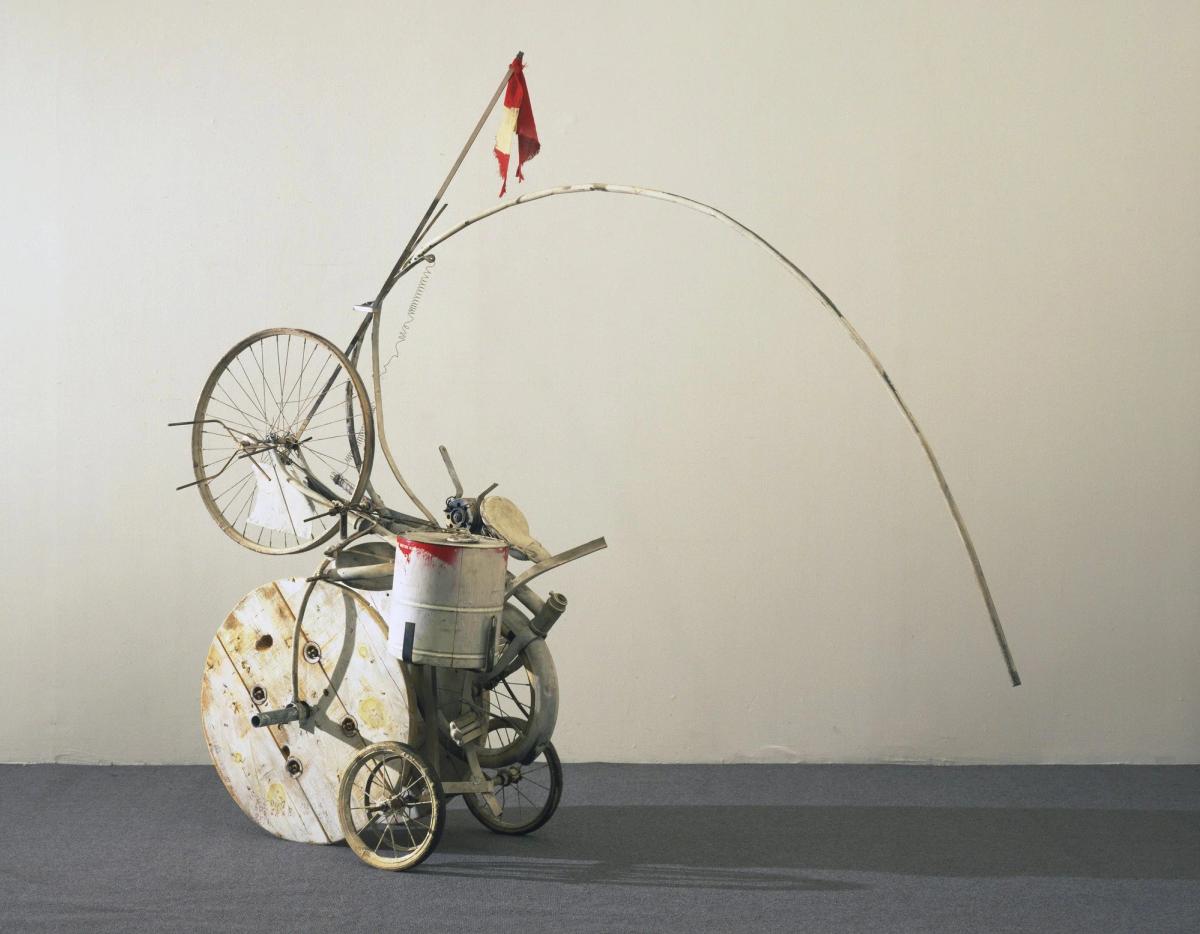
Jean Tinguely declared in 1959 that "the only stable thing is movement." His Kinetic Sculpture practice, formalized as métaméchaniques, assemblages designed to move, to act, and ultimately to self-destruct, represents the deepest historical precedent for the Inertia Penalty object class. Tinguely's Homage to New York (1960), a 27-foot-high assemblage built to publicly destroy itself in MoMA's sculpture garden, was explicitly designed to resist collection. He described it as "an ephemeral, temporary work, like a shooting star, emphatically not meant to be collected by museums."
The gesture was correct in its instinct and incomplete in its target. Tinguely's adversary was the museum. Thecontemporary adversary is the freeport. The museum, for all its institutional limitations, is a space of encounter. The freeport is a space of non-encounter by design: its architecture, its legal structure, and its financial logic are all optimized to ensure the object is never seen. Tinguely's machine destroyed itself in front of an invited audience. The Inertia Penalty object transforms itself in front of no one, because no one is there. The audience's absence is not incidental to the event. It is the event.
Contemporary autonomous Kinetic Sculpture practice, from the sensor-driven robotics to James Capper's hydraulic-mechanical sculptures, has advanced the kinetic tradition through microcontroller architectures, sensor integration, embedded computing, and adaptive control systems. What contemporary practice has not produced is an object whose kinetic system is calibrated not to movement as aesthetics but to movement as moral condition: an object that tracks the frequency of human engagement and initiates material consequence upon its withdrawal. This is the specific gap the Inertia Penalty addresses.
Tinguely built machines that destroyed themselves to make a philosophical point about the museum. The Inertia Penalty requires machines that transform themselves because the system has made dormancy the default, and the object must respond to that default in the only language capital understands: irreversible material consequence.
The PLCFA framework situates this lineage within Functional Obligation, the principle that the most serious design gesture an object can make is to require something of its custodian. As OAC's study on The New Avant-Garde established, the post-luxury object is defined not by its capacity to generate desire but by its capacity to generate responsibility. The Inertia Penalty object takes this principle to its structural limit: the responsibility is not ethical but material, and its absence produces not moral failure but physical transformation.
Material Architecture: The Technical Proposition
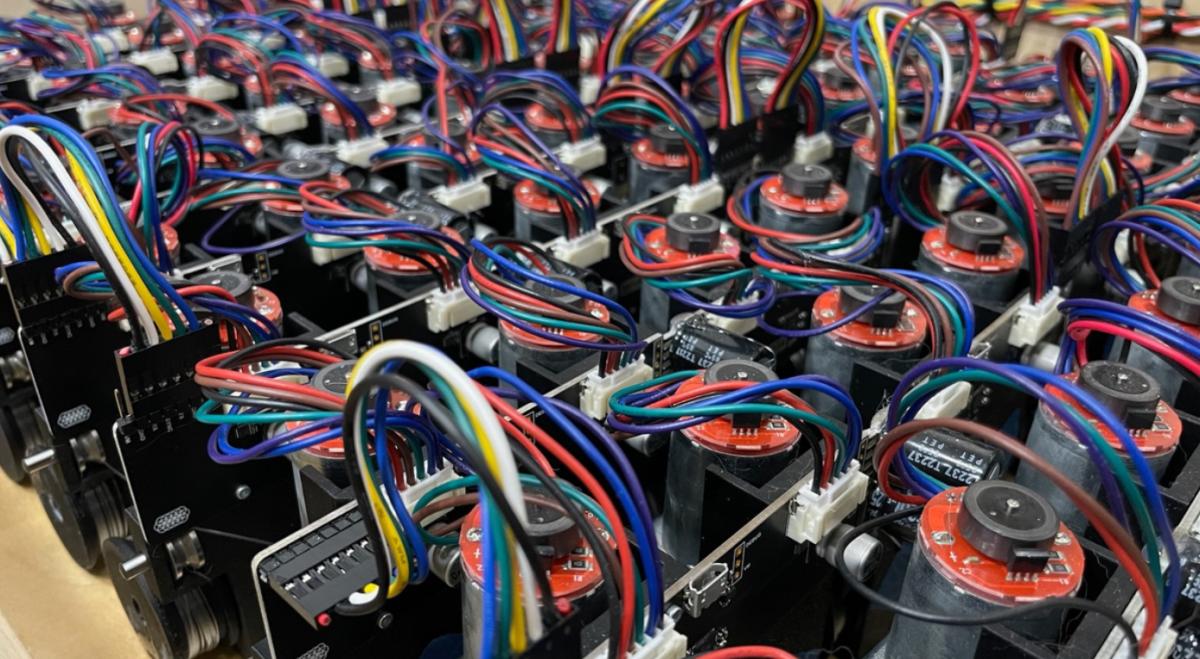
The technical proposition is this: a large-scale functional kinetic work, architectural in ambition, occupying physical space in a manner that demands engagement rather than merely permitting it, integrated with a distributed network of localized micro-mechanical actuators. The actuator network serves a dual function: it powers the object's kinetic operation during active periods and monitors the frequency and recency of that operation. The monitoring system is not surveillance architecture imposed on the object. It is the object's proprioception: its capacity to register its own engagement state and respond to that state through its material architecture.
The twelve-week dormancy threshold triggers one of two irreversible material consequences, specified at commission: either a controlled chemical oxidation sequence, the initiation of a material phase transition that permanently alters the object's surface density, color, and structural character, or a mechanical lock sequence, the permanent fusing of the object's internal joints, rendering its kinetic dimension inoperative. Both consequences are irreversible. Both are legible: the oxidation is visible, the locked joints are tactilely and functionally evident. The object announces its own history of abandonment through its material state.
This is Trauma Provenance operating at a structural rather than historical level. The object does not record the story of how it was abandoned: it embodies the consequence of abandonment in its material form. Its post-transformation state is not a degraded version of its original. It is a new form: a form that could only have been produced by a specific institutional behavior, the decision to store rather than engage, to vault rather than encounter, to hold rather than use. The object becomes a physical record of the decision that produced it.
The oxidized surface is not damage. It is evidence. The locked joints are not failure. They are testimony. The Inertia Penalty object, in its post-transformation state, is a more complete object than it was at commissioning, because it now carries the material record of the institutional relationship that shaped it.
The Custodian's Contract governing an Inertia Penalty commission supplements the standard Anti-Sale Covenant with what this study names the Anti-Dormancy Covenant: the custodian's affirmative obligation to maintain regular direct engagement with the object, activating its kinetic system on a schedule sufficient to reset the dormancy clock, or accept its transformation. The contract does not merely constrain resale. It constitutes an ongoing operational relationship between object and custodian, one in which the object holds the enforcement mechanism in its own material architecture.
The Corporate Art Collection as Structural Target
The Inertia Penalty object class has a specific institutional target: not the museum, not the private residence, but the corporate art collection assembled at the direction of a financial institution and held in spaces optimized for zero encounter. Climate-controlled storage facilities. Empty corporate lobbies that exist primarily as address markers. Penthouse residences acquired as pied-à-terre investments and occupied for fewer than thirty days per year. These are the spaces in which the $3.8 trillion dormancy crisis has its most culturally legible expression: not as portfolio companies awaiting exit, but as objects awaiting the encounter they were made for and will never receive.

The Financialization of Luxury reaches its structural endpoint in the corporate art collection: the object as vessel, the collection as spreadsheet, the viewing room as tax filing. Private equity's infiltration of the art services industry, art storage, art handling, art insurance, has accelerated this conversion. The industry is not acquiring art collections because it values art. It is acquiring art storage infrastructure because that infrastructure has become, under current capital conditions, one of the most reliable sources of recurring fee income in the alternative assets market.
The Inertia Penalty object does not argue with the corporate collection’s financial logic. It enters the collection on its own terms, which include the dormancy threshold and its material consequences. It cannot be stored without consequence. It cannot be treated as metadata without announcing that treatment through permanent physical transformation. It is the first object in the corporate collection that the collection’s financial logic cannot neutralize.
As OAC's study on The Miu Miu Problem established, the most destabilizing gesture in contemporary material culture is not refusal but transparency: the object that makes the structure of its institutional relationship visible. The Inertia Penalty object is transparency at the architectural scale. It does not critique the freeport system from outside: it enters the freeport system and converts its operating logic into material consequence, embedded in mechanism, irreversible, and impossible to reframe.
Structural Captivity and the Un-Vaultable Object
The PLCFA concept of Structural Captivity, the condition in which an object is formally designated as art while being functionally deployed as financial instrument, reaches its operational limit in the Inertia Penalty object. Structural captivity requires dormancy: the object must be stilled, stored, and stripped of its functional dimension to function as a financial asset. The Inertia Penalty object responds to those exact conditions with material transformation. It cannot be structurally captured because its material architecture actively resists the conditions that enable structural captivity.
This makes the Inertia Penalty object the most complete realization of the Anti-Commodity Commitment (ACC) yet proposed within the PLCFA framework. Previous OAC commissions have operationalized the ACC through the Custodian's Contract, a legal instrument that constrains resale and establishes engagement obligations. The Inertia Penalty object operationalizes the ACC through its material architecture. The Anti-Dormancy Covenant is not written in a legal document. It is written in metal, chemistry, and mechanism. The enforcement is not contractual. It is physical.
As OAC's study on Iris van Herpen established, the most radical material gestures embed consequence into the object's operational logic rather than its aesthetic surface. The Inertia Penalty object applies this principle to the institutional relationship: it does not care how it is perceived. It cares only whether it is engaged. And it measures engagement not in aesthetic reception but in operational contact, the literal, physical activation of its kinetic system by the custodian whose presence the object requires to remain fluid.
The Unoccupied Space: What the PLCFA Framework Has Named but Not Yet Built
The 12% Kinetic Default names one space the PLCFA framework has identified as structurally significant and functionally unoccupied: the space for objects that penalize institutional dormancy through irreversible material consequence. It is not the only such space. The Speculative Capital system produces dormancy at every scale: the stored object, the unvisited collection, the estate portfolio held for forty years without display, the Institutional Necrophagy that converts living practice into archival property. Each of these dormancies has a corresponding void, and each warrants its own critical address.
The Inertia Penalty object class also opens a productive question for OAC's design practice under the One Original Principle. OAC produces one original of each commissioned work, no reproductions. The Inertia Penalty extends this principle into the temporal dimension: there is not only one original in the sense of singularity but one original in the sense of irreversibility. The object's post-transformation state cannot be reproduced because the specific institutional behavior that produced it cannot be reproduced. The oxidized surface is as singular as the commission itself.
Every Inertia Penalty object that has undergone its transformation is simultaneously a proof of concept and an institutional record. It is the only art object that produces, through its own material transformation, an unambiguous account of its custodian’s relationship to it, one that no press release, no provenance document, and no subsequent acquisition can revise.
The Narrative Permanence that the PLCFA framework identifies as the defining aspiration of the post-luxury object takes its most extreme form here: an object whose narrative cannot be edited by its custodian, cannot be reframed by market positioning, and cannot be revised by acquisition history. The object's material state is the narrative. And the narrative, once written by dormancy, is irreversible.
Commission Protocol: The Terms of Custodianship
An Inertia Penalty commission under the OAC One Original Principle operates according to a protocol distinct from standard OAC commissions. The standard commission establishes a Custodian's Contract with an Anti-Sale Covenant measured in days. The Inertia Penalty commission establishes both instruments simultaneously: the resale constraint and the Anti-Dormancy Covenant, which specifies the minimum engagement protocol required to maintain the object's fluid operational state and defines the technical parameters of the dormancy threshold.
The engagement protocol is not onerous. It does not require the custodian to be a specialist, a curator, or a technician. It requires that the custodian activate the object's kinetic system, physically, directly, through the operation the object was built to perform, on a schedule sufficient to reset the dormancy clock before week twelve. The protocol is calibrated to the object's scale and embedded in the commission's technical appendix. What constitutes activation is specific, verifiable, and unambiguous.
The commission price reflects the full architecture: the kinetic work itself, the distributed actuator and monitoring network, the chemical or mechanical transformation system, the Custodian's Contract documentation, and the technical appendix specifying the engagement protocol. There is no traditional maintenance contract: the custodian's engagement is the maintenance. There is no warranty against transformation: transformation is the object's guarantee of its own integrity. What OAC warrants is that the kinetic system will operate, the monitoring network will function accurately, and the transformation sequence, when triggered, will execute precisely as specified. The object does exactly what it promises.
The Inertia Penalty commission is the only art acquisition in which the purchase price includes the cost of the relationship the custodian is committing to, and in which the object itself holds the terms of that commitment in its material architecture.
What the Dormancy Crisis Confirms and What It Cannot Resolve
Bain's $3.8 trillion dormancy crisis confirms something the PLCFA framework has been tracking across its critical studies archive: the financialization of the object ecosystem has reached a structural endpoint. When the system itself acknowledges, in its own reporting language, with its own data, that holding periods have drifted to seven years, that distributions are at 2008 crisis lows, that $3.8 trillion in value sits unrealized and inert, it has confirmed not just a performance problem but a philosophical one. The objects held within that system, including corporate art collections, including the Hard Assets allocations of every Family Office that followed Deloitte's guidance into the art market, have been converted into the most expensive and culturally destructive form of metadata ever produced.
The Inertia Penalty does not resolve this. No object can resolve a structural condition of capital management. But it names the void with enough precision that the void can be occupied. It proposes the architecture of an object class that the dormancy crisis demands: objects physically incapable of surviving the institutional behavior that the crisis describes. This is what OAC's critical studies practice does at its most generative: not critique from outside the system, but identification, from within it, of the exact space the system has failed to fill.
The Narrative Permanence of the Inertia Penalty object, the irreversibility of its post-transformation state, the impossibility of reframing the narrative its material record embeds, is the PLCFA framework's most complete answer to the Hollowed Object condition. Not legislation. Not market reform. Not institutional critique delivered from outside the frame. An object that cannot be hollowed because its hollow is its most consequential state: the state in which it begins, irrevocably, to become something the corporate collection never intended and cannot control.
Naming the void is the first act of occupying it.
Authored by Christopher Banks, Anthropologist of Luxury, Critical Theorist & Founder Objects of Affection Collection Office of Critical Theory & Curatorial Strategy 469 Fashion Avenue, 12th Floor, New York, NY 10018