Thirty Million Dollars to Postpone the Death of an Object Nobody Owns
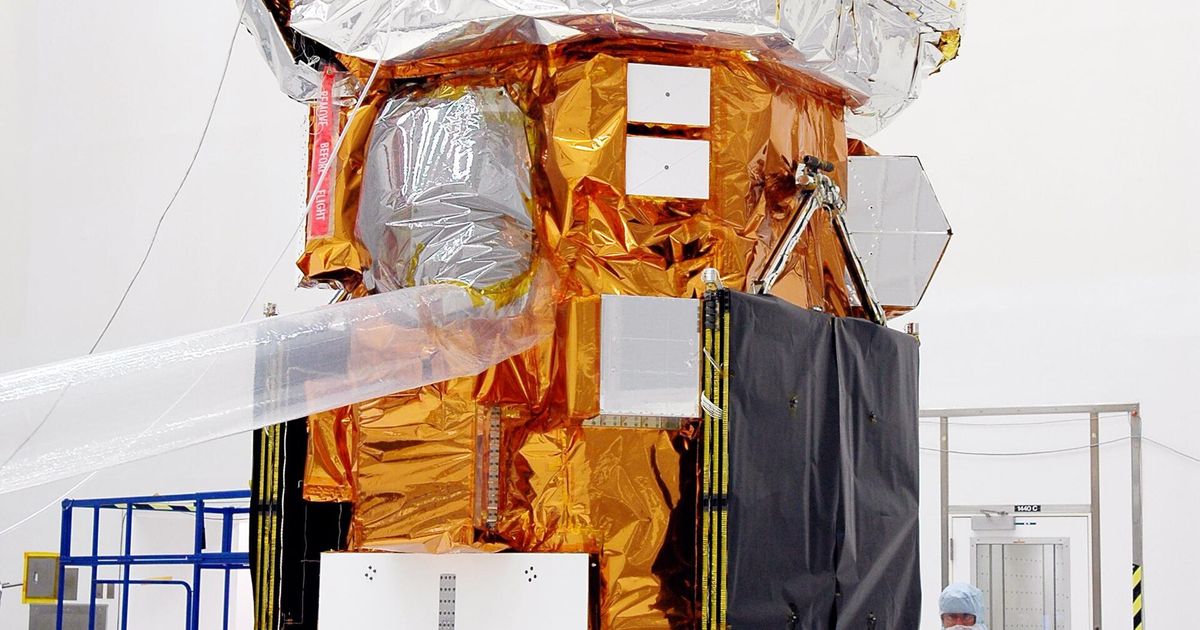
A telescope built to watch things die is dying, and a machine has been sent to catch it. There is no resale value here, no provenance premium, no collector. Strip the market out of custodianship and this is what is left.
Every object this institution studies sits inside a market. The scarf has a price, the bronze has an auction record, the bag has a resale index. The market is so reliably present that it is easy to mistake it for the reason anyone keeps anything.
In July 2026 a spacecraft with three robotic arms launched from beneath the belly of an aeroplane over the Marshall Islands, to catch a falling telescope that cannot be sold to anyone.
What is falling
The Neil Gehrels Swift Observatory has been in orbit since 2004. It is a gamma-ray telescope, and its distinguishing quality is speed: it can swing to point at a sudden explosion almost anywhere in the sky within minutes. NASA describes it as a first responder. Its subject is the most violent and briefest events in the universe, the deaths of large stars, which announce themselves for seconds and then are gone.
It is very good at its job and its job is watching things end.
Beginning in 2024, a period of strong solar activity heated and expanded the upper atmosphere. An expanded atmosphere reaches higher. Anything in a low orbit therefore meets more air than it was designed to meet, and slows, and sinks. In early 2025 NASA calculated that Swift would reenter and break up in the middle of 2026.
Nothing was wrong with the instrument. It had not failed, had not been superseded, had not run out of anything. The sky came up to meet it.
The distinction this forces
An object can end for two different reasons and the difference is the whole of this study.
It can become obsolete, which is a judgment. Someone decides the thing is no longer worth what it costs to keep. Obsolescence is an argument about value dressed as a fact about equipment.
Or it can be overtaken by a physical process that was always going to arrive and simply arrived on a schedule nobody set. That is what is happening to Swift. Its death was not decided. It was calculated.
Almost every object in the luxury and art markets dies the first way. A watch is not discarded because it stops; it is discarded because a story about it stops. This institution has spent a great deal of vocabulary on that, and Swift is the control case: an object whose end has nothing to do with what anyone thinks of it.
What is being spent
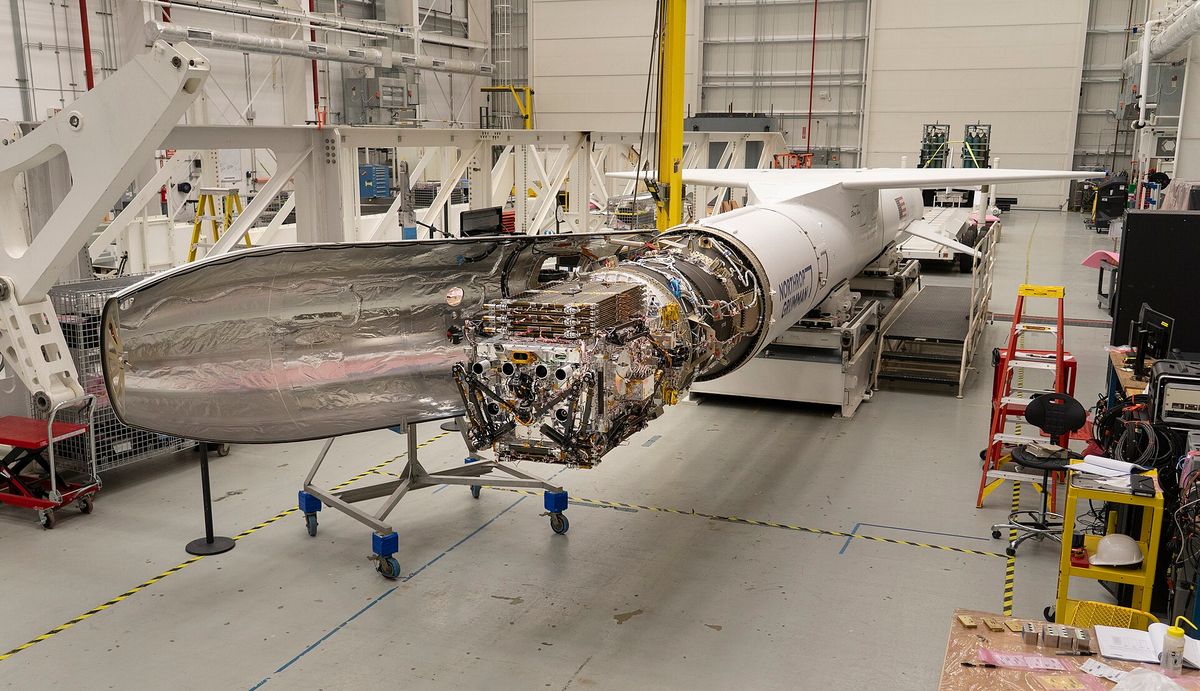
NASA is paying about thirty million dollars to a private company, Katalyst Space Technologies, selected in September 2025. Their spacecraft is called LINK. Northrop Grumman put it up on a Pegasus rocket, air-launched, in July 2026. It takes roughly a month to reach its target.
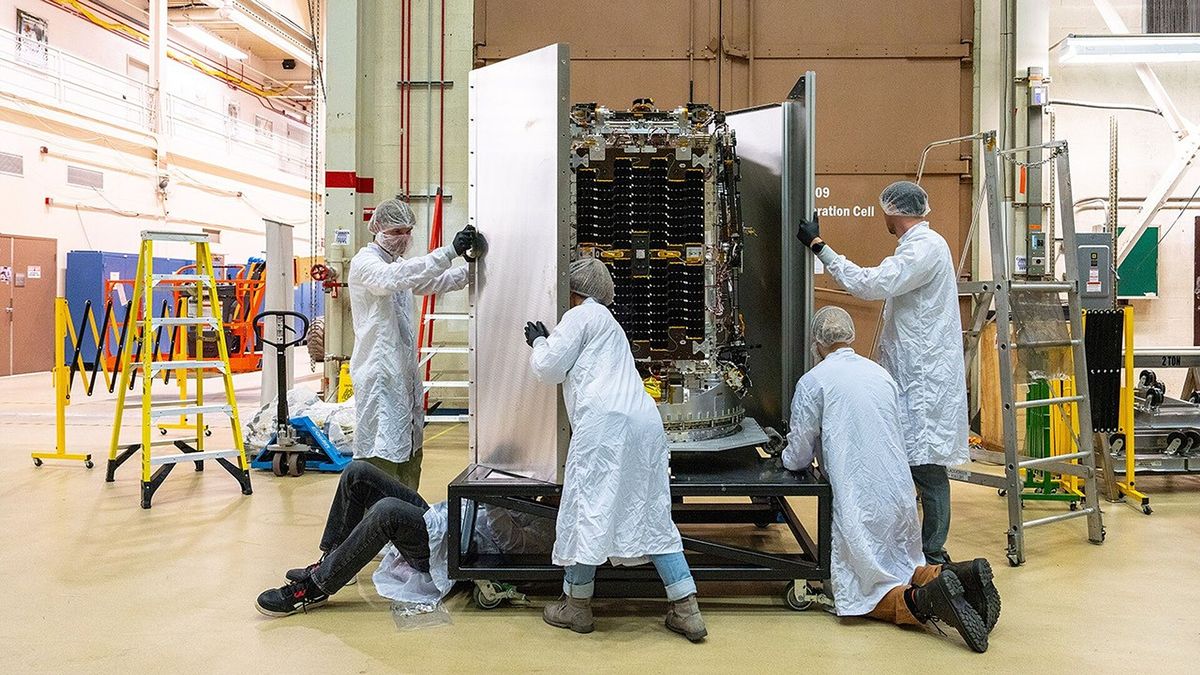
LINK will find Swift, circle it, take hold of it with three arms, and fire gentle thrusters to lift it back toward six hundred kilometres, approximately where it started.
Thirty million dollars, to move a twenty-two-year-old instrument upward.
The part that matters: it was never built to be caught
Hubble was designed for servicing. It has handholds, a grapple fixture, a berthing point. It was built on the assumption that people would come back for it.
Swift was not. There is no docking port, no capture ring, no fitting placed there for a future rescuer. It was built to be launched and then left alone, and the plan for the end of its life was that it would come down.
So LINK is not using an interface. It is improvising a hold on a surface that was never offered. It has never been done to a satellite not built for it.
That is a custodial act in the strictest sense this institution uses the term. Custody is not the same as ownership, and it is not the same as maintenance. It is the acceptance of an obligation the object itself did not make provision for. A Custodian's Contract binds a holder to an object beyond the terms of the sale, and the hardest version of that is exactly this: the thing gave you nothing to hold on to and you go anyway.
Where the market would be, there is nothing
Take the inventory this institution would normally run.
Resale value. None. Swift cannot be sold. There is no secondary market in orbiting instruments, no buyer, no auction house, no reserve.
Provenance premium. None that anyone can realise. Swift has an extraordinary record: two decades of catching stellar deaths as they happened. In any market this institution studies, that record would be the asset. Here it converts into nothing at all.
Scarcity. Absolute, and worth nothing commercially. There is exactly one.
Speculative velocity. Zero. Nothing about Swift can be traded, so nothing about it can be traded quickly, and the entire apparatus this institution has built to describe objects accelerating away from their own materiality has no purchase on it.
Every mechanism that usually explains why an object is preserved is absent, and the object is being preserved anyway, at a price.
So what is the thirty million buying
Not the object. Nobody gets to keep it. Not an asset. It never appears on a balance sheet a collector could read. Not even permanence, since the rescue buys years rather than forever, and the same physics will come back.
It buys continued function. Swift is being saved so that it can keep doing the thing it does, which is to notice, faster than anything else in orbit, that something far away has just ended.
That is a valuation of use rather than of possession, and it is a rare thing to see priced. The market this institution studies almost never puts a number on use. It puts numbers on ownership, on rarity, on the story. Here is a number, publicly stated, attached to nothing but the continued operation of a working instrument.
The reason this belongs in a register about objects

Objects of Affection Collection holds that the objects are the evidence, and that the question underneath every study is why humans give meaning to things.
Swift is the cleanest available answer to a narrower version of that question: what remains of custodianship when you remove every commercial reason for it.
What remains is a decision that a thing which works should go on working, made by people who will never touch it, about an object that cannot be owned, sold, displayed, inherited or held. The obligation survives the removal of every incentive this institution normally finds underneath it.
There is a version of this study that ends by calling the rescue sentimental. It is not. Nobody is saving Swift because they love it. They are saving it because it is still the fastest instrument for its purpose and it would be worse not to have it.
That is the finding, and it is a little cold: the strongest case for custody in the record has no affection in it at all. It is the plain judgment that something functioning should be allowed to keep functioning, and that judgment turned out to be worth thirty million dollars to act on.
What this study does not claim
It does not claim the rescue will work. LINK has to find, approach, circle and grip an uncooperative object in orbit, and at the time of writing it has not yet arrived.
It does not claim this is a new kind of ethics. Museums, archives and conservators have spent centuries keeping things that no market wanted.
And it does not claim Swift is special. It is ordinary. It is a competent instrument doing steady work, and the ordinariness is the point: the case for keeping it is not that it is precious, only that it is useful and it is still here.