The Most Worn Birkin in the World Is the Most Valuable One
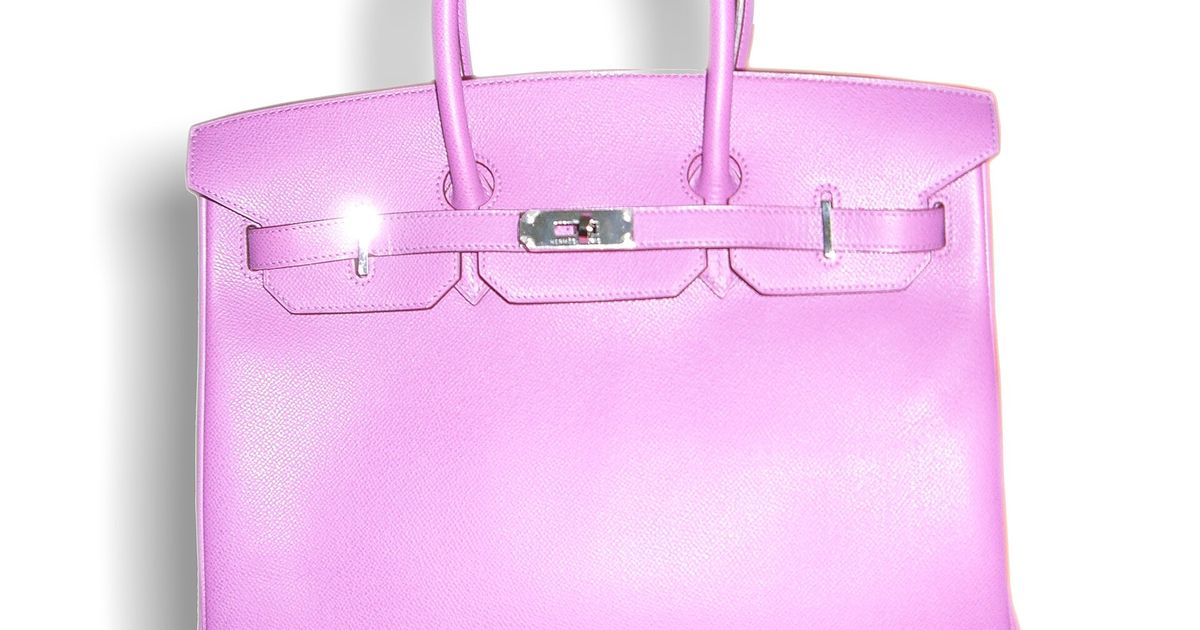
The thesis handed to this desk asked whether secondary-market velocity terminates material identity. The Birkin answers it twice, in opposite directions, and the dividing line is wear.
A thesis reached this desk in the plainest possible form: does secondary-market velocity terminate material identity? Put less formally, when an object trades fast enough and often enough, does the particular thing in your hands stop mattering, leaving only a price with a shape?
The Birkin is the right specimen because it is the most heavily traded singular object in the luxury economy. It has an index, a resale premium, a retention percentage, fractional-share platforms, and two decades of people arguing it outperforms the market.
It also produced, in July 2025, the most expensive handbag ever sold. That bag is battered.
The generic Birkin behaves exactly as the thesis predicts
Take the ordinary case first, because the thesis is right about it.
Rebag's 2025 report, as summarised by Robb Report, put Hermes average value retention at 138 percent, up 38 points on the previous year. Over the last decade Birkins appreciated 92 percent on the preowned market, against a 43 percent rise in retail prices over the same period. During 2025 a Kelly Mini II resold at 282 percent of its retail price and a Sellier Birkin at 183 percent.
The older claim is even flatter: a 2016 study by Baghunter compared Birkin values from 1980 to 2015 against the S&P 500 and gold and reported an average annual rise of 14.2 percent.
Read those numbers and notice what is missing from every one of them. No particular bag appears anywhere. The figures describe a category. They would be unchanged if every individual bag in the sample were swapped for another of the same model, size, leather and hardware, because that is precisely the assumption the numbers are built on.
That is the Hollowed Object in its ordinary working state. The object has become a unit. Its material identity has not been destroyed so much as declared irrelevant, which is a quieter and more complete kind of ending.
And it prices like a unit. By November 2025, on The Fashion Law's reading of the resale data, some of those same premiums had fallen back to roughly 1.4 times retail. An asset that moves like that is being valued as a position rather than as a thing.
Then the actual bag sold
On 10 July 2025, at Sotheby's in Paris, the original Birkin sold for 8.6 million euros, about 10.1 million dollars, to an anonymous Japanese buyer after a ten-minute contest between nine bidders. It was the bag's first market appearance in twenty-five years.
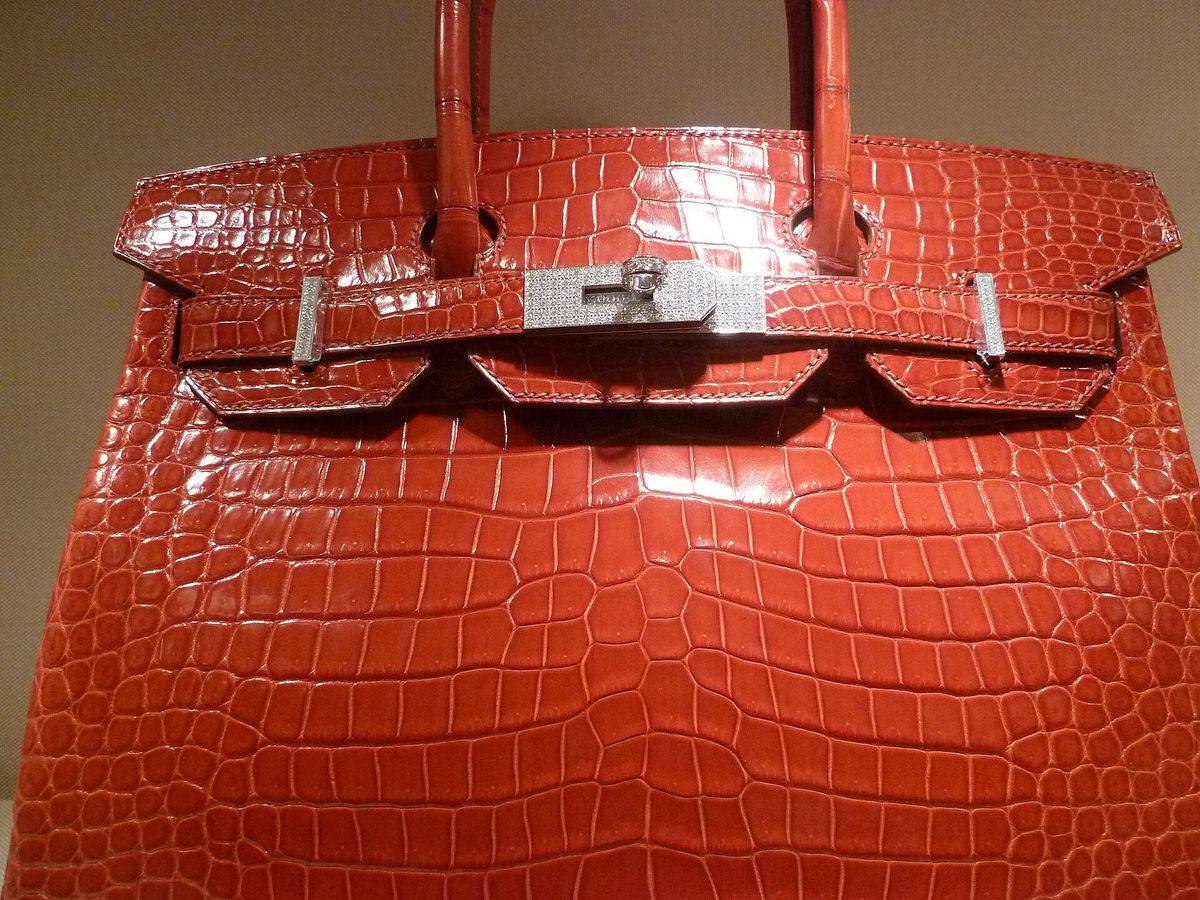
The previous record for any handbag, by Sotheby's own ranking, was a white Himalaya Niloticus crocodile Kelly 28 set with diamonds, which made 513,040 dollars in 2021.
The original Birkin sold for roughly twenty times that.
The record-setting bag is the worn one. It is scuffed. It carries stickers. Sotheby's own catalogue notes the nail clippers attached to the strap. It was used as a bag, daily, for years, by the woman the model is named after, and it looks it. The bag it beat by a factor of twenty was pristine, exotic, and set with diamonds.
Every quality that makes a Birkin liquid was absent. It could not be substituted, indexed, modelled, or compared to a comparable, because there is no comparable. The one thing it had in abundance was a history that could not be reproduced.
So the thesis answers itself, and the answer is a line rather than a verdict
Secondary-market velocity does terminate material identity, and it does so thoroughly, but only for objects that are substitutable in the first place.
Velocity requires interchangeability. To trade something quickly you must be able to say that this one is equivalent to that one, and the entire apparatus of retention percentages and resale indices is built on exactly that claim. Where the claim holds, the individual object dissolves into its category and the thesis is correct.

Wear breaks the claim. Not damage, and not age: use. A specific object that has been somewhere specific with someone specific cannot be swapped for another, so it cannot be priced as a unit, so velocity has nothing to grip.
This institution's term for the surviving quality is Material Singularity, and the July sale is the cleanest demonstration of it available in any market: the same name, the same house, the same model, and a twenty-fold gap between the object that had a life and the object that had only a specification.
What actually caps a Birkin, and it is not resale
The thesis as handed over used the phrase resale caps. It is worth being exact, because the mechanism is upstream of where that phrase points.
Hermes does not cap resale. What it controls is access at the point of first sale, and that control was tested in court.
In March 2024 a class action was filed in the Northern District of California by three plaintiffs, alleging that Hermes conditions the opportunity to buy a Birkin or Kelly on a sufficient purchase history, with sales associates steering customers toward scarves, shoes, jewellery and homeware first. The legal theory, as The Fashion Law set it out, was unlawful tying: that access to the desired product was being tied to purchases in a separate market.
In September 2025 Judge James Donato dismissed the case with prejudice. The Fashion Law's report of the appeal records that the plaintiffs have asked the Ninth Circuit to revive it, and at the time of writing that appeal is open.
So the scarcity is manufactured before the object is ever sold, and a federal court has so far declined to call that unlawful. Everything that happens afterwards, all of the velocity the thesis asks about, is downstream of a decision made at the counter.
That ordering matters. It means the resale market is not the place where the Birkin's value is decided. It is the place where a decision already taken is priced repeatedly and quickly, which is a different activity and a less interesting one.
Why this belongs in a register about objects
Objects of Affection Collection holds that the objects are the evidence.
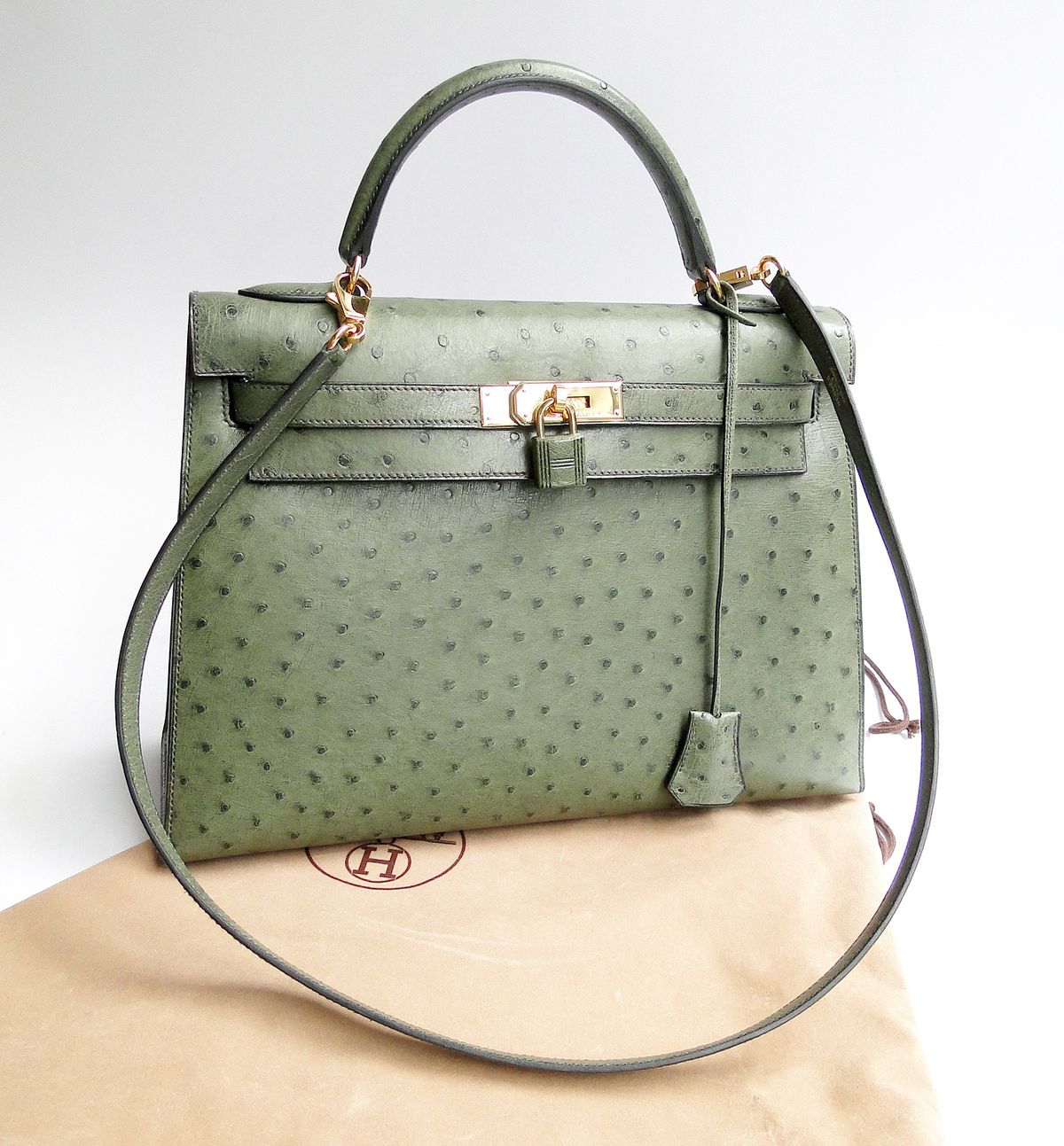
Here the evidence arrives as a matched pair, which almost never happens. Two Hermes bags, same house, same lineage, sold four years apart. One is the market's ideal object: flawless, exotic, set with stones, unused. The other is a working bag with stickers on it. The market paid twenty times more for the one that had been used, by a person, in an ordinary way, for years.
The usual reading of that sale is celebrity. It is not sufficient. Celebrity provenance is common at auction and does not ordinarily produce a twentyfold premium over the category record. What was on offer was narrower: the single object from which an entire product line descends, carrying the visible record of the life that made it worth naming.
The finding, stated as plainly as it can be: in the most financialised object market this institution studies, the highest price ever paid was for the least financialisable object in it.
That is not a comforting result and it should not be read as one. It does not rescue the ordinary Birkin, which remains a unit in a category and is traded as one. It establishes something narrower and more useful: that velocity has a boundary, that the boundary is drawn by unrepeatable use, and that the market itself will pay enormous sums to cross back over it when the chance appears.
What this study does not claim
It does not claim Birkins are a good investment or a bad one. The figures quoted are the market's own reporting on itself, and this institution has not audited them.
It does not claim the July result is repeatable. It is a single lot, and a category record set by one object is a fact about that object.
And it does not claim Hermes acted improperly. The tying claim was dismissed with prejudice and is on appeal; nothing here asserts an outcome, and the study takes no position on the merits.