The Certificate Is Now One of the Goods

A carmaker has registered the car, its structural parts, and its collectors' models as three separately token-authenticated products. Provenance used to be what happened to an object. It is being specified at manufacture instead.
A trademark filing is a dull document and it is one of the few places a company has to state, in advance and in writing, what it intends to sell.
In a pending international application held by Ferrari S.p.A. of Modena, filed in Italy on 5 May 2026 and internationally on 5 August, the goods list runs to several hundred entries. Buried among the tyres and the sun visors and the cup holders is a category that did not exist in any meaningful commercial sense a decade ago.
automobiles authenticated by non-fungible tokens [nfts]
It does not stop at whole cars. The same class registers structural parts of automobiles authenticated by non-fungible tokens, and spare parts and accessories on the same terms. A separate class registers model cars for collectors, authenticated by non-fungible tokens.
The car. The component. The scale model of the car. Each one registered as a distinct good whose authentication is part of what is being sold.
What the rest of the list makes explicit
If those entries were isolated they could be read as a lawyer future-proofing a filing. They are not isolated.
The same application registers downloadable virtual goods, enumerated as computer programs featuring cars, spare parts, clocks, stationery, clothing, footwear, eyewear, bags, art, games and toys, for use online and in virtual worlds. It registers digital tokens used with blockchain technology in the nature of data to represent a collectible item. It registers downloadable collectible images and videos authenticated by non-fungible tokens. It registers fan tokens, which the document defines as digital objects for voting in team polls, predicting results in competitions and races, checking in for competitions and races, playing games and choosing drivers.
And it registers this:
electronic devices for enabling the authenticity, ownership, availability and trading of digital assets and creations on computer software platforms authenticated by non-fungible tokens [nfts]
Read that as a sentence about objects rather than about software. Authenticity, ownership, availability and trading, four functions listed together as the purpose of one apparatus. Not four things that happen to an object over its life. Four features of a product.
This study is not an accusation and there is nothing improper here. Registering trademarks broadly is ordinary, lawful, and what any competent practice advises. The filing is interesting because of what it commits to paper, not because anyone did anything wrong.
Provenance used to be sediment
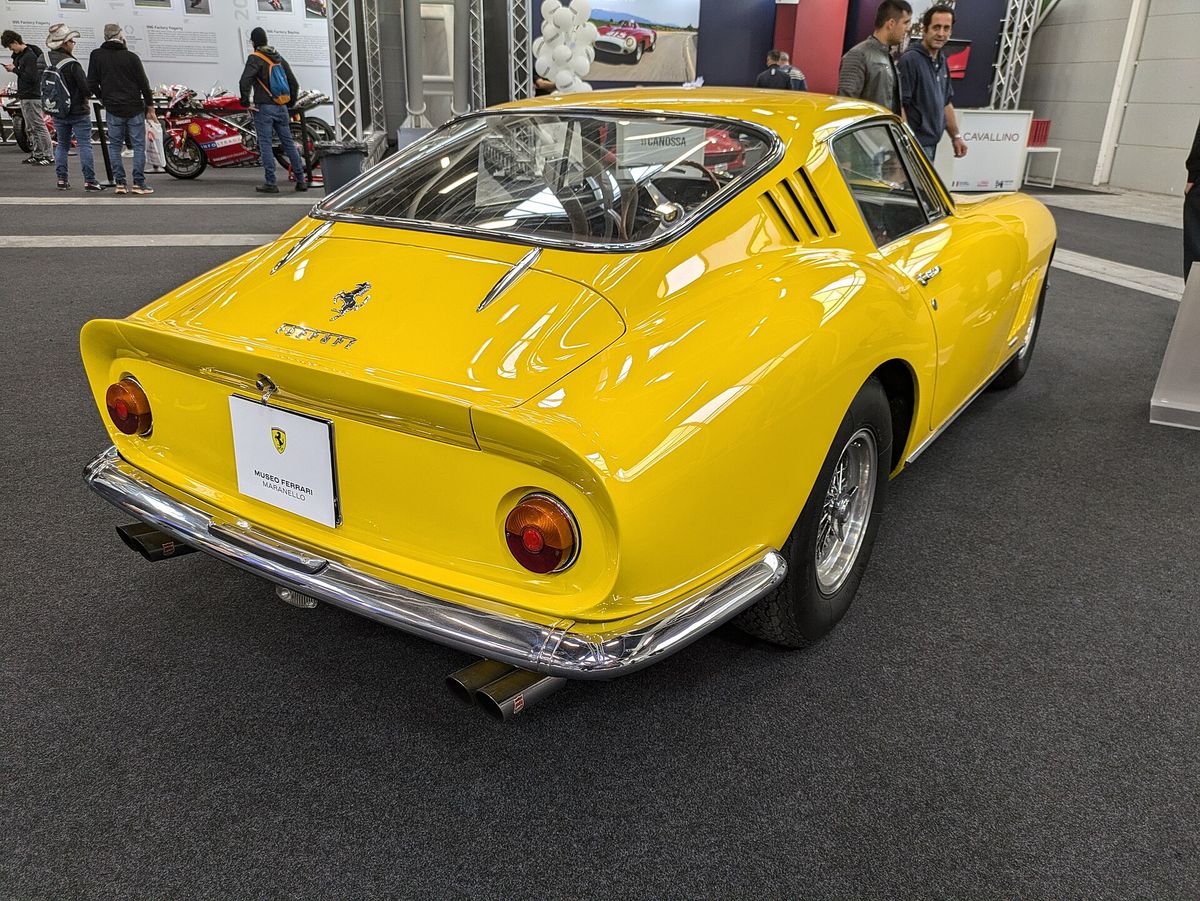
Set that against an object whose authenticity was assembled the old way, by accident, out of events nobody would have chosen.
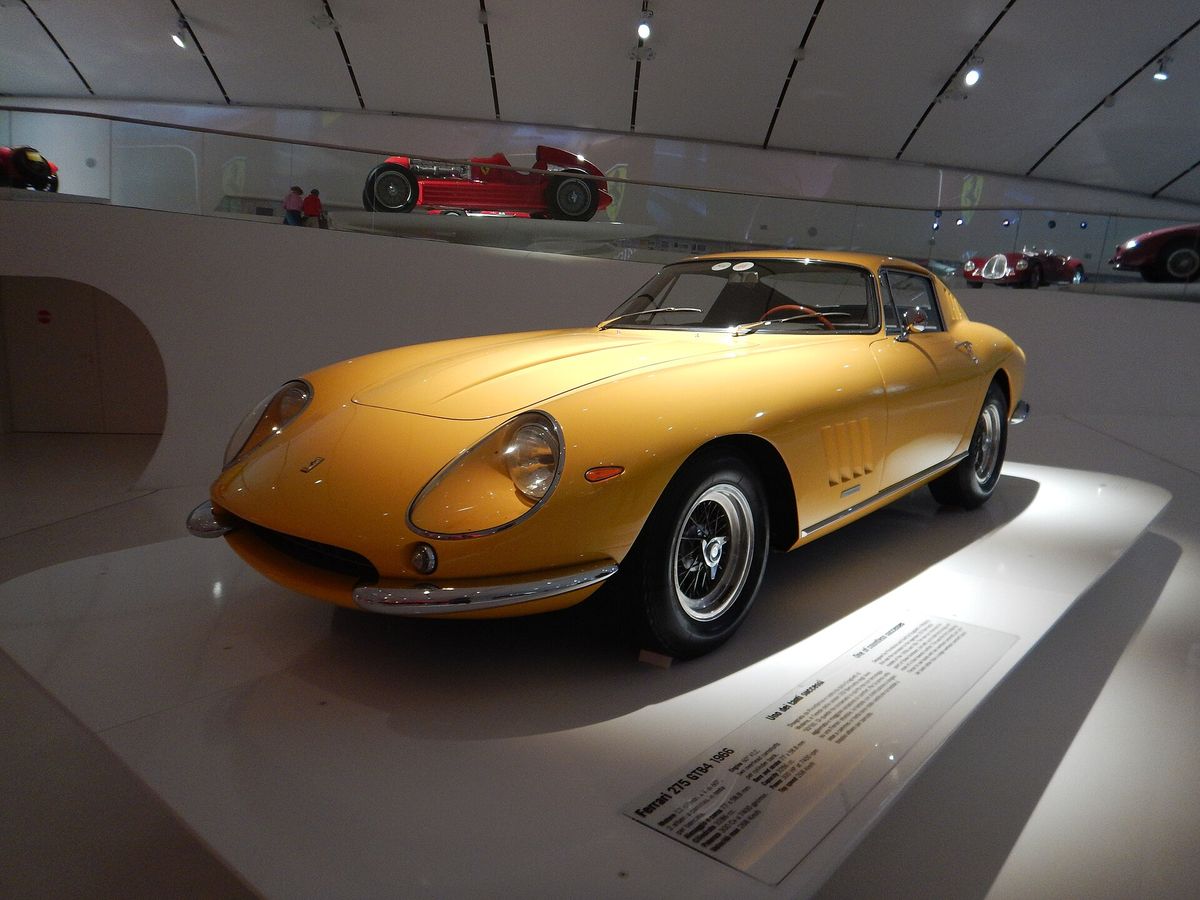
In 1966 Luigi Chinetti, Ferrari's United States importer and the founder of the North American Racing Team, argued that the American market wanted an open version of the 275 GTB/4 and that there was not one. He got his way. Scaglietti built the bodies.
Chinetti ordered twenty-five.
Ten were built. The remaining fifteen were never made, because the first ones would not sell. He had a hard time moving them in the United States and had to sell the final few at a marked discount.
The cars now discussed as among the most desirable objects the company ever produced ended their commercial life as slow stock, marked down to clear. One of the ten, chassis 10709, sold at RM Sotheby's in Monterey in August 2013 for twenty-seven and a half million dollars.
Nothing about that outcome was designed. The scarcity is the residue of a sales failure. The provenance is a record of what happened: who ordered them, who could not sell them, who bought one cheap, who raced it, who kept it, who let it go. It accumulated backwards, over decades, out of material that was embarrassing at the time.
That is what an object's authenticity has historically been made of. Not a property it shipped with. A history it acquired.
Why the token is not a stupid idea
It would be easy and wrong to treat a token-authenticated car as decadence.
Objects of Affection Collection issues a Custodian's Contract precisely because an object's obligations are not self-evident, do not travel on their own, and have to be written down and carried forward deliberately. Every provenance failure this institution has examined is a failure of the record to stay attached to the thing: a consignment whose payment nobody recorded, a returned bronze whose casters nobody counted, a score whose performances left no trace.
A certificate that cannot be separated from the object it describes would solve a real and expensive problem. Anyone who has tried to establish what happened to a thing forty years after the fact understands the appeal immediately.
So the objection is not that this is fake authenticity. The objection is more specific, and it is about direction.
A history and a feature are not the same thing
A history is made of what happened, including the parts that were unwelcome. A feature is a specification met at manufacture and verified against a database.
The first cannot be planned, and its value often comes precisely from the fact that nobody planned it. Chinetti's discount is now part of why those cars matter. Nobody could have designed that, and nobody at the time would have described it as an achievement.
The second can be sized, priced, allocated, and above all unbundled. That is not speculation about where this leads. It is what the goods list already does: the car is one authenticated good, the structural part is another, the collector's model is a third. Three separate certificates, three separate things to own, three separate things to trade.
An authenticity that ships as a feature is an authenticity that can be sold apart from the object. A history cannot be detached from the thing it happened to, which is the entire reason it is worth anything.
What a token can carry, and what it cannot
A token can carry identity with real rigour. This is the object; here is its unbroken chain of custody; here is proof it is the one it claims to be. That is a genuine advance over a folder of invoices and a dealer's word.
What it cannot carry is the part that made the NART Spider matter.
It cannot record that fifteen were cancelled. It cannot record that the last ones were discounted because nobody wanted them. It cannot record that the object was, for a period, a commercial embarrassment, which is the fact that makes its present standing interesting rather than merely expensive.
A record designed at manufacture records what the manufacturer knows at manufacture. Everything that gives an object its later meaning happens afterwards, to people the manufacturer never meets, and most of it is not the kind of thing anyone would choose to write into a certificate.
So the field is not being falsified. It is being narrowed, at the moment of creation, to the parts that can be specified.
The question this leaves open, which this study will not close
If authenticity becomes a property that objects ship with, what happens to the objects whose meaning came from what happened to them?
There is a tidy answer and it is too comfortable. The tidy answer is that both will coexist: the token handles identity, and history accumulates on top as it always has, and nothing is lost.
That may be right. It is also exactly what you would expect the comfortable answer to be, and there is a reason to doubt it. A record that is authoritative tends to become the record. When a certificate is issued at manufacture, is complete on its own terms, and is verifiable by anyone in a second, the messier account that has to be assembled from correspondence and auction catalogues and somebody's memory does not compete with it on equal terms. It becomes a hobby.
This institution holds that the objects are the evidence, and that an object is studied for what humans do with it, feel about it, believe it means. Nearly all of that is post-manufacture, unplanned, and frequently unflattering.
A certificate issued at the factory cannot hold any of it. It was never designed to, and there is no version of it that could.
The filing described here does not decide any of this. It is one company registering categories of goods, and most of them will probably never be made. But it is a company writing down, in a document it had to be precise in, that it intends to sell authenticity as a thing, alongside the object, and separately from it.
The ten cars in this study got their authenticity the hard way, out of fifteen cancellations and a discount. Nobody issued it. Nobody could have.