The Contestants Risk Nothing. The Artists Get a Price Record.

A BBC Two competition format turns art dealing into a game. The people playing it go home. The two emerging artists whose work is auctioned on air do not get to leave their results behind.
The Big Deal with Steph McGovern began on BBC One Northern Ireland on 12 August 2026 and on BBC Two the following night. Six episodes. Fourteen contestants in seven pairs, described as having little to no experience of the art market, competing to turn a profit dealing contemporary art. The winning pair takes fifty thousand pounds worth of British art. The presenter has described the format as the Apprentice for the art world, and added the phrase that matters most in this study: the deals are all real.
In the fourth episode the contestants source work from two emerging artists in Berlin, the Argentine painter Celeste Najt and the duo 44flavours, and sell it through an Artsy Auction. A vice president of Artsy sits as a judge on that episode.
What the criticism has already covered
The art press has responded on the ground it knows. Apollo's assessment is that the programme misunderstands what it is depicting: that collecting is close to defined by its exclusivity, that the show's opening promise that buying art is something we can all have a go at does not survive contact with what good work costs, that the auction economics shown are not those of a real primary market, and that the recurring suggestion you might strike gold is at best over-generous and at worst a delusion. Its summary judgment is that the result feels like a bigger-budget Bargain Hunt, and that before people want to collect, they want to know about the art.
That critique is sound and this study does not contest it. It is also, on its own account, silent on one question. It does not examine what the format does to the artists whose work is sold.
That silence is where this study begins, because the artists are the only participants who cannot walk away from the outcome.
An auction result is not a television result
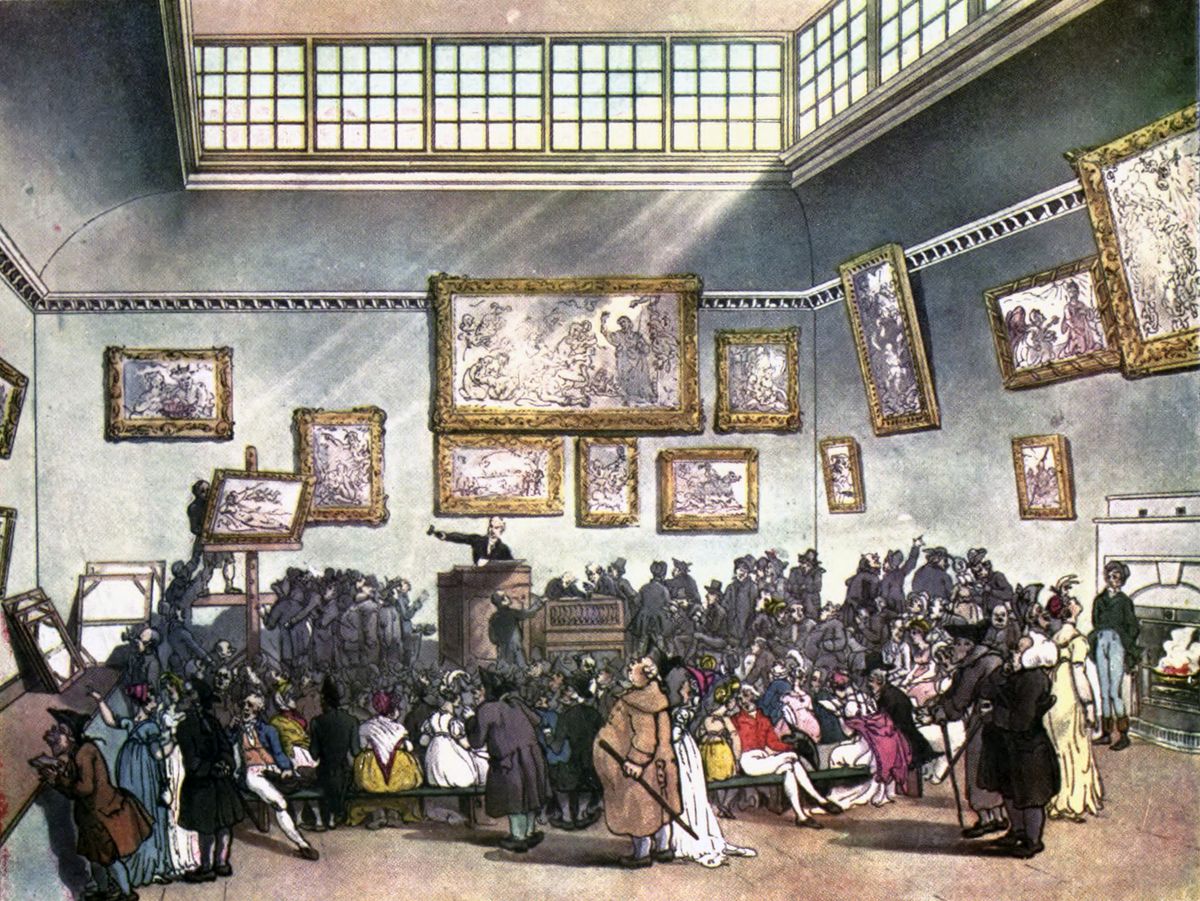
A contestant on a competition programme who prices badly, misjudges a room, or fails to sell has a bad episode. The format is built to absorb that. Failure is the content.
An artwork that goes to auction and performs badly does not have a bad episode. It acquires a number.
Auction results are compiled, published and kept. Artsy operates a free public price database of current and historical results. Artnet holds some eighteen million results with prices reaching back to 1985. Artprice covers more than seven hundred thousand artists across some thirty million results. These are the instruments that dealers, collectors, insurers and other auction houses consult when they want to know what an artist's work has done.
And the record is not inert. The empirical literature on art prices finds that the prices an artist's work achieved in the previous year are positively and significantly related to what it achieves now. A strong result propagates outward, lifting prices for other works in the artist's body of work and for new pieces sold through galleries and fairs. That effect is usually described in its flattering direction, as a halo.
The mechanism does not care about direction. A weak result propagates too, and for an artist with a thin auction history it propagates from a smaller base, because there is less prior record to dilute it. For an artist with no auction history at all, a first result is not one data point among many. It is the data.
The asymmetry
Set the two positions beside each other.
The contestants are amateurs by the programme's own description. They are given a budget they did not earn, a deadline they did not set, and an incentive to sell rather than to place work well. If they lose, they leave with a story. Their names attach to a television performance, which is a thing the culture forgets quickly and has a settled vocabulary for forgiving.
The artists are named, working, and early in their markets. Their work enters a real auction, because the deals are all real. Whatever it makes becomes a public number attached to their name in databases that will outlive the series, consulted by people who will never have watched it and will have no idea the number was produced under a production schedule by someone learning on air.
Nobody in this arrangement has done anything wrong. The BBC is making television. Artsy is running an auction on its own platform. The artists presumably agreed, and exposure on a national broadcaster is a real good that emerging artists are right to want. The contestants are doing their best in a format designed to make their inexperience entertaining.
The structure still allocates the durable risk to the two participants with the least market power and the least ability to absorb it.
What is actually being manufactured
The programme is not selling art. It is producing price events, and price events are provenance.
Everything this institution studies about an object's history assumes the history is a record of what happened to the object. Provenance is meant to be a trace. What a televised auction produces is a trace generated for the purpose of being watched, on a schedule set by an edit, with participants selected for their unfamiliarity with the market they are moving prices in.
That is the inversion worth naming. In the ordinary case, a price is an outcome and the record follows it. Here the record is the product, and the price is the thing the format needs in order to have an episode.
It is tempting to reach for the obvious verdict here, that the format showcases the worst of what happens to art when it meets entertainment. The more precise statement is that the format does not need any of its participants to behave badly to arrive there. It gets there by construction, from the ordinary operation of a competition structure applied to a market whose central instrument keeps permanent records about people who are not competing.
What this study does not claim
The Artsy episode has not aired at the time of writing. We do not know what the works made, whether the results were strong, weak or unremarkable, or what either artist thinks about any of it. No harm is asserted here, because none has been demonstrated.
What is demonstrated is the shape: real deals, real auction, real public record, named early-career artists, and a format in which the price is an outcome of a game played by people the programme describes as inexperienced.
If the results are good, the artists will have been well served and the argument here will be a description of a risk that did not land. That would be the better outcome and it would not change the structure that produced it.
The question worth returning to after the series is not whether the show was any good. It is what the numbers did afterwards, and whether anyone thought to look.