A Score Is an Object That Asks to Be Used Up
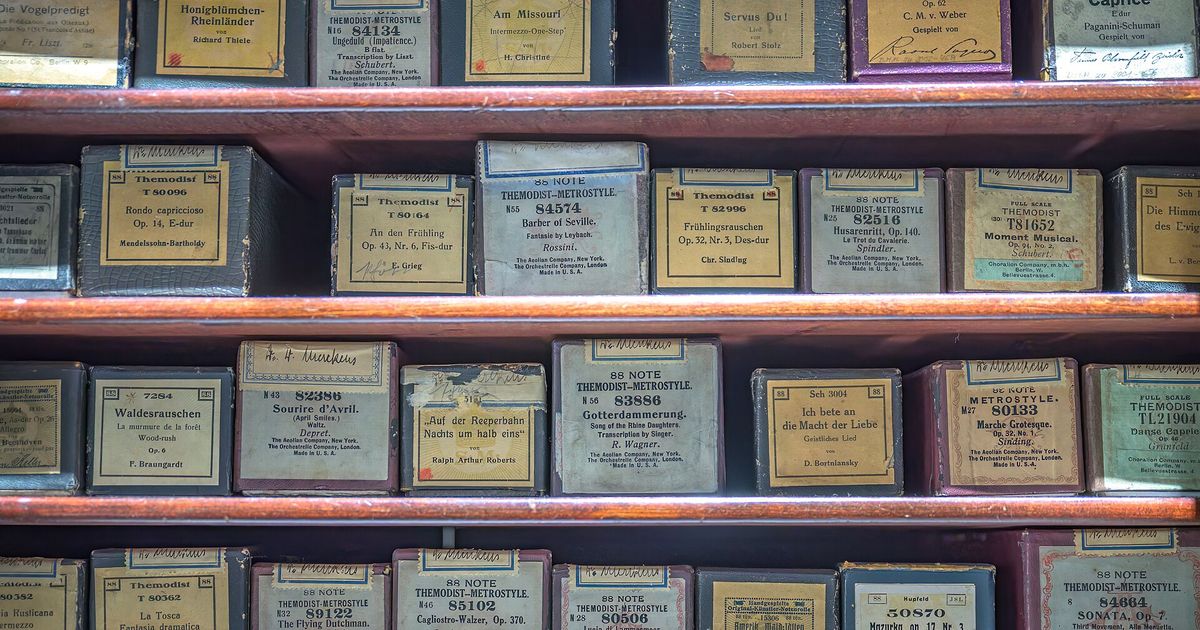
George Maciunas made work designed to be performed by anyone and priced so anyone could. Its most successful destination is a museum, which is the one place it cannot be performed.
A Fluxus event score is a short instruction. Some are scores in the ordinary musical sense. Some direct an action. Some describe how to set a situation up. And some, as the curatorial framing of the material has it, are the work itself, meaning that the paper carrying the instruction is not a document about the piece but the piece in its only permanent form.
That last category is a peculiar kind of object and it is the reason this subject belongs to an institution that studies the relationship between people and things. A score of that kind exists in two states. Unperformed it is a card with words on it. Performed it is the work. Nothing about the card changes between those states. Everything about what it is changes.
What Maciunas was building against
George Maciunas organised Fluxus as an explicit refusal of the art market. The instruments were cheap multiples, printed matter, and boxed sets known as Fluxkits containing instructional scores and small objects for participatory actions. The pricing was the argument. The most elaborate of the editions, a retrofitted attaché case, was advertised at one hundred dollars. The point was that the work could be owned and enacted by people who could not buy art.
It is worth being precise about what kind of claim that is. Maciunas was not making inexpensive versions of expensive things. He was constructing a category of object whose value could not be concentrated, because the object was a set of directions and directions can be followed by anyone holding them.
He also ran the enterprise as an administrator, which the scholarship has taken seriously rather than treating as a footnote. Colby Chamberlain's study of him is titled around the art of paperwork. The forms, the catalogues, the ordering systems and the distribution schemes were not the packaging around the work. They were an argument about how art might circulate.
The obvious story, and why the evidence does not support it
The expected conclusion writes itself. An artist builds an anti-market object; the market absorbs it; the refusal becomes a collectible; another hollowing.
The numbers do not carry that reading. A collection of eleven Fluxkits sold at auction in November 2014 for nine thousand three hundred and seventy five dollars, inside an estimate of eight to twelve thousand. That is roughly eight hundred and fifty dollars a kit, against an original advertised price of one hundred. Appreciation, certainly, across half a century. It is not a story about speculative capture, and a study that reached for one would be fitting the evidence to a house vocabulary.
What actually happened to the largest concentration of this material is more interesting than the story that did not happen.
Gilbert and Lila Silverman assembled roughly three thousand Fluxus works over three decades in Detroit: printed ephemera, multiples, drawings, sculptural objects, photographs, film. In 2008 the collection and its archives went to the Museum of Modern Art. Reporting on the transfer describes it as a full donation.
So the most complete gathering of an anti-market body of work was not sold into a market at all. It was given away, into the most established museum in the field.
The museum is where the instruction stops
This is where the subject turns, and it is not a criticism of anybody.
A museum's obligation to an object is to keep it. Handling is limited, condition is monitored, and the object is passed forward in the state it arrived. For almost everything in a collection this is exactly right and it is what makes later scholarship possible.
A score of the kind described at the top has a different relationship to that obligation. Its instruction asks to be carried out, and carrying it out generally involves handling, consuming, altering or using up the materials the instruction names. A boxed set of small objects for participatory actions is, read literally, a set of things to be participated with.

Preserved perfectly, the score is safe and the work is suspended. Enacted, the work occurs and the object bears the cost. The two duties are not in tension at the margins. They point in opposite directions.
Institutions know this and have developed responses to it, including performance from documentation, authorised re-realisations, and exhibition copies. Those are serious answers and this study does not pretend otherwise. But every one of them is a way of managing a conflict that the object itself creates, and none of them dissolves it. The conflict is in the design.
Two identical cards
Here is the question the material puts most sharply.
Take two copies of the same printed score, from the same edition, indistinguishable on any physical inspection. One has been performed forty times, in rooms, by people who followed it. The other has been in a flat file since 1965.
Are they the same object?
Physically, yes, and any conservator would treat them identically. On any account of an object that includes what humans have done with it, no. One has a history of being the thing it instructs. The other has a history of being kept.
Nothing in the apparatus records the difference. A provenance record traces owners and locations. It has no field for enactment. The card that was performed forty times carries no trace of it, and the institution holding it has no method of knowing.
That is not a defect in anyone's cataloguing. It is that the record was built for objects whose meaning does not depend on having been used, and applied to an object whose meaning depends on nothing else.
The finding, and where it sits
This institution has now examined three cases in which the provenance record is silent about the thing that decides what the object actually is.
In an unsettled consignment, the record traces custody and says nothing about whether the chain was paid for. In Benin, the record traces the object and says nothing about whether anyone can still make one. Here, the record traces ownership and says nothing about whether the instruction was ever carried out.
Three different silences, one shape. Provenance answers where a thing has been, with great rigour, and declines the question of what was done with it, whether the doing was completed, and whether the capacity to do it survives.
Maciunas built an object designed around being used, priced so that using it was possible, and distributed through a paperwork apparatus meant to keep it circulating. The most secure thing that could happen to that work happened to it. It went into a museum, where it is safe, catalogued, and not being followed.
A score that is never performed is not damaged. It is just paper that was once an instruction.