Maison Février: The Last Plumassier Inside Paris
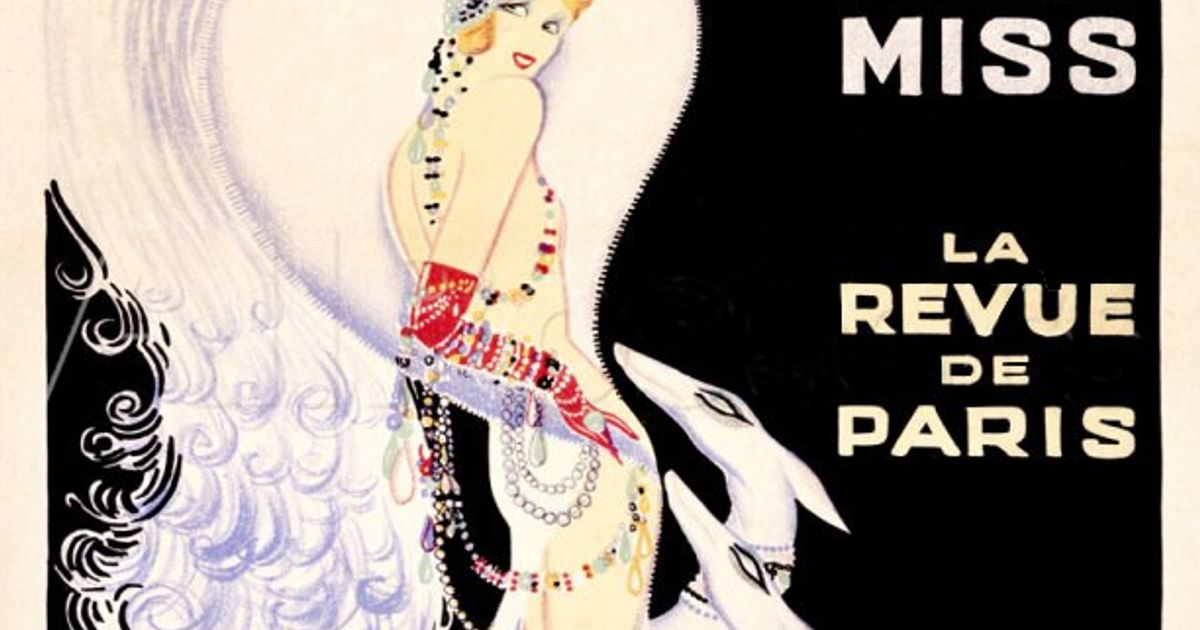
Founded in 1929 and still at the foot of Montmartre, Février survives because the Moulin Rouge bought it. The other great Paris feather house survives because Chanel did. That is the whole story of this craft.
In the 1890s Paris supported roughly eight hundred feather workshops employing as many as seven thousand people. By 1960 there were about fifty houses left. Today there are somewhere near ten plumassiers in all of France.
Maison Février is one of them, and it is the one that never moved.
What a plumassier actually does
Plumasserie is the working of feathers into ornament, and the word covers a set of operations that have not been mechanised because they cannot be.
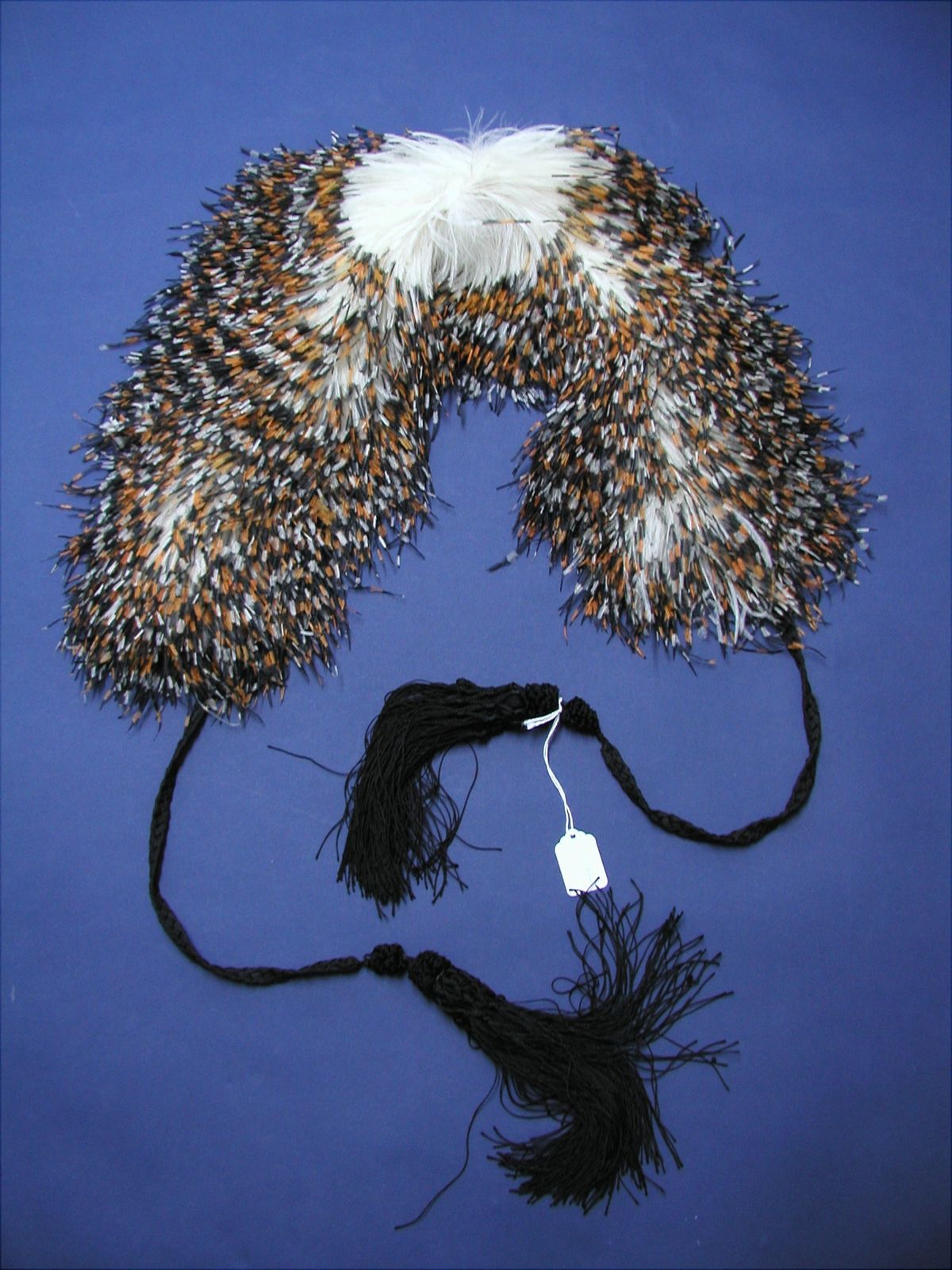
A feather is steamed to relax it, trimmed, heated to set a curve, and dyed. It is then attached, usually by hand, to other feathers that must agree with it in length, colour, curve and weight. None of these are standard. A feather is a grown object, so no two are identical, and every judgment in the process is a comparison the worker makes by eye and hand against the piece already built.
This is why the craft is labour in the strict sense this institution means: the time is not a cost attached to the object, it is the object's only route into existence. There is no version of a feather cape that is arrived at faster. The material refuses it.
It is also why the trade collapsed. When fashion stopped requiring plumes at scale in the twentieth century, nothing about the work got cheaper, because nothing about it could.
The house
Maison Février was founded in 1929 by Monsieur and Madame Février. It sits at the foot of Montmartre, at 82 Boulevard de Clichy and 11 rue Lepic in the eighteenth arrondissement, across roughly six hundred square metres.
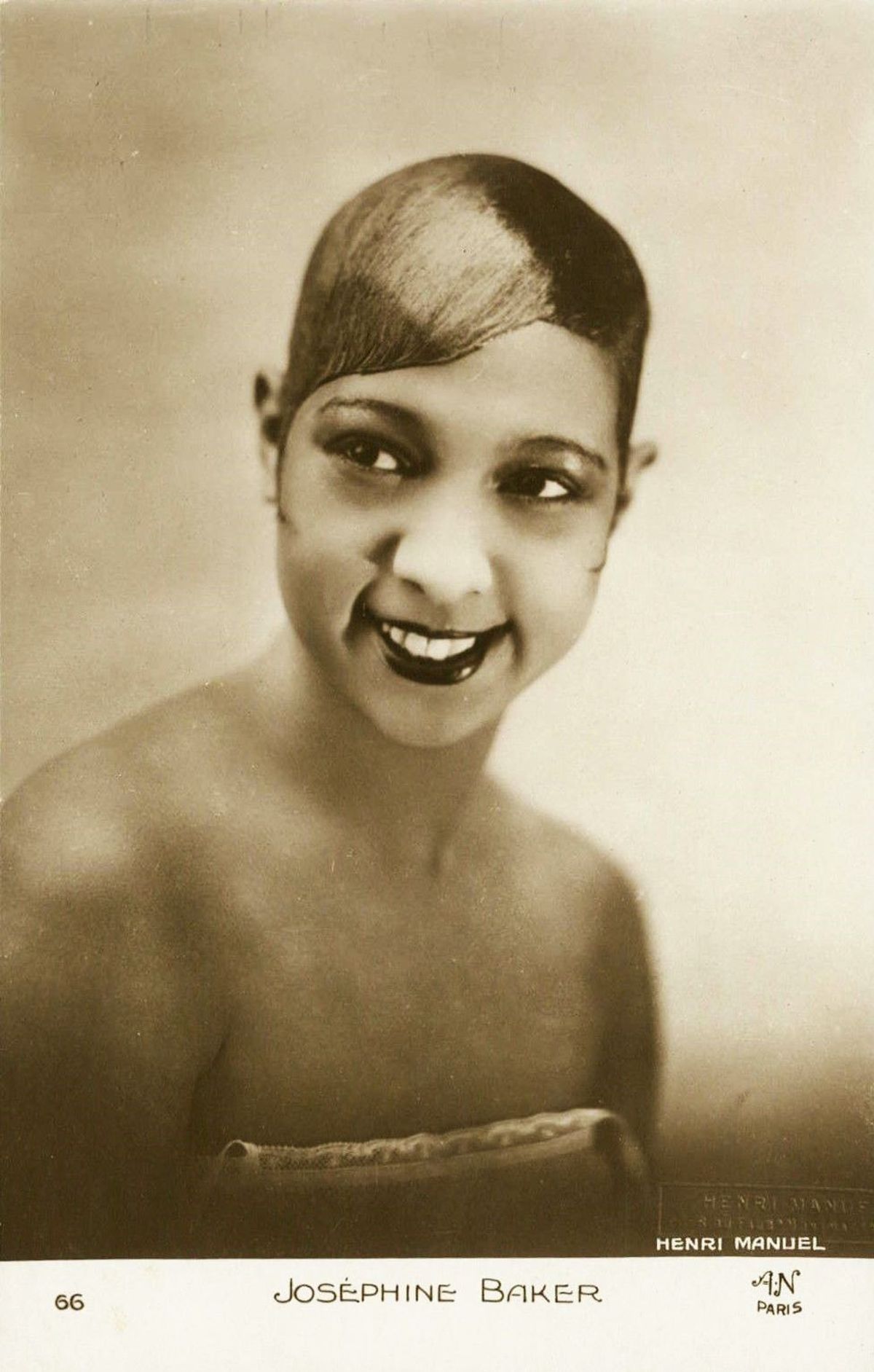
Its early reputation was built on the music hall. Mistinguett, the highest paid female entertainer in the world in her day, and Josephine Baker were clients in the early 1930s, and the association with the stage rather than with couture is the fact that determined everything that came afterwards.
The client list since has run in both directions: Yves Saint Laurent and Zizi Jeanmaire, and more recently Vanessa Paradis and Rita Ora, alongside supply to houses including Hermès and Louis Vuitton. The French state has recognised the house as an Entreprise du Patrimoine Vivant, a living heritage company, which is a designation rather than a subsidy.
The acquisition, and the comparison that explains it
In 2009 Maison Février was bought by the Moulin Rouge.
Set that beside the other survivor. Maison Lemarié, founded in 1880, was bought by Chanel in 1996 through Paraffection, the subsidiary Chanel built to hold specialist ateliers. Lemarié left its Paris premises in November 2018 for Pantin, and from 2021 has worked inside 19M, the purpose-built campus Chanel constructed for its métiers d'art on the northern edge of the city.
Both of the great Paris feather houses survive, and both survive because the customer bought the supplier. That is the finding, and it is not a heritage story. Independent plumasserie at this scale did not make it. What made it was being absorbed by a body large enough to carry the cost of the craft as an operating expense.
The difference between the two acquisitions is what the buyer needed.
Chanel bought capability. Paraffection exists so that a couture house is never dependent on an outside workshop for embroidery, feathers, flowers or buttons, and the ateliers it holds remain free to supply other houses. The result is real preservation and it is also brand infrastructure: the métiers d'art are a story Chanel tells, and 19M is that story given a building.
The Moulin Rouge bought its own costumes. Roughly three hundred feather costumes are worn on that stage every day, twice each evening, and the house makes something like three thousand metres of feather boa a year. That is not patronage. It is a supply chain with a theatre attached to the end of it.
And it is the reason Février is still in the eighteenth arrondissement. Its principal customer is nine hundred metres down the same boulevard.
The claim, stated precisely, because the precision is the point
Février describes itself as the last feather atelier in the world located in the heart of Paris.
Read quickly that sounds like puff. Read as written it is careful, and it is checkable. Lemarié is larger and older and is not in Paris any more; it moved to Pantin in 2018. Marcy, the third Paris name usually listed, works in high-end clothing and music hall. Independent plumassiers remain scattered across France, and Nelly Saunier, who works at the level of art rather than supply, is the best known of them.
So the claim is not that Février is the only feather atelier. It is that it is the only one of its kind still inside the city, and the qualifier survives contact with the facts because the alternative moved out seven years ago.
A precise claim that holds is worth more than a grand one that does not, and this house's own copy gets that right where a great deal of luxury copy does not.
What this says about post-luxury
Three things, and none of them are comfortable.
Craft at this level does not survive on its own terms. The romance of the independent atelier is mostly retrospective. Both survivors are subsidiaries. The question a maker faces is not whether to stay independent but which larger body will absorb them and what that body wants from the work.
Ownership by a customer preserves the practice better than ownership by an investor would, and it is still ownership. The Moulin Rouge needs boas the way a restaurant needs a kitchen. That need is more durable than admiration, and it is also narrower: it preserves the parts of the craft the stage requires.
And the state's designation does not pay wages. Entreprise du Patrimoine Vivant is a mark of recognition. France has also put plumasserie on a postage stamp. Recognition is not nothing, and it is not a business model. What kept the lights on was a cabaret with three hundred costumes to dress twice a night.
The version of this story usually told is that a rare craft was rescued by people who loved it. The more useful version is that a rare craft found a customer whose need for it was structural, and that the customer eventually bought the workshop to be sure of supply.
What this study does not claim
It does not claim Février is the last plumassier anywhere. It is not.
It does not claim the Moulin Rouge purchase was charitable or that Chanel's was cynical. Both kept a trade alive that would otherwise have thinned further, and the study takes no view on motive.
And the counts of surviving houses are approximate. Published figures disagree on how many remain in Paris, partly because Lemarié's move makes the answer depend on where the city is held to end.