Forty Million for Chassis 0: The Auction That Refuted Our Own Reading of It

On what a hammer price measures when the premium is waived and every dollar leaves the room
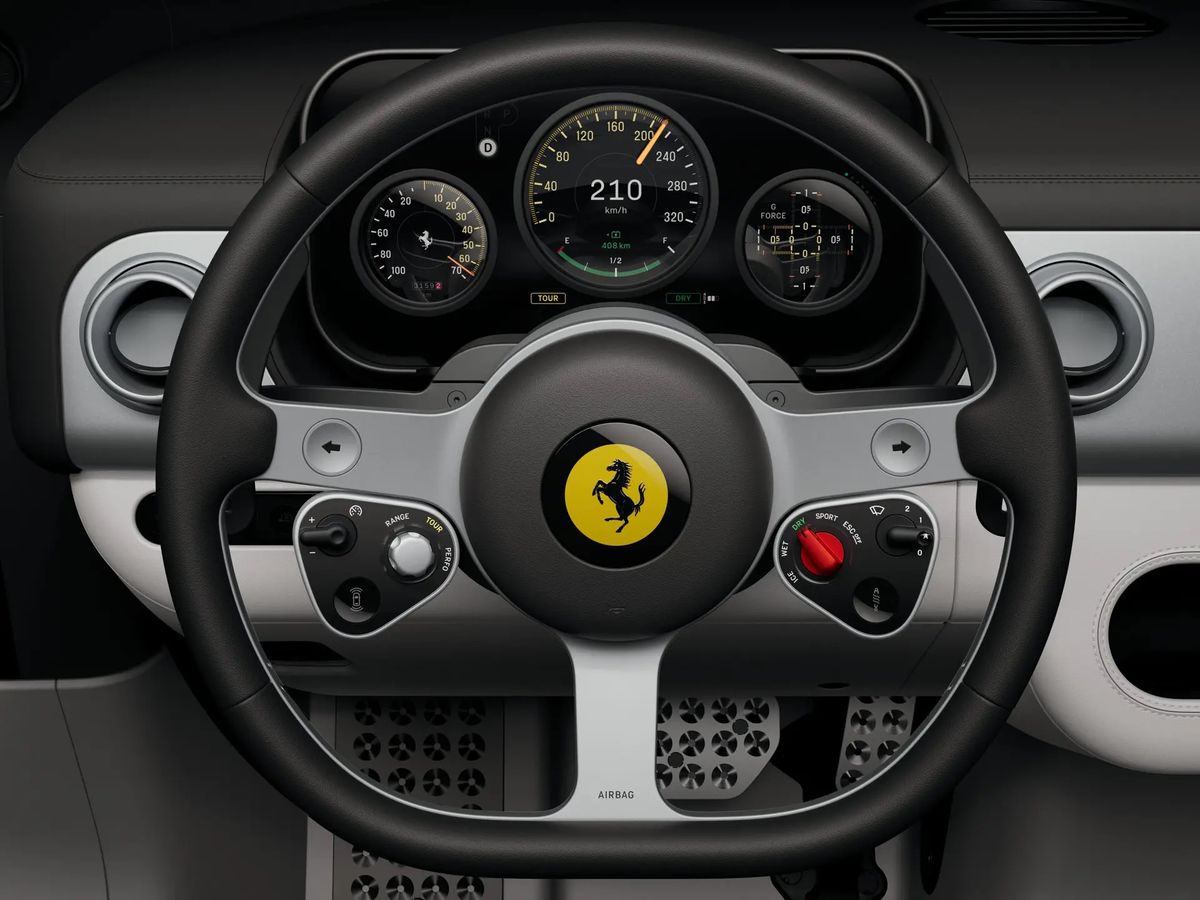
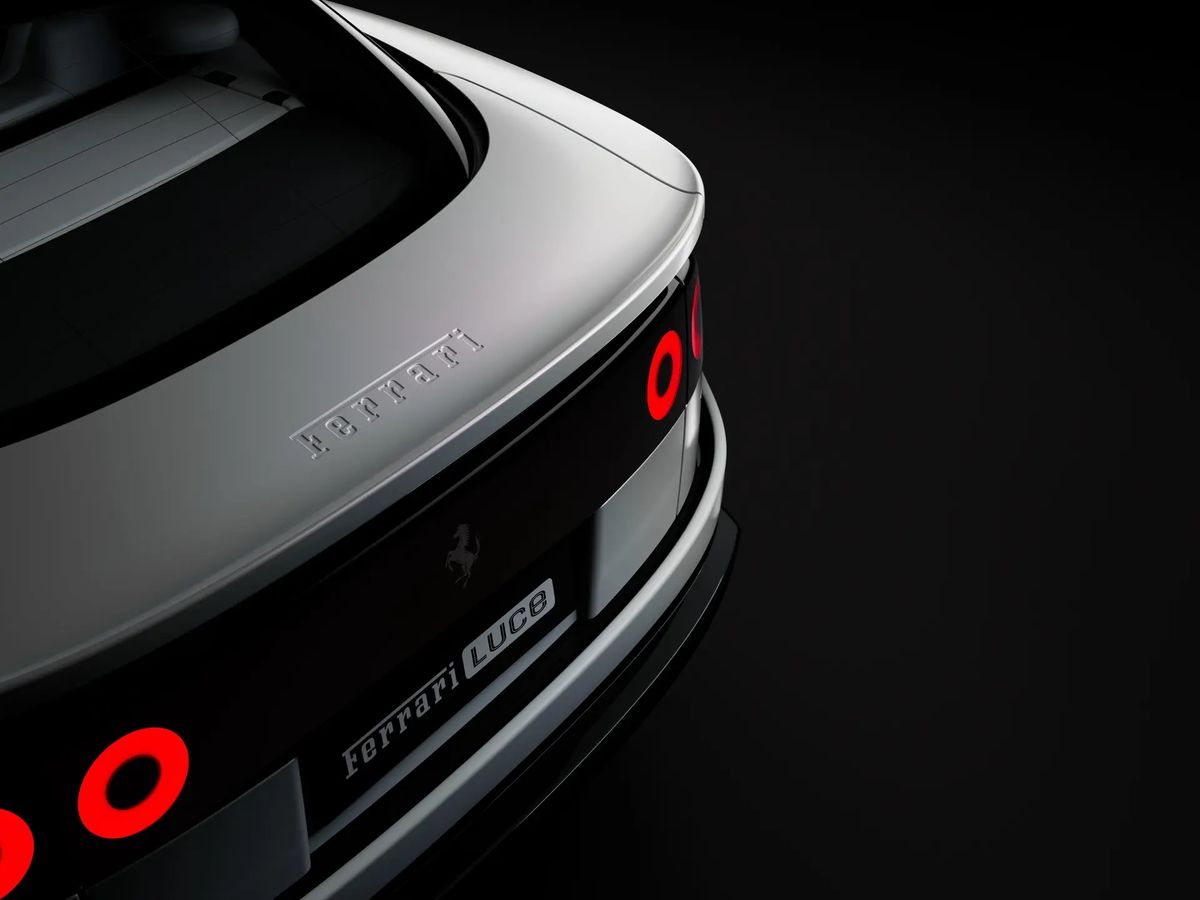
On the evening of Saturday 15 August 2026, at RM Sotheby's Monterey auction, lot 345 sold for forty million dollars. The lot was Chassis 0 of the Ferrari Luce, the first production example of Maranello's first electric car, configured by the Tailor Made division in a Madreperla semi-gloss finish whose iridescent pigment shifts from green to violet with the angle of the light. It was offered without reserve. The buyer's premium was waived. Every dollar goes to the Ferrari Foundation, a recognised 501(c)(3) public charity, for educational initiatives. The car itself is not yet in the buyer's hands; delivery is scheduled for the first quarter of 2027.
This institution published its reading of that sale on 17 July, a month before the hammer fell, under the title Chassis 0: The Ferrari Luce and the Auction of Inauguration. That study named the date correctly, named the mechanism it expected, and closed with a sentence that has now been tested: that the hammer would fall, a number would be recorded, and the gap between the light the car is named for and the depreciation it cannot escape would make the mechanism impossible to look away from.
The number came in at roughly thirty-six times the estimate. It is the practice of this institution to publish what it finds rather than what it predicted, and the finding is that the July study was half right in a way that is more useful than being wholly right would have been.
The Number, and the Three Numbers It Must Be Read Against
A hammer price is meaningless in isolation. Forty million dollars acquires its meaning only against the figures it displaced.
The Luce is a series production car with a list price reported between roughly six hundred thousand and six hundred and forty thousand dollars. The pre-sale estimate on Chassis 0 was in excess of one point one million, already close to double list, and that premium was the object of the July analysis. The result was forty million dollars: approximately thirty-six times the estimate, and approximately sixty-two times the price of an ordinary example of the same car.
So the sale distributed itself roughly as follows. Something on the order of six hundred thousand dollars is the car. Something on the order of half a million more is the Tailor Made specification and the inaugural chassis designation, which is what the estimate was pricing. The remaining thirty-eight point nine million dollars is not the car, is not the specification, and is not the serial number. It is something else, and identifying what it is constitutes the whole of this study.

What This Institution Said in July, and Where It Was Wrong
The July study argued that Chassis 0 was an unusually clean instance of Speculative Velocity, the rate at which an object's market price outruns any material or functional reason for it. It argued that Ferrari had released the origin point of the line at the moment of maximum controversy and minimum evidence because the argument was the product. It argued that the buyer was purchasing a position in a story other people would later wish they had occupied. And it argued that the charitable frame performed tactical friction: a genuine moral good placed at the surface of a transaction to slow and soften the reading of what lay beneath it. It stated, in a pull quote, that the gift is sincere and the gift is cover, and that in the contemporary luxury economy those two facts are not in tension.
The structural half of that reading survives the result intact and is arguably strengthened. The motive half does not survive at all.
Speculative Velocity Requires an Exit. This Has None.
Speculation is not a synonym for a high price. It is a specific structure: value assigned in advance on the expectation of resale rather than the fact of stewardship. The expectation of resale is not decoration on that definition. It is the load-bearing element. Remove it and the term does not apply, however large the number.
At forty million dollars, no resale thesis is available. The Luce is a series production model, not a limited edition; more will be built, and later cars will be better sorted. Its high-voltage battery degrades on a chemical schedule that no amount of custodial care arrests. The chassis designation cannot be transferred to a subsequent owner in any form other than the one it already has. There is no plausible future market in which a buyer recovers thirty-eight point nine million dollars above list for a car of this kind, and there is no sophisticated participant at Monterey who believes otherwise.
The waived buyer's premium sharpens this to a point. In an ordinary sale the auction house takes a percentage, and that percentage is part of what a speculator prices when calculating an exit. Here the house took nothing and the consignor received nothing, because the consignor is a foundation. The transaction was engineered so that the entire sum leaves the room. A buyer optimising for return does not participate in a structure built to ensure that every dollar is unrecoverable.
The July study read the estimate and inferred the mechanism from it. That inference was reasonable at one point one million, where a resale thesis is entirely plausible. It does not survive at forty. The error is instructive and worth naming precisely: a framework was applied to a predicted number, and the predicted number turned out to be the one figure in the analysis that was not evidence.
The Object as Receipt
If the thirty-eight point nine million dollars is not the car and is not a bet on the car, then it is a gift, and the car is what the gift came with.
This inverts the ordinary relation between an object and its price. In a normal transaction the price is a statement about the object: what it costs to make, what it is worth to hold, what someone else might later pay. Here the price is a statement about the buyer. What was acquired is a documented, dated, publicly witnessed act of giving, conducted in a room full of the only people whose recognition of such an act carries weight in that world, with a physical token that will carry the record of it permanently.
This is an Aura Transaction, but not the one the July study described. That study expected the conversion of a semiotic position, firstness, into a price. What actually occurred is the conversion of a price into a semiotic position, which runs the other way. The buyer did not pay forty million dollars because Chassis 0 was worth it. Chassis 0 became what it now is because someone paid forty million dollars for it in public, for a foundation, with the premium waived.
The buyer did not pay forty million because Chassis 0 was worth it. Chassis 0 became what it is because someone paid forty million for it in public, and could not get any of it back.
The object is therefore closer to a certificate than to a car. It is the durable, transferable, materially specific record of a transaction whose substance was entirely immaterial. This institution has argued elsewhere that the certificate is now one of the goods. Monterey has now produced the limit case, in which the certificate is a thousand-horsepower grand tourer finished in iridescent pearl, and the good it certifies is a donation.

The Charity Was Not the Friction. It Was the Transaction.
The July study's account of the philanthropy requires retraction rather than refinement, and this section is that retraction.
Tactical friction describes a small moral good positioned at the surface of a larger commercial act in order to make that act harder to criticise. The reading has real applications, and this institution stands by the concept. It does not apply here, and the arithmetic is what disqualifies it. A cover story that costs thirty-eight point nine million dollars more than the thing it is alleged to conceal is not a cover story. At that ratio the concealment is larger than the object by a factor of sixty-two, and a proportion that extreme is not a frame around a transaction. It is the transaction, and the commercial act is the frame.
The sentence this institution published, that the gift is sincere and the gift is cover, was written to describe a one point one million dollar sale. Applied to a forty million dollar one it becomes false, and it becomes false in the direction that flatters the analysis at the expense of the evidence, which is the direction a critical institution should be most suspicious of in its own work. The correction is recorded here rather than made quietly in the earlier study, because a retraction that travels less far than the claim it corrects is not a retraction.
What Survives from July
Three claims come through the result unharmed.
The first is that firstness is decreed rather than earned. Ferrari controlled when Chassis 0 entered the market, controlled the designation that made it first, and controlled the ceremony in which the designation was priced. Nothing about the result contradicts this. The result confirms it at a scale nobody anticipated, including this institution.
The second is the comparison to the 250 GTO, which now cuts more sharply than it did in July. A GTO's price rests on events that happened and cannot be revoked: races run, aluminium shaped by hand, a history no marketing decision can duplicate. Chassis 0's price rests on an event that happened in a saleroom on 15 August 2026 and likewise cannot be revoked, because the money is gone and the foundation has it. Both valuations are underwritten by irreversibility. They simply locate the irreversible event in different places, one in the object's past and one in the transaction's finality.
The third is the Hollowed Object reading of the powertrain, which remains true and now sits in an unexpected position. The battery will degrade. The management software depends on support the manufacturer alone controls. The car will age at the rate all electric objects age. What has changed is that this no longer threatens the value, because the value was never in the car. The donation is already complete and already permanent. The object can hollow out entirely and the thing that was actually purchased remains intact, which is a stranger outcome than the July study's warning and a more troubling one.
The Custodian's Contract Problem This Creates
The buyer does not have the car. Delivery is set for the first quarter of 2027, which means that the most expensive electric vehicle reported sold at auction currently exists, for its owner, entirely as a record.
This is precisely the condition the Custodian's Contract was designed for, and precisely the condition for which the auction market has no instrument. What is durable in this transaction is not the object but the documentation of what the object was given for, by whom, on what date, to which foundation. That record is presently held across an auction house's lot page, a foundation's acknowledgement, and press coverage. None of those is a provenance instrument. None of them travels with the car. In thirty years, when the battery has been replaced and the software has been superseded and the paint has been corrected at least once, the only thing that will make Chassis 0 worth anything at all is a chain of custody attesting to an evening in Monterey, and no party to the sale has undertaken to maintain one.
An auction house has therefore produced, accidentally and at the top of the market, the clearest available argument for binding obligations to the object rather than to the transaction. Material Permanence here is not a property of the aluminium or the cells. It is a property of the record, and the record is the part nobody has secured.
What the Price Measures
This institution's field of inquiry begins with a question about why humans give meaning to things, and holds that the objects are the evidence. Chassis 0 is unusually good evidence, because the ordinary noise has been stripped out of it. There is no resale thesis to disentangle, no reserve, no premium, no consignor with a position. What remains is a person who wanted, badly enough to pay sixty-two times list, for the giving to be attached to a specific and beautiful thing rather than transferred quietly by wire.
That is the finding, and it is not a cynical one. The gift could have been made anonymously and was not. The money could have moved without a car and did not. Someone judged that a donation needs an object to be fully real, and paid an enormous premium to give it one. This institution spends most of its published work documenting objects whose meaning has been hollowed out or manufactured. Here is the opposite case, and it deserves to be recorded as such: an object bought almost entirely for its capacity to carry a meaning that had nowhere else to live.
Coda
The July study closed by saying that Chassis 0 would not be the last inaugural artifact auctioned before it had settled. That remains true and is the least interesting thing that can now be said about it. The more useful conclusion is the one the number forced: that a price can exceed its object by a factor of sixty-two and, at that distance, stop being a statement about the object at all. Somewhere past the fortieth multiple the hammer stops appraising and starts witnessing. What was recorded in Monterey on 15 August was not what a car is worth. It was what someone was willing to make unrecoverable in order to be seen doing it, and the car is the thing they will be handed, in the first quarter of next year, to prove that they did.