The Objects Nobody Chose: What Probate Sees That the Market Cannot
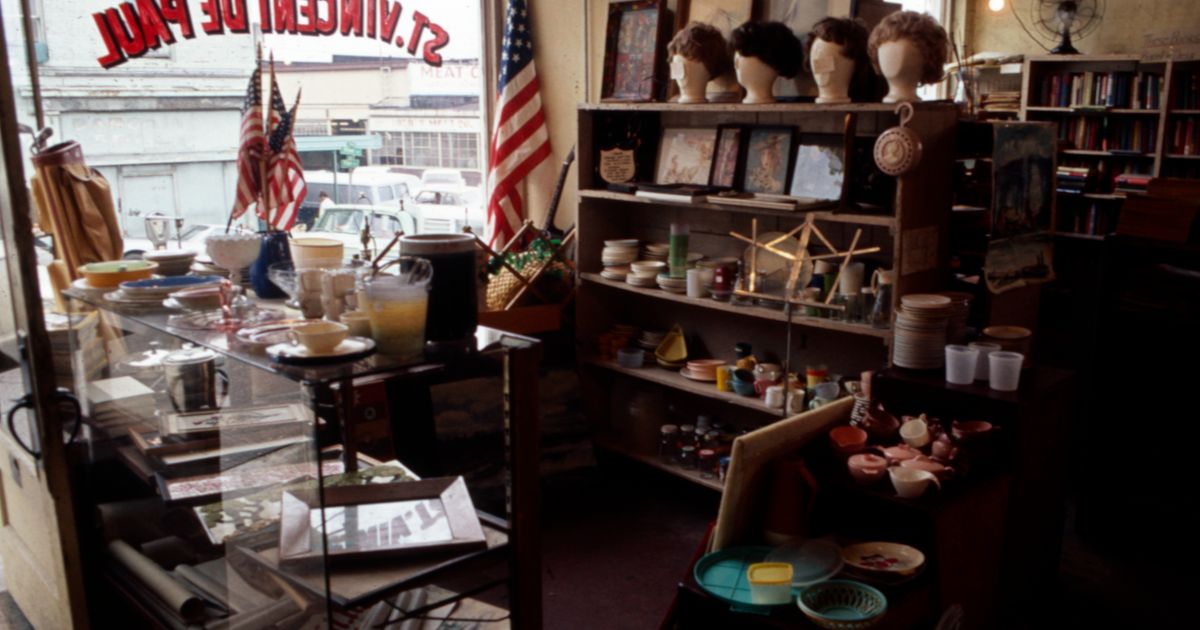
On the only institution obliged to price everything, and on what it finds in the house
Most of the objects in most homes were not chosen by the people living with them. They were inherited, given, left behind by a previous occupant, or arrived in a box after a funeral. The purchased object, which is the only kind the market can see, is a minority of what any household actually contains.
This institution has published extensively on objects at the moment of sale and has never published on this. The reason is structural rather than accidental: no transaction occurs, so no price is generated, so there is nothing for a market vocabulary to describe. A thing you did not buy, cannot value, and will not sell is invisible to every instrument this institution normally uses.
Except one. There is a single moment when the law requires that every object in a house be given a number, including the objects nobody wanted.
Probate is the only institution that must price everything
When a person dies, their estate must be valued. In the United Kingdom that means reporting the value of the estate to HMRC, and the duty extends to household contents: furniture, china, jewellery, the lot. Comparable machinery exists in most jurisdictions.
Consider what that obliges someone to do. A valuer walks through a house in which a person lived for forty years and produces a figure for each thing in it. Not for the things with buyers. For everything. The sideboard nobody will take, the dinner service for twelve, the piano, the shelf of figurines.
Every other valuation in the economy is voluntary and selective. An auction house appraises what it can sell. An insurer schedules what the owner asks it to. A dealer prices what they would buy. Probate cannot decline. It is a compulsory, exhaustive valuation performed on a population of objects that includes everything the market has already refused.
The market prices what somebody wants. Probate prices what is there. It is the only survey of objects taken without a buyer in the room.
And because the figure has tax consequences, it must be defensible. Guidance to executors is consistent on the point: contents must be assessed on realistic, evidence based figures, because both overvaluation and undervaluation carry consequences. The one place the law demands honesty about what a thing is worth is the place where nobody is buying.
What that survey found: a category that fell out of the world
Run that compulsory survey across a generation and it records something no sales figure could, because it captures the objects that did not sell as well as those that did.
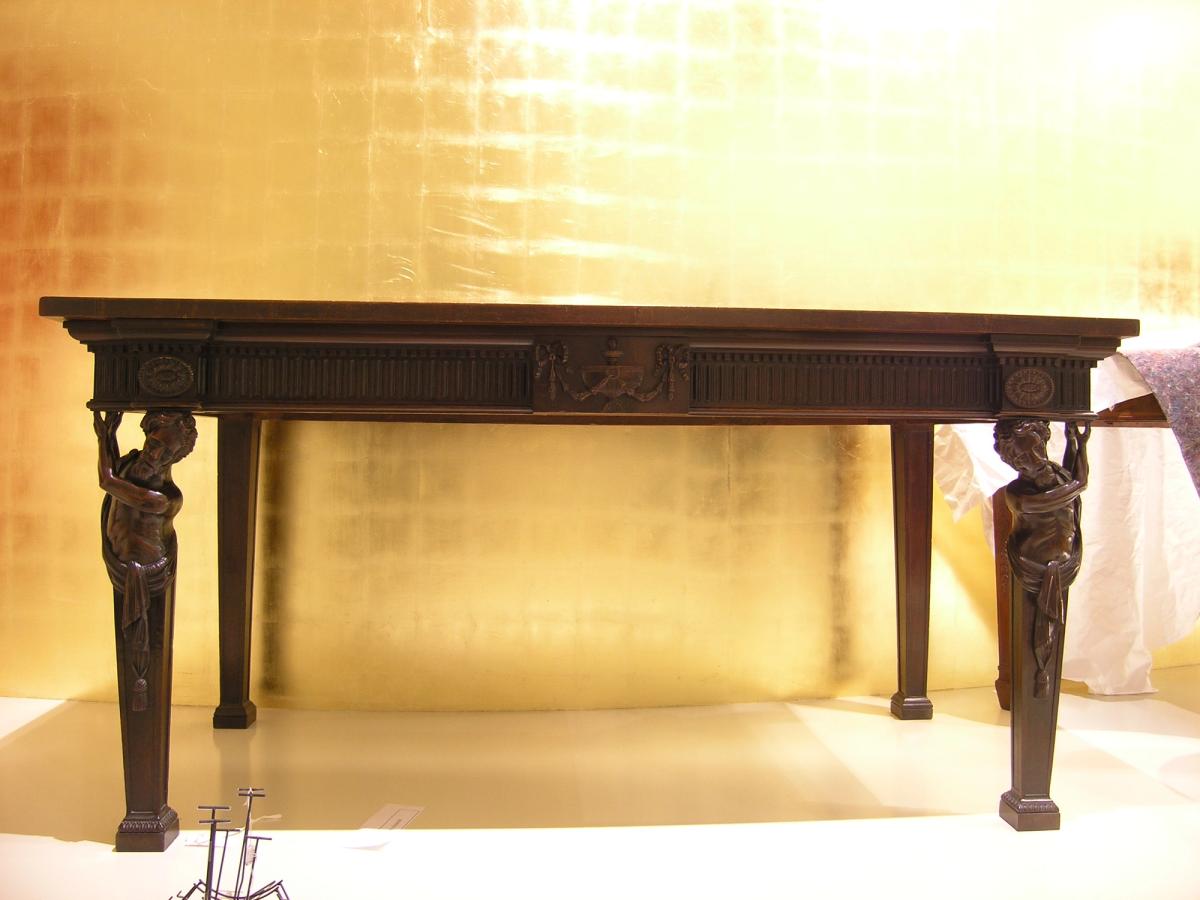
What it recorded is the collapse of what the trade calls brown furniture. Victorian and Edwardian mahogany: sideboards, dining tables, bureaux, display cabinets. Objects that were, within living memory, the most substantial thing a middle class household owned, made by hand, in solid timber, to last centuries.
A mahogany dining table insured for several thousand pounds in the 1990s may now fetch a few hundred. At the same auction, a plain teak sideboard from the 1960s can be in strong demand. The same is reported across the categories that used to constitute an inheritance: china, china cabinets, crystal, silver tea services, pianos, figurines.
Nothing happened to the objects. The mahogany table is the same table. Same timber, same joinery, same hours of work, same age, in most cases better condition than the teak that displaced it. Its material claim on value did not change by a single percentage point.
What changed is that the people who would have inherited it declined.
The finding, stated as plainly as it can be
This is the cleanest natural experiment available on the institution's own founding question, and it ran without anyone designing it.
Hold the object constant. Hold the material, the craft, the age, the condition, the rarity, the country of origin constant. Change only one variable, which is whether the next generation wants to live with it. The value moves by an order of magnitude.
Every account of value that locates worth in the object fails this test. Material quality did not move. Labour content did not move. Scarcity did not move, and in fact improved as pieces were broken up. The only thing that moved was a relationship, and the price followed the relationship exactly.
This institution holds that Material Singularity must be earned in the object rather than administered on paper. Brown furniture is the hard case for that position and it should be met rather than avoided: here is a class of object with an impeccable material claim and no value, because material singularity is necessary and is not sufficient. A thing can be unrepeatable, hand made, and honest about what it is, and still be worth nothing, because worth requires somebody to want to keep it.
Inheritance is acquisition without selection
The ordinary account of collecting is that a person selects. They see, they want, they choose, they pay, and the choosing is where the meaning is understood to enter.
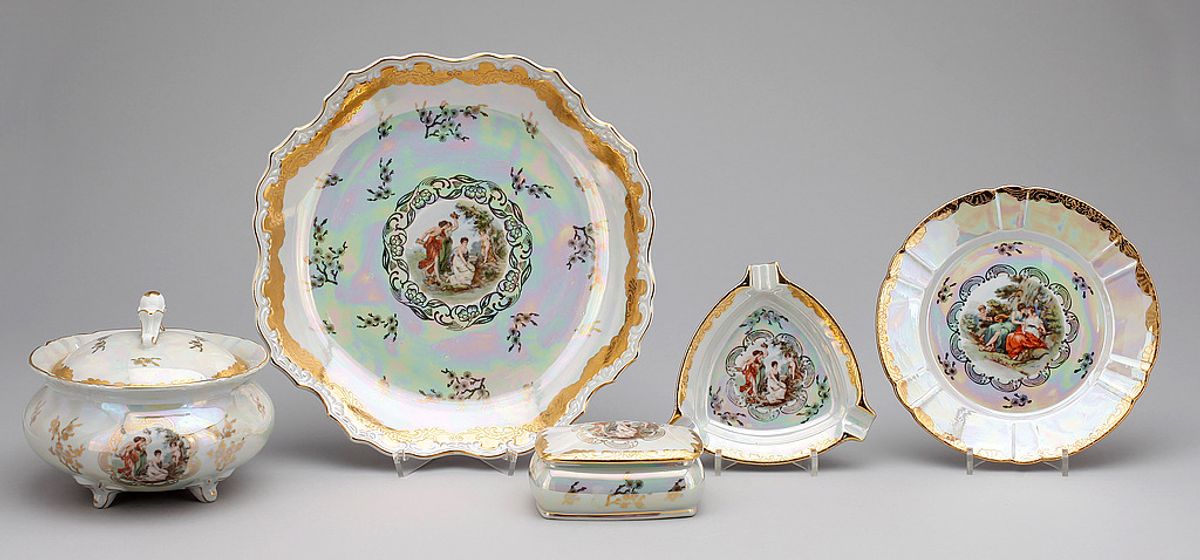
Inheritance inverts every term. The object arrives unchosen, often unannounced, frequently in quantity, and usually at the worst possible moment. The recipient did not want it, cannot assess it, has nowhere to put it, and in many cases cannot dispose of it without a feeling that is difficult to name and easy to recognise.
That difficulty is the entire subject. An object nobody chose can be almost impossible to discard, and the impossibility is not about the object. It is about what discarding would mean, done by this person, about that person, at that moment. Nothing in the object's material, provenance, condition or market value predicts it.
The trade that handles this is large, competent and almost entirely undescribed by anyone outside it: house clearance, estate sale, probate valuation, downsizing. These are people who spend their working lives in the rooms of the recently dead, deciding what is worth carrying down the stairs. They are the closest thing in existence to a profession of applied object meaning, and this institution has never spoken to one of them.
The last institution willing to take it also has rules
Below the museum sits the terminal market for unchosen objects, and it has acceptance criteria too.
Charity retail is a substantial trade with its own trade body, the association representing charity shops, and it is where most household contents ultimately go or fail to go. It does not take everything. Upholstered furniture without the correct fire labelling is refused. Electrical goods require testing before resale. Categories that will not sell are declined at the door because shelf space and volunteer hours are the binding constraint, and a shop that accepts everything becomes a warehouse.
The donor experiences this as rejection and it is nothing of the kind. It is the same calculation the museum makes, performed at speed and without a policy document: the cost of holding this object exceeds what it will return.
Which produces the sequence this study is actually about. An object is refused by the family, then refused by the market, then refused by the charity shop, and each refusal is rational and made by somebody with no ill will toward it. Nobody decides the thing is worthless. A series of separate parties each decline to carry the cost of keeping it, and the aggregate of those declines is indistinguishable from a verdict.
A probate valuer, arriving before any of that has happened, writes the only number that will ever describe the object while it is still in the room it lived in. The valuation professions hold that figure to an evidential standard. It is a small number and it is the most carefully produced one in the whole sequence, and this institution has argued before that the records made without a buyer present are the ones worth reading, in the study of what provenance does not record.
Every institution that receives objects has a written way of saying no
The heir's problem has an institutional twin, and the institutions solved it long ago by writing the refusal down.
A museum is offered far more than it can take. Unsolicited bequests, boxes left at reception, the contents of a collector's house arriving with the expectation of gratitude. The professional answer is an acquisition procedure and a collections development policy: a written statement of what the institution collects, what it does not, and on whose authority an offer is declined. The sector's collections management standard defines acquisition as a documented procedure rather than an act of acceptance, and the ethics codes of the international museums council and the American museums association both treat acquiring an object as a commitment of resources that must be justified before it is made.
Read that as an answer to this study's subject and it is startling in its directness. The professional position is that accepting an object is the expensive act. Not buying it, not insuring it, not displaying it. Accepting it, because acceptance creates a permanent duty to store, document, conserve and eventually justify keeping it. This institution has written about a museum's appetite for material and the demand it generates in the study of the Bayeux Tapestry loan.
So the museum's defence against the objects nobody chose is a policy that lets a curator say no without saying no to a person. The refusal is institutional, written in advance, and impersonal by design. That is precisely what makes it possible.
The heir has none of this. No policy, no scope statement, no authority to point at, and no way to make the refusal impersonal, because in the domestic case the refusal is unavoidably about the person who died. The Burden of Preservation arrives without any of the machinery the professions built to make it bearable, which is why the same decision that a registrar makes in an afternoon can take an heir a decade.
The obligation arrives without a fund
A study on succession drafted by this institution and not yet published found that the instruments which survive their authors are the ones that arrive endowed, and that an obligation to keep transmitted without money to discharge it becomes a liability rather than a bequest.
Inheritance is that finding at domestic scale and in bulk. The heir receives the duty to store, insure, maintain and not sell, and receives no fund for any of it. The Custodian's Contract would place the same duty deliberately, and this study is a warning about what that duty looks like from the receiving end when the person who chose it is dead.
The person who accepts a custodial obligation is not the person who will discharge it. That sentence is uncomfortable and it is the single most useful thing this subject has to say to this institution's own instrument design.
What is not established here
The brown furniture collapse is reported here from trade and probate commentary rather than from an index. This institution has not constructed a paired series and the figures quoted, a table insured for thousands now fetching hundreds, are illustrative of the direction and are not measured. Building that series from auction records is a real piece of work and would be considerably better evidence than this study currently has.
The claim that most objects in most homes were not chosen by their occupants is asserted from ordinary observation and is not sourced. It is plausible, it is probably true, and it has not been measured here. If it matters to a later argument it should be established rather than assumed.
Probate practice is described from United Kingdom guidance. Other jurisdictions differ in ways that may be material, and no comparative work has been done.
Nobody in the house clearance or probate valuation trade has been interviewed for this study. That is the largest gap in it, it is entirely fixable, and the fix is a phone call rather than an archive.
Museum acquisition practice is described from published standards and ethics codes, not from an audit of how any institution applies them. No museum's collections development policy was read for this study and no registrar or curator was interviewed.
The charity retail acceptance criteria are described as the general shape of the trade. Specific regulatory requirements on upholstery labelling and electrical testing vary by jurisdiction and were not verified against the instruments themselves for this study, because the government page that would establish them could not be located at a verifiable address.
An earlier version of this study described a companion study on succession as published. It is drafted and unpublished, and the sentence has been corrected.
Coda
A valuer stands in a dead person's dining room and writes a number beside a mahogany sideboard. The number is small. It is also, in the strict sense, correct, and it is the most honest figure anybody will ever produce about that object, because it was arrived at with no buyer present, no seller hoping, and a legal duty to be accurate.