A Provenance Is a List of Departures: What the Record Cannot See
On a record made entirely of departures, and on the one act it cannot see
Open any provenance record and read what it is made of. Owners, with names and dates. Methods of transfer: sale, auction, gift, inheritance, commission. Exhibition history with catalogue references. Locations. The Getty's Categories for the Description of Works of Art sets the shape, and every serious register follows it.
Now notice the form of every entry. Each one records a moment the object left somebody. A provenance is a list of departures, written from the point of view of the thing's motion, and the long periods between the entries, which is to say almost the whole of the object's existence, are blank by construction.
Somebody owned it for thirty years. Provenance records the year they got it and the year they lost it. It has no field for the thirty years.
And there is one act inside those thirty years that a market record cannot represent at all, which is the act of repair.
What a repair is, economically
A repair is an expenditure that produces no gain.
Money is spent, skilled labour is bought, and at the end of it the object is approximately what it was before the damage. Nothing has been acquired. Nothing has appreciated. In most cases the repair costs more than the difference it makes to any price the object could fetch, and in a great many cases it costs more than the object is worth at all.
No rational actor optimising for value does this. People do it constantly.
Which makes a repair the cleanest piece of evidence available about a relationship between a person and a thing. A purchase proves somebody wanted it. A repair proves somebody intended to keep it, and intention to keep is the exact quantity this institution's whole vocabulary is built to describe and the exact quantity no register records.
A sale tells you what an object was worth to someone leaving. A repair tells you what it was worth to someone staying. Only one of those is written down.
The record exists. It is simply held somewhere else.
The claim that nobody records repair would be false and it is worth being precise instead.
Museums record treatment in detail. A conservation record documents condition, materials analysis, every intervention, what was used, what was reversible, who did it and when, and the profession's ethics require it. The standards bodies, AAM and ICOM, treat that documentation as an obligation rather than an option.
So the record is made. What it is not is provenance. It sits in a conservation file, held by a different department, created for a different purpose, and when the object moves it is the ownership chain that travels. A buyer at auction receives a provenance and a condition report. A condition report describes the object's state now. It does not narrate what has been done to it across a century, and it is not required to.
Two complete records of one object, kept by two professions, and they do not merge. The one that follows the object to its next owner is the one made of departures.
Outside museums it is worse and simpler. The watchmaker's job card, the cobbler's ticket, the invisible mender's note, the furniture restorer's docket: these are commercial paperwork, retained for a few years and then destroyed. The most common repair records in existence are made to be thrown away.
Why the market cannot want this record
It would be comfortable to call this an oversight. It is not, and the reason is structural.
In most markets a repair history is a negative. Disclosed restoration reduces price. A heavily restored painting is worth less than an unrestored one; a watch with replacement parts is worth less than one with all original components; the trade term for a piece that has been worked on is compromised. The market has an interest in repair being visible enough to avoid fraud and invisible enough not to depress a price, and the condition report is exactly that compromise: a snapshot of the present state with no history attached.
So the absence is not a gap in the record. It is a preference expressed as a record. What the market wants to know is whether the object is what it claims to be and who else has wanted it. What it does not want is a detailed account of how much intervention was required to keep it presentable.
The consequence is that the single act that most reliably indicates care is the one act the register treats as a defect. A person who repaired a thing repeatedly across forty years has, in market terms, damaged it.
Repairability acquired a public number, and it came from consumer law
While the art market was declining to record repair, an entirely separate body of regulation was making repairability a published, comparable figure for the first time.
France introduced a repairability index requiring certain categories of electrical and electronic product to display a score at the point of sale, and comparable right to repair measures have advanced across the European Union and in a number of United States legislatures. The French environment ministry administers the index. Independently, a repair documentation organisation has published teardown based repairability scores for years and built the public expectation that such a number should exist.
Notice what kind of instrument that is. A repairability score does not record what has been done to an object. It predicts whether the object will be able to accumulate such a record at all. It is a forward looking provenance instrument, and it exists because a legislature decided a buyer is entitled to know whether a thing can be kept.
The art market has no equivalent and would find the idea strange, because it does not conceive of its objects as things that need keeping in the mechanical sense. Yet every point this study has made about maintenance applies with more force to a painting than to a washing machine, and the painting is the one with no score, no disclosure requirement and no obligation on anyone to say whether keeping it is even possible.
The direction of travel is worth naming plainly. Repair is becoming a regulated, published, comparable property of consumer goods at the same moment it remains an undisclosed defect in cultural ones. This institution has argued that price in the luxury market is largely a price for the sign; here is a category where the substance is being legislated into visibility while the sign is left alone.
The one market that records keeping, and what it proves
There is a partial exception and it is instructive because of how narrow it is.
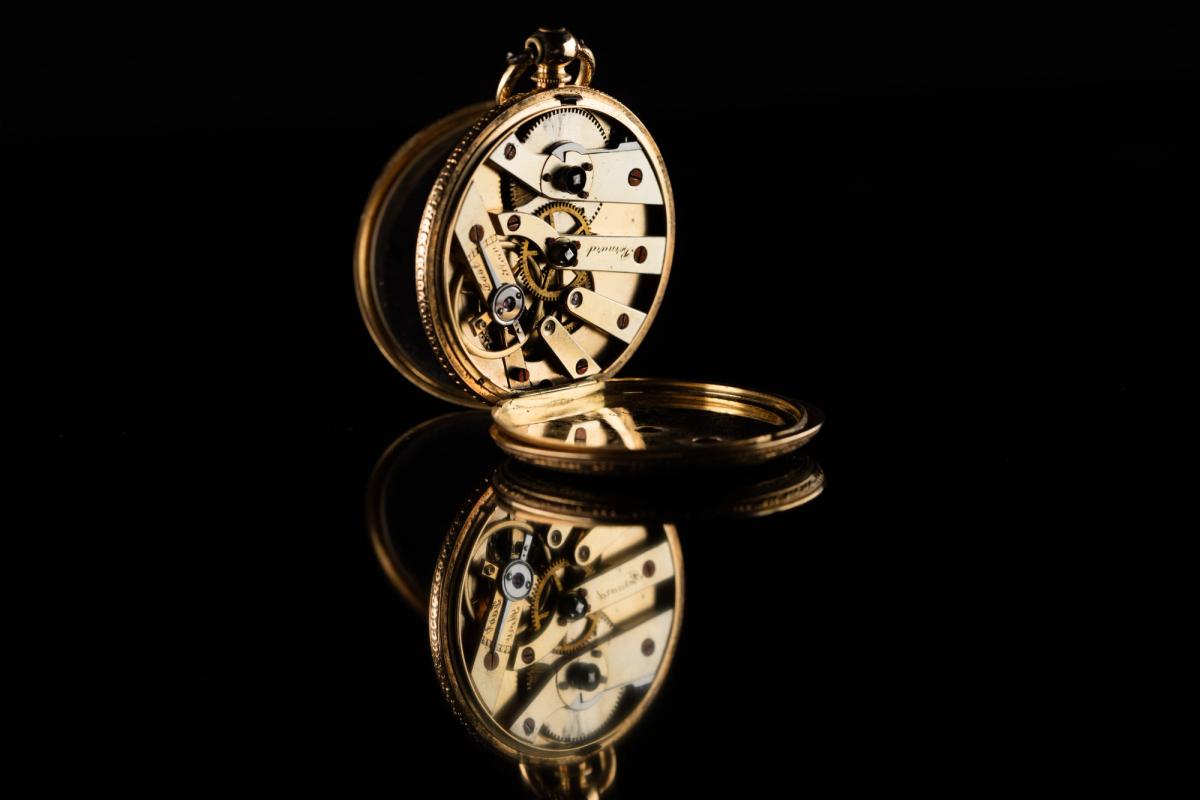
In classic cars, in mechanical watches, and in a few categories of musical instrument, a documented service history raises price rather than lowering it. A folder of stamped service records, receipts and a named specialist is an asset. The trade phrase is that the object comes with history, and history here means maintenance rather than ownership.
What separates these categories from painting is that the object is expected to work. Where function is part of what is being bought, the record of keeping it functional becomes evidence of quality rather than evidence of damage. Where the object is expected only to be looked at, the same record reads as a list of injuries.
So the market is not indifferent to maintenance records. It is capable of valuing them, and does, wherever the object still has to do something. The absence in the art record is not a limitation of registers. It is a statement about what an artwork is understood to be for.
This institution studies objects that are made to be used and kept, which places its subject in the first category and its documentary conventions in the second. That mismatch is the finding, and it is worth stating as a design problem rather than a complaint.
The record omits the hand, even where the record exists
There is a second absence inside the first, and it survives even in the museum file that this study has been praising.
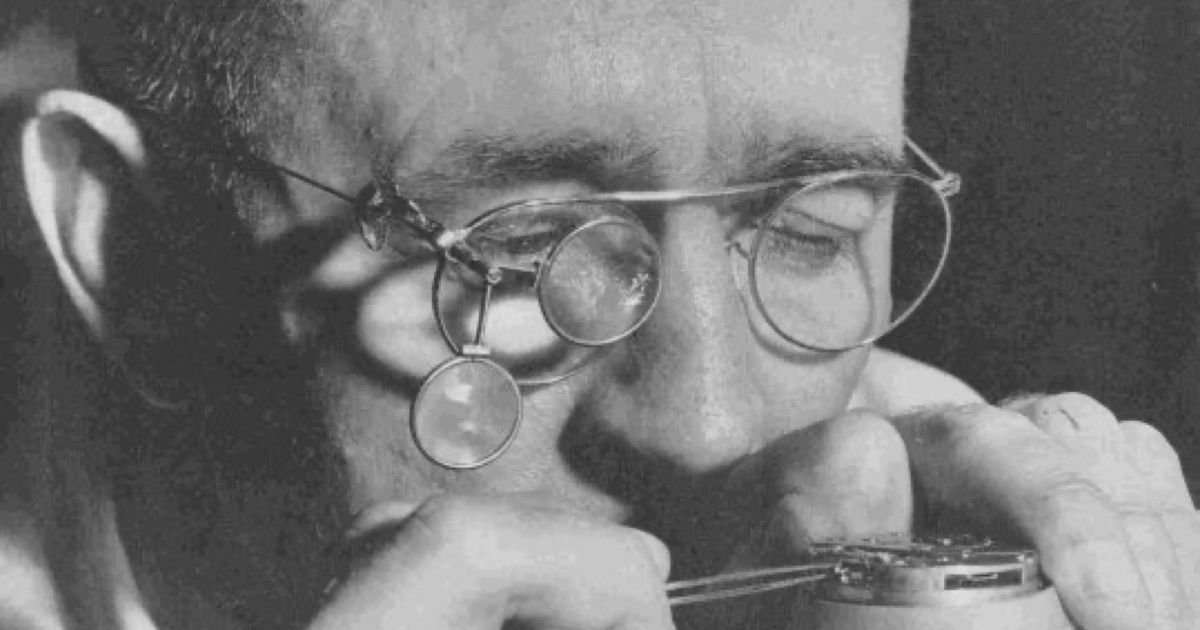
A conservation record names the treatment and, at professional standard, the conservator. Outside that setting the naming stops. The watchmaker who serviced a movement nine times across forty years, the mender who rewove a sleeve, the cobbler who resoled the same pair of shoes for a decade: their work is on the object and their names are nowhere. The horological institute and the conservation institute both maintain registers of qualified practitioners, which is to say the professions know exactly who these people are. The objects do not.
This is Labor Density in its least visible form. The institution's usual case for labour density concerns making, where hours are poured into an object at its origin and can at least be argued about. Repair is labour poured in afterwards, in small quantities, repeatedly, across decades, by many different hands, and the total across a long life can exceed the labour of manufacture without a single hour of it being recorded anywhere.
An object that has been kept for a century has been worked on by people whose names have been lost, using skills that in several cases no longer exist. This institution has written about the cost of holding a single object against time, in the study of a thirty million dollar postponement. That figure buys named specialists and a documented programme. The ordinary object gets the same service from anonymous hands and receives no document at all.
So the maintenance log this study proposes has a second column that a museum file already has and a market record does not: not only what was done, but who did it. A provenance names every owner and no maker of the keeping.

The traditions that keep the record on the object
A small number of practices solve this by refusing the separation entirely, and they are usually admired for the wrong reason.
Kintsugi is the famous case, and the usual reading, that it makes the break beautiful, is the shallow half. The structurally interesting part is that the repair is entered on the object itself in a material that cannot be mistaken for the original. The record and the thing are the same artefact. No file can be separated from it, no dealer can decline to pass the record on, and no buyer can receive the object without receiving its history of damage.
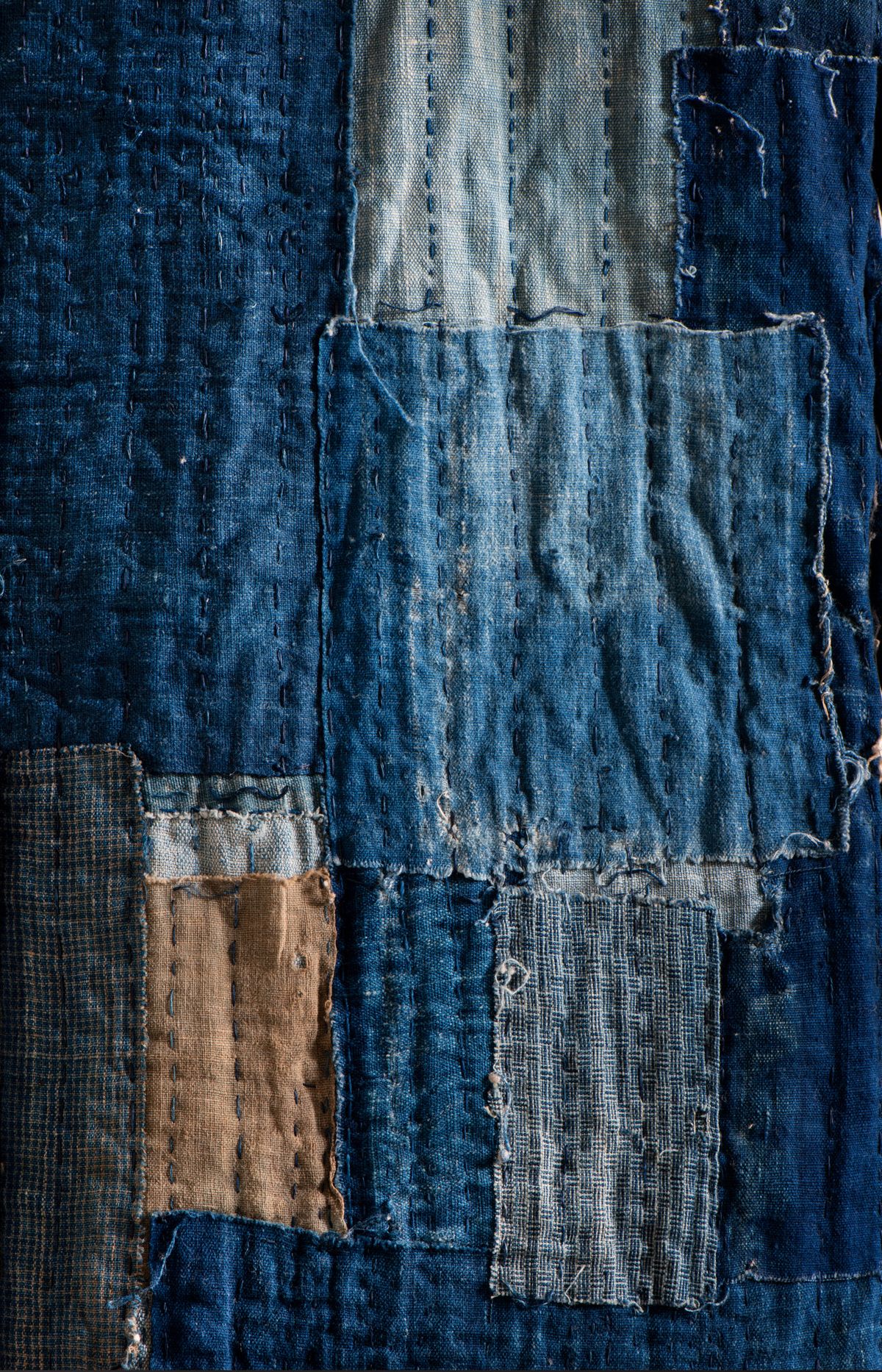
Sashiko and boro do the same for cloth. Lead repair on ceramics, staple repair, riveting, the visible dark line of a mended crack in a Chinese porcelain bowl: these were not aesthetic decisions in origin. They were what was available. But their effect is identical, which is that the object carries its own maintenance log in the only place it cannot be detached from.
Set against this, invisible mending is the opposite technology. It is a real and difficult craft whose entire purpose is to remove the evidence that anyone cared enough to intervene. The better it is performed, the less it can be known to have happened.
What this changes for this institution
OAC binds obligations to an object through the Custodian's Contract, and holds that Material Singularity must be earned in the object rather than administered by a certificate. This study finds a straightforward and slightly embarrassing consequence.
A custodial instrument that does not require the custodian to record what they did to the object is measuring intention by declaration. The Contract asks a custodian to undertake to keep. It does not ask them to write down that they did. The only durable evidence of custody is maintenance, and maintenance is the thing the paperwork does not currently ask for.
The fix is not conceptual. Museums have been doing it for a century, the profession has standards for it, and the requirement fits in a sentence: a custodian records every intervention, and the record travels with the object. That is a maintenance log, and it would be the first provenance instrument this institution has proposed that documents keeping rather than transfer.
It also raises a question this study does not answer. If the log travels with the object and the market treats repair as a defect, the instrument reduces the object's resale value by design. Whether that is a flaw or the entire point is a founder question, not a Studio one, and it is worth asking plainly rather than discovering later.
What is not established here
This study asserts that commercial provenance standards do not require a treatment history and that museum conservation records are held separately. Both are drawn from published standards and professional guidance rather than from an audit of what individual auction houses and registers do in practice, and practice varies. No claim is made that the Art Loss Register or any specific register has a policy on repair; the point is about the shape of provenance as a category.
The economic claim that disclosed restoration reduces price is the trade's own working assumption and is reported here as such. This institution has not measured it against paired sales, and doing so would be a real piece of work and a better piece of evidence than the assertion.
The account of kintsugi, sashiko and lead repair as originally practical rather than aesthetic is the standard art historical reading and has not been traced here to primary sources.
The repairability material describes the existence and purpose of such indices and scores. No index score, product category, statutory date or scope is stated, because none was verified for this study, and the schemes differ between jurisdictions.
A conservation body's page cited in an earlier version of this study was replaced. The host returns HTTP 200 for a URL that cannot exist, so nothing on it can be verified, and the reference was moved to a conservation institute whose host discriminates correctly. The claim itself was not in doubt; the ability to check it was.
The claim that repair labour across a long life can exceed the labour of manufacture is an argument, not a measurement. No object has been costed both ways for this study and doing so would be a genuine piece of work.
Coda
The object in a museum has two files. One says who owned it. The other says what was done to keep it alive, and it is the longer file, and it is the one that stays behind when the object is sold.