Suspended Custody: What the Rent on a Storage Unit Is Actually Buying
On a market in deferral, and on who finally decides when the tenant will not
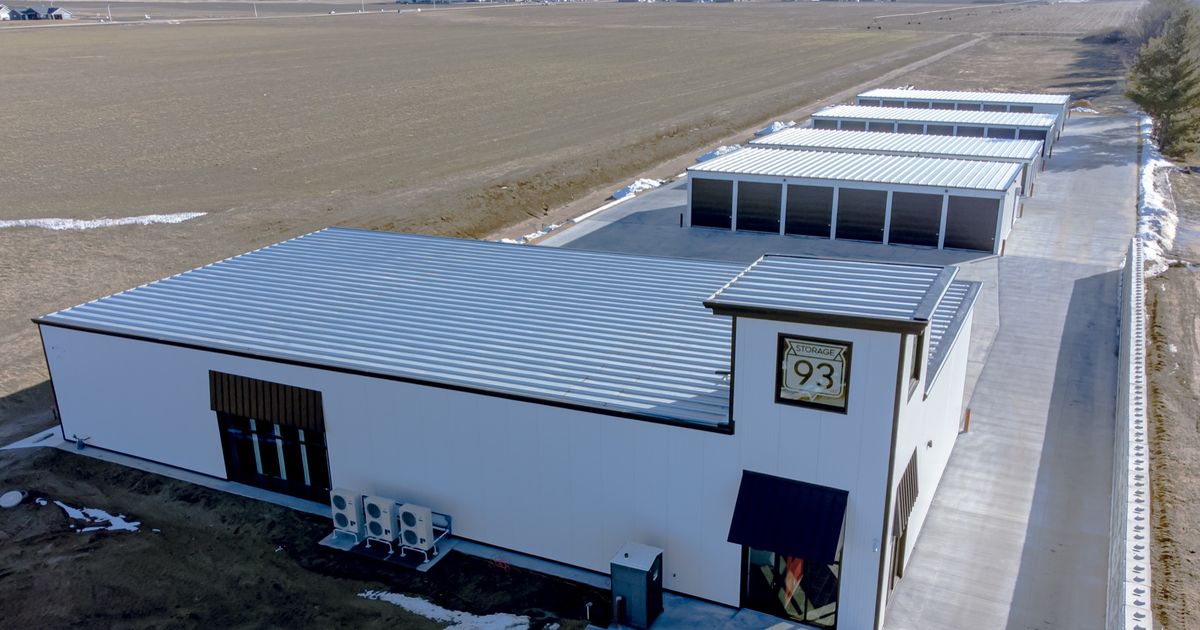
The United States contains on the order of two billion square feet of rented self storage across roughly fifty three thousand facilities, an industry with annual revenues in the region of forty billion dollars, according to figures collected by the Self Storage Association and the trade press. It is one of the larger property categories in the country and it is almost entirely a market in objects that their owners are not using.
This institution has published at length on what people pay to acquire things. It has published nothing on what they pay to avoid deciding about them.
The arithmetic almost nobody performs
Take the middle of the market. The most rented unit by revenue is ten feet by ten, roughly the floor area of a small bedroom. Reported average tenancies sit around eighteen months, and roughly a fifth of renters stay beyond two years.
Multiply the monthly rent of such a unit by eighteen months and the figure is substantial. Multiply it by four or five years, which is unremarkable, and it exceeds what almost any ordinary household's furniture, boxed kitchenware, books and stored clothing would fetch if sold.
For a large share of units, the accumulated rent passes the resale value of the contents, and then keeps going. This is not a secret and it is not a scam. The tenant can do the multiplication. Many do, and pay anyway.
The rent is not the price of the space. It is the price of not having to decide, billed monthly, for as long as the decision can be postponed.
That makes self storage the only place in the economy where the cost of deferral is denominated. Everywhere else the difficulty of parting with an object is a private feeling with no number attached. Here it has a monthly figure, a due date, and a payment history.
What the object is doing in there
An object in a storage unit occupies a condition this institution's vocabulary does not currently have a term for.
It is owned, and it is not used. It is kept, and it is not seen. It is being paid for continuously and providing nothing continuously. It is not in circulation, so no market prices it; it is not in a home, so it furnishes nothing; it is not discarded, so it has not been renounced.
It is in a state of suspended custody: an object whose owner has accepted the cost of keeping and declined the responsibilities of having. The Custodian's Contract asks a custodian to keep an object and to be answerable for it. A storage unit is the exact inverse, which is keeping without answerability, and it is what most people actually do.
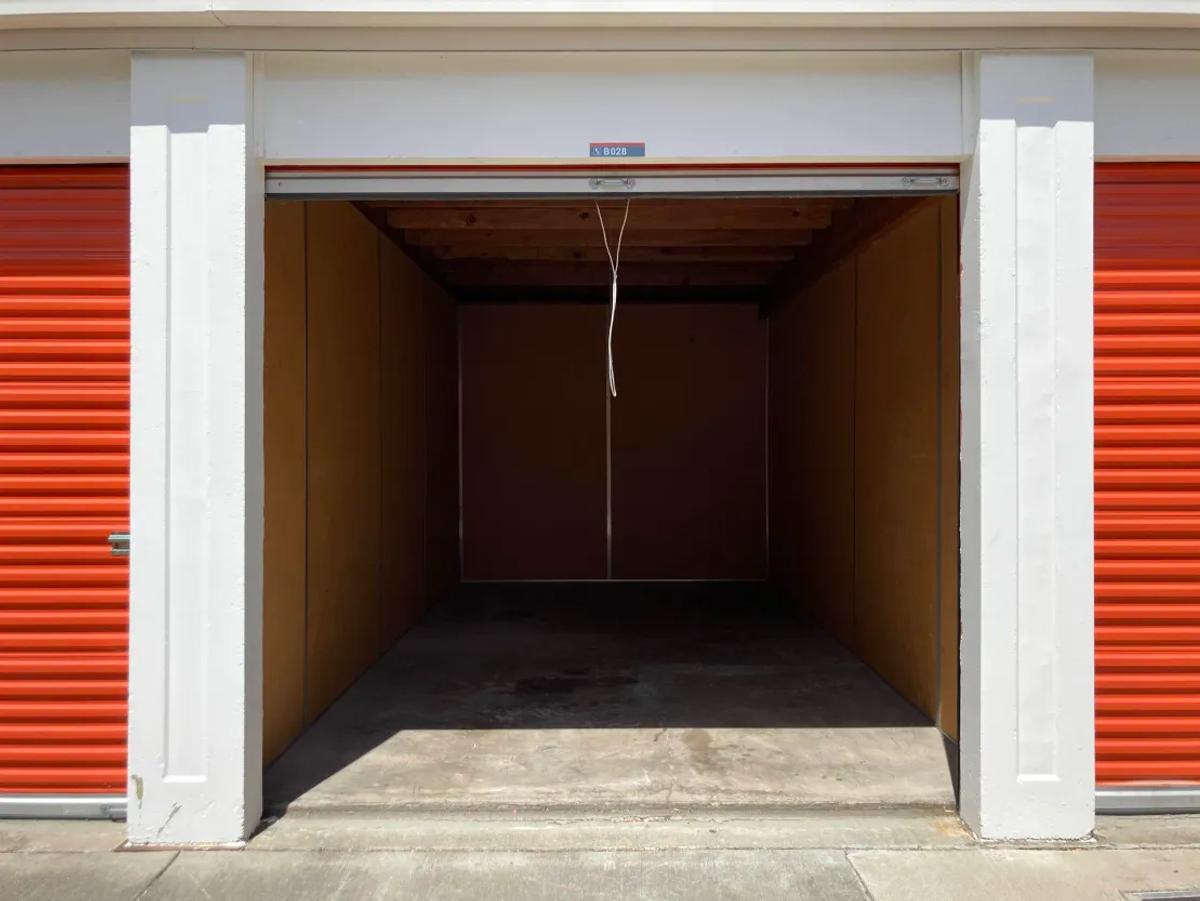
The physical arrangement encodes it. Corridors of identical roller doors, numbered rather than named, climate controlled to a standard indifferent to what is behind any particular one. The facility is designed so that the contents do not matter, and that is what the tenant is buying.
The price is for the volume, not for what is in it
A storage unit is priced by its floor area and nothing else. The same ten by ten costs the same whether it holds a family's photographs or a pallet of scrap, and the operator sets that price without knowing, or asking, which it is.
The lock is the tenant's own. In the standard arrangement the customer supplies the padlock and the operator holds no key, keeps no inventory, and has no lawful means of looking inside during the tenancy. The industry's own trade bodies and their counterparts in Britain describe an arrangement in which the operator is responsible for a space rather than for contents.
Insurance follows the same logic. Cover is a separate and usually optional product, priced on a value the tenant declares and the operator never verifies. Nobody inspects, nobody appraises, and no schedule of items is ever produced.
Read the whole transaction and something stark falls out of it. The only party who has ever put a value on these objects is the person who cannot bear to dispose of them, and they stated it to nobody, in no document, at no moment. Everyone else in the chain is pricing cubic feet.
That is why the industry can be enormous and tell us nothing. Two billion square feet of rented space generates no valuation data at all, because the product was never the objects.
The decision does get made. Just not by the owner.
Deferral has a terminus and the industry has a well developed machinery for it.
When a tenant stops paying, the operator acquires a lien over the contents. After a statutory period that varies by state, commonly in the region of thirty to ninety days, and after notice requirements are met, the operator may sell the contents to satisfy the debt. The sale is conducted at auction, increasingly online through dedicated platforms.
Read what has happened there. A person spent months or years paying rather than choosing. They then stopped paying, which is not a choice either. The decision was finally made by a lien statute, executed by a stranger, on a schedule set by the state. The objects were disposed of by a process nobody involved would describe as a decision at all.
And the buyers are the sharpest part. A bidder at a lien auction can typically look into the unit from the doorway and may not enter it, touch anything or examine an item. They are bidding on a volume of objects whose meaning to the previous owner was total and whose meaning to them is zero, on the basis of what the pile looks like from four feet away.
It is difficult to construct a cleaner demonstration that value is relational rather than resident in the thing. The identical contents are, on one side of the roller door, worth years of rent to a person who cannot part with them, and on the other side worth whatever a stranger will pay sight unexamined.
Climate controlled is not the same as conserved, and the difference is the whole belief
The phrase that persuades people to pay the higher tariff is climate controlled, and it is worth taking apart, because what the tenant believes they are buying and what the specification actually promises are different things.
A climate controlled unit typically guarantees that temperature and humidity stay inside a broad band, chosen so that mould does not bloom, metal does not visibly corrode and timber does not split. It is a band that prevents obvious damage over a commercial timescale.
Conservation storage is a different discipline with different numbers. The professional bodies for conservators, in Britain the Institute of Conservation, work to specified and monitored conditions with tolerances set per material, because paper, photographic emulsion, leather, wood and textile each degrade differently and a single compromise band is a compromise for all of them. A national archive monitors and records those conditions continuously and treats the record itself as part of the holding.
The storage unit has no monitoring the tenant can read, no per material specification, and no record. Nothing is logged, so nothing can later be shown. An object emerges after six years in exactly the condition it emerges in, and there is no document anywhere describing what it went through.
This matters for the study's argument rather than as a consumer complaint. The tenant is paying a premium in the belief that the payment is preserving something, and that belief is doing real work: it converts an ongoing cost into an act of care, which makes the cost easier to keep paying. The Burden of Preservation is being felt without being discharged, and the monthly invoice is the receipt for a duty nobody is actually performing.
Set that beside the pricing structure and the picture completes. The operator prices a volume and promises non degradation. The tenant pays for a volume and believes they are buying custody. Neither party is lying and they are not in the same transaction.
The same structure at the top of the market
The household unit has a counterpart at the other end of the price range, and it is the same object in the same condition wearing better clothes. Fine art, wine, precious metals and collectors' cars are held in bonded and tax suspended warehouses, of which the Geneva facility is the best known, with comparable operations in Luxembourg, Singapore and Delaware.
The structure is identical. An object is owned, unused, unseen, professionally climate controlled, and paid for monthly for as long as the owner chooses. The only difference is what is being deferred. The household tenant is deferring a decision. The freeport client is deferring a taxable event, and in many cases an object enters such a warehouse specifically so that a sale does not have to be recognised anywhere.
An object in that condition is the Hollowed Object at its limit rather than at its usual working range. Nobody sees it. No visitor, no owner, no photographer. Whatever the thing looks like has been rendered completely inert, because looking is not among the services purchased. All that remains active is a number on a document, and the object exists to hold that number still.
This institution has written about the market that supplies those warehouses, in the study of Art Basel and speculative velocity. The warehouses themselves are where the velocity stops and the object waits. A public collection such as a national museum also stores the majority of its holdings unseen, and the comparison is worth making precisely because the reason differs: a museum stores what it is obliged to keep and cannot sell, and a freeport stores what its owner intends to sell later and would rather not be taxed on now.
Two ends of one market, then, and the same physical fact at both: an object that is being kept and not had. The household unit simply lacks the accounting advantages, which is the only respect in which the person paying for the photographs is worse off than the person paying for the painting.
Why this institution's instruments cannot see it
Nothing in the storage transaction generates the data this institution normally reads. No sale, no provenance entry, no valuation, no certificate. The only documents are a rental agreement and a payment record.
The payment record is nonetheless a better measure of attachment than most of what the market produces. A person paying to store an object with no resale value, month after month, is producing continuous evidence of an unwillingness to let go. It is voluntary, it is costly, it yields nothing, and it is sustained over years. In any other context this institution would call that a strong signal.
It is a signal about the tenant rather than the object, which is exactly the point that Material Singularity keeps running into. The stored boxes have no material claim on anyone's attention. They are being kept anyway, at cost, for reasons that live entirely in a person.
What is not established here
The industry figures above are reported from trade association and trade press material and are given as orders of magnitude. This institution has not audited them, they vary between sources and years, and no figure in this study should be quoted as precise.
The central arithmetical claim, that accumulated rent commonly exceeds the resale value of a unit's contents, is a reasoned inference and is not measured. Establishing it properly would require paired data on tenancy length and on realised contents value at lien auction, and this institution has neither. It is the study's load bearing claim and its weakest evidence, and those two facts should be read together.
Lien procedure is summarised from United States trade guidance and varies materially by state. Nothing here is a statement of law.
No storage operator, lien auctioneer or tenant has been interviewed, and the auction buyers are described from published accounts of the process rather than from observation.
The description of what a climate controlled unit guarantees is drawn from how such units are generally specified and marketed, not from any named operator's contract. No specific tariff, tolerance or facility is cited, and no operator is accused of misdescribing its product. The claim being made is about a gap between two vocabularies, not about anyone's conduct.
The freeport material describes a structure rather than any transaction. No holding, owner, object or tax position is asserted, nothing here characterises the conduct of any named facility, and no claim is made that any particular use is improper. Tax treatment of goods in bonded storage varies by jurisdiction and nothing here is tax advice.
The account of storage pricing, the tenant supplied lock and optional insurance describes the standard arrangement as the industry's own trade bodies present it. Terms vary between operators and no individual agreement was read.
Coda
Somewhere in two billion square feet there is a unit containing a dining set, a box of photographs and a child's bicycle, on which a person has now paid more in rent than the contents would raise at any auction on earth. They know. They pay it again next month.