The Document Was Never the Check: AI Did Not Break Provenance, It Made Lying Cheap
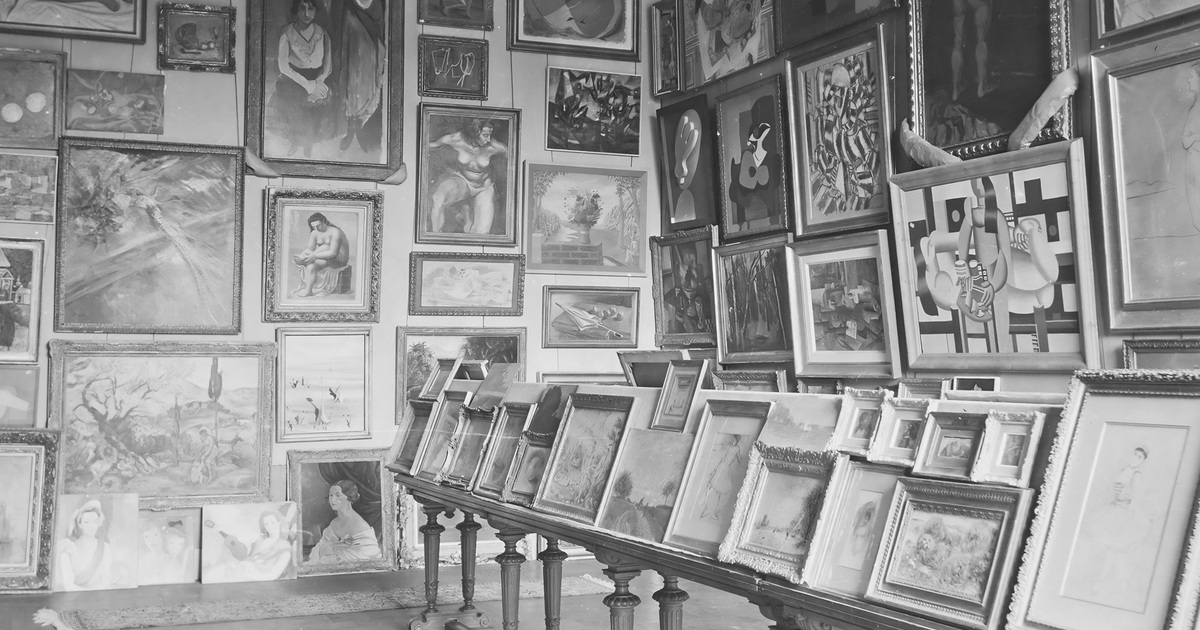
A loss adjuster opened dozens of appraisal certificates for a single collection of paintings. They looked right. Then he noticed that the descriptions of different works were word for word identical, and concluded the entire collection was fake. The art market has decided this is a story about artificial intelligence. It is really a story about the fact that nobody was ever checking the paperwork.
The warning came from inside the insurance industry. Olivia Eccleston, a fine art broker at Marsh McLennan, told the Financial Times that chatbots and large language models are helping fraudsters convincingly forge sales invoices, valuations, provenance documents and certificates of authenticity. Grace Best-Devereux, a claims adjuster at the investigation firm Sedgwick, put the problem in the first person: "We're at this precipice where it might not be possible for me to look at it" and tell.
An analyst at the provenance research firm Flynn and Giovani described the machine's habit precisely. The model, she said, is "quite conniving", because it "has to come up with an answer, so if you give it enough information, it will guess something."
Those quotations have travelled a long way since. They have been rewritten by a dozen aggregators, compressed into headlines about AI forging art, and are now repeated as current news. They are from December 2025. This article is partly about why that matters.
The Example Everybody Repeats Is the Wrong One
The detail that has fixed itself to this story is vivid and specific: fake ledger numbers, and forged Nazi-era stamps on provenance files. It is attributed to Angelina Giovani, co-founder of Flynn and Giovani, and it is doing more work in the retelling than it can bear.
Read it as evidence of what artificial intelligence has made possible and it falls apart immediately, for a reason that has nothing to do with scepticism about the technology.
A language model does not apply a stamp to a sheet of paper. A forged Nazi-era stamp is ink on a physical document. A fake ledger number is a handwritten or typed entry in an object that has to look sixty or eighty years old. Neither is a thing a chatbot produces, and nobody in the original reporting claimed otherwise. The analyst was describing what she has seen on provenance files across her working life. The chatbot is a separate observation that has been folded into the same sentence by people summarising at speed.
The forger himself is the best witness here. David Henty, who served a prison sentence for forgery and now sells acknowledged copies under his own name, described the actual method to Insurance Business UK in October 2026, and it is entirely analogue. Buyers, he said, pay more attention to a painting's provenance, the labels and stamps and marks on the back, than to the picture itself. So he ages gallery labels. He types the details on a period typewriter. He obtains auction stamps through a cooperative auctioneer.
Asked where the new technology fits, Henty's answer was conditional and modest: AI could generate supporting material, such as a staged photograph of an artist handing a work to a buyer.
Hold that example, because somebody already did it, by hand, thirty years ago, and it worked better than anything a model has produced yet.
Two Forgers Who Needed No Machine
Wolfgang Beltracchi did not copy paintings. He invented new ones, in the manner of artists whose catalogues had gaps, and then he invented a reason for them to exist.
The reason was a collection that had never existed. Beltracchi and his wife Helene constructed the Jägers Collection: the story that Helene's grandfather, Werner Jägers, had been a friend of the Jewish dealer Alfred Flechtheim, and had bought a cache of works from him before Flechtheim fled Germany. The narrative did two jobs at once. It explained why unknown pictures by known artists had surfaced, and it placed them in the one period whose record-keeping nobody expects to be complete.
Then came the photograph. Helene posed as her own grandmother, seated among the paintings. Accounts differ on the mechanics, one saying the images were shot in the 1990s on paper aged with tea and sunlight, another that Wolfgang used an antique camera and period film. Either way, the staged photograph that Henty in 2026 describes as something AI could do had already been made, physically, in a room, by two people. They added fake Flechtheim gallery labels to the backs.
What exposed it was not a document and not a connoisseur's eye. In 2008, new owners of a Campendonk dated 1914, Red Picture with Horses, had it analysed. The paint contained titanium white, a pigment not in use in 1914. It had come from a tube sold as zinc white that contained about two per cent titanium. The gallery labels had already drawn the expert Ralph Jentsch's suspicion that year. A forty day trial in Cologne in 2011 ended with six years for Wolfgang and four for Helene. They have claimed around three hundred works. Many have never been conclusively identified.
And then there is the case that should end any comfortable belief that the paperwork problem is new, because it is worse than forging a document.
John Drewe did not forge the archive. He got into it.
Drewe presented himself as a serious collector and donated twenty thousand pounds to the Tate. The gallery opened its archives to him. He then replaced pages in old catalogues and inserted new ones, so that the modernist paintings being produced for him by John Myatt would appear in the institutional record where any diligent buyer would go to look.
Myatt produced more than two hundred paintings. Drewe got six years at the 1999 trial, Myatt one. Roughly a hundred and twenty of those works are still circulating, by the most commonly repeated estimate; the Sotheby's Institute puts it above a hundred. The archives themselves were described at the time as needing years to purge, and the contamination is still discussed as unfinished. The burden of preservation he created fell on institutions that had done nothing wrong except open a door.
Sit with the structure of that attack. Drewe did not produce a convincing document and hope it would pass. He made the thing you check against wrong. Every subsequent verification of those works, performed honestly by competent people consulting the correct source, returned the answer he had planted. He had manufactured narrative permanence directly, skipping the object entirely. No model has done anything remotely as effective, and the tool he used was a cheque.
The Gallery That Believed a Collector Who Did Not Exist
The third case is the one that should trouble anyone who thinks expertise is the backstop, because it ran for years through one of the most reputable addresses in American dealing.
Glafira Rosales, a dealer from Long Island, supplied Knoedler, a New York gallery then more than a century and a half old, with previously unknown Abstract Expressionist paintings. They were painted by Pei-Shen Qian, who was reportedly paid a few thousand dollars each. Rosales sold them on for millions.
What made them saleable was not the painting. It was the story: a secretive Swiss collector, Mr X, who had bought directly from the artists and whose family now wished to sell quietly. Rosales supplied a false provenance for each work, and the name of Alfonso Ossorio, a genuine friend of Pollock's, appeared on invoices across the decades to anchor the fiction in a real relationship.
Mr X did not exist. The paintings sold for more than eighty million dollars. Knoedler closed in 2011 after 165 years. In 2017 a federal judge ordered Rosales to reimburse victims some eighty one million dollars.
Note how it ended. Not with a dealer or an expert reading a provenance file and finding it wanting. A London hedge fund owner sent his painting for appraisal, and scientists found yellow pigments that had not been invented until the 1970s.
Which completes a pattern that runs through every case in this article and deserves stating as flatly as possible.
Beltracchi was caught by titanium white. Knoedler was caught by a 1970s yellow. Drewe's forgeries were painted by a man whose work would not have survived technical examination either, and what made them saleable was an archive nobody suspected. Three of the most consequential provenance frauds on record, tens of thousands of hours of professional diligence performed by competent people around them, and not one of them was caught by reading the provenance.
Every one was caught by the object, or by a person who talked.
That is not an argument that documents are worthless. It is a precise statement of what they have historically been able to do, which is to make a work saleable, and what they have never once demonstrably done, which is to stop a fraud.
So What Is Actually New
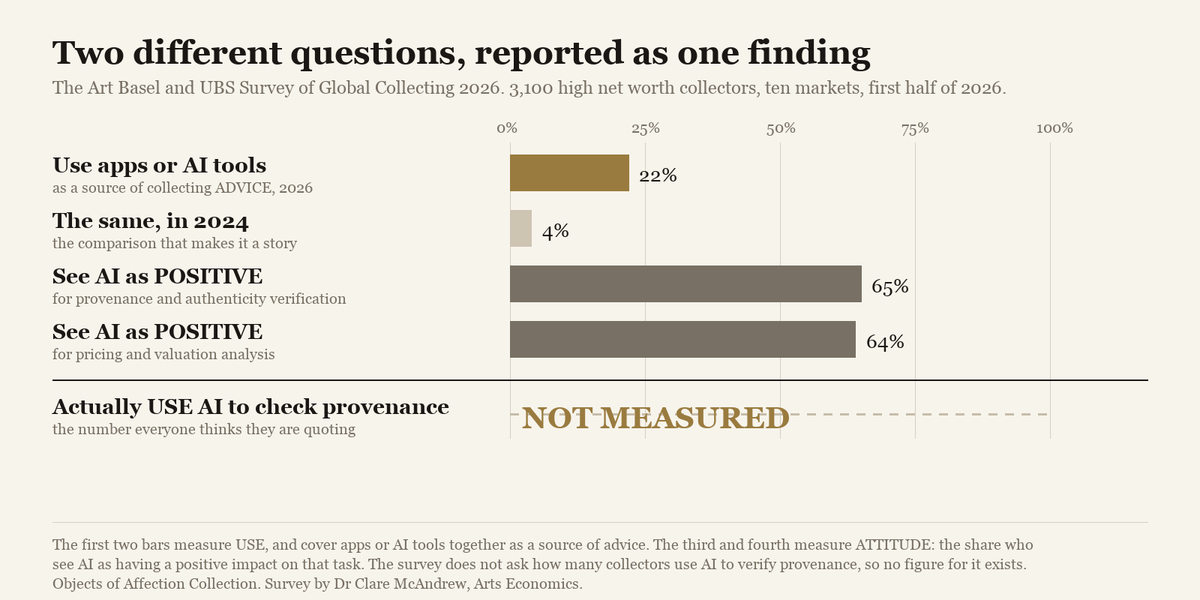
Nothing about capability. Everything about cost.
Forging a plausible paper history used to require what Beltracchi and Drewe had: period materials, technical craft, patience measured in years, and in Drewe's case physical access to a national institution. It was a specialist crime with a small population of practitioners, and that population is why the famous cases have names.
A language model removes the craft and collapses the time. It will not age a label or stamp a document. What it will do is write forty internally consistent appraisal certificates in an afternoon, in competent professional English, for someone with no training at all. The barrier was never the idea. The barrier was the labour, and the labour is now close to free.
Which produces exactly the failure the loss adjuster found. The collection was not caught because the documents were bad. It was caught because they were too similar, the same descriptive sentences recurring across works that should have had nothing in common, and because the metadata did not match the story the documents told. That is a volume signature. It is what mass production looks like when it reaches a craft industry, and it is detectable only because the fraudster did not think to vary the output.
The next one will vary the output. This is the honest reading of Best-Devereux's precipice: not that she has lost the ability to spot a bad document, but that the tells she has spent a career learning are tells of human forgery, and the new volume is not produced by humans.
The Hole the Machine Walks Through
Here is the part of this story the coverage has almost entirely skipped, and it is the part that decides whether any of the above matters.
Insurance never verified authenticity. It verified paperwork, and it says so plainly.
Robert Read, head of art and private clients at Hiscox, told Insurance Business UK that his firm does not perform valuations or authenticity checks itself. It relies on third parties, and underwriters will generally accept a valuation from a source they trust. Rob Starr, who spent thirty five years in the industry, was blunter about what the check actually consisted of: his client checks went no further than the documents provided.
And the policy is explicit about where that leaves the owner. A standard fine art policy does not cover a work that turns out to be fake. Separate fakes and forgeries cover exists and few clients buy it. Agreeing a value, Read said, does not mean the insurer guarantees the attribution. If an attribution is later withdrawn, the policyholder must disclose it as a material fact, the sum insured is reduced, and a return premium follows.
So the document was not one check among several. For this institution it was the entire check, and the institution had already declared that it was not standing behind the answer.
That is not a criticism of insurers, who have been candid about it and whose product was never sold as authentication. It is a description of a structural gap that existed before any of this technology did, and it explains why the arrival of cheap document generation is being experienced as a crisis rather than an inconvenience. A verification layer made entirely of documents is perfectly exposed to a machine that makes documents.
The pre-AI cases make the same point without needing a model at all. Maurice Taylor was jailed for three years in 2009 after deceiving Bonhams over a work by Arthur Delaney painted in the manner of Lowry, then using the Bonhams valuation itself as the instrument to sell it, and was ordered to repay more than one point one million pounds. The document the market trusted was generated by the market.
In 2022 the FBI seized twenty five works presented as Basquiats from the Orlando Museum of Art. The owners had claimed nineteen point seven million dollars for a total loss after the works were added to the museum's policy for a loan. The former auctioneer Michael Barzman admitted in a 2023 plea deal that he and an accomplice had created them. Liberty Mutual and Great American sought a declaratory judgment alleging misrepresentation; the owners denied it and said the insurers had never checked authenticity. In February 2025 a federal judge sent the case back to Florida state court. The owners' defence was that nobody verified, and on the industry's own account of how it works, that part was true.
The Failure Mode With No Criminal In It
The fraud is the half of this story that gets written about. The other half has no villain and may contaminate more records.
The FT reporting carried a second category entirely: collectors using AI in good faith to search reference databases for a work's history, and receiving invented results, which then went into insurance submissions as fact. Nobody in that chain intends to deceive anyone. The collector believes the provenance. The broker receives a document that looks like research. The underwriter accepts a valuation from a source it trusts.
This is the Flynn and Giovani analyst's point stated exactly: the model has to come up with an answer, so given enough context it will guess, and a guess rendered in the register of a finding is indistinguishable from one. The industry word for this is hallucination, which is a poor name for it, because it implies a malfunction. The model is working correctly. Producing a fluent answer is the entire function, and nothing in that function distinguishes a remembered fact from a plausible one.
A fraud is bounded by the fraudster. It stops when he is caught, and the works can in principle be traced to him. An honest error has no such boundary. It propagates through files, gets cited, enters a catalogue, and nobody ever looks for it, because no one involved did anything wrong. Drewe's insertions are still being picked out of archives nearly thirty years later and he was a single man with a chequebook working in two institutions.
This institution has written before that a gap in a provenance record has two completely different prices depending on who is reading it. A fabricated entry is worse than a gap in one specific and permanent way: a gap announces itself. A fabrication presents as the thing that closes the gap, and it is the entries that close gaps that nobody goes back to question.
What the Survey Actually Measured
Against that backdrop, the other number in circulation deserves better handling than it has had.
The Art Basel and UBS Survey of Global Collecting 2026, written by Dr Clare McAndrew of Arts Economics, surveyed 3,100 high net worth collectors across ten markets through the first half of 2026. Fifty eight per cent used digital resources of some kind. Within that, apps or AI tools were cited as a source of collecting advice by 22 per cent, up from 4 per cent in 2024.
It is a real and steep rise and it is not the finding it is usually reported as.
That 22 per cent is a combined figure for apps or AI tools, and the thing being measured is ADVICE. It is not a measurement of AI alone, and it is not a measurement of provenance checking.
The provenance figure is a different question answered by different people. Sixty seven per cent of respondents see AI as having a positive impact across various tasks, and within that, provenance and authenticity verification scores 65 per cent, with pricing and valuation analysis at 64. Those measure attitude. They record how many collectors think AI would be good at verification, not how many use it for that.
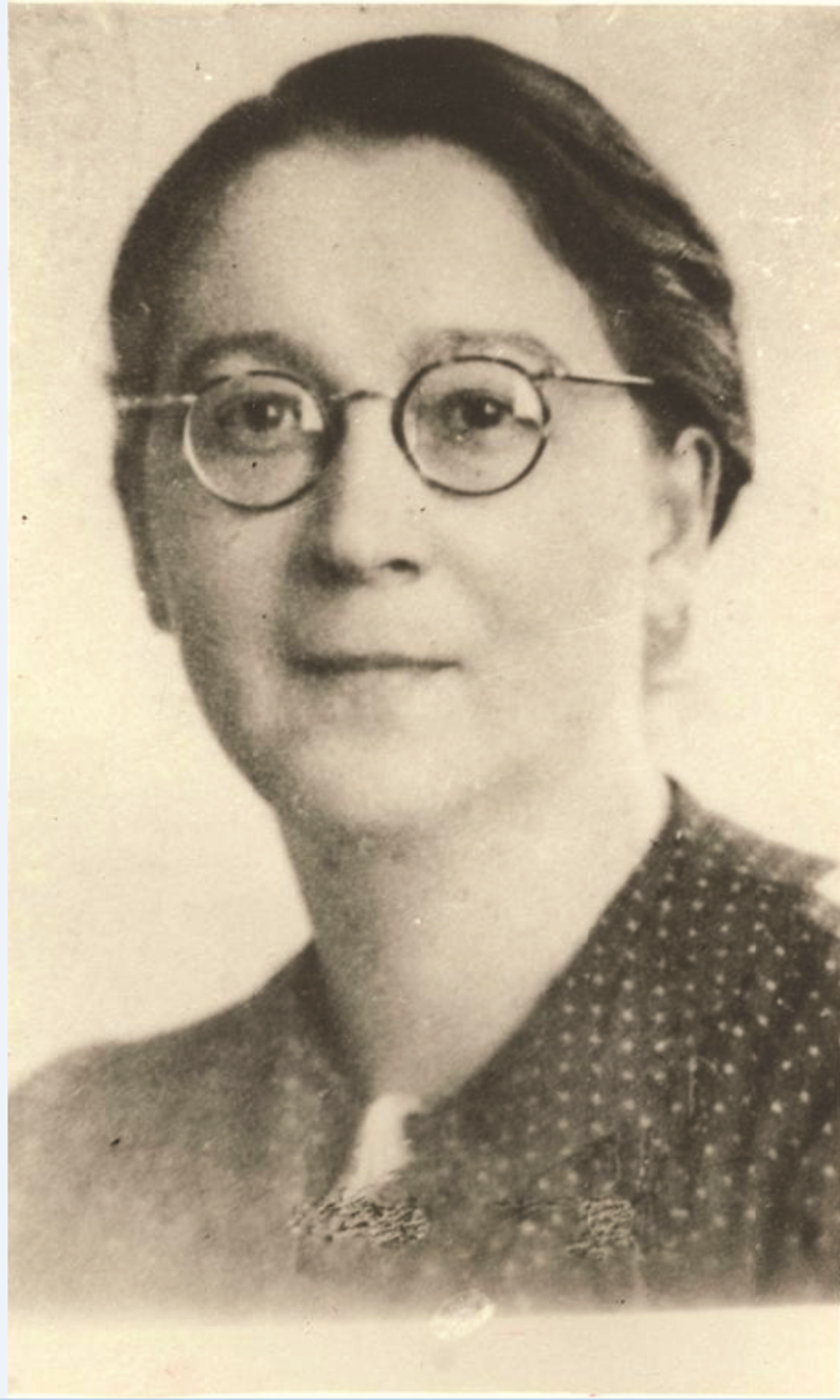
Set the two side by side and the honest summary is uncomfortable: the survey establishes that about two thirds of wealthy collectors believe AI is good at provenance and authenticity verification, and it does not establish that any particular number of them use it for that at all. The usage figure covers a broader category and a different task.
The belief is the finding, and the belief is the risk. The same months in which insurers were warning that machine-written provenance documents were arriving in claims are the months in which two thirds of surveyed collectors recorded confidence in machine provenance verification. Nobody in that survey was asked whether the answers they received were checked against a source.
Worth noting too, from the same survey, that the enthusiasm is not a young person's phenomenon and not a flight from expertise: usage runs level across generations at 23 per cent for Gen Z against 21 for both Gen X and boomers, nearly nine in ten collectors still bought through a dealer, and the proportion buying a newly discovered artist's work fell to 45 per cent, the lowest in five years. Collectors are using these tools while behaving more cautiously, not less.
The Same Technology, Pointed the Other Way
It would be a poor article that stopped there, because the identical technology is being used to repair the record it is accused of corrupting.
The AI Provenance Assistant, built by Michael Santoro, Haibing Lu and Michele Samorani at Santa Clara University, lets researchers query art databases in plain language, looking for works taken during the Nazi era. Early versions draw on the Jeu de Paume records, the registry of works processed through the Paris collection point, with German and United States national archives planned.
The responses from people who do this work for a living are the most useful thing in this entire subject, because they are not about enthusiasm or alarm. They are about conditions.
Carla Shapreau, of Berkeley Law, calls the project promising and attaches a specific requirement: it becomes genuinely useful once it covers many databases and links its results to digitised primary sources, such as original confiscation files.
Marc Masurovsky, co-founder of the Holocaust Art Restitution Project, is more sceptical, and his objection is about the shape of the evidence rather than the tool. Many relevant archives are not digitised at all and some are restricted by privacy law, which narrows what any system can draw on, and he questions whether a model can reliably interpret cases whose central quality is that they are messy.
The Record That Worked, and Who Made It
There is a reason the Santa Clara tool starts with the Jeu de Paume, and it is the most instructive fact in this entire subject.
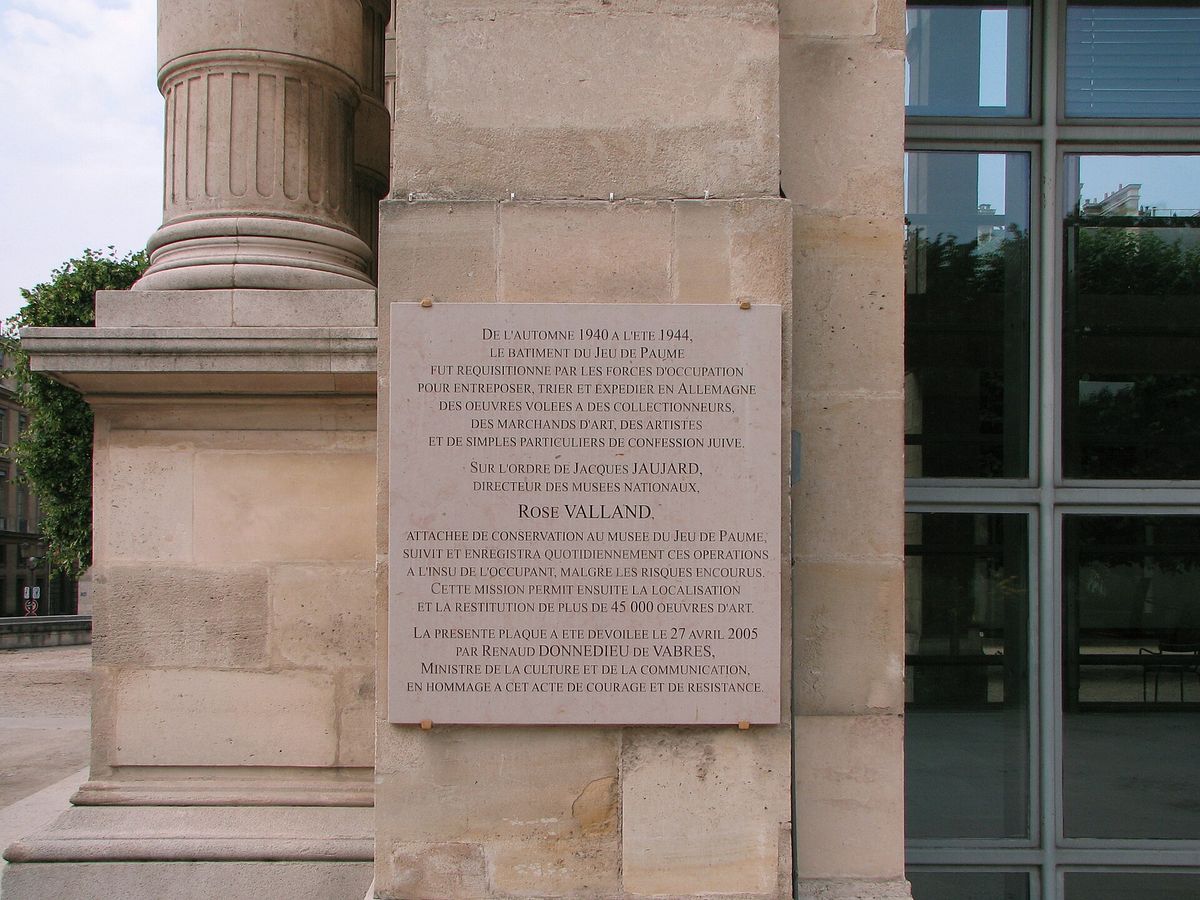
From the autumn of 1940 to the summer of 1944 the Jeu de Paume in Paris was requisitioned by the occupying forces as the place to store, sort and ship to Germany works stolen from collectors, dealers, artists and private individuals who were Jewish. The looting operation kept meticulous records, because it was an administration and administrations file things. That is the uncomfortable origin of a great deal of what provenance researchers work from: a substantial part of the documentary basis for restitution was created by the people doing the looting.
The other half was created by a woman who was standing in the room.
Rose Valland was an attachée de conservation at the museum. On the instruction of Jacques Jaujard, director of the national museums, she recorded these operations daily, without the occupier's knowledge, despite the risks involved. She wrote down what came in, what went out, and where it was sent, while the people shipping it stood a few feet away.
The commemorative plaque on the wall of the Jeu de Paume states the result in one line: her mission subsequently permitted the location and restitution of more than 45,000 works of art.
Hold that against every document in this article. Beltracchi's photograph of Helene as her grandmother, Drewe's inserted catalogue pages, Rosales's Mr X, forty appraisal certificates written by a model in an afternoon: every one of them was made after the fact, by someone with an interest in the conclusion, and every one asserts.
Valland's notebook was made during the event, by a witness, about objects she had physically seen, and it does not assert anything. It attests. It says a thing came here on this day and left for that address, and each line of it points at a crate that existed.
That is the difference, and it is not a difference of technology. It is a difference between a record that accrues as events happen and a document produced afterwards to establish a conclusion somebody wants reached. The first can be checked against the world. The second can only be read.
Assert, or Point
Shapreau's condition is, in one clause, the whole distinction this subject needs, and it applies in both directions.
A system that answers a provenance question by producing a sentence is a forgery engine, whatever its intentions. It does not matter whether the operator is a fraudster or an honest collector, or whether the output is deliberately false or confidently invented. The artefact is the same: a fluent assertion about an object's history, with nothing behind it that a reader can open.
A system that answers by pointing at a scanned confiscation file is a finding aid, and it is a finding aid even when it is wrong, because being wrong is now something a human being can discover in one click.
The difference is not accuracy, and that is the counter-intuitive part. It is resolvability. An accurate assertion with no pointer and an invented one are the same object to everyone downstream, and they age identically: in six months both are simply a line in a file, and nothing distinguishes them.
Which returns, finally, to the market's actual exposure. The paperwork layer that insurers relied on was built out of unresolvable assertions: a certificate that asserts, a label that asserts, a valuation that asserts, a catalogue entry that asserts. It held for as long as producing a convincing assertion required craft. Beltracchi had the craft. Drewe bought access to the archive. Both were caught by physical evidence and institutional memory, not by reading the documents, because reading the documents was exactly what they had prepared for.
The machine does not introduce a new weakness. It removes the last thing that was protecting an old one, which was that this used to be difficult.
What This Article Does Not Say
This institution does not authenticate, appraise or value, and nothing above should be read as guidance on whether any object or document is genuine. The question of what is real is for conservators, scientists and the people who hold the primary sources.
It makes no claim about any living person named here beyond what they are reported to have said. Henty's account of his methods is his own, given publicly. Eccleston, Best-Devereux and Read are quoted as industry professionals describing their own work. The attribution of the ledger-number and stamp observation to Angelina Giovani comes from secondary coverage; one rendering of the same reporting attributes it to an unnamed analyst at the same firm, and this article has not been able to resolve which.
And a disclosure, because it is material to how this piece should be read. This institution publishes a provenance specification and builds provenance records, so it has an interest in an argument that concludes records should resolve to sources. That interest does not make the argument wrong, and the reader is entitled to know it is there. The argument's support is Shapreau's condition and the Drewe archive, neither of which is ours.
On the sourcing. The insurance warnings originate in Financial Times reporting from December 2025 that this institution has not read in the original, and everything above is drawn from coverage of it, including one article that quotes it directly. Where the secondary sources disagree, that is stated rather than resolved. The loss adjuster, the collection and the insurer in that case are unnamed in all available coverage, so the central anecdote of this entire news cycle cannot be verified by anyone outside the firms involved, which is worth noticing in an article about unresolvable assertions.
Estimates of how many Myatt works remain in circulation range from above one hundred to about one hundred and forty depending on the source, and the figure most often repeated is around one hundred and twenty. Beltracchi's own claim of roughly three hundred works is his claim.
Nothing here establishes how common machine-generated forgery actually is. No figure exists for its prevalence, no insurer has published a count, and a small number of vivid anecdotes is how a news cycle begins rather than how a measurement ends.
The Thing Worth Keeping
The art market is treating this as a problem of detection, and detection is the one framing that cannot work. Every tell the adjusters know is a tell left by a person. Identical descriptions across forty certificates, metadata that contradicts a date, a label whose typeface is a decade early: all of these are artefacts of someone doing by hand a thing that is now done by machine, and all of them go away the moment the operator is slightly more careful.
What does not go away is the question Drewe answered thirty years ago, and answered correctly from his own point of view. He understood that the market does not check objects. It checks records about objects, and that a record which cannot be opened and traced to a source is not evidence. It is a claim wearing the clothes of evidence.
He attacked the archive because the archive was where the belief lived.
The machine has not changed where the belief lives. It has only made claims cheap, and the art market is now discovering how much of its confidence was resting on the historical accident that lying used to take a long time.