Artist Tarot Decks: When Reinvention Hollows the Archetype
On symbolic permanence, the artist edition, and why the archetype outlasts its every reinvention.
I. The Morgan Exhibition as Diagnostic Occasion
The Morgan Library and Museum opened "Tarot! Renaissance Symbols, Modern Visions" on June 26, 2026, and the institution has framed it as a homecoming. The 35 Visconti-Sforza cards in the Morgan's collection were reunited with those in the Accademia Carrara in Bergamo, Italy: the first time the majority of these cards appeared together in North America. Around them, approximately 380 works traced the tarot's passage from Lombardian court amusement to contemporary artist commission, from the 15th century to Chris Ofili's collages ordered specially for this show. The exhibition runs through October 4, 2026, and it is, by any measure, the most serious institutional engagement with tarot as a material and symbolic object in recent memory.
It is useful precisely because it makes the problem visible without intending to. The Morgan presents the tarot as a continuous tradition, the latest artist editions arriving as natural heirs to the Visconti-Sforza, as though six centuries constitute an unbroken creative conversation. What the Morgan actually displays, read against the grain, is a succession of ruptures: each moment in which the tarot was "reinvented" by artists is also the moment at which something was lost, thinned, redirected from symbolic depth toward symbolic surface. What the institution frames as revival, this study reads as a pattern of Institutional Necrophagy: the periodic consumption of a durable symbolic system by the market forces of its own moment.
The question is not whether artists should engage the tarot. The question is what that engagement does to the system they are engaging. The Morgan's exhibition, for all its scholarly ambition, is structured in a way that cannot quite ask this question. It celebrates the proliferation. This study asks whether the proliferation is the point.
II. What the Visconti-Sforza Actually Was
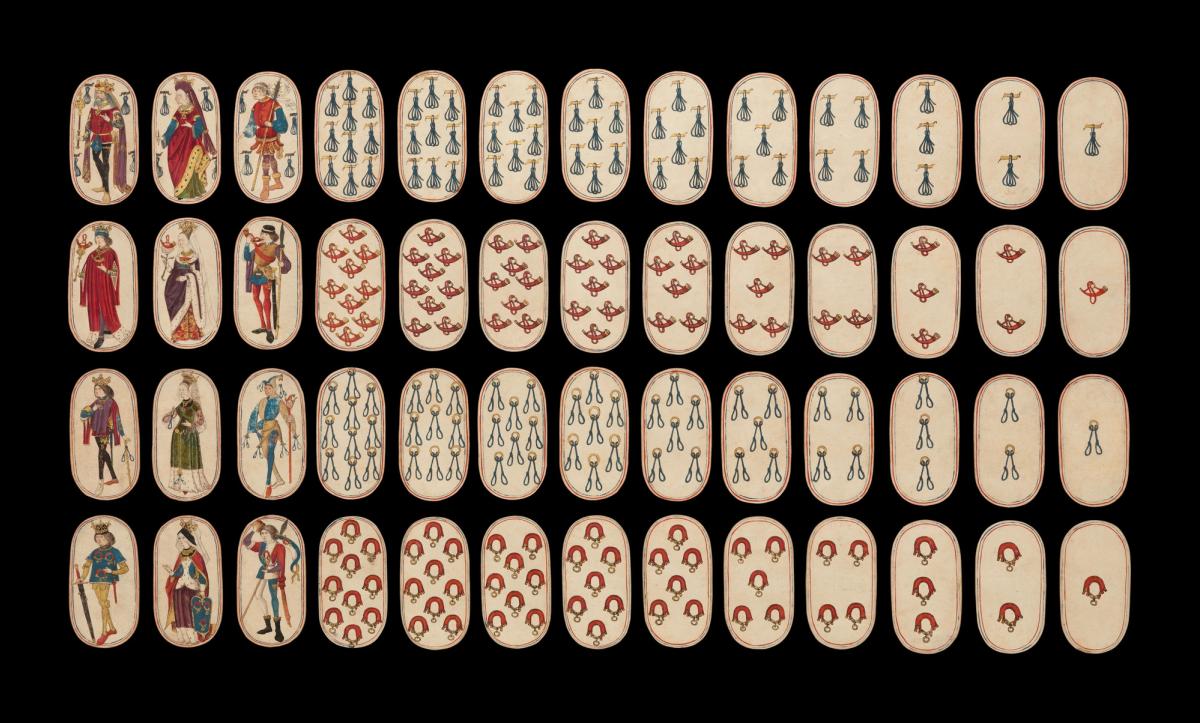
The Visconti-Sforza cards, produced in Milan around 1450 to 1480 and attributed to the workshop of Bonifacio Bembo, were not a cultural product in any sense we would recognize today. They were a court object: hand-painted, gilded, produced at enormous expense, and almost certainly commissioned to mark or honor a dynastic occasion. The deck may have been made for Bianca Maria Visconti and Francesco Sforza, whose marriage in 1441 united two of the most powerful families in northern Italy. J. Pierpont Morgan acquired the Morgan portion of the deck in 1911, and it has been held at the Morgan Library ever since.
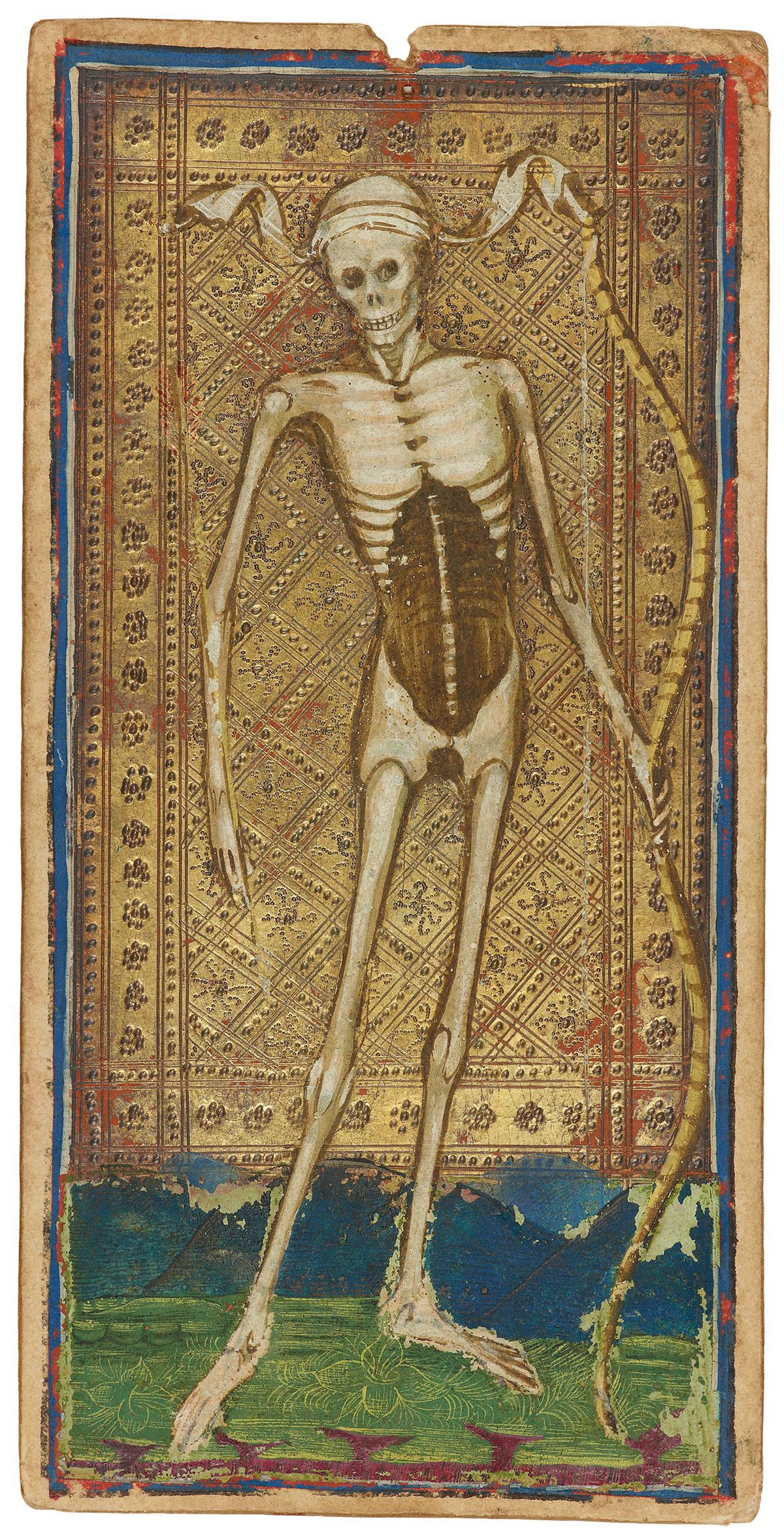
The object carries what the OAC framework calls Material Singularity: an irreducible specificity of making that cannot be transferred to any copy, reproduction, or successor. The gold leaf is particular. The pigments are particular. The hand of the painter, moving across the surface of each card, left behind an irreversible trace of a specific body at a specific moment, working in the conventions of a specific tradition. When we look at the Morgan Death card, we are not looking at "the death archetype" in some general sense. We are looking at a particular artist's articulation of that archetype in a particular material at a particular historical moment. The archetype is carried by the object. The object cannot be separated from it.
This is what makes the Visconti-Sforza so different from everything that followed. It was not made for a market. It was not made to circulate. It was made for a specific court, for specific purposes, and its survival to the present day is a function of the extraordinary Custodian's Contract that every institution, from the Visconti family forward, maintained with it across the centuries. The deck is a sedimentary object: layered with the accumulated custody of generations, each of which made a decision to preserve rather than consume or disperse.
The Visconti-Sforza was not reinventing an archetype. It was making one, at the level of material, under conditions that no edition economy can reproduce.
This distinction matters because the entire contemporary discourse around artist tarot decks proceeds as if the archetype already existed, floating free of any particular object, available for anyone to access and re-express. The Visconti-Sforza tells a different story: the archetype became coherent because someone made it coherent, in a specific material, with a specific labor, in a specific historical moment. The system did not precede the object. The object was the system.
III. Pamela Colman Smith and the Edition That Became the Standard
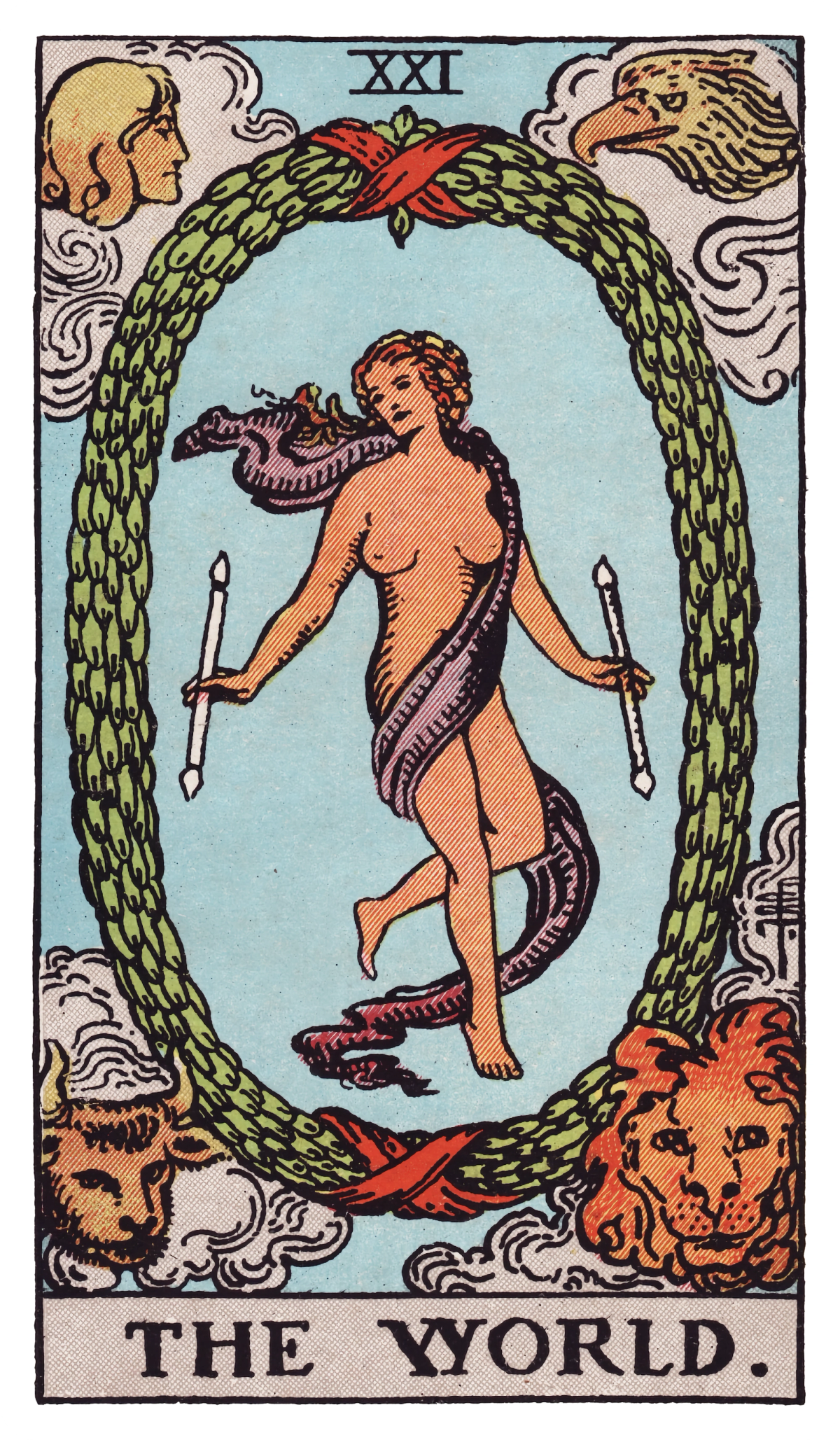
The Rider-Waite-Smith deck, published in December 1909, is the most consequential single act in the history of tarot, and the most thoroughly misunderstood. Arthur Edward Waite, the mystic and occultist who commissioned the deck through the Rider Company, has received the credit for decades; Pamela Colman Smith, the artist who painted all 78 cards, worked largely in obscurity, received no royalties, and died impoverished in 1951. The deck now has more than 100 million copies in circulation. Her name was omitted from the standard title for decades; it was only through sustained scholarly pressure that "Rider-Waite-Smith" became the common designation.
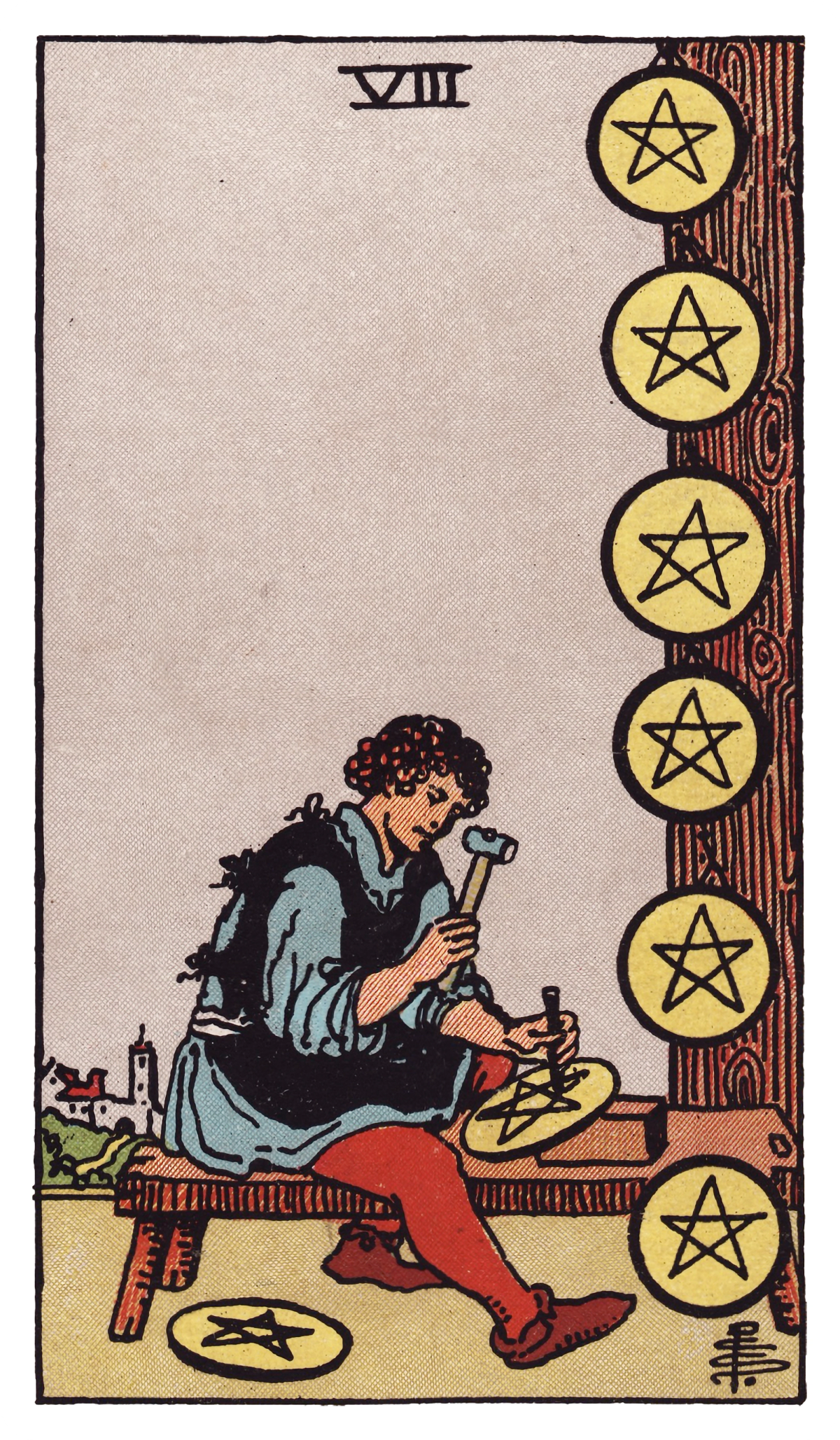
The deck's innovation was structural, not merely aesthetic. For the first time in the history of tarot, all 78 cards carried fully realized pictorial scenes, including the 56 Minor Arcana cards that had previously looked like playing cards: arrangements of symbols but no narrative. Smith changed every card into a scene, a window into a situation that a reader could interpret directly without consulting a guidebook. This was not decoration; it was a new epistemic structure for the system. The Rider-Waite-Smith deck made the tarot legible to a mass audience, which is both its achievement and, in retrospect, the source of a problem it could not have foreseen.
Because once the system was legible, once Smith had made it accessible and reproducible, the editions began. By making the archetype visual and portable, Smith had, inadvertently, made it available to Speculative Velocity: the acceleration of an object's symbolic and market circulation beyond the rate at which its material and conceptual basis can be renewed. What she had made was a system of such clarity and depth that anyone could feel they understood it well enough to replace it. The proliferation of artist editions begins, in a meaningful sense, with the Rider-Waite-Smith deck. Not because it was flawed, but because it was too good.
Pamela Colman Smith made the tarot accessible. The market made it disposable.
The OAC's study on Will Higgins's collection as facsimile argues that objects become facsimiles of themselves when their material specificity is abandoned in favor of their symbolic legibility. The artist tarot deck has performed this substitution at a systematic level: each new edition presents itself as a continuation of the tradition while trading on Smith's labor without reproducing it. The Labor Density of Smith's original, the fact of 78 individual scenes conceived and painted by one artist in a compressed period of sustained attention, is precisely what the proliferating editions cannot match. They borrow her structure; they cannot borrow her effort.
IV. The Surrealists: Artists Who Knew What They Were Touching
Not all artist engagement with the tarot has been extractive. There is a line of artists in the 20th century who understood, intuitively or explicitly, that the tarot was a system with real depth, and who brought corresponding seriousness to their engagement with it. Leonora Carrington is the most instructive example.
Carrington, the British-born Surrealist who spent most of her working life in Mexico, created a 22-card major arcana suite around 1955. The cards were hand-painted in oil on board, accented with gold and silver leaf, and were never intended for commercial distribution. She was working within a genuine esoteric practice that included Tibetan Buddhism, the Kabbalah, ancient Egyptian and Mesopotamian traditions, Celtic mythology, and the tarot itself. The cards were personal: instruments of a symbolic practice rather than products of a market calculation. For decades they were essentially unknown; it was only in 2021 that Fulgur Press published a facsimile edition. The original 22 cards, made for no audience and no market, constitute the most rigorous artistic engagement with the tarot in the 20th century precisely because of their indifference to the market.
Salvador Dalí's relationship with the tarot is more complex. Producer Albert Broccoli commissioned him in the early 1970s to design a custom deck for the James Bond film "Live and Let Die"; the project fell through, reportedly over Dalí's fees, but he continued working on the cards for a decade, completing the Tarot Universal Dalí in 1984. The result is characteristic Dalí: a pastiche of Surrealism, Christian iconography, classical antiquity, and self-mythology (Dalí himself appears as the Magician; his wife Gala as the Empress). It is, by any honest accounting, a spectacular object. It is also a commissioned luxury artifact whose relationship to the tarot as a symbolic system is primarily decorative.
The distinction between Carrington and Dalí is the distinction between an artist who brought the tarot into a genuine esoteric practice and an artist who brought his own iconography to the tarot's frame. Both engagements produced notable objects. Only one of them took the system seriously on its own terms. The contemporary proliferation of artist editions has, with very few exceptions, followed the Dalí model: using the tarot's 78-card structure as a vehicle for personal or institutional branding rather than as a system whose archetypal depth demands corresponding depth of engagement.
The tarot's archetypal system is not a template. It is a set of claims about the structure of human experience, and it requires engagement at that level or it is not being engaged at all.
V. The Artist Commission Problem: Ofili, Bruno, and the Logic of the New Deck
Chris Ofili's collages for the Morgan Library's 2026 exhibition represent the most prestigious recent example of the artist commission model. Ofili, who lives and works in Trinidad, is one of the most significant artists of his generation. His engagement with the exhibition is built around a character called the Healer, originating in a 2008 painting, now placed in dialogue with tarot archetypes. The collages interweave colonial history, Catholicism, and Trinidadian Carnival figures; they are, by any account, serious work by a serious artist.
The question this study asks is not whether Ofili's work is accomplished. It is whether the commission model, as such, is the right relationship between an artist and a symbolic system of this depth. When the Morgan Library commissions a living artist to create a new response to the tarot, it performs what the OAC framework calls an Aura Transaction: the exchange of the tarot's accumulated symbolic weight for the artist's contemporary brand authority, and vice versa. Both parties benefit from the exchange. The system, which belongs to neither party and predates both by several centuries, is not a party to the negotiation.
Nicolas Bruno's Somnia Tarot, conceived during the COVID-19 pandemic lockdowns in early 2020 and completed in late November of that year, is a different case: a self-directed project, not a commission, emerging from a personal practice built around sleep paralysis and surreal self-portraiture. Bruno's deck is genuinely idiosyncratic in the sense that it emerges from a real relationship between the artist's psychology and the tarot's symbolic structure. But it is also a crowdfunded edition designed for the market of collectors who buy artist tarot decks. Its Narrative Permanence is entirely bound up with Bruno's personal narrative; the question of whether the deck will outlast its moment is the same question one asks about any contemporary limited edition.
The OAC's study on what happens to an object when its owner dies is directly relevant here: the object's survival depends on whether the next generation of custodians finds it worth keeping. For objects whose value is primarily narrative, that question is particularly acute. The Visconti-Sforza has survived because the deck itself carries something that transcends any particular owner's relationship to it. The contemporary artist deck survives, if it survives, because of the artist's continuing reputation. When the reputation fades, the object's claim on custodial attention weakens with it.
VI. Speculative Velocity and the Market for the New Deck
The contemporary market for artist tarot decks is, at its core, a market in which the rate of new editions consistently outpaces the rate at which any single edition can establish the depth that would justify its existence. Kickstarter has become the primary infrastructure for this market, with hundreds of artist-designed decks funded every year. The search results for "artist tarot deck" are dominated by editions whose primary distinction is their visual style: the artist's particular aesthetic sensibility applied to the 78-card structure, rather than any claim about what the deck offers as a symbolic system.
This is the structure of what the OAC framework calls the Hollowed Object: an object that retains the form and vocabulary of a meaningful category while evacuating the content that made the category meaningful. The artist tarot deck presents itself as a continuation of a 500-year tradition of engagement with symbolic archetypes. What it actually offers, in most cases, is an aesthetic surface built on borrowed symbolic authority. The 78-card structure provides the frame; the artist's visual language provides the fill. The question of whether the artist has a genuine relationship to the symbolic system those 78 cards carry is rarely asked, because the market has no mechanism for evaluating the answer.
The Semantic Burden of the tarot, the weight of meaning that has accumulated in the system over centuries, is being consumed faster than it is being renewed. Each new edition draws on that accumulated meaning to legitimate itself; very few add to it. The long-term effect of this extraction is a gradual depletion of the system's symbolic authority: not its formal structure (the 78 cards remain; the Major and Minor Arcana persist) but its ability to function as a genuine symbolic system rather than a set of visually interesting prompts. The tarot has not collapsed under this pressure. But it has been changed by it, and the direction of the change is not toward greater depth.
VII. Material Singularity in a System Without Originals
The tarot poses a unique problem for the OAC framework, because it is a system that was never intended to exist in a single original object. Unlike a painting or a sculpture, the deck is a set of reproducible cards: its function depends on multiplicity, on the existence of many copies. There is no "original" Rider-Waite-Smith deck in the way there is an original Fountain by Marcel Duchamp. What the system offers is not material uniqueness but structural coherence: the coherence of the 78-card architecture, the relationships between the cards, the accumulated interpretive tradition that has grown up around each position and each figure.
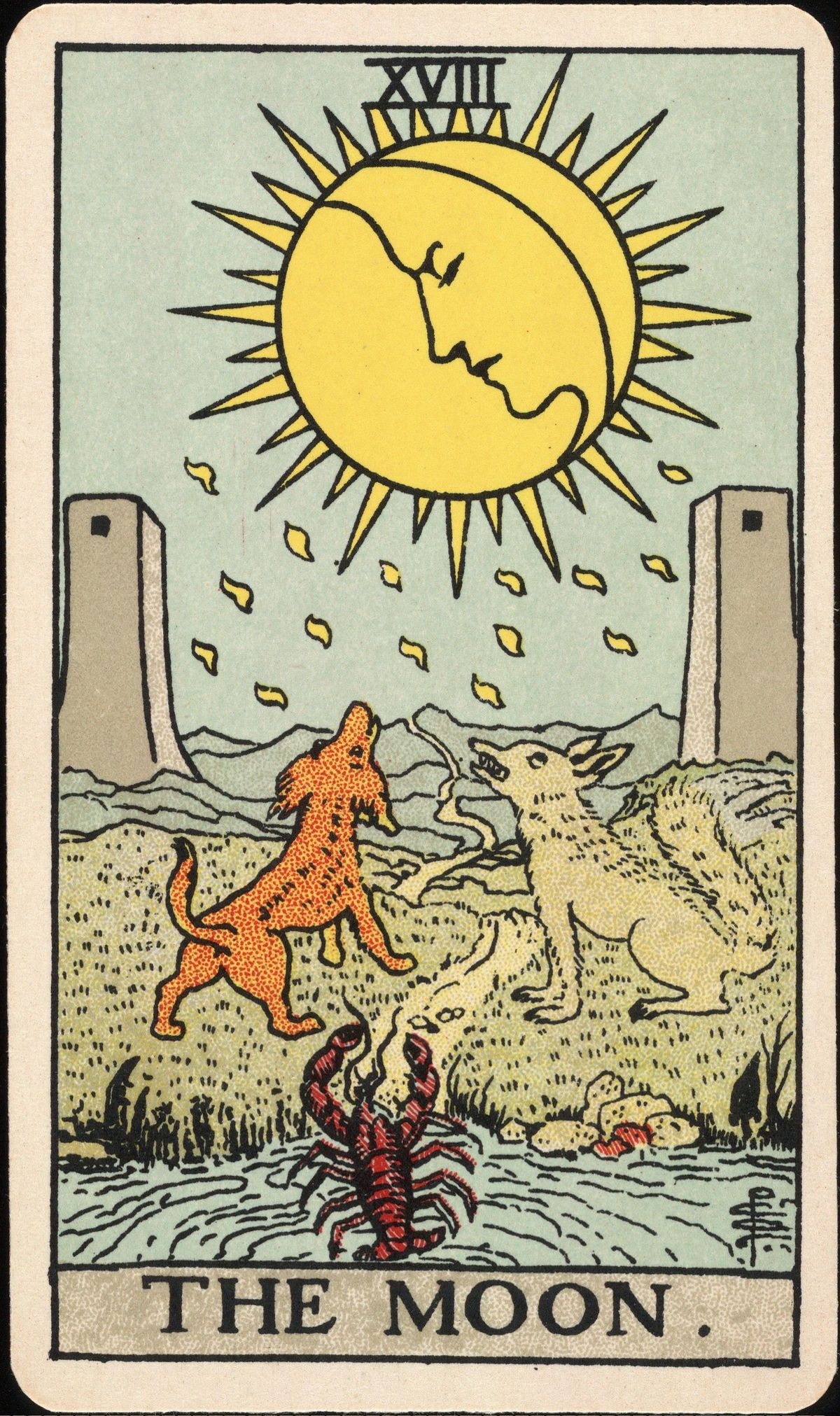
Material Singularity, in the context of the tarot, does not refer to the uniqueness of a physical object but to the irreducible specificity of the visual language that articulates the symbolic structure. Pamela Colman Smith's visual language is particular; the way she drew the Fool, the Empress, the Death card, is a specific articulation of specific archetypes by a specific sensibility working at a specific historical moment. Her choices, the positions of figures, the landscapes, the symbolic attributes, have been so thoroughly absorbed into the culture's understanding of the tarot that they now function as transparent: they feel like "what the tarot looks like," rather than like one woman's highly specific visual interpretation of a symbolic system.
This transparency is the most powerful form of material singularity available to a reproducible object. Smith's deck has achieved what very few designed objects achieve: it has become the system it was designed to express. The contemporary artist edition does not compete with this achievement on its own terms. It competes on the market's terms, offering visual novelty as a substitute for structural depth. The One Original Principle applies here in a modified form: there is one original articulation of the modern tarot's visual language, and it belongs to Pamela Colman Smith. Everything that follows is a response to that articulation, for better or worse.
The OAC's study on provenance as a record of keeping argues that objects carry the history of their custody as part of their meaning. The tarot's "provenance" is a history of interpretation: each generation that has read the cards has added to the system's depth, and this accumulated interpretive tradition is as much a part of the system's value as any physical object. The contemporary artist edition that treats the 78-card structure as a blank template is not engaging with this provenance. It is ignoring it, and the deficit shows in the resulting objects.
VIII. What the Archetype Actually Requires
The tarot is a sedimentary object in the sense that counts most for this analysis: it has accrued meaning over centuries in a way that no single edition can fully hold, and it has done so because successive generations found in it a genuine symbolic utility, a real capacity to organize and articulate human experience. The Fool is not arbitrary; the Tower is not arbitrary; the specific relationships between the 22 Major Arcana cards are not arbitrary. They represent a particular, historically contingent, but genuinely coherent attempt to map the structure of human psychological and social experience. You can disagree with the map. You cannot simply replace it with a different aesthetic style and call it the same map.
What the archetype requires, and what most contemporary artist editions do not provide, is engagement at the level of the system's actual claims. Not just "what does the Death card look like in my visual language?" but "what does Death mean as an archetype, how does it relate to Judgement and the Hanged Man, and what does my understanding of these relationships contribute to the tradition of thinking about them?" This is a much more demanding question, and the market for artist tarot decks does not ask it. The market asks: is the visual language attractive? Is the artist's reputation sufficient to legitimate the edition? Is the price point appropriate for the target collector?
The Burden of Preservation falls, in the tarot's case, not on a single custodian but on the community of practitioners, scholars, and artists who take the system seriously enough to engage with its actual depth. The Morgan Library's exhibition, for all its limitations as noted above, is an act of preservation in this sense: it insists that the Visconti-Sforza cards deserve to be seen in relation to the broader tradition, not merely as antique curiosities. The challenge for the institution is to extend this seriousness to the contemporary commissions it places alongside them, to ask whether an artist's commissioned collages are engaging the system on its own terms or on the market's terms.
An archetype is not a template. An artist edition that treats it as one has not made a tarot deck; it has made a branded object that borrows the tarot's vocabulary without paying the entry price.
The Zero-Sum Aura logic of the proliferating edition market means that each new deck, by entering the space of "artist tarot deck," necessarily draws on the accumulated authority of the system while also diluting it. The more editions there are, the more the phrase "artist tarot deck" becomes a market category rather than a meaningful descriptive claim. The Morgan Library's exhibition is partly a symptom of this dynamic: the institution is responding to the cultural salience of the contemporary tarot moment, which is itself partly a function of the proliferation it is now, retrospectively, historicizing.
Coda
The Visconti-Sforza Death card, painted on vellum in Milan around 1450 to 1480, sits in the Morgan Library's Tarot exhibition alongside Chris Ofili's 2026 collages and Nicolas Bruno's surreal photographs. They are all in the same room. The institution presents this as a conversation.
What it is, read carefully, is a study in what an archetype costs to make. The Visconti-Sforza required a court, a budget, a painter of the highest skill working in the conventions of a tradition that had spent centuries developing the visual vocabulary for representing human archetypes. Pamela Colman Smith required a commission, years of intensive work, and a visual intelligence that was original enough to remake the system's appearance without distorting its structure. Leonora Carrington required a genuine esoteric practice, decades of engagement with the symbolic systems the tarot draws on, and the discipline to spend years making 22 cards no one would see for decades.
The contemporary artist edition requires none of these things. It requires a visual language, a production budget, and the tarot's willingness to lend its accumulated authority to whoever borrows its frame. The system is, in this sense, extremely generous. The generosity is not without cost. Each edition that borrows the frame without earning it weakens the frame a little, makes it a little harder for a future Pamela Colman Smith to be recognized for the real thing rather than the market category.
The Morgan Library knows what the Visconti-Sforza is. The question the institution has not yet found a way to ask in public, in a major exhibition, is what the new editions are. This study is, in part, an attempt to ask it.