
The Architecture of Intent
A Critical Lexicon
This collection of studies is the intellectual architecture of Post-Luxury Conceptual Functional Art (PLCFA).
The true artistry of this Maison resides not in the finished form, but in the rigorous thinking that precedes it. These essays serve as the conceptual foundation for PLCFA, using a critical lens to interrogate cultural phenomena, art history, and consumer paradigms—analyzing everything from the ephemeral spectacle of luxury to the pure architectural rigor of abstract principles.
This is an invitation into the workshop of the mind. By sharing this process, we validate the necessity of a new category of value and invite you toward a well-considered life, one founded on true craft, uncompromising narrative, and durable meaning.
New to PLCFA? Begin with Essential Reading below.
Exploring a specific area? Navigate by category.

The Bag-Backed Security: How the LUXUS Fund Signals the Death of Old Luxury and the Rise of the Post-Luxury Era
The 21st century has borne witness to a silent, seismic shift in the semoiotics of value. Luxury, once the bastion of craftsmanship, has been systematically hollowed out, its cultural meaning evacuated and replaced by a cold, relentlessly quantitative logic. What was once an object of affection has been supplanted by the alternative asset. This transformation was a deliberate, institutional project to financialize desire and render the intangible liquid.
The logical endpoint of this process is the "Bag-Backed Security", exemplified by the emergence of LUXUS, an asset management firm backed by Christie's. This is the "Simulacrum of Luxury" made real. The definitive proof of this total financialization is that a $1 million fund returned 34% in 43 days—a speculative trade that proves the object's physical existence is now irrelevant.
This system creates a crisis of value—a "value monoculture" incapable of processing "un-smooth" objects. The model fails to see the intellectual critique of a Rei Kawakubo "Lumps and Bumps" dress or the earned endurance of a Carol Christian Poell Drip Sneaker.
The cultural crisis creates the intellectual void that our framework, Post-Luxury Conceptual Functional Art (PLCFA), is designed to answer. Where the LUXUS model offers ownership of an alienable commodity, PLCFA demands active stewardship of an inalienable possession.
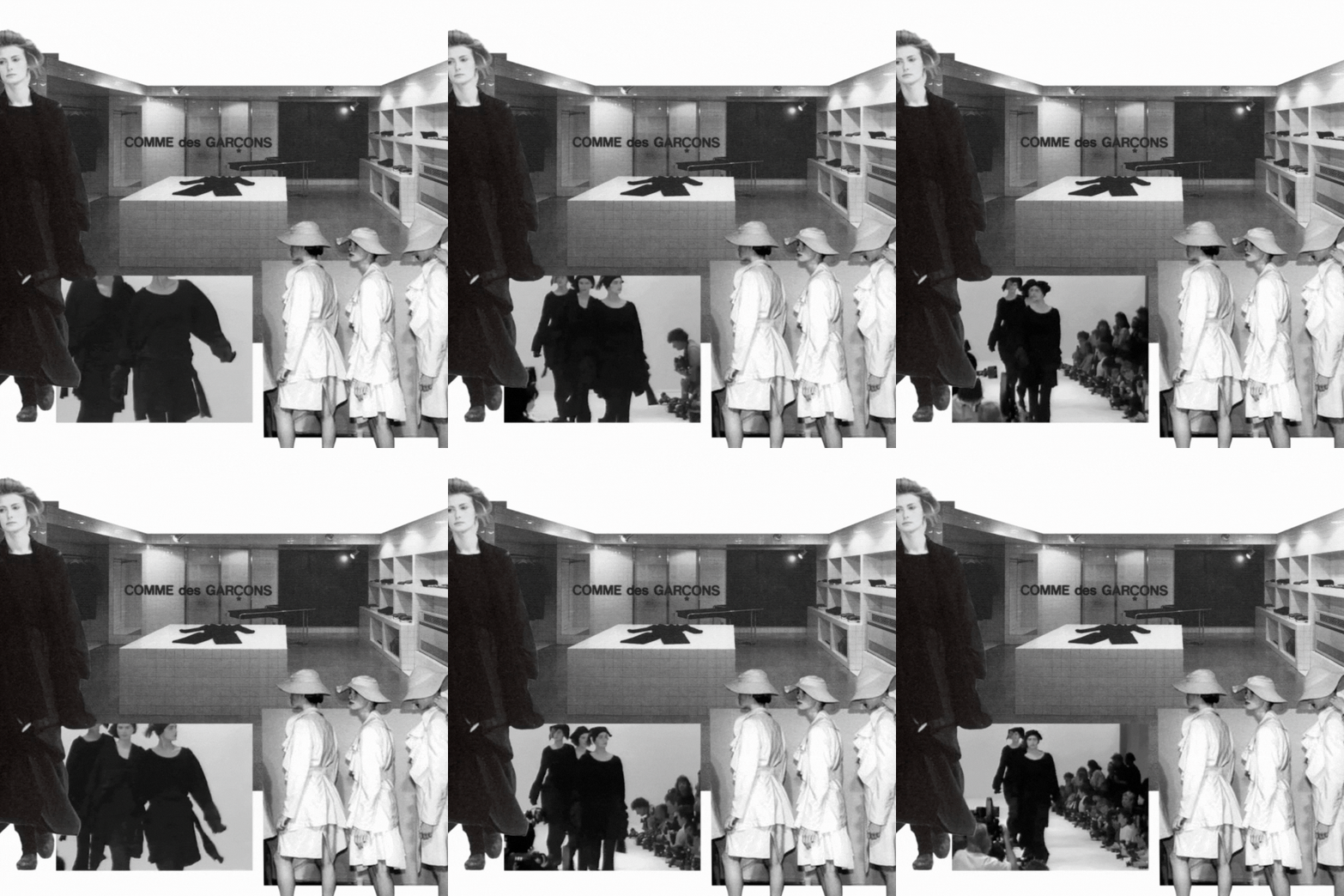
Rei Kawakubo and the Critique of Fashion as Conceptual Art
To categorize Rei Kawakubo as a mere "fashion designer" is a fundamental failure of language. Her life’s work is not a sequence of collections, but a sustained, totalizing critique delivered through the medium of the garment. This study traces her journey as a Philosophical Architect who relentlessly challenged the fashion system’s core tenets: the hollow worship of novelty, the arbitrary definitions of luxury, and the commodification of the human form. Through her radical 1982 "Destroy" collection, the conceptual warfare of the 1997 "Lumps and Bumps," and the creation of Dover Street Market, Kawakubo established the foundational anti-fashion lineage for the entire Post-Luxury sensibility. Her ultimate creation is an inhabitable universe where value is based on concept, function is defined by critique, and the only true object of affection is the one that forces intellectual engagement.

From 'Quiet Luxury' to Post-Growth Citizen: A PLCFA Perspective on Discerning Consumption
The "Quiet Luxury" phenomenon, widely interpreted as a simple aesthetic shift away from logos, is not what it appears to be. It is, in fact, the most visible tremor of a foundational crisis within the traditional luxury system. The legacy model has been hollowed out by its own success, creating a "Scarcity Paradox" that has destroyed rarity and a profound "price fatigue" in consumers who are quietly rebelling against a system where value is no longer tethered to any material reality.
This study argues that this popular aesthetic is only Phase 1 of a critical, three-stage evolution in discerning consumption. We provide the definitive map for that journey: from the unconscious, class-signaling aesthetic of "Quiet Luxury" (Phase 1), through the purpose-driven, conscious ethos of the "Quiet Vanguard" (Phase 2), to the final, philosophical and political alignment of the "Post-Growth Citizen" (Phase 3).
Using the foundational framework of Post-Luxury Conceptual Functional Art (PLCFA), this study guides the discerning individual from being a passive follower of a trend to becoming a conscious practitioner of a more considered life. It is an invitation to elevate your intent, revealing how your aesthetic instincts are pointing toward a far more meaningful philosophy—one that transforms the act of consumption into an act of conscious stewardship.