A Bolt of Cloth Has No Custodian: Loro Piana's Other Channel, and the Record That Stops at the Invoice

On a house that spent a year being asked who made its clothes, a second channel that nobody has asked about, and four hundred and ninety-two pages in which the word tailor never once appears as a noun
For fifteen months this institution has read Loro Piana through the record of what came into it. The May study set out the Milan Tribunal's decree and the conditions it described. The July study read the widening probe as an audit of the luxury model. The October study recorded that the administrations had all been lifted, that the prosecutor had changed instrument from seizure to document order, and that an audit file is a provenance record of labor whether or not anyone files it as one.
Every one of those studies followed the material inward: fiber to spinner, spinner to workshop, workshop to label. That direction has now been examined by a court, in public, with a decree and a hearing schedule and an administrator.
This study follows the material the other way.
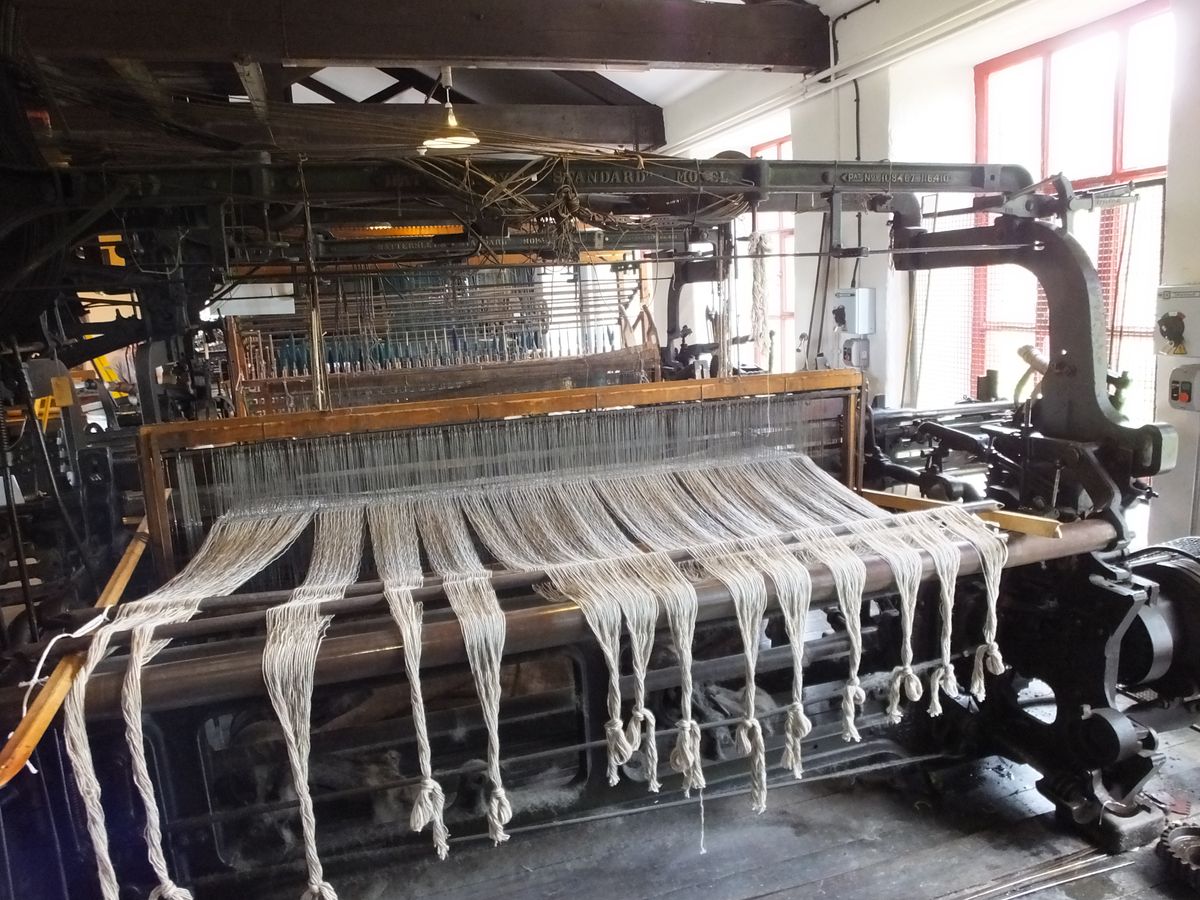
Loro Piana is not only a brand that sells garments. It is a mill. Cloth woven and finished at Quarona in the Valsesia leaves the house in bolts and becomes clothing made by other people, under other names, for customers who will never see the word Loro Piana on a label. That channel has no decree, no administrator, and no hearing date. It also, as this study will show by measurement, has no description in the four hundred and ninety-two pages in which LVMH accounts for itself.
What Is Established, With Its Dates
LVMH raised its holding in Loro Piana to ninety-four percent on 31 July 2025, paying one billion euros for an additional nine percent. The 2025 Universal Registration Document was filed with the Autorite des marches financiers on 31 March 2026 and runs to four hundred and ninety-two pages. The 2025 Annual Report runs to one hundred and eighty-four. Both were read in full for this study by extraction and search rather than by summary.
Loro Piana's judicial administration was lifted on 17 April 2026. This is worth stating precisely, because the Universal Registration Document does not say so. It says proceedings are in progress and names a February 2026 hearing at which the court would decide whether to conclude or extend. That sentence was accurate when the document was filed and became false seventeen days later. A filed document is evidence of what was true on its filing date and of nothing after it.
In September 2026 it was reported that Loro Piana is being withdrawn from wholesale, with surviving retail partnerships converted to concessions. That report rests on a single secondary outlet. It is not confirmed by LVMH, it is not in either document above, and this study does not depend on it. It is recorded here as reported and unconfirmed, and the argument below holds whether it is true or false.
The Channel LVMH Describes
Section 2.5 of the Universal Registration Document is titled Distribution, and it is unambiguous about what the group is doing and why.
Controlling the distribution of its products, it says, is a core strategic priority, particularly in the luxury Fashion and Leather Goods sector. The stated reasons are three: to retain retail margins, to guarantee strict control of the brand image and the sales environment, and to bring the group closer to its customers. To that end LVMH reports around two thousand three hundred Fashion and Leather Goods boutiques as of 31 December 2025.
The revenue note is more precise still. Direct sales to customers, it says, are mostly made through retail stores in Fashion and Leather Goods. Wholesale sales mainly concern the Wines and Spirits businesses, as well as certain Perfumes and Cosmetics and Watches and Jewelry brands.
Read that twice, because it settles something. Wholesale was never the principal route for the segment Loro Piana sits in. If the September report is accurate, the house is closing a door that was already narrow. What is being tightened is the path by which a finished Loro Piana garment reaches a person who wants a Loro Piana garment.
The Channel It Does Not
Now the measurement.
The word tailor appears twenty-one times in the Universal Registration Document. Every one of them is the adjective tailored, as in tailored to needs. As a noun meaning a person who makes clothes for other people, the word appears zero times. Couturier appears zero times. There is no passage anywhere in the document describing the sale of cloth to makers outside the group.
This is not an absence of the mill. The mill is there, and the document is specific about it. The Loro Piana production site at Quarona, it says, is a textile production and finishing facility that is strategic at a Group level. It records longstanding practices for treating polluted effluents, new treatment technology installed in 2024, and in 2025 the ramp-up of a reverse osmosis and water recycling system. Three separate places in the sustainability scope name the Maison that represents the textile category in group reporting, and in each the answer is the same: for textile, Loro Piana. The company is described elsewhere as primarily textile processing and production.
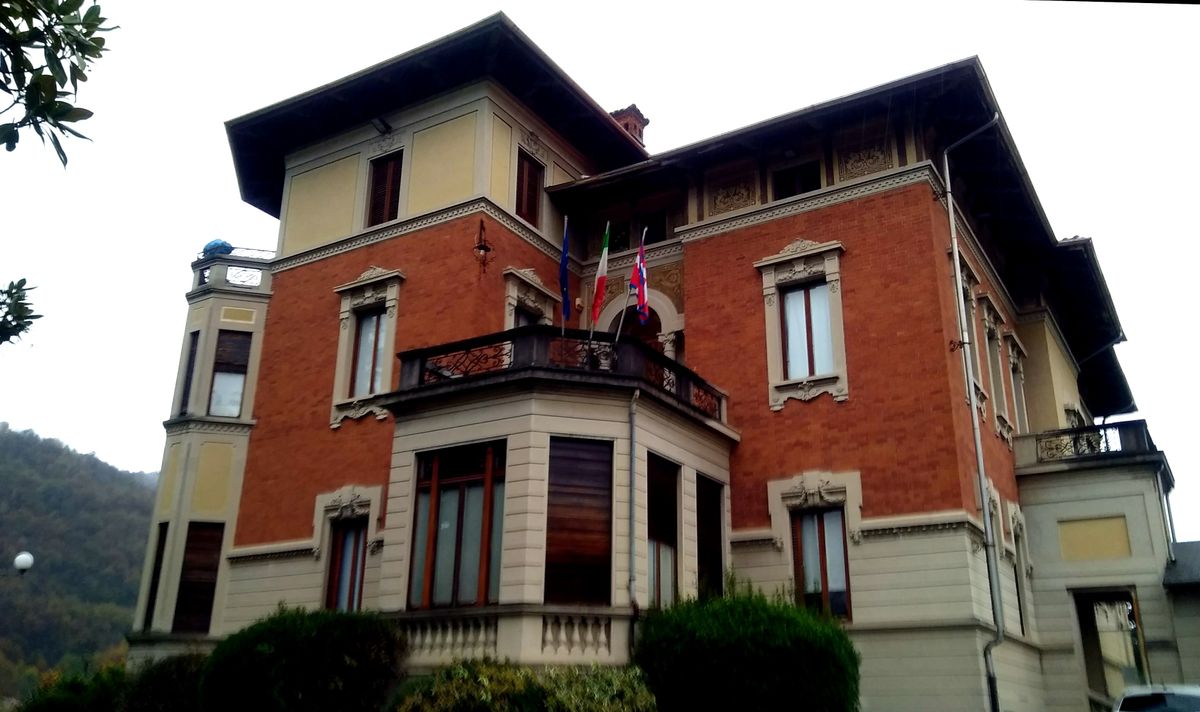
Nor is it an absence of the trade. The consolidation scope lists, among the Loro Piana entities at ninety-four percent, two separate companies in the same city:
Loro Piana (Shanghai) Commercial Co., and Loro Piana (Shanghai) Textile Trading Co.
A commercial company and a textile trading company, side by side, consolidated, as of 31 December 2025. The second of those is a vehicle for selling cloth. Its purpose is inferred from its name, and that inference is stated here as an inference rather than a finding, but a group does not maintain a separately incorporated textile trading company in order to run boutiques.
So the structure exists, the mill is strategic, the capital is being spent, the entity is consolidated, and the narrative does not mention it. The house accounts for the channel that carries its logo and does not account for the channel that carries its material.
A Concession Is a Custody Record
There is a sentence in the accounting policies that deserves more attention than it will get, because it shows that this group is entirely capable of recording custody when custody has a consequence.
Sales made in stores owned by third parties, the note says, are treated as retail transactions if the risks and rewards of ownership of the inventories are retained by the Group.
That is the concession, defined. It is also, read plainly, a custody statement. To apply that rule at all, the group must know, for every garment on every third-party shop floor in the world, who holds the risk and reward of owning it. That is a live record of possession, maintained continuously, across thousands of premises it does not own.
It exists because revenue recognition depends on it. An auditor will ask, and the answer has to be right, so the record is kept.
Set that beside the bolt of cloth. When cloth is sold to a maker outside the group, title passes, the transaction completes, and the group's interest in that material ends at the invoice. No rule requires anyone to know where it went, what was made from it, who made that, or who holds it now. There is no instrument, and because no money turns on the answer, there is no record either.
Custody is documented in this institution's subject precisely where a financial statement would otherwise be wrong. Everywhere else it is optional, and optional records are not kept.
The Cloth Leaves Under Another Name
Consider what the finished object looks like at the end of the unrecorded channel.
A jacket is cut from cloth woven and finished at Quarona. The fiber may have come from the Eastern Steppes or the Peruvian Andes. It was spun, dyed and finished by a house that measures its own water recycling and reports its own effluent treatment to a European regulator. It was then bought by a maker who cut it, fitted it, and sewed a label into it bearing their own name.
That garment is, in its material, almost entirely the product of a house that has spent a year under court supervision learning to document its supply chain. In its record, it is the product of nobody in particular. The cloth's Material Singularity is wholly intact, and its provenance is wholly absent: these are two different properties and the object carries one without the other.
The owner of that jacket, asked in twenty years what it is made of, has the maker's word and the cloth's hand. They have no document. If the maker has closed, retired, or kept no book, there is nothing. The material survives the record by decades, which is the ordinary case for cloth and the reason a Custodian's Contract has to attach to material and not only to finished goods.
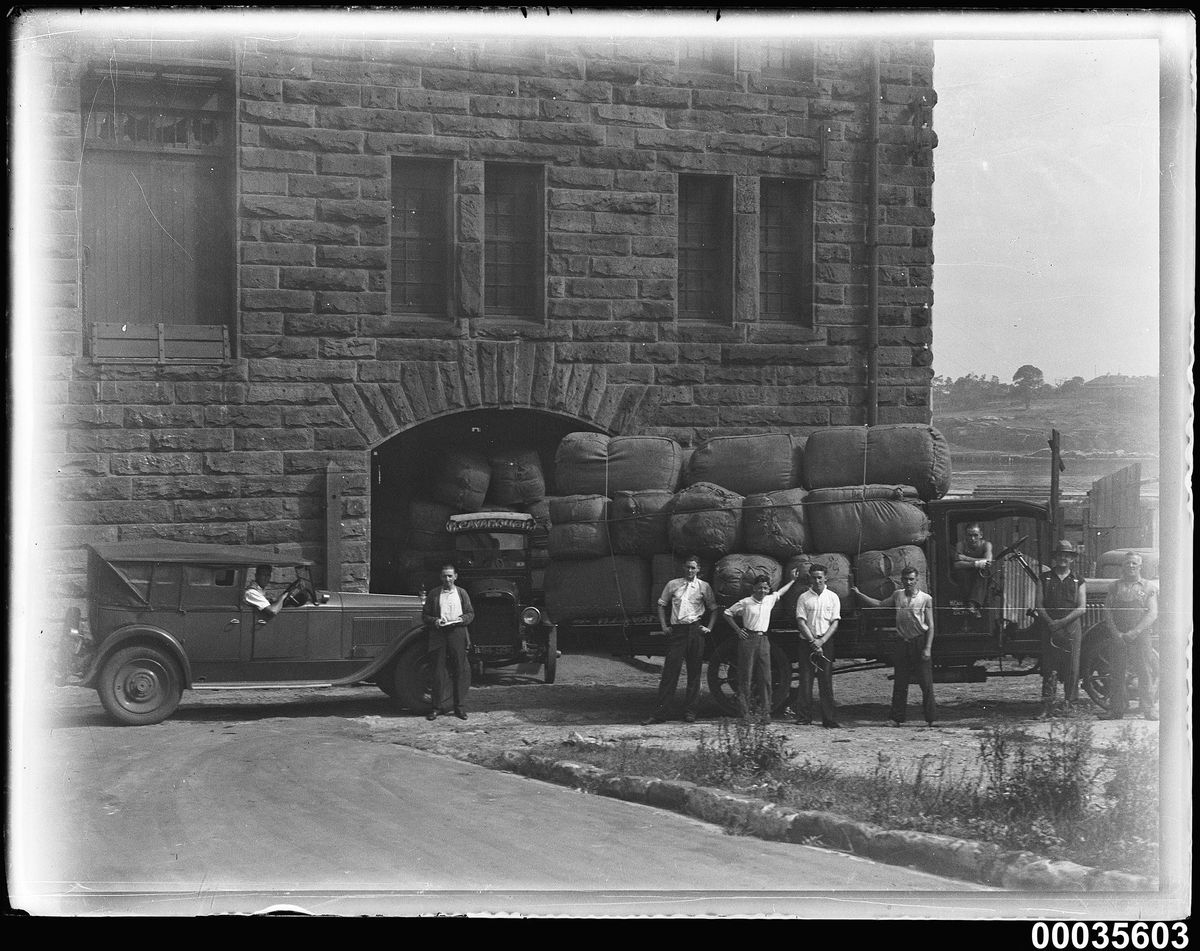
None of this is a defect in the tailor, who is doing what tailors have always done. It is a gap in the instrument, and it sits at the exact point where the material changes hands.
What We Have Already Established, and Why This Is Not That
This institution's prior position on Loro Piana is a position about the inbound record, and it should not be restated as though it were this one.
The May study established that a vocabulary of material integrity persisted after the conditions it described had been contradicted, and that the court file is the counter-reference. The July study established that the exploitation sat one or two tiers below the house, and read the probe as an audit of the model. The October study established that the audit file is itself a provenance record of labor, that the maker is the author rather than the facility, and that at each step of subcontracting the name of the person who did the work drops out of the record until the label says only the house.
Hold that last sentence against this study's finding and the symmetry is exact, running in the opposite direction. Coming in, the name of the maker drops out and the label keeps the house. Going out, the name of the house drops out and the label keeps the maker. In both cases the thing lost is the same thing, and it is not a name. It is the link between a material and the hands it passed through.
The inbound half of that loss has a court, a decree, a prosecutor and twenty-two houses holding document orders. The outbound half has nothing, and nobody is asking for it.
The Asymmetry
An instrument was built for the inbound channel because a harm was found there, and the harm was to people. That is the right order of priority and this study does not argue otherwise.
But note what the asymmetry produces. A house can now demonstrate, under supervision and to a court's satisfaction, that it knows who made its garments. The same house has no obligation, no instrument and no incentive to know what was made from its cloth. A record compelled at one door and absent at the other is not a provenance record of the material. It is a compliance artifact that happens to contain provenance, and it stops where the compliance stops.
This is why the subject of this institution is custody over time rather than conditions at a moment. A decree describes a workshop in 2025. It does not follow a bolt of cloth to a maker in 2027, or to that maker's customer, or to whoever holds the jacket when the customer dies. Those are transfers, and transfers are the thing a provenance record is for.
What This Is Not
This study makes no allegation against Loro Piana, and the facts above are not offered as wrongdoing. Selling cloth without a custody instrument is the universal practice of the textile trade and has been for centuries. No mill anywhere issues one.
It is not a claim that the mill is closing or that the cloth trade is ending. The evidence points the other way, and the September wholesale report concerns finished goods and not material.
It is not authentication. Nothing here establishes that any particular garment is made of any particular cloth, and this institution does not make claims about objects at a moment.
It is not a reading of the lifted administration. That the administration ended early, and that the decree called it a virtuous path, is recorded in the October study and is not revisited here.
And it is not an argument that the group is concealing the trade channel. A registration document is written to a regulator's requirements. Nothing requires LVMH to describe who buys its cloth. The absence is a fact about what the instrument asks for, not evidence of intent.
The Thing Worth Saying Plainly
A house in this trade maintains, continuously and accurately, a record of who holds its finished product on shop floors it does not own, because an auditor will test it. It maintains no record of what becomes of its material once sold, because nobody will.
Both are custody. Only one is counted, and the one that is counted is the one attached to a number in a financial statement.
That is the whole of the finding, and it is not special to this house. It is what happens to any record that exists because an accounting rule demands it rather than because the object deserves it. Change the rule and the record disappears. The cloth does not.
Coda
Quarona has been weaving in the Valsesia since 1924, and the document calls the site strategic at a Group level. The word appears in a section about wastewater.
Four hundred and ninety-two pages describe how a garment reaches a person who wants that garment. Not one of them describes how the cloth reaches the person who will make something else from it, and the word for that person does not appear in the document at all.
The material leaves the valley either way. Only one of the two journeys has been written down.