A Cancellation Documents Itself: Four Withdrawn Exhibitions, the Record Each One Left, and the Quieter Ones That Leave Nothing
On four institutions that took work down or held it back, the unusually thick record each refusal produced, and the quieter decisions that produce no record at all
This study takes no view on the content of any work named in it, on whether public money should support art, on what is or is not obscene, or on whether any of the four institutional decisions examined here was the right one. Those are not questions this institution answers, and none of them is necessary to the finding. No contested image is reproduced. The statute and the court decision below are cited as record rather than interpreted.
What this study is about is narrower and, so far as can be established, unexamined. When an institution removes a work, cancels a show, or holds one back, it generates more durable documentation in a few weeks than that work would otherwise accumulate in a lifetime of uneventful display. The refusal is dated. The person who made it is named. The reasoning is published, usually under pressure. The object moves, and the movement is recorded by several parties who disagree with each other. A removal is the single best documented moment in most works' institutional lives, and the documentation is a byproduct of the attempt to make the work go away.
What Is Established, With Its Dates
The occasion is a book review. The Perfect Moment: God, Sex, Art, and the Birth of America's Culture Wars, by Isaac Butler, was published in 2026 by Bloomsbury, and was reviewed on 23 October 2026 in Hyperallergic by the artist Martha Wilson. Butler's argument, as the publisher states it, is that a particular set of tactics was developed in that period and remains in use. Wilson, who founded the New York arts organisation Franklin Furnace fifty years ago, was named in the episode herself, and reviews the book from inside it.
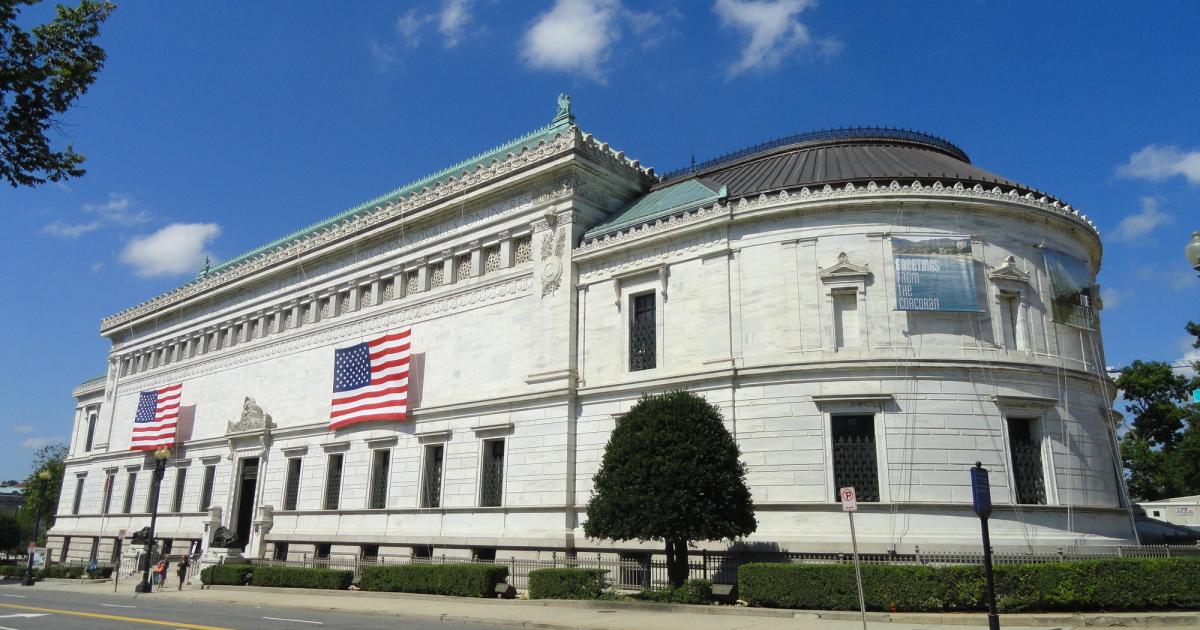
The events the book covers, with the dates that matter here. Robert Mapplethorpe: The Perfect Moment was organised by the Institute of Contemporary Art at the University of Pennsylvania with partial support from the National Endowment for the Arts, and had been shown to critical acclaim in Philadelphia and Chicago. Washington was next. On 12 June 1989 the Corcoran Gallery of Art cancelled it, eighteen days before it was due to open on 30 June. Its director, Christina Orr-Cahall, gave as her reason the fear of adversely affecting the National Endowment's congressional appropriations. Mapplethorpe had died of an AIDS-related illness three months earlier, aged 42.
The surrounding record, briefly. Andres Serrano's Piss Christ of 1987 was circulated by the Reverend Donald Wildmon's National Federation for Decency, which Wilson credits with pioneering mass mailing to Christians as a campaign instrument. In 1989 Senator Alfonse D'Amato tore a reproduction of it in half on the Senate floor. Senator Jesse Helms sought to restrict federal arts funding; Representative Sidney Yates opposed him. Five years earlier the Morality Action Committee had asserted that Franklin Furnace showed pornography to children in its exhibition Carnival Knowledge, a claim that was false.
A Removal Is the Loudest Entry in Any Record
Begin with the structural claim. The four cases are evidence for it, and not themselves the subject.
Consider what the ordinary institutional life of a work puts on paper. An acquisition produces a receipt and a line in a register. A loan produces a form, a condition report and an insurance valuation, all of which are read once. A hang produces a floor plan and a label. None of it is contested, so none of it is corroborated. The record is thin not because anyone was careless but because nothing in the transaction required a second account.
Now consider what a removal produces. A dated decision. A named decider. A public statement of reasons, which is immediately disputed, which produces a second statement. Press coverage from parties with opposing interests, which is the only circumstance in which an institution's own account of its conduct is checked against anybody else's. Correspondence, petitions, resignations. Often a legislative record. Sometimes a court record, which is produced under oath. Every one of those documents exists because somebody wanted the work not to be seen.
This is the inversion worth holding on to. The institution acting to suppress a work is, in the same motion, generating the most reliable documentation that work will ever have. Not out of candour. Out of the structure of a dispute, which requires each side to commit its position to a dated record that the other side will quote back.
Thirty-Eight Days Later, the Show Opened and Drew Thirty Times the Crowd
The Washington Project for the Arts, a non-profit without the Corcoran's endowment or its building, took the exhibition. Its director Jock Reynolds was quoted in The New York Times on 15 June 1989, three days after the cancellation: our artists and board members voted unanimously last night to take the show.
It opened on 20 July 1989, thirty-eight days after the cancellation, and ran to 13 August. By the Project's own account, preserved on its archive, attendance reached nearly 49,000, roughly thirty times its norm. Visitor donations exceeded forty thousand dollars. Tickets for the opening reception raised one hundred and twenty-five thousand dollars for the Design Industries Foundation Fighting AIDS. The catalogue sold out. There was, the Project records, surprisingly little protest.
That figure is the measurable core of this study, and it should be read with its source named: it comes from the institution the episode benefited. An organisation describing the moment it mattered most is an interested witness. The thirty-fold multiple is nonetheless an attendance ratio against its own baseline, which is the kind of claim an institution is least able to invent and most likely to have in its books.
What a provenance record would show for a work in that show is a venue change in July 1989 with a documented cause. The work did not become less visible. It became visible at a different address, to thirty times the usual audience, with a reason attached. An uncancelled show in a borrowed building leaves no such entry.
The Corcoran's side of the same period is equally documented and considerably less comfortable. Local artists formed a National Committee Against Censorship in the Arts. Slides of the photographs were projected onto the museum's facade at forty feet. Members resigned. Orr-Cahall issued a formal apology within two months and relinquished the directorship three months after that. A cancellation intended to protect an appropriation cost the institution its director and produced a permanent public record of the attempt.
A Courtroom Keeps Better Records Than a Museum
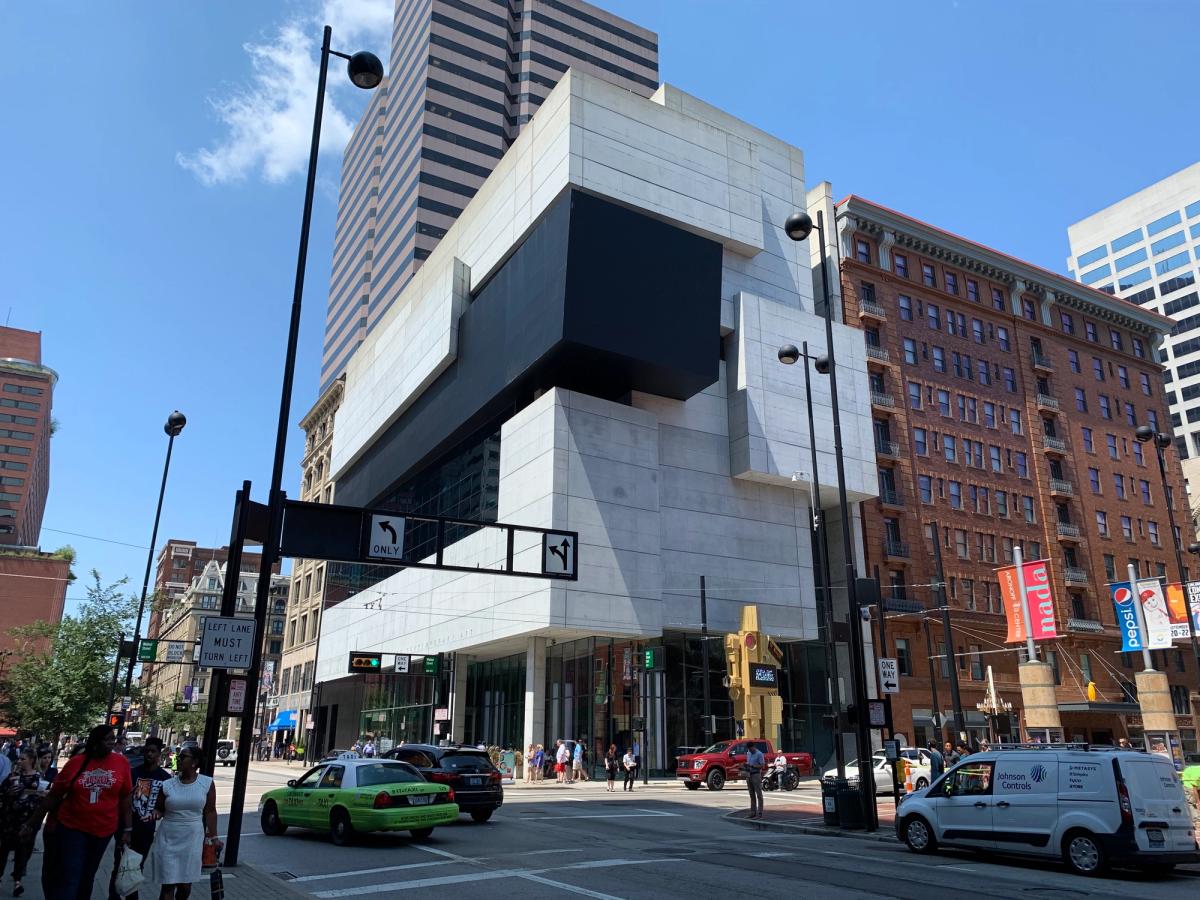
The exhibition continued to Cincinnati, and there the documentary surplus reached its maximum.
The Contemporary Arts Center filed for a declaratory judgment on 27 March 1990. It was dismissed on 6 April. The next day a Hamilton County grand jury indicted the museum and its director Dennis Barrie, on charges of pandering obscenity and of the use of a minor in nudity-oriented material. The trial ran from 24 September to 5 October 1990. The jury acquitted on all counts.
It is described in the secondary literature as the first criminal trial of an American museum over the contents of an exhibition. For the purposes of this study the relevant fact is not the verdict but the kind of document a trial produces. Exhibits are entered and numbered. Witnesses state on oath what they saw, where it hung, who selected it, how it was lit, what the wall text said. Expert testimony about the work is taken down verbatim. A curatorial decision is examined under cross-examination, which is a standard of scrutiny no catalogue essay has ever been held to.
No ordinary exhibition generates a sworn account of its own installation. This one does, and it exists because the state attempted a prosecution. The record is adversarial in origin, which is precisely what makes it load-bearing: it was produced by two parties who had every incentive to contradict one another and no ability to agree a convenient version.
The Statute Outlived Everyone's Argument
The most durable artefact the episode produced is not a photograph or a catalogue. It is a sentence in the United States Code.
The most invasive parts of the 1989 Helms amendment were struck down. In 1990, however, Congress amended the National Endowment's governing statute, and the language survives today at 20 U.S.C. section 954(d)(1): the Chairperson is to ensure that artistic excellence and artistic merit are the criteria, taking into consideration general standards of decency and respect for the diverse beliefs and values of the American public.
Four performance artists whose grants were denied challenged it. The Ninth Circuit held the provision facially invalid. The Supreme Court reversed in National Endowment for the Arts v. Finley, 524 U.S. 569 (1998), holding the provision facially valid. This study expresses no view on that holding and does not interpret the provision. It records that the provision exists, that it was enacted in the aftermath of a cancelled exhibition, and that it is still in force thirty-six years later.
Set that beside the objects. The photographs were acquitted in Cincinnati, the Corcoran dissolved, the director resigned, the organisers dispersed. The clause remains. Of everything the dispute generated, the item with the longest life is the one written in the most durable medium available to any party to it, which is the statute book. That says something about where records survive and nothing about any party's merits.
The Accusation Was False and the Archive Survived Anyway
Franklin Furnace is the case that runs the other way, and it is the most hopeful one in the subject.
The organisation was the target of an assertion that was untrue. What happened to its record is nonetheless the best outcome in this study. In November 1993 the Museum of Modern Art announced the acquisition of its artist book collection: approximately 13,500 artist books, magazines and audiotapes by more than 500 artists internationally, together with documentary files, to be merged with the Museum's own holding of roughly 4,000 artist books. Wilson, the founding director, gave her reason at the time: the sale kept the archive intact and in New York, and freed the organisation to concentrate on performance and exhibition. Franklin Furnace moved to Pratt Institute in 2014. In 2016 the Museum mounted an exhibition drawn from the material it had bought.
The structure of that outcome deserves naming. A small organisation under attack converted its archive into an institutional holding before anything could happen to it, on terms it chose, for stated reasons, with the collection unbroken. The record of a fifty-year practice now sits inside one of the largest museums in the world and is exhibited from. The Burden of Preservation was handed over on chosen terms, not shed, which is the distinction between a succession and a loss, and almost nothing in this field gets it right.
The Institution That Cancelled No Longer Exists
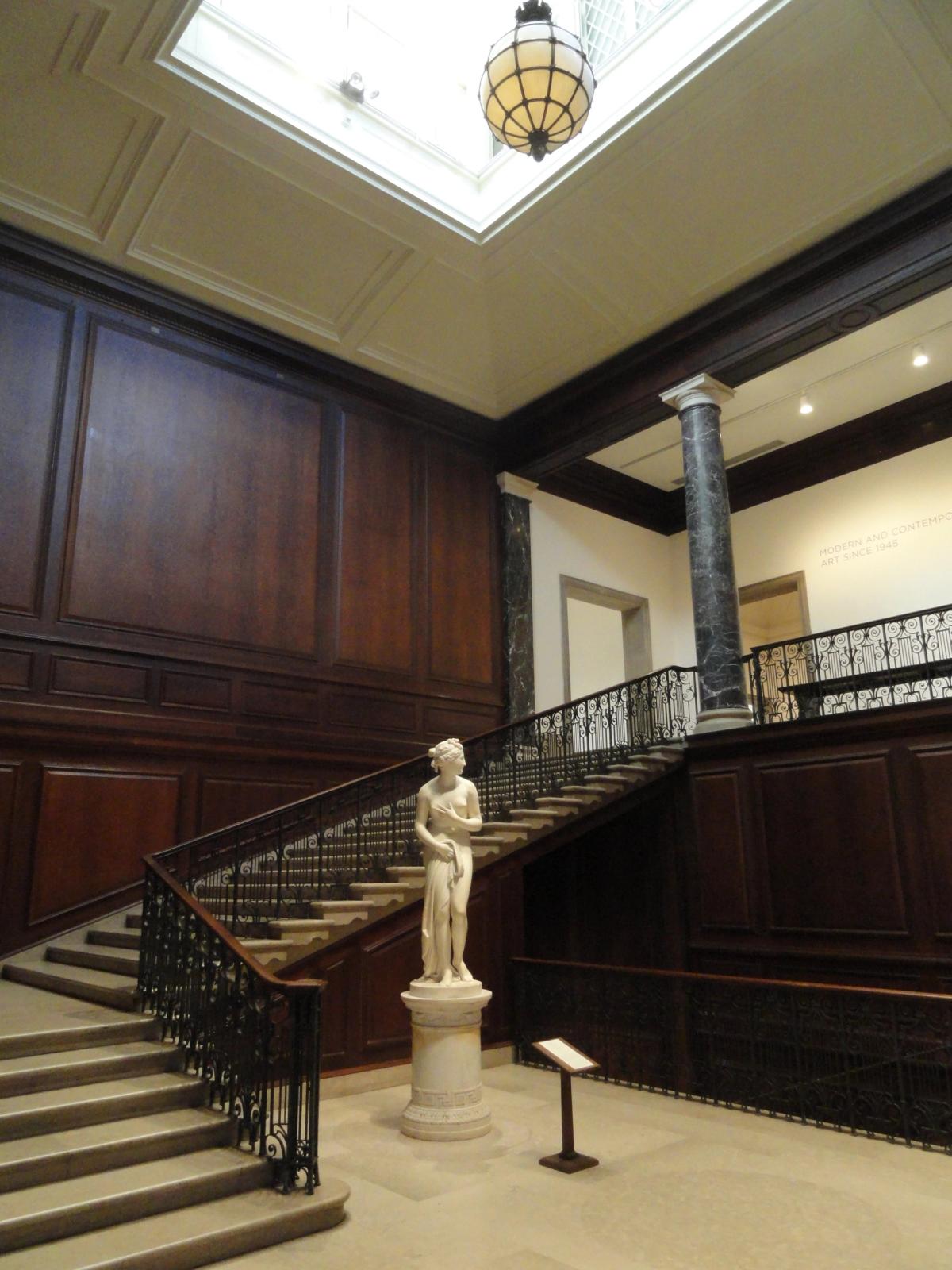
The Corcoran Gallery of Art ceased operations in 2014 under a court-approved agreement. Its art collection was relocated to the National Gallery of Art. Its school became part of George Washington University's Columbian College of Arts and Sciences. In 2016 the Corcoran trustees invited GW Libraries Special Collections to serve as the permanent home for the archives. A further 884 works were given to the university as a study collection.
There is a plain contradiction in the dispersal record, and this study leaves it standing. One account of the 2014 distribution gives the collection as 19,456 works divided chiefly between the National Gallery and the American University Museum. Another describes curators selecting over roughly two years from about 17,000 works. The institution's own archive page says only that the art collection was relocated to the National Gallery. Three accounts, three different pictures of the same event, none of them obviously wrong. The disagreement is the finding. A number quoted without its source and its date is not a measurement, and the dissolution of a 145-year-old museum is exactly the event at which counts stop agreeing.
What survived with a precise address is the paperwork. The archive is organised into record groups, and two of them are the ones this study has been circling: COR RG 2.0, Directors' records, 1869 to 2012, and COR RG 5.1, Gallery registrar's office records, 1869 to 2013. The decision of 12 June 1989 was made in the first office and its consequences for the physical objects were handled by the second.
So the position today is this. The museum is gone. The director is gone. The record of the cancellation is a requestable record group at a university library, which is a more stable custodian than the museum turned out to be. This is Institutional Necrophagy in its literal and least polemical form: an institution dies and the surviving institutions feed on what it held, and in this instance the feeding is why anything is left to consult.
A Postponement Can Redesign the Object's Presentation
The recent case shows the mechanism at a lower temperature, and it produces the subtlest finding in the study.
In September 2020 the National Gallery of Art, the Museum of Fine Arts Boston, the Museum of Fine Arts Houston and Tate Modern announced that Philip Guston Now would be delayed, possibly until 2024, over concern about how the artist's hooded figures would be read. After public objection, the museums said in November 2020 that it would open in Boston in May 2022. It ran at the Museum of Fine Arts Boston from 1 May to 11 September 2022, then Houston from 23 October 2022 to 15 January 2023, the National Gallery from 26 February to 27 August 2023, and Tate Modern from 3 October 2023 to 4 February 2024.
Two things changed permanently, and neither is a document about the controversy. The tour order reversed: Washington had been first and Boston last, and Boston went to the front. And the Boston exhibition was redesigned, organised thematically as well as chronologically, with 73 paintings and 27 drawings.
That is the finding. A reader of the Boston catalogue in fifty years will see a thematic hang and a particular checklist. The hang is the effect. The cause is in a press release from September 2020, and nothing in the catalogue joins the two. The pressure did not merely delay the exhibition; it entered the exhibition's form, and it entered it in a medium that does not carry its own explanation. This is the failure mode of Narrative Permanence: the shape of a thing persists perfectly while the reason for the shape is held in a different document, in a different institution, with no pointer between them.
What the Thick Record Still Does Not Say
Having argued that removal documents itself, the honest next step is to say what all that documentation is about.
Read the whole corpus generated between June 1989 and October 1990 and you will find: who decided, when, under what pressure, what they said afterwards, who resigned, who voted, what the attendance was, what the jury found, what Congress enacted. You will find almost nothing about the works. No condition reports. No sequence of ownership. No account of how the prints were made, or who held them before, or what the artist intended by the order of the portfolio.
The surplus is real and it is in the wrong dimension. It documents the institution, not the object. This institution has recently had occasion to describe the opposite failure, in which the people who knew the most about an object were the only people the record never recorded. The defect here is a mirror of it: the record is enormous, and it is a record of a quarrel. Provenance asks where a thing has been and in whose keeping. A censorship archive answers where a thing was argued about, which is a different question that looks like the same one.
This matters because the thick record is seductive. A work with a controversy has a bibliography, and a bibliography reads as documentation. A work can be among the most written-about objects of its century and still have a provenance record no better than a work nobody ever mentioned.
What a Withdrawal Record Has to Contain
The constructive half. If removal is the moment a record is richest, it is the moment worth specifying, and the specification is short.
A withdrawal entry should carry: the date of the decision; the office that made it, which is a role and not only a name, because the office outlives the person and is how the file is later found; the stated reason, in the words used at the time, because a reason restated later is a different document; what physically moved and to whose custody; what the institution told the public and when, including any later correction; and where the file now lives, which for a dissolved institution is the only field that still resolves.
Every one of those six fields exists for the Corcoran in 1989, scattered across a newspaper, a non-profit's archive page, a university library's record groups and a book published this year. None of them is in one place, and that is the whole of the problem. The information was never lost. It was never joined.
Note what the specification refuses. It does not record whether the decision was right. A record that adjudicates cannot be kept by the party with an interest in the outcome, and the institutions here were all interested parties. Object Permanence requires that the fact of the removal survive, not that the removal be judged, and a record which insists on a verdict is one a future custodian has a motive to edit. See Object Permanence and Narrative Permanence for how the two come apart.
The Decisions That Leave Nothing
The last finding is an absence, and it limits everything above.
Every case in this study is loud. A cancellation announced eighteen days before an opening, a grand jury, a Senate floor, four museums issuing a joint statement. Each is in the record because somebody objected in public.
Set against that the decisions that make no noise. The exhibition never proposed, because the curator knew how the proposal would land. The acquisition quietly not pursued. The loan declined with a scheduling reason. The work hung in a corridor rather than a gallery. The catalogue essay softened at proof stage. None of these produces a dated decision, a named decider, a press statement, a petition or a court exhibit. They produce nothing at all.
So a history of institutional refusal assembled from the available record is assembled from the subset that was contested, and it will systematically over-represent the loud cases while being structurally unable to see the quiet ones. There is no instrument for the second class, and this study is not able to propose one, because the evidence a proposal would be tested against is the evidence that does not exist. Plainly, this is the larger category. Public fights are rare. Quiet caution is not.
That is a lacuna, and naming it is the only honest thing available. A measurement taken over the cases that generated documents is a measurement about documentation, not about conduct. It should be reported with that boundary attached every time, which is the discipline the thick record makes it easy to forget.
Coda
A gallery cancelled a show eighteen days before it opened in order to protect an appropriation. The appropriation was restricted anyway, in language still on the statute book. The show opened five weeks later a short distance away and drew thirty times the replacement venue's usual audience. A museum and its director stood trial for mounting it and were acquitted. The director who cancelled apologised and left. The gallery itself ceased to exist in 2014 and its papers now sit in a university library, which is where the decision of 12 June 1989 can be read.
Not one step of that sequence was intended by anyone, and all of it is documented, because each party committed its position to a dated record in order to argue with the others. The record of a refusal is written by people trying to win, which is why it is reliable and why it is about them.
The institution that attacked Franklin Furnace with a false claim left no comparable archive. The organisation it attacked sold its own intact and now exhibits from it. The most durable thing any party to these disputes produced was, in every case, a record. It is worth being deliberate about that while there is still a choice of custodian, because the alternative is what the Corcoran got: a record that survives because somebody else agreed to keep it.