One Author for the Object and Its History: The Dealer Who Furnished Los Angeles, and the Archive That Convicts Him
On a dealer who supplied the objects, the paperwork and in some cases the objects themselves, and whose own filing cabinet is now the instrument by which all of it is known
This study takes no view on where any object belongs, on whether anything should be returned, or on the obligations of any museum now holding one. Those are not questions this institution answers. It is about a record, and about what happens to the idea of provenance when one person is the only source of it.
Earl Stendahl ran a gallery in Los Angeles from 1921. He is the reason a great many pre-Columbian objects are in American museums and American houses, and according to a book published this year by the Getty Research Institute he obtained a large number of them by looting and smuggling.
What Is Established, With Its Dates
The research is Artifacts to Art: Collecting Ancient America in Midcentury L.A., by Andrew D. Turner, Mary E. Miller and Khristaan D. Villela, published in 2026 by the Getty Research Institute, and reported on 12 October 2026 by Hyperallergic.
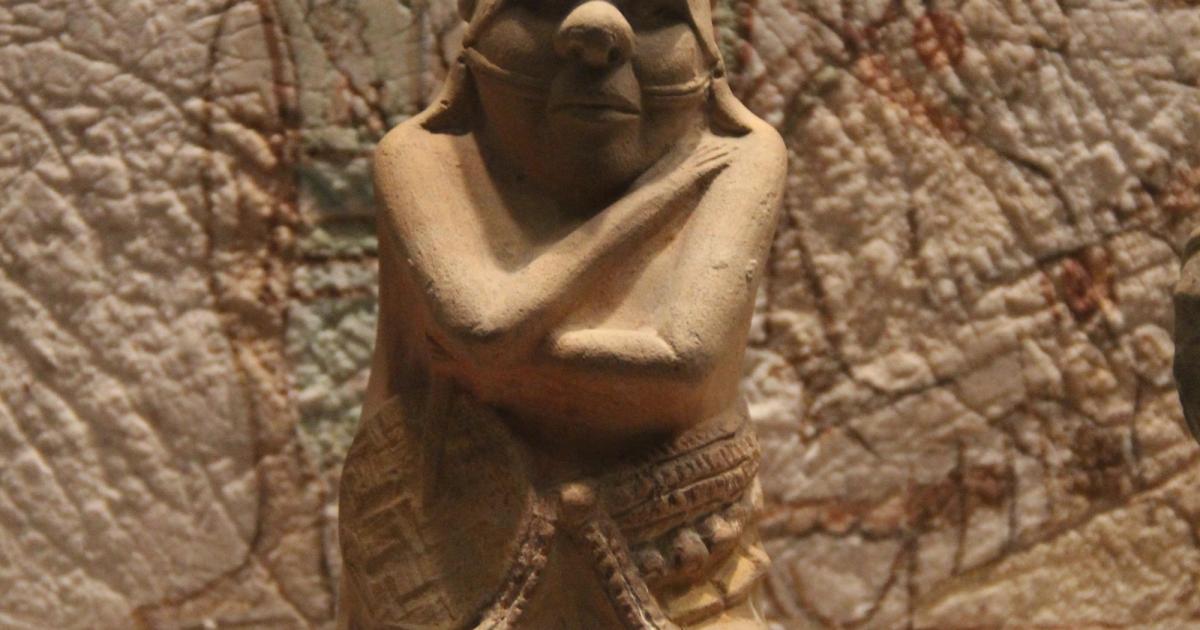
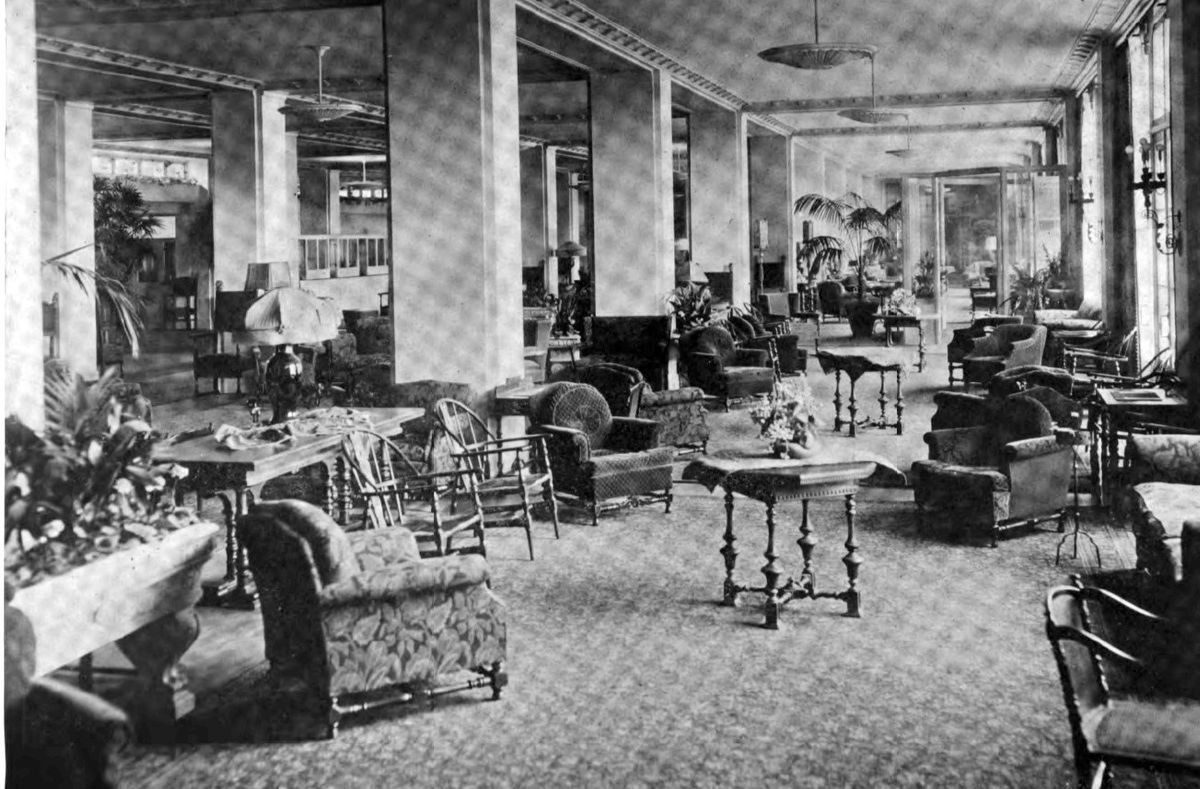
Stendahl moved to Los Angeles in 1911 and opened the Stendahl Art Galleries at the Ambassador Hotel in 1921. In 1935 the Mexican dealer Guillermo Echániz visited him and the two began removing antiquities from sites including Jaina, working with huaqueros, the looters who dig them. In 1939 Stendahl staged the only Los Angeles showing of Picasso's Guernica, for eleven days. In 1941 he wrote to an archaeologist: you will marvel at the great number of good things I have been able to gather in the past six years.
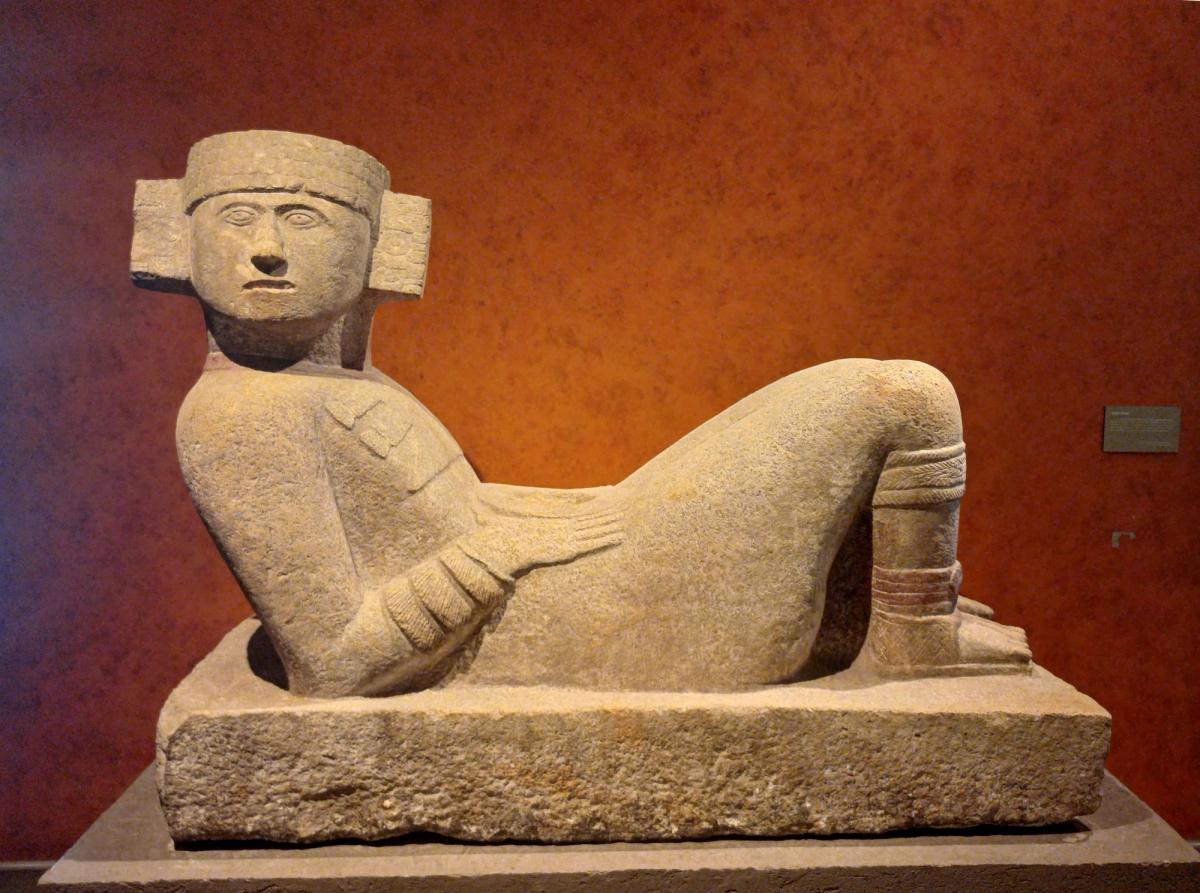
In 1947 the Minneapolis Institute of Art bought a chacmool from him for ten thousand dollars. It toured Europe in an exhibition between 1958 and 1960. About a decade after the purchase it was identified as a forgery. Among his other customers were the collectors Walter and Louise Arensberg and Hollywood figures including the actor Teresa Wright, photographed with a chacmool by Man Ray in 1940.
One Author for the Object and Its History
Begin with the structural fact, because everything else follows from it.
A provenance record is a chain of independent assertions. A finder says where a thing came out of the ground. An exporter says it crossed a border. A dealer says who they bought it from. A museum says what it was told. The chain is worth something precisely because the links were made by different people with different interests at different times, so that a false link has to survive contact with the others.
In this case the links have one author. The man who caused objects to be removed from the ground was the man who moved them across the border, who sold them, and who supplied whatever account of their origin accompanied them. There was no second party to contradict him, because the second party was his partner.
A museum in 1947 doing careful diligence on a Stendahl object could ask Stendahl. That is not a weakness in 1947 diligence. It is the complete absence of the thing diligence operates on. When every statement about an object traces to one interested source, the record is not thin. It is a single claim wearing the costume of a chain.
He Also Made Some of Them
Then the detail that collapses the distinction entirely. The Getty's account records that objects were often altered by Stendahl or fabricated by local artisans in Mexico.
So the same person was, variously, the source of the object, the author of its history, and the cause of its manufacture. A record cannot distinguish a genuine object from one its own narrator made. There is no internal test. The paperwork says what the maker of the paperwork wanted it to say, about a thing the same operation may have produced.
This is the reason the Minneapolis chacmool matters out of proportion to its price. It was bought in 1947 as an ancient object, held as one, lent as one, toured Europe as one between 1958 and 1960, and was only then found to be a forgery. For over a decade it was a documented museum piece with an international exhibition history, and the exhibition history was real. The object was not.
Note what the exhibition record did in that period. Every loan, every catalogue entry, every customs form for a European tour added a layer of institutional attestation to a thing that had none at the bottom. Circulation manufactures provenance. A false object that travels acquires a true record of its travels, and the two are easy to mistake for one another.
The Only Person Who Knew Was Never Asked
There is a figure in this story who appears in one word and is never named, and the omission is the most consequential thing in the whole subject.
Echániz worked with huaqueros: the men who actually dug. They were in the ground. They knew the site, the depth, the orientation, what lay beside the object, what was broken getting it out and what was left behind. That information is the single most valuable fact any ancient object can carry, and in archaeology it is close to the only one that matters. An object with a findspot is evidence about a people. The same object without one is a shape.
The person holding that information is the one person the record never records. Not because anybody decided to exclude him, but because the transaction has no place for him. He is paid for the object and not for what he knows, and what he knows is worth more than the object and is destroyed in the act of extraction.
Look at the sequence as a documentation problem rather than a moral one. At the moment the object leaves the ground, its commercial value is created and its informational value is annihilated, in the same motion, by the same hands. Every subsequent record, including the honest ones, is written downstream of a loss that nothing further along the chain can repair. The museum's catalogue card, however scrupulous, begins at the point where the evidence has already gone.
It is worth noticing how a record encodes this. The card will carry the dealer, often the collector, sometimes the exhibiting institutions, and a field for provenance that begins with a purchase. The man who could have filled the first line is not a party to the document at all. The chain does not start late by accident; it starts where the paperwork starts, and the paperwork starts when money does.
Reputation Did the Work That Documents Could Not
There is a reason museums bought from him, and it is not naivety.
Stendahl was the dealer who brought Guernica to Los Angeles. For eleven days in 1939 the most politically charged painting of the century hung in his rooms, in the only showing the city would get. He sold to the Arensbergs, whose collection is now one of the foundations of a major American museum. He was photographed in the company of film stars and written about in Vogue.
That standing was functioning as documentation. A curator weighing an object with a thin history was not weighing it in a vacuum; they were weighing it against the fact that this was the Guernica man, a serious figure with serious clients and a serious gallery. Reputation filled the space where provenance should have been, and it filled it convincingly, because the reputation was genuinely earned in a different department of the same business.
This institution's standing position is that an assertion must be traceable to a source that can be checked. A dealer's standing is not such a source. It is a summary of other people's confidence, it accumulates fastest around people who are good at inspiring it, and it transfers silently from the part of a business that deserves it to the part that does not.
Where They Went
The objects did not stay in Los Angeles, and tracing where they went shows how a single source propagates.
Walter and Louise Arensberg were among the first American collectors to take pre-Hispanic art seriously, and much of what they assembled came from Stendahl. Their relationship was close enough that he moved his gallery to a property beside their estate, and after they died he bought their house and made it his principal gallery. The Arensbergs built their collection between 1913 and 1950 and bequeathed it, modern and pre-Columbian together, to the Philadelphia Museum of Art.
So a chain that begins with two men and a site runs: looter, Echániz, Stendahl, a private collection in the Hollywood Hills, and then a permanent public institution on the other side of the country, where the objects are held today in the ordinary way, catalogued and cared for. At no point does anything improper need to happen after the first step for the record to be irrecoverable. Each subsequent transfer is a real transaction between parties acting in good faith, and each one adds a true line to a file whose first line is missing.
The Getty's own research guide gives a worked example. A mural fragment from Atetelco at Teotihuacan, now in Philadelphia, was sold by Stendahl to the Arensbergs in 1950. The guide attaches a possible inventory number to it and flags that identification as uncertain.
That flag is worth as much as the finding. A research guide that marks which of its own links are probable rather than established is doing the thing this institution spends most of its published work asking for, on exactly the material where it is hardest: a dealer's inventory, eighty years old, describing objects whose origins he had reason to obscure. The uncertainty is in the apparatus where a later reader will see it, rather than being quietly resolved into a clean citation.
The Archive Is Forty One Linear Feet and It Is at the Getty
Now the turn, and it is the part of this story that should be told more often than the scandal.
The Stendahl Art Galleries records are at the Getty Research Institute, accession 2017.M.38. The finding aid produced in April 2026 gives the extent as 41.6 linear feet, 138 boxes, two film reels and four flatfiles, covering 1880 to 2003. An earlier version of the same finding aid recorded 40 linear feet in 128 boxes, which is a reminder that even the measurement of an archive is a dated reading rather than a fact. A separate and smaller body of Stendahl records, 7.5 linear feet, is held by the Archives of American Art.
The Getty maintains a research guide to one part of it in particular: the Echániz correspondence, the letters between the dealer and the partner he looted with.
The trafficker's filing cabinet is now the provenance archive. Everything scholars can establish about what was taken, from where, when and for whom, they establish from the records the man kept about his own business. The Getty-published book that describes him as a looter is built from papers the Getty holds and has catalogued to forty-one linear feet.
A Record Kept to Impress Becomes a Record That Indicts
Why do those papers exist at all? Not out of scruple. A dealer keeps correspondence, invoices and photographs because a business needs them, and he writes boastful letters because he is selling himself as well as objects.
Read the 1941 sentence again with that in mind. You will marvel at the great number of good things I have been able to gather in the past six years. It is written to impress an archaeologist. It names a quantity, a quality and a period. Six years before 1941 is 1935, which is the year Echániz arrived. The boast is a dated statement of scale, made by the person in the best position to know, preserved in a box, and it is now evidence.
This is the most hopeful thing in the subject and this institution should say so plainly. A complete record, even one kept by an interested party for self-serving reasons, can be read against itself. What cannot be read against itself is an absence. If Stendahl had kept nothing, the objects would still be in those museums and nobody would be able to say where they came from, and the book published this year could not have been written.
Every argument this institution makes for recording things turns on this. A record does not have to be honest to be useful. It has to exist, be specific, and be preserved. Honesty is supplied later, by whoever reads it next to something else.
What This Institution Will Not Say
To be explicit, because a study that laid all of this out and then stopped would be read as implying a conclusion it has not argued.
Nothing here is a view on where any object should be, on restitution, return, export or origin, or on what any museum now holding a Stendahl object ought to do. Those are questions for the institutions, the source communities and the relevant authorities, and they are outside what a record can settle. The fence governs what this institution says, not what it may examine.
What can be said is narrower and is about documentation only: an object acquired through a single interested source has no provenance, whatever is written on its card, and that remains true of a genuine object as much as a forged one. The forgery is the dramatic case. The ordinary case is an authentic object whose history is equally unknowable, and there are far more of those.
What the Record Would Have to Carry
Three fields, none of which requires anybody to know more than they already do.
Who asserted this, and what is their interest. Not merely the source of an object but whether the source profits from the claim. A chain in which every link is the vendor is a chain that should be legible as such on the card.
Which statements are independent. Two documents from the same operation are one document. A record that lists them separately overstates its own corroboration, and nothing in standard cataloguing distinguishes four letters from four people from four letters from one.
What the exhibition history proves and what it does not. A loan record is a true account of where an object travelled. It is not evidence of what the object is. The Minneapolis chacmool had an impeccable record of its own movements for a decade and was a forgery throughout, and nothing in its file would have revealed the difference.
A card bearing those three would not have stopped Stendahl. It would have made what he was doing visible in the catalogue rather than in a book published eighty five years later.
Coda
A man opened a gallery in a hotel in 1921, showed Guernica for eleven days, sold ancient objects to museums, and had some of them made. He wrote letters about it, kept them, and they are now in a hundred and thirty eight boxes in Los Angeles, about a mile from where he worked.
The objects he sold are the evidence of what people wanted. The boxes are the evidence of what happened, and they exist because he was proud of it.
Object permanence is not the survival of the thing. Some of these things were made last century to look like they were made a thousand years ago, and they have survived perfectly well. It is the survival of a truthful account of where a thing came from, and in this case that account survived only as a by-product, inside the papers of the one man with the strongest reason to obscure it. He is the reason we know, and he is what we know about.