A Date Nobody Wrote Down: The Starry Night, a Catalogue More Certain Than Its Own Prose, and a Finding Already Losing Its Hedge
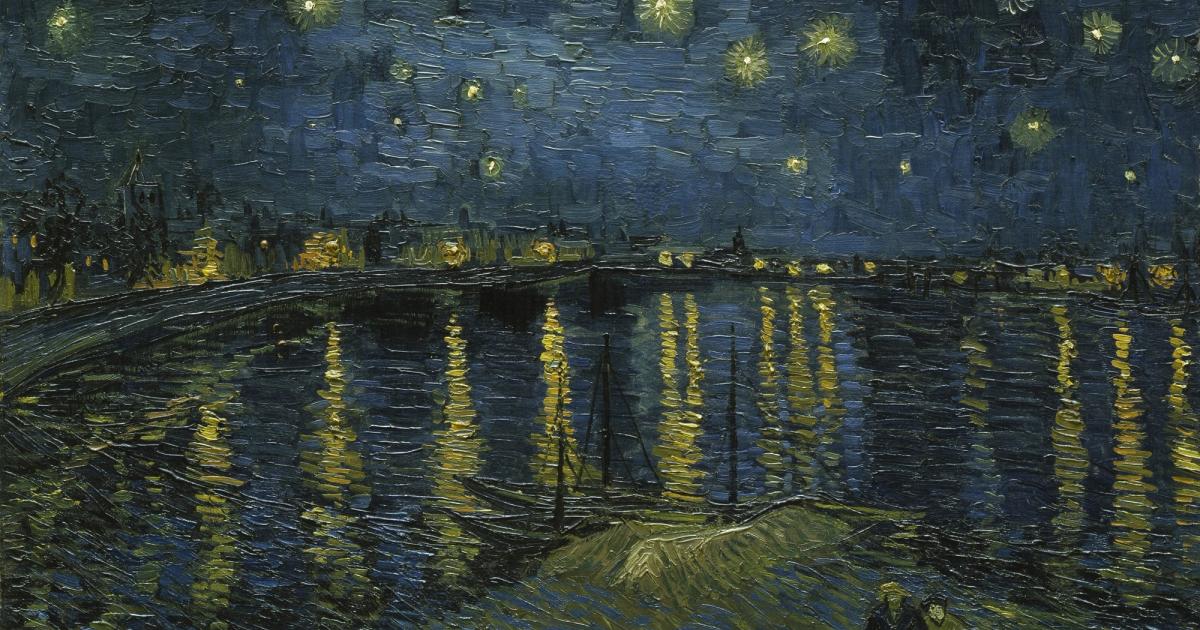
On a painting whose date was never attested by anyone, a catalogue entry more certain than its own prose, and a careful new finding that is losing its qualifications faster than it is being read
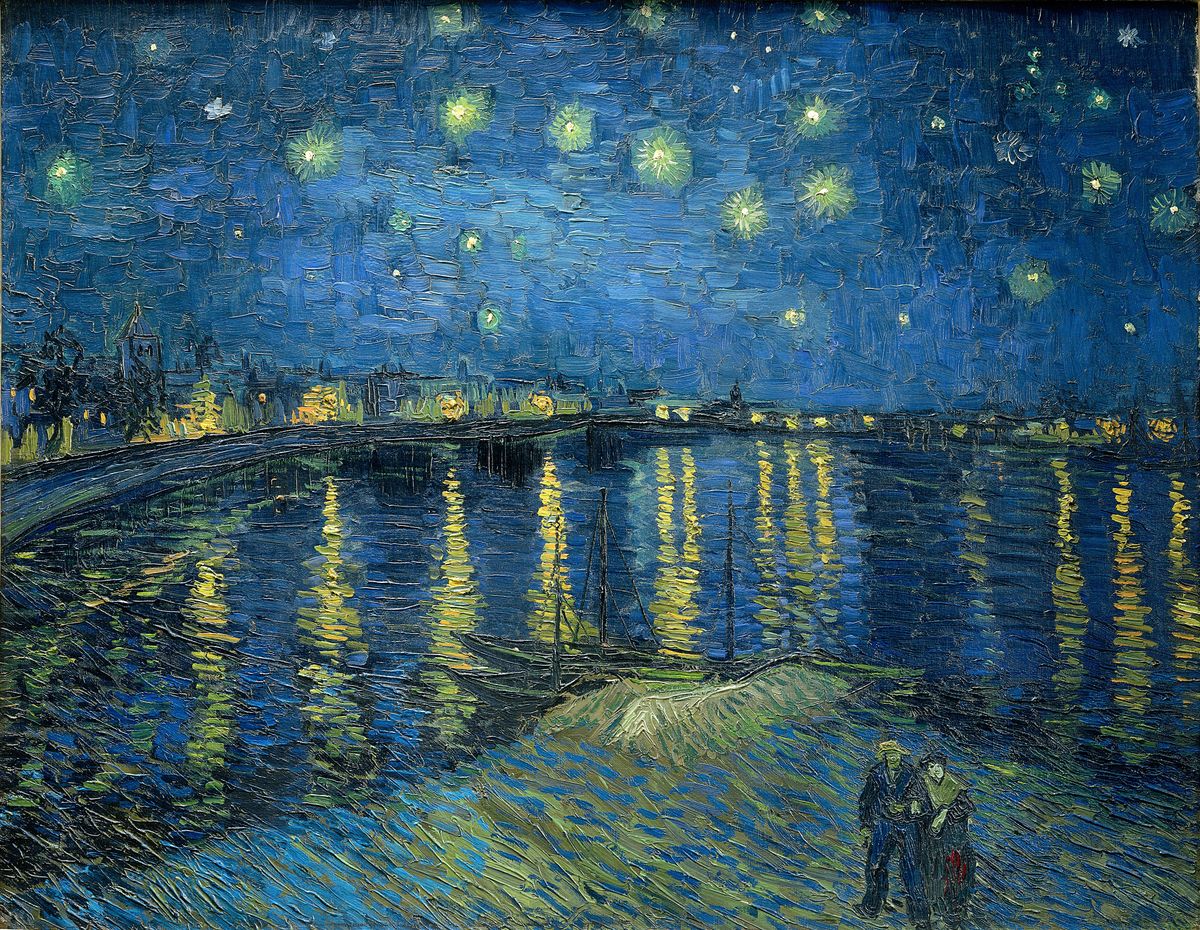
On 22 October 2026 four researchers in South Korea published a reconstruction of the sky in The Starry Night and concluded that it matches the pre dawn sky over Saint-Remy-de-Provence around 22 July 1889. The painting has been dated to June 1889 for a century.
The useful thing in this is not which month wins. It is what the argument reveals about how the date was held in the first place, and this institution would make the same observation if the new paper had confirmed June instead.
What Is Established, With Its Dates
The paper is The actual sky of Van Gogh's Starry Night: a multidisciplinary reconstruction, by Elijah Jeong-hyun Kim, Suna Kang, Jungwoo Song and Ho Jin, in Scientific Reports, published 22 October 2026.
Their method narrows the dates on which the Moon and Venus both fall inside the painter's field of view, confirms that selection by Procrustes fitting of the star group against the Hyades cluster, and cross checks the result against meteorological and bioclimatic records and against Van Gogh's own letters. The painter's narrow frame was recovered from an earlier sketch of the same terrain. At dawn around 22 July 1889, by their account, the waning crescent Moon, Venus and the Hyades gather inside that frame.
The painting hangs at the Museum of Modern Art in New York, object number 472.1941, acquired through the Lillie P. Bliss Bequest. Its catalogue entry gives the date as Saint Remy, June 1889.
Nobody Ever Wrote Down When It Was Painted
Here is the first thing worth knowing, and it is not in dispute between the two camps.
The June date is an inference. The announcement accompanying the new paper puts it plainly: the painting has conventionally been dated from a letter Van Gogh wrote to his brother Theo around 18 June 1889. In that letter he mentions a new study of a starry sky. Somebody, at some point, matched that sentence to this canvas.
That is a reasonable inference and it may well be correct. It is not a record. Van Gogh did not write that he had painted The Starry Night, because the painting did not have that name yet and he was not in the business of dating his own catalogue. A line in a letter was read against an object, the reading was persuasive, and the reading became the date.
Nothing dishonest happened. This is simply how most dates on most objects come to exist, and it is why an attributed date and an attested one are different things that look identical once they are printed in the same field.
What the Letter Actually Says
It is worth putting the sentence on the page, because the entire June date rests on it and it is shorter than its reputation. Letter 782, Saint-Remy, dated 17 or 18 June 1889, to Theo:
At last I have a landscape with olive trees and also a new study of a starry sky.
That is the whole of it. The paragraph goes on to compare the two studies to work by Gauguin and Bernard, which he has not seen, and to say he is convinced the pair are parallel in feeling. A study of ivy is mentioned nearby.
Now read what is not there. He does not say which canvas. He does not say when he painted it. He does not say it is finished, and study in his usage is frequently the opposite of finished. He does not describe the sky, the moon, the village, the cypress or anything else that would let a reader match the sentence to this painting rather than another. He says he has one, on a day in June.
To go from that sentence to a date of execution requires three further steps, each reasonable, none written down by anyone at the time: that the starry sky study is this canvas rather than another; that having it means having finished it; and that a work made across several sittings belongs to the month in which one of those sittings happened.
The most quoted defence of the June date puts this best by accident. Donald Olson, the astronomer who has done more forensic dating of paintings than anyone alive, explains the consensus as resting on the fact that van Gogh himself said so. He did not. He said he had a new study of a starry sky, and a century of careful people filled in the rest so consistently that the filling-in became the saying.
The Field Is More Confident Than Its Own Prose
MoMA's entry is the clearest example this institution has found of a defect it keeps describing, and it is worth setting out exactly, because the museum is not being careless. The opposite: the care is all there, in the wrong place.
The date field reads Saint Remy, June 1889. Flat, unqualified, no derivation, the form a reader takes as settled fact.
Now the prose on the same page. It says the work was made in mid-June, narrowing the claim further. It says the painting was created in several sessions during the day. It says that although certain features of the sky have been reconstructed as observed, the artist altered celestial shapes and added a sense of glow. It notes the village below could not be seen from his window, and that the cypress is nearer than it was.
Read those together and the entry is telling you four things that make a single date impossible to state precisely: the work took several sittings, it was painted by day, the sky was altered, and the landscape is composite. Every qualification a careful reader could want is present.
And the field still says June 1889. The hedge lives in the paragraph; the assertion lives in the structured field, and the structured field is what gets copied. It goes onto the wall label, into the image credit, into every reproduction, into the search result, into the phrase a visitor repeats afterwards. Nobody copies the paragraph.
The Record Constrained the Inquiry Into the Record
The sharpest sentence in this whole affair belongs to the new paper, and it is about what the June date did to the scholarship that came after it:
Earlier astronomical readings, constrained by the conventional June dating, reached mutually exclusive conclusions, and the painting's celestial arrangement was never quantitatively tested.
Read that twice. Previous attempts to reconstruct this sky took the June date as a given and worked inside it. The inferred date became a boundary condition on the evidence that might have tested the inferred date. And because each attempt was confined to a window that may have been the wrong window, they contradicted one another, and the contradiction was read as the sky being unreadable rather than as the constraint being wrong.
This institution has a name for the general case and has used it mostly about its own work: a claim that is confidently recorded stops being a question. What makes this instance valuable is that it is visible. Usually the cost of an unmarked inference is invisible, because nobody can see the inquiries it quietly prevented. Here somebody removed the constraint and the picture changed, so the cost became measurable.
They Built a Positive Control, and It Is Why This Is Worth Taking Seriously
One detail in the method deserves more attention than it will get, because it is the difference between an argument and a result.
Before applying the procedure to the painting in question, the team ran it on night paintings by Adam Elsheimer and Jean-Francois Millet, and then validated it on two 1888 night paintings whose sites survive. In other words they pointed the instrument at cases where the answer could be checked independently, and confirmed it returned the right one, before pointing it at the case where it could not.
That is a positive control, and it is the entire reason a reader should credit the July result. An instrument that has never been shown to produce a known answer tells you nothing when it produces an unknown one. The authors understood that and built it in. Whatever happens to their conclusion, the method is the part that should survive, and they say so themselves: the framework is offered as something extensible to other historical night paintings.
The Dissent Names What Would Settle It
The July finding is contested, and the contest is the healthiest thing in this story.
Olson's objection is specific and structural rather than rhetorical. He argues that the assumed narrow field of view used to place the Moon, Venus and the Hyades inside the painter's frame is inconsistent with the much wider field of view required to show the hills and cliffs the painting also contains. If the frame is wide enough for the landscape, it may be too wide for the celestial fit to mean what the authors say it means. That is an argument about the instrument, not about the conclusion, which is the useful kind.
Then he does something better, and this institution would like it noted. He names a test that would falsify the claim. Give an experienced amateur the painting and ask them to find Aldebaran, he says, and they will not identify Aldebaran as either of the two stars to the left of the cypress tree, where the new reading places it.
That is a disagreement stated so that it can be lost. It is checkable, it is cheap, it does not depend on anybody's authority, and whichever way it falls it moves the question. A field in which the sceptic volunteers the experiment that would defeat him is a field in good health, and it is a markedly higher standard than most disputes about objects ever reach.
The dissent has precedent on its side too. In the 1980s an astronomer argued the painting could not show the sky of 19 June 1889, because cloudy weather was recorded at Aix-en-Provence, about seventy kilometres away, and concluded the painting was a celestial composite. That reading has been available for forty years. It sits perfectly comfortably with MoMA's own prose and perfectly uncomfortably with MoMA's own date field.
Three Inferences Holding Each Other Up
Here is the structure underneath the argument, and it is the finding this institution would not have reached by reading either side's conclusion.
The date of the painting is inferred from a letter that does not name the painting. The date of the illness is inferred too: van Gogh fell ill a short time after entering the hospital and did not paint for roughly six weeks, so historians place the painting before that break. The reading of the sky is inferred from an astronomical reconstruction that depends on an assumed frame.
Each of those three is used to constrain the other two. The letter fixes June; June fixes the work as pre-illness; the pre-illness window constrains which skies an astronomer will bother to test. The new paper moves one of the three and the other two have to move with it, which is exactly why its authors also propose a different date for the onset of the illness. They were obliged to, because the three are load bearing against each other.
Not one of the three is an attested record. They are three readings, each defensible, locked into a frame that has held for a century because each was holding up the others. Remove any one and the structure does not fall; it simply turns out never to have been resting on anything but itself.
This is the ordinary condition of dating in art history and it is not a scandal. What is worth objecting to is only the last step, where the output of that structure is written into a field that looks like a measurement.
Two Questions, Not One
Now the care that the coverage is losing.
The date a sky was seen and the date a canvas was painted are different facts. The paper dates an astronomical arrangement. A catalogue dates an act of making. These coincide only if the painter worked from a single observed night and rendered it faithfully, and MoMA's own entry says he did neither: several sessions, in daylight, with the celestial shapes altered.
So the honest reading of the two positions is not that one is right and one is wrong. If the sky is a faithful record of one specific dawn, the July finding is hard to reconcile with a mid-June making. If the sky is remembered, composite or adjusted, then an astronomical fit, however rigorous, cannot by itself date the painting at all.
The lead author is not claiming otherwise. His stated hope is that the work prompts a renewed, multidisciplinary look at the sequence and working methods of the Saint-Remy paintings. That is an invitation to reopen a question, not an announcement that it is closed.
The Hedge Is Already Being Lost
Compare three statements of one finding, in the order they were made.
The abstract: the results suggest that the sky originated from observation of a specific celestial arrangement, and call for reconsidering the June dating. That is the authors, in the journal, being exact about the weight of their own evidence.
The press release: the sky matches, in both observation and shape, the pre dawn sky around 22 July 1889. Firmer, and still defensible.
The coverage: that scientists have cracked The Starry Night, and that the real date has been revealed by science.
Nobody lied at any step. Each restatement is a slightly firmer version of the one before it, and the word that disappears first is always the one carrying the uncertainty. This institution has documented the same mechanism turning a goal into a credential, and the grammar is identical: an inference restated until it reads as a finding, a finding restated until it reads as a fact. It took a century for June to harden. July has managed it in a weekend.
What a Catalogue Entry Would Have to Carry
Three fields, and none of them requires the museum to know anything it does not already know.
What is claimed, which is the date. How it was established, which here is an inference from a letter of 18 June 1889 rather than a documented date of execution. And what remains undetermined, which is the date of completion of a work made over several sessions.
Every one of those facts is already on MoMA's page. The museum knows them and has written them down in good prose. What is missing is the one structural move that would stop the date being read as attested: saying, in the field itself, that it is inferred and from what. A date with its derivation attached cannot harden, because the reader can see what would have to change for it to move.
A claim that wears the appearance of a determination without carrying one is a hollowed object performed on a date rather than on a thing, and the remedy is not more certainty. It is less, stated precisely.
Coda
The Starry Night is among the most reproduced images ever made, and one of the few paintings a person can picture without having seen it. Its provenance is secure, its ownership is documented, its authorship has never been questioned. By every ordinary measure its record is complete.
And the month under it was always somebody's reading of a sentence in a letter. For a hundred years that reading sat in a field that looks exactly like the fields around it, next to the medium and the dimensions and the object number, which are measured facts. A reader cannot tell the measured ones from the inferred one, because nothing on the page distinguishes them.
Whether the answer turns out to be June or July matters less than the thing this argument made briefly visible: that the most examined painting in the world has a date nobody ever wrote down, and that object permanence was never the same as its accuracy. A record can be stable for a century and still be a guess. Stability is not evidence. It is only what happens to a claim nobody is checking.