Of Whatever Geographical Origin: The Field a Standard Made Optional, and the Money That Stayed In It

On a gemstone whose name was severed from its birthplace by seven laboratories in 2006, whose certificate is permitted to leave the birthplace blank, and whose price has refused to follow the name anywhere
In February 2023 the Laboratory Manual Harmonisation Committee published the eighth version of a two page document that tells seven of the world's gemmological laboratories how to write one line on a report. It is a dull document. It is also, read carefully, one of the most honest records this institution has examined, and the market built on top of it does something the document does not permit and cannot see.
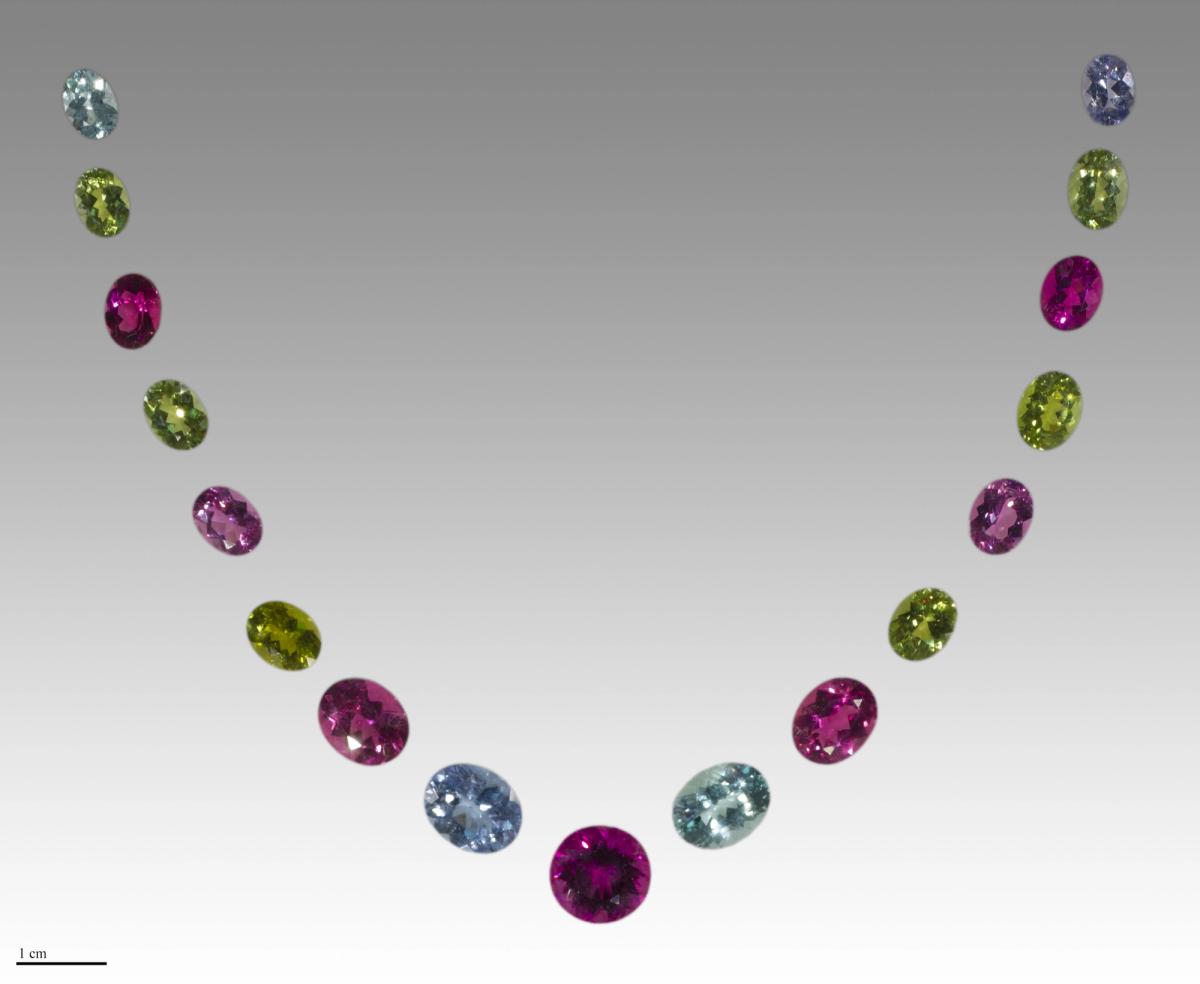
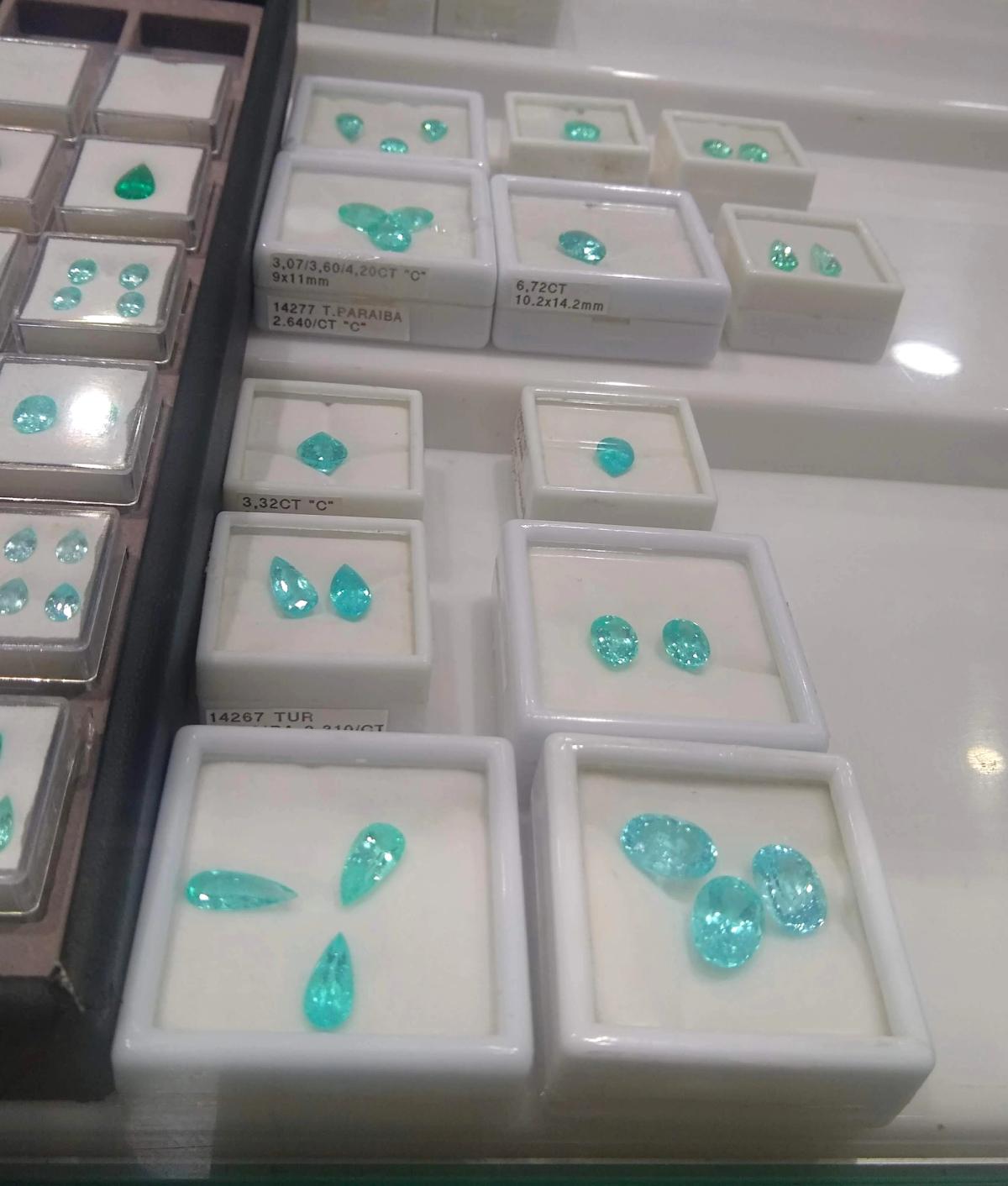
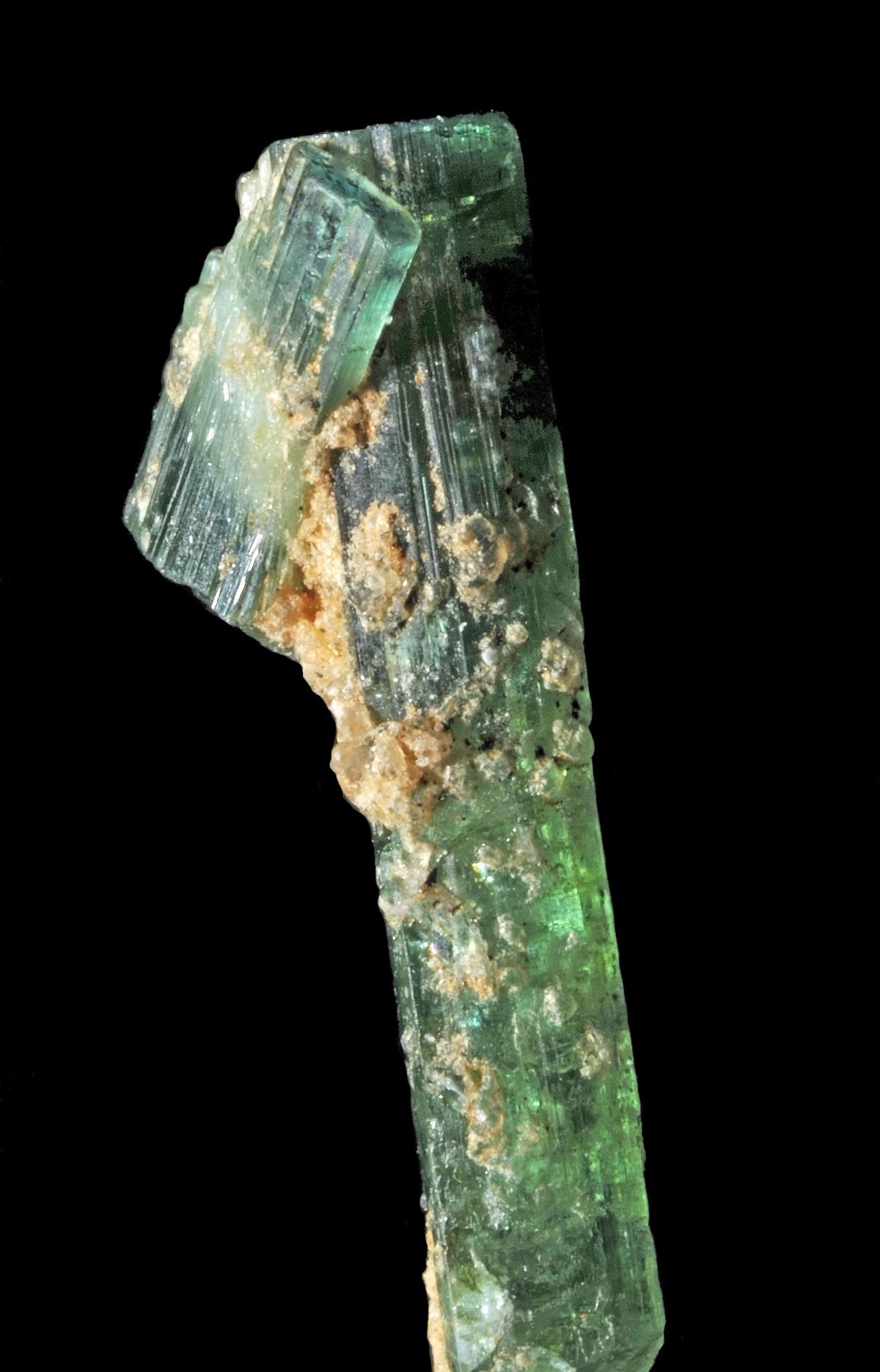
The stone is Paraiba tourmaline. It reached the market in 1989 out of the Batalha mine in Sao Jose da Batalha, in the Brazilian state of Paraiba, after a long search led by Heitor Dimas Barbosa. The colour, an electric blue that looks lit from inside, comes from copper. For about fifteen years the name and the place were the same fact. Then copper bearing tourmaline was found in Nigeria and in Mozambique, the laboratories could not reliably tell the new material from the old, and a decision had to be made about what the word was allowed to mean.
They made the right decision, and the consequence is the subject of this study. The laboratories wrote a definition that describes what they can measure and quietly set down what they cannot. The trade then took the thing they had set down and made it the most valuable attribute a Paraiba tourmaline can have.
What Is Established, With Its Dates
The nomenclature was settled in 2006. The current text is LMHC Information Sheet number 6, version 8, February 2023, two pages, read here in full from the committee's own file rather than from any summary of it. The signatories are named on the second page: the Central Gem Laboratory in Japan, CISGEM in Italy, the DSEF German Gem Lab, the GIA Laboratory in the United States, the Gem and Jewelry Institute of Thailand, Gubelin Gem Lab in Switzerland, and the Swiss Gemmological Institute.
On 10 December 2025, at Christie's in New York, a Tiffany & Co. necklace set with a triangular modified brilliant cut Paraiba tourmaline of thirteen point five four carats sold for four million two hundred and twenty three thousand dollars against an estimate of four hundred to six hundred thousand. That is about seven times the high estimate and about ten times the low, which is why different reports of the same sale give different multiples and all of them are correct. It was a world auction record for the variety, at a little over three hundred and ten thousand dollars a carat. The necklace came from the collection of Max and Cecile Draime. The matching earrings took about one point three million. The sale totalled forty six point five million, and the house called tourmaline the surprise of the night.
On 8 September 2026 the Italian Gemological Review published the first examination of copper bearing tourmaline from Abuloo, in Ethiopia, a deposit worked on for three days in late June of that year. It is the newest source in the story and the first real test of the 2006 rule in two decades.
The Sentence Seven Laboratories Signed
Here is the definition, in full, as the committee wrote it.
A paraiba tourmaline is a blue (electric blue, neon blue, violet blue), bluish green to greenish blue, green or yellowish green tourmaline, of medium-light to high saturation and tone (relative to this variety of tourmaline), mainly due to the presence of copper (Cu) and manganese (Mn) of whatever geographical origin. The name of the tourmaline variety 'paraiba' is derived from the Brazilian locality Paraiba where this gemstone was first mined.
Four words carry the whole thing. Of whatever geographical origin. The name is a description of colour and chemistry, and the place it came from is no part of it. The second sentence is a courtesy, an etymology, a note explaining why a chemical category is wearing a Brazilian place name. It confers nothing.
The sheet then excludes two cases, and both exclusions are chemical rather than geographic. Tourmaline with only traces of copper, or low saturation, or colour outside the stated range, is not Paraiba tourmaline. Iron rich copper bearing tourmaline whose polarised spectrum shows a seven hundred nanometre band stronger than the nine hundred nanometre copper band is not Paraiba tourmaline either. A laboratory can run both of those tests. Neither of them asks where the stone was dug.
The Form Keeps a Line for What the Name Let Go
The same two pages standardise the report wording, and this is the part worth the attention. The committee did not merely drop origin from the definition. It gave origin its own line, separate from the variety name, and it wrote down the permitted values.
Variety: (colour) (paraiba) (tourmaline). Origin: (not determined), (undetermined), (Brazil), (Nigeria), (Mozambique), (other).
Read that as an instrument rather than as a form. The variety line is a conclusion the laboratory will stand behind. The origin line is a separate field with an explicit permission to be empty. And footnote five closes it properly: when origin is not determined, the comments section must carry the words Geographic origin has not been determined.
That is a correctly constructed record, and this institution should say so plainly. It states what was tested. It separates what was not. It declares the gap in words rather than leaving a silence where a reader can imagine an answer. A blank space invites a guess. A sentence saying the thing was not determined forecloses one. Most of the provenance failures this institution has documented would not have happened if the document had behaved like this sheet.
The committee's reasoning is not mysterious either. Laboratories could not separate Mozambican from Brazilian material with confidence, so they declined to make the name depend on a determination they could not always make. A record that refuses to certify what it cannot test is not a weak record. It is the only kind worth having, and the argument runs through the hallmark in every direction this institution has taken it.
What the Optional Field Is Worth
Now the market. Dealer and retail guides place fine Brazilian material at several times African material of comparable colour, with figures running from roughly five to ten times. Those are trade estimates rather than auction data and this study does not treat them as measured. What can be said without a guide is simpler and harder to argue with: the field the standard made optional is the field that moves the price, and everybody in the trade knows it.
This is Zero-Sum Aura in its most literal available form. The aura attaches to one valley in one Brazilian state, the mine there is substantially worked out, and no quantity of chemically identical copper bearing tourmaline from anywhere else can add to the supply of it. The chemistry is reproducible. The provenance is not. When a committee declares the reproducible part to be the name, the irreproducible part does not lose its value. It goes somewhere else.
The Record Price Bought That Field Twice
Where it went is visible in the Christie's result, and the detail is the whole study.
The thirteen point five four carat stone did not arrive at the saleroom with its origin left undetermined. Reporting the sale, the American Gem Trade Association records that the centre gem was accompanied by two laboratory reports, one from American Gemological Laboratories in New York and one from Gubelin, and that both reports confirm that the origin of the Paraiba tourmaline is Brazil.
Gubelin is a signatory to the sheet. The same laboratory that agreed in writing that the name applies of whatever geographical origin was engaged to determine the geographical origin, and a second laboratory was engaged to agree with it. The stone carrying those two answers made about seven times its high estimate and set the record for the variety on both measures.
Nothing here is improper and nobody is being accused of anything. Origin determination is a legitimate, difficult, well understood service, and both houses did exactly what they were asked to do. The point is what the transaction reveals about the document. A standard declared a field optional on the honest ground that it could not always be filled. At the top of the market that field is not optional at all. It is bought twice, from two laboratories, because it is the difference between six hundred thousand dollars and four point two million.
One Tier Down, Origin Is a Caption
Below the saleroom the same field appears, and it appears without a laboratory anywhere near it.
Bulgari launched Colour Journeys in May 2021 as the first in a series of annual capsule collections, twenty one pieces built around this stone, and the house set out the rarity argument in the usual terms, including the trade's figure of one Paraiba tourmaline for every ten thousand diamonds, which is repeated widely and derived nowhere this study could find. The collection was catalogued piece by piece, and the specification of one white gold ring names a single cushion cut Paraiba tourmaline of five point six zero carats, from Mozambique. The origin sits inside the stone's own description, next to the carat weight, in the position a certificate would put it.
Chopard's Precious Lace necklace, offered through a private sale at Sotheby's the same year, centres on a Paraiba tourmaline of thirty four point six three carats. The trade report of it states that the centrepiece hails from Mozambique.
Both houses are doing something reasonable and probably required of them commercially. Neither is hiding anything. Both are stating the origin of a stone whose governing standard says origin is not part of its name, and in neither case is a laboratory report cited for the claim.
So there are two tiers of origin statement in this market, and nothing on the object distinguishes them. At the top it is a determination by two named laboratories, paid for, signed, and defensible. One tier down it is a line of copy. Both are called origin. Both move the price. Only one of them was established, and the buyer reading a caption has no way to know which kind of statement is in front of them.
A claim that wears the appearance of a determination without carrying one is a Hollowed Object performed on a provenance field rather than on a thing. The exterior sign is intact. The content is absent. And because the standard has already declared the field optional, nothing in the apparatus is obliged to notice.
Ethiopia Is the First Live Test in Twenty Years
The rule is being exercised right now. Copper bearing tourmaline turned up at Abuloo in Ethiopia in mid 2026. A preliminary study ran from 24 to 26 June, was first shared publicly on 27 June, and was published on 8 September in the Italian Gemological Review.
The findings are precisely what the 2006 settlement predicts. Of the five largest stones examined, only three were clearly coloured by copper and so qualify for the name. The iron rich specimens are indicolite under the committee's own spectral exclusion. Others fall in an intermediate compositional range where the authors say classification may remain open to interpretation. Their conclusion is stated flatly: not every stone recovered from this deposit should automatically be described as Paraiba tourmaline.
The system is working. A new deposit appeared, the chemical test was applied, some material passed and some did not, and the laboratory said so in public before the parcels moved. This is what a functioning standard looks like in operation.
And in the same paragraph the authors record that the stones which fail are already being sold under a name of their own. The trade calls them lagoon tourmaline. Nobody convened a committee. Nobody published a definition. A word arrived to carry the material the standard excluded, and it arrived faster than the standard could describe what it was excluding.
The Committee Was Right, and That Is the Problem
It would be easy and wrong to read this as a failure of the LMHC. The sheet is better than most of the instruments this institution examines. It is short, public, free to reproduce in full, signed by the people bound by it, revised eight times, and candid about its own limits.
The problem is structural and it is not the committee's to solve. A standard can only govern the fields it certifies. By correctly declining to certify origin, the sheet placed origin outside the only part of the apparatus that has any power over what may be said. The value did not leave with it. The value stayed exactly where it was and is now carried by whatever happens to be nearby: a dealer's recollection, a parcel's history, an old invoice, a caption, a house's confidence, and at the very top two reports that most stones will never have.
That is the migration this study is about. Not a lie, not a scandal, not a failure of gemmology. A price bearing fact moved from the document that is accountable for it to the documents that are not, and the move was the direct result of the accountable document behaving honestly. Every provenance system will meet this problem the moment it is rigorous enough to admit what it does not know.
What the Record Would Have to Carry
The remedy is not to make the laboratories certify origin they cannot determine. That would trade an honest gap for a confident error, which is the worse of the two by a wide margin. The remedy is a second document that does what a report cannot: carry the claim across time, with its grade attached.
Three fields would close most of this. What is claimed, in this case the locality. How it was established, naming the method and the party: a determination by a named laboratory on a dated report, a seller's assertion, a parcel record, an inference from colour, or nothing at all. And what remains undetermined, written out in words, exactly as footnote five already requires of the laboratories.
That third field is the one the trade is missing and the LMHC already has. The sheet refuses to let a laboratory leave origin silently blank. It demands the sentence. Nothing imposes the same discipline on a caption, a lot note, or a conversation in a booth, which is why a reader cannot currently tell a double certified Brazilian origin from an unsupported one at a glance.
A Custodian's Contract is the instrument for the part that outlives the report. A laboratory report is a statement about a stone at a moment. Custody is the thing that accumulates, and unlike origin it can always be written down, because somebody always knows who handed the object to whom.
Which the record price already demonstrates, quietly, and this is the detail to end on. The Christie's necklace carried a named former owner. The Draime collection is a custody fact, and it was in the catalogue alongside two reports arguing about a field the governing standard says is not part of the stone's name. Origin had to be purchased from two laboratories. Custody was simply known.
Coda
In 2006 seven laboratories looked at a stone they could not always place and decided to stop pretending that they could. They wrote a definition out of what they could measure, they gave the thing they could not measure a line of its own, and they required anyone leaving that line empty to say so out loud. It is a small, careful, well made document.
Nineteen years later the empty line is where the money is. A buyer in New York paid about seven times the high estimate for a stone whose blank had been filled in twice, and a buyer reading a house caption gets the same word with nothing behind it.
The standard did not fail. It succeeded, and the market routed around the success. The lesson for anyone building a record is not to certify more than you can. It is to understand that the moment you honestly decline a field, that field does not disappear. It goes somewhere with no rules at all, and it takes the value with it.