The End of Greenwashing in Luxury: The September 27 Ban
The Adjective That Becomes Illegal
For thirty years, luxury's favorite adjective has been free. "Sustainable" cost nothing to print on a hangtag, nothing to embed in a campaign, nothing to attach to a collection whose material biography no customer could audit. The word did enormous work: it converted anxiety into permission, and permission into purchase. It was the purest form of what this institution calls Sign Value, meaning value that attaches to the signal rather than the substance, and it circulated without collateral. On 27 September 2026, the European Union forecloses on it.
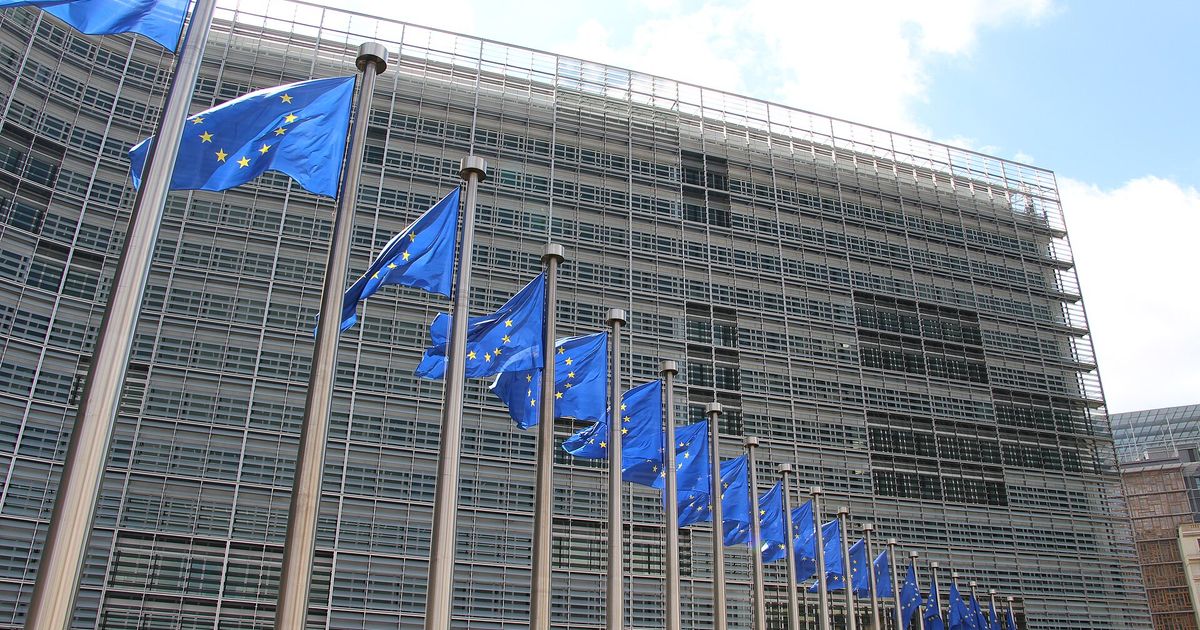
That is the date the Empowering Consumers for the Green Transition Directive, Directive (EU) 2024/825, begins to apply to companies selling to European consumers. Adopted on 28 February 2024 and transposed into member-state law by 27 March 2026, the directive amends Europe's foundational unfair-commercial-practices regime to do something regulators have circled for a decade and never done: it makes the unsubstantiated environmental claim not merely actionable but blacklisted, prohibited per se, no case-by-case argument required. A generic claim such as "green," "eco-friendly," "natural," or "sustainable" becomes illegal to make about a product unless recognized excellent environmental performance can be demonstrated. The burden reverses. The adjective must now arrive with evidence, or not arrive at all.
The luxury industry has treated this deadline the way it treats most regulation: as a compliance matter, delegated downward to legal teams and copy audits. This study argues the opposite. September 27 is not a compliance matter. It is the state's formal confirmation of the argument this institution has made from its founding: that virtue asserted in language and unverifiable in the object is not virtue but decoration, and that the era in which decoration could be sold as substance is structurally over. The regulation is downstream of the diagnosis. Post-luxury is the name of what comes after.
What the EU Greenwashing Ban Actually Prohibits
The directive's mechanism is worth stating precisely, because its precision is the point. European consumer law has long operated a blacklist, Annex I of the Unfair Commercial Practices Directive, of commercial practices considered unfair in all circumstances. Directive 2024/825 adds new entries to that blacklist, and each entry is a sentence luxury marketing has spoken fluently for years.
First, the generic claim. Making a generic environmental claim without demonstrated, recognized, excellent environmental performance relevant to the claim is banned. The Commission's guidance names the vocabulary directly: "green," "nature's friend," "eco," "environmentally correct," "climate friendly," "energy efficient," and the industry's load-bearing favorite, "sustainable." These words do not become illegal as such; they become illegal as unaccompanied assertions. The claim must be substantiated on the same medium where it is made, backed by recognized certification or verifiable evidence, or it constitutes an unfair commercial practice in every member state of the Union at once.
Second, the offset alibi. Claims that a product has a neutral, reduced, or positive impact on the environment in terms of greenhouse-gas emissions, where the claim rests on the purchase of carbon offsets, are prohibited in all circumstances. "Climate neutral," "CO2 neutral certified," "carbon positive," "climate net zero," "climate compensated": the directive treats this entire genre as structurally misleading, because the product's own emissions are unchanged by the certificate attached to it. The indulgence economy, in which absolution was purchased adjacent to the object rather than built into it, loses its legal basis.
Third, the future tense. Aspirational claims, "net zero by 2030" and its many siblings, are banned unless supported by clear, objective, publicly available, and verifiable commitments, set out in a detailed and realistic implementation plan, with allocated resources and regular independent verification of progress. A target without a funded plan is now a misleading practice. The press release is being asked to produce its receipts.
Fourth, the private label. Sustainability labels may only be displayed if they derive from a certification scheme meeting the directive's requirements or are established by public authorities. The self-awarded badge, the in-house "conscious" line marker, the leaf icon that implied third-party endorsement while reporting to the marketing department: prohibited.
And around these prohibitions, the directive tightens disclosure on durability and repairability, banning misleading information about a product's expected lifespan and the withholding of information that bears on its long-term functioning. Enforcement belongs to national consumer-protection authorities, coordinated across borders through the Consumer Protection Cooperation Network, with penalties for widespread infringements reaching at least four percent of a trader's annual turnover in the affected member states. Four percent of turnover is not a marketing budget line. It is a board agenda item.
The 53 Percent: An Industry's Language, Audited
The directive did not emerge from regulatory enthusiasm. It emerged from measurement. In 2020 the European Commission screened environmental claims made across the single market and found that 53.3 percent of those examined were vague, misleading, or unfounded, and 40 percent were entirely unsubstantiated. A companion review of 232 ecolabels operating in Europe found roughly half subject to weak verification or none at all. Read plainly: a European consumer encountering a green claim faced worse than coin-flip odds that the claim meant anything.
These numbers deserve to be understood as an audit of a language, not of a fringe. A majority share of an entire commercial vocabulary failed verification. This is what this institution's lexicon calls the Hollowed Object condition operating at the level of discourse: the signifier retained and circulated after its referent has been quietly removed. The word "sustainable" continued to appear on products whose supply chains no one could trace, in campaigns whose claims no one could check, attached to labels no one verified. The language kept its exchange value after losing its truth value, which is the precise definition of a market ready for correction.
Luxury cannot exempt itself from this audit by pointing at fast fashion. The 53 percent was drawn from the whole market, and the luxury sector's own contribution to the genre, the "conscious" capsule, the mycelium press release preceding the material by years, the atelier's carbon neutrality achieved by certificate, has been documented in this institution's own studies. The difference between a ten-euro T-shirt calling itself sustainable and a three-thousand-euro handbag doing so is not honesty. It is production values.
The End of the Indulgence Economy
Among the directive's prohibitions, the offsetting ban deserves separate attention, because it dismantles a theological structure that luxury found unusually comfortable.
Offsetting allowed a brand to leave the object untouched while transacting its guilt elsewhere. The flight still burned its fuel; the handbag still crossed three continents; but a certificate, priced in a market the consumer never saw, converted the emission into neutrality. The claim "climate neutral" thus described nothing about the object. It described a financial transaction adjacent to the object. Medieval Christianity called this instrument the indulgence, and its logic was identical: sin retained, absolution purchased, the ledger balanced somewhere out of sight.
The directive's drafters understood this precisely, which is why offset-based neutrality claims are banned in all circumstances rather than case by case. There is no compliant way to make them, because the claim form itself is the deception: it locates virtue outside the object while speaking as if the virtue were in it. In the lexicon of this institution, offsetting was the purest attempt to purchase Moral Capital without material change, and its prohibition confirms what our study of luxury's root marketing argued: moral capital cannot be bought at the register. It accrues only to institutions whose objects can testify for themselves.
What replaces the indulgence? The directive's answer is structural: if you claim the impact, show the mechanism. And that answer has infrastructure arriving behind it. On 19 July 2026, eight days before nothing, the European Union's central Digital Product Passport registry went live under the Ecodesign for Sustainable Products Regulation, the same instrument that, on the same date, banned large companies from destroying unsold apparel and footwear. The passport will, category by category, give every product a machine-readable material biography: composition, origin, repairability, recyclability. The greenwashing ban removes the false testimony; the passport builds the witness stand. Together they legislate what this institution calls the Legibility of Labor: the condition in which an object's making can actually be read.
Material Transparency Becomes the Floor
It is worth being exact about what changes on September 27, because the change is categorical rather than incremental. Before the deadline, material transparency in luxury was a differentiator: a thing certain houses did, publicized, and were rewarded for, while the sector's median practice remained opacity punctuated by adjectives. After the deadline, material transparency is the legal precondition for speaking about virtue at all. A brand that cannot evidence its claim cannot make it. The floor rises to meet the language.
This inverts the marketing economics that governed sustainability communication for two decades. Under the old regime, the cheapest path to a green reputation was language, and the most expensive was material change; rational actors bought language. Under the new regime, language without material change is a liability priced at up to four percent of turnover, while material change becomes the only durable license to speak. The directive does not force any house to become sustainable. It forces every house to choose between silence and substance, and it makes silence conspicuous in a market whose customers have been trained for a decade to expect the claim.
Watch what this does to the sector's copy between now and September. The quiet rewrite is already underway: "conscious" collection pages retitled, leaf icons retired, footnotes appearing beneath claims that lived for years without them. The compliance aesthetic will be studied by this institution as it emerges, because the deletions are a confession in negative space. Every claim a house removes rather than substantiates is an admission of what the claim always was.
Why Post-Luxury Predicted This
This institution's framework, Post-Luxury Conceptual Functional Art, has argued from its founding that the luxury economy's crisis is a crisis of unverifiable meaning. The sector spent the financialized decades converting objects into signs, and signs into instruments, until the object itself became the least important layer of the transaction. Sustainability marketing was simply this conversion applied to ethics: the virtue of the object replaced by the virtue of the claim, circulating on the brand's authority alone.
Against this, the post-luxury position has been consistent and, until now, voluntary: that the only claims worth making are the ones the object itself can support; that provenance, material, labor, and lifespan must be legible in the thing rather than asserted around it; that an institution's Anti-Commodity Commitment is proven in its production system or not at all. Our studies have documented the practitioners who arrived at this position without regulation: the maker whose single-material construction makes its recyclability a physical property rather than a promise, the house that stopped destroying unsold goods before the law required it, the practices whose transparency is architecture rather than campaign.
September 27 is the moment the state adopts the same epistemology. The directive's underlying principle, that a claim about an object must be verifiable in or through the object, is the post-luxury principle stated in the language of consumer protection. Regulation has arrived, late and partial, at conclusions the framework reached first. This is not a coincidence and not a vindication to be enjoyed idly. It is a confirmation that the framework was never aesthetic preference. It was, and is, a structural reading of where the meaning economy must go once its counterfeits are called in.
The consequence for the sector's discourse is already visible in the search data this study is written into. The strategist Googling "EU greenwashing ban" in August 2026, the journalist searching "end of greenwashing in luxury" the week the fines begin, the compliance officer looking up "material transparency" with a deadline attached: they are all, whether they know it or not, researching the post-luxury thesis. The moment has a date now.
Enforcement: Four Percent and the Zalando Precedent
Skeptics will note, correctly, that European consumer law has always depended on national enforcement, and that enforcement is where directives go to be disappointed. The record suggests this one will be different, for two reasons.
The first is that enforcement began before the deadline. In 2024, following coordinated action by the European Commission and national consumer authorities through the CPC Network, Zalando, Europe's largest online fashion platform, committed to strip its misleading sustainability flags and icons, remove unspecified terms such as "sustainability" from product presentation, and replace them with specific, verifiable information such as recycled-material percentages. The largest fashion interface on the continent rewrote its vocabulary under regulatory pressure, two years early, without a single fine being levied. That is what a credible threat looks like before it matures.
The second is the penalty architecture. The four-percent-of-turnover ceiling for widespread infringements, inherited from the consumer-protection modernization regime and now attached to the blacklisted green claims, moves greenwashing out of the reputational-risk category and into the financial-materiality category. A misleading adjective on a pan-European campaign is no longer a public-relations exposure. It is a contingent liability with a percentage attached, which means it now belongs to the chief financial officer and the audit committee, populations considerably less romantic about language than marketing departments.
One honest complication belongs in this record: the directive's planned companion, the standalone Green Claims Directive that would have built a detailed pre-approval and verification regime for explicit environmental claims, was withdrawn by the Commission in June 2025 amid political resistance. Some read the withdrawal as retreat. The reading matters less than the arithmetic: the blacklist stands, the application date stands, the penalties stand. What was withdrawn was a second layer of process. What remains is the prohibition itself, and the prohibition is the historic part.
Coda: What Survives September 27
It is easy to read a ban as an ending, and this study has used that language deliberately. But the more precise reading of 27 September 2026 is as a filter. What dies is a vocabulary: the unaccompanied adjective, the offset neutrality, the self-awarded leaf, the unfunded future tense. What survives is everything that was never bluffing: the claim with a certification behind it, the percentage with a supply chain behind it, the durability statement the object itself will spend a decade proving.
Luxury has always insisted its value lay in truth of material and mastery of making. For the first time, a market of four hundred and fifty million consumers will require that insistence to be literal. Houses whose virtue is architectural have nothing to rewrite in September. Houses whose virtue is editorial have eight weeks, as of this study's publication, to become what their copy has long claimed they already were. The distance between those two positions, measured in supply chains, materials, and years, is the exact distance this institution has been mapping since its founding. The regulation did not create that distance. It only turned on the lights.