Material Transparency Becomes Law: The Digital Product Passport
The Object Learns to Testify
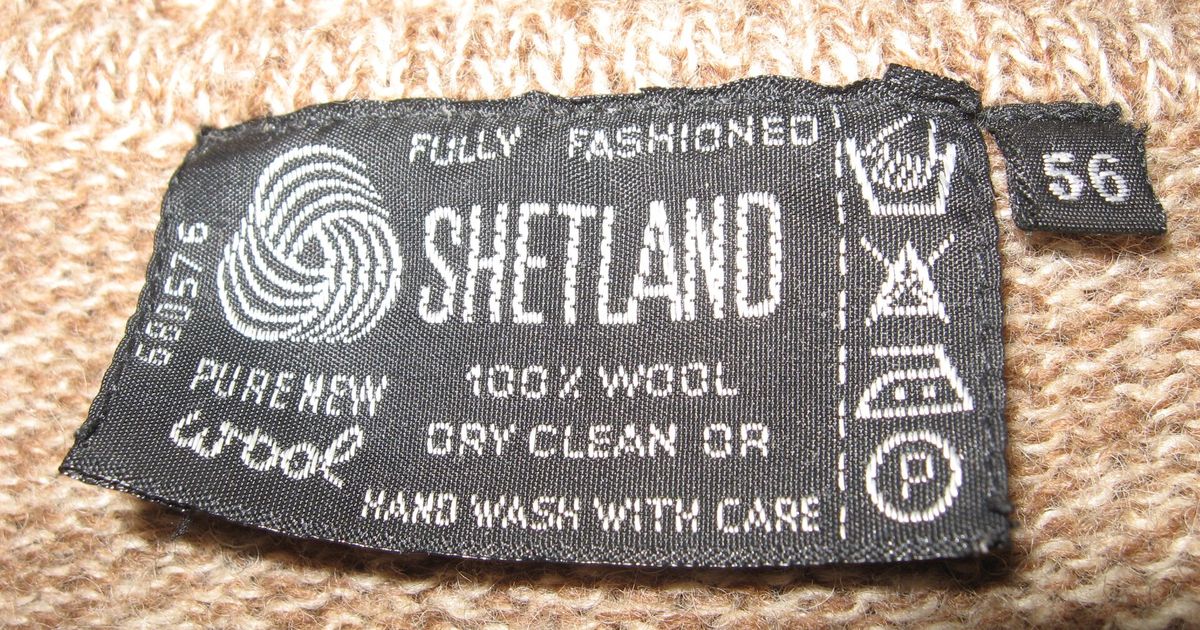
Consider the sewn-in label. For half a century it has been the object's entire sworn statement: a fibre percentage, a country stamp, five care hieroglyphs, a size. Everything else about the garment, where the fibre grew, who spun and dyed and sewed it, what chemistry it carries, what it did to a river, whether it can be repaired or only replaced, has been legally none of the buyer's business. The label is a masterpiece of minimal disclosure: the least an industry could be compelled to say, said in the smallest possible type.
That settlement is ending. On 20 July 2026, the European Commission's central Digital Product Passport registry went live (the regulation required it by the 19th, a Sunday; the Commission launched the Monday), the operational spine of the Ecodesign for Sustainable Products Regulation, Regulation (EU) 2024/1781. The passport it underwrites is the sewn-in label's successor and its refutation: a machine-readable record, reached through a QR code or chip on the product, carrying the object's material biography. Not a marketing page. A regulated data structure, category by category, whose contents the law will specify and whose absence will eventually exclude a product from the single market.
This study reads the passport as the third act of the regulatory moment this institution has been documenting. The greenwashing ban that applies on 27 September polices what luxury may say. The destruction ban that took effect in July polices what luxury may discard. The passport is the deepest of the three: it changes what an object IS, from a mute artifact fronted by advertising to a thing that carries its own evidence. Material transparency stops being a virtue that distinguishes the honest maker and becomes the infrastructure every maker stands on.
What the Digital Product Passport Actually Requires
The mechanics deserve precision, because the timeline is widely misreported. The registry that opened in July stores unique product identifiers and registration metadata, an index, not the data itself. The substantive record stays with the economic operator or its service provider, a deliberately decentralized architecture: public and stakeholder-facing information accessible through the passport, business-confidential information remaining with the company. Consumers, repairers, recyclers, customs, and market-surveillance authorities each see the slice the law assigns them.
The rollout is sectoral. Batteries go first: a mandatory battery passport from 18 February 2027 for EV, light-transport, and industrial batteries. Textiles and apparel follow through a product-specific delegated act expected in 2027, with mandatory application realistically landing in 2028 or 2029 after a transition period. What the textile passport is expected to carry is already visible in the framework: fibre composition and recycled content, verified to source; origin traced through the production stages rather than a single "made in" stamp; substances of concern with thresholds; durability, repairability, spare-part availability; end-of-life instructions; environmental accounting including carbon and water. Collected at the model, batch, or item level as the delegated act specifies.
Luxury's planning horizon should not, however, be set by Brussels' textile timetable, because France has already arrived. Under the AGEC anti-waste law's information decree, in force since January 2023 for larger sellers, products on the French market must already disclose, digitally and at the point of sale, their recyclability, recycled-material content, presence of microplastics, and, for textiles, the countries where weaving, dyeing, and assembly took place. The passport's supposedly distant future is, in the sector's second-largest home market, three years old. A maison selling in Paris is already living under a national prototype of the thing it calls premature.
Luxury Built the Witness Stand Itself
The industry's public posture toward mandated transparency is weary compliance. Its actual history is stranger: luxury built this infrastructure first, voluntarily, at consortium scale, for its own reasons.
The Aura Blockchain Consortium, founded by LVMH with Prada and Cartier, exists to give luxury goods digital identities: registered products carrying cryptographic records of provenance and ownership. Chloé ships digital IDs on its garments through the platform EON, which has spent years positioning fashion for exactly the passport regime now arriving and counts houses from the conglomerates to the mass market among its partners. The stated purpose of this infrastructure was authentication: killing counterfeits, securing resale value, binding the object to its buyer. Traceability as a service to the brand's own scarcity.
The consequence is an irony the sector has not yet metabolized. Luxury built the witness stand to defend its property, and the state is now calling its witness. The same digital identity that proves a bag is genuine can carry, and under the passport regime will carry, the rest of the testimony: what the bag is made of, where its stages happened, what it can and cannot claim. The infrastructure of authentication becomes the infrastructure of accountability, and the houses that built it have surrendered the argument that transparency is technically infeasible. They demonstrated feasibility themselves, at scale, when the beneficiary was the brand. The only question the passport adds is whether the object's record serves the seller alone or the buyer too.
This institution maintains its own instrument on the accountability side of that line: the Material Integrity Record, an instrument of the Objects of Affection Collection, which reads the documented gap between what an object costs to make and what it commands at retail. The methods differ; the direction is the same. The era of the object as a sealed surface is closing from every side at once, corporate, institutional, and now statutory.
The Legibility of Labor, Made Statutory
Read through this institution's framework, the passport legislates a condition the lexicon has always treated as the foundation of honest objects: the Legibility of Labor, the capacity of a thing's making to be read in and through the thing itself. The old label reduced that legibility to a fibre percentage. Advertising replaced it with narrative. The passport restores it as data: the weaving, dyeing, and assembly that France already forces into disclosure are precisely the chapters of the material biography that the industrial system spent a century making illegible, first through distance, then through complexity, finally through storytelling.
Two consequences follow, and they run in opposite directions across the sector's two halves. For the houses whose value is genuinely material, the passport is a gift wrapped in compliance costs: it converts claims they could always make privately into evidence a market can verify, and it prices the difference between them and their imitators. An atelier whose silk is what it says, whose stages are where it says, has nothing to redact. For the half of the sector whose margin lives in the gap between narrative and material, the passport is an audit that never closes. Every chapter of the biography that must be disclosed is a chapter that can no longer be written by the marketing department.
The deeper shift is in the object's ontology. An artifact that carries its record ceases to be a pure sign and becomes, in the framework's terms, accountable matter: a thing whose meaning is anchored to its documented making rather than floating free of it. The Custodian's Contract, the obligation between an object and its keeper that this institution has traced through made-for-one practices, acquires a statutory echo: the passport is a custody record the object cannot lose, attached not to the buyer's sentiment but to the product's identity. What the framework argued as philosophy, the regulation now installs as plumbing.
Coda: Transparency as the Floor
The passport will arrive slowly, category by category, delegated act by delegated act, and the temptation will be to treat each postponement as a reprieve. The record suggests the opposite reading. France's decree is live. The registry is live. The consortium infrastructure is live. The greenwashing ban that punishes unverifiable claims applies in September, and a claim's cheapest verification is the passport that carries its evidence. The pieces are not waiting for the delegated act; they are converging ahead of it.
When material transparency is the floor, the label's old silence will read the way undisclosed ingredients read on food: not as discretion but as concealment. The houses that understand this are not the ones budgeting for compliance in 2028. They are the ones asking what their objects will say when the objects are finally, legally, allowed to speak, and whether the testimony will survive the telling. The sewn-in label had one virtue: it could not lie about the little it said. The passport extends that virtue to everything. For an industry whose margins were built in the dark between the fibre and the story, the light is the regulation.