
The Architecture of Intent
A Critical Lexicon
This collection of studies is the intellectual architecture of Post-Luxury Conceptual Functional Art (PLCFA).
The true artistry of this Maison resides not in the finished form, but in the rigorous thinking that precedes it. These essays serve as the conceptual foundation for PLCFA, using a critical lens to interrogate cultural phenomena, art history, and consumer paradigms—analyzing everything from the ephemeral spectacle of luxury to the pure architectural rigor of abstract principles.
This is an invitation into the workshop of the mind. By sharing this process, we validate the necessity of a new category of value and invite you toward a well-considered life, one founded on true craft, uncompromising narrative, and durable meaning.
New to PLCFA? Begin with Essential Reading below.
Exploring a specific area? Navigate by category.

Carol Christian Poell: The Alchemical Designer, Post-Luxury's Radical Critique of Materiality and the Smooth Society
Carol Christian Poell stands not merely as an avant-garde designer, but as a critical theorist whose chosen medium for philosophical inquiry is the garment. This study positions him as the definitive Philosophical Architect of the Post-Luxury world, whose entire body of work—from the visceral reality of blood-tanned leather to the anatomical disruption of the Spiral Pants—is a sustained argument against the Hyperreality of mainstream luxury. He rejects the frictionless aesthetic of the "Smooth Society" by demanding endurance from the wearer (the Drip Sneaker) and delivers his critique through industrial alchemy: a methodology that uses injected dyeing to expose the material's vascular networks and employs the grotesque to reject sanitation. We explore how Poell transforms fashion from a disposable commodity into a potent site of political and material inquiry, proving that the object's true worth resides in the difficult, non-transferable history of commitment co-created by the wearer over time.
Rei Kawakubo and the Critique of Fashion as Conceptual Art
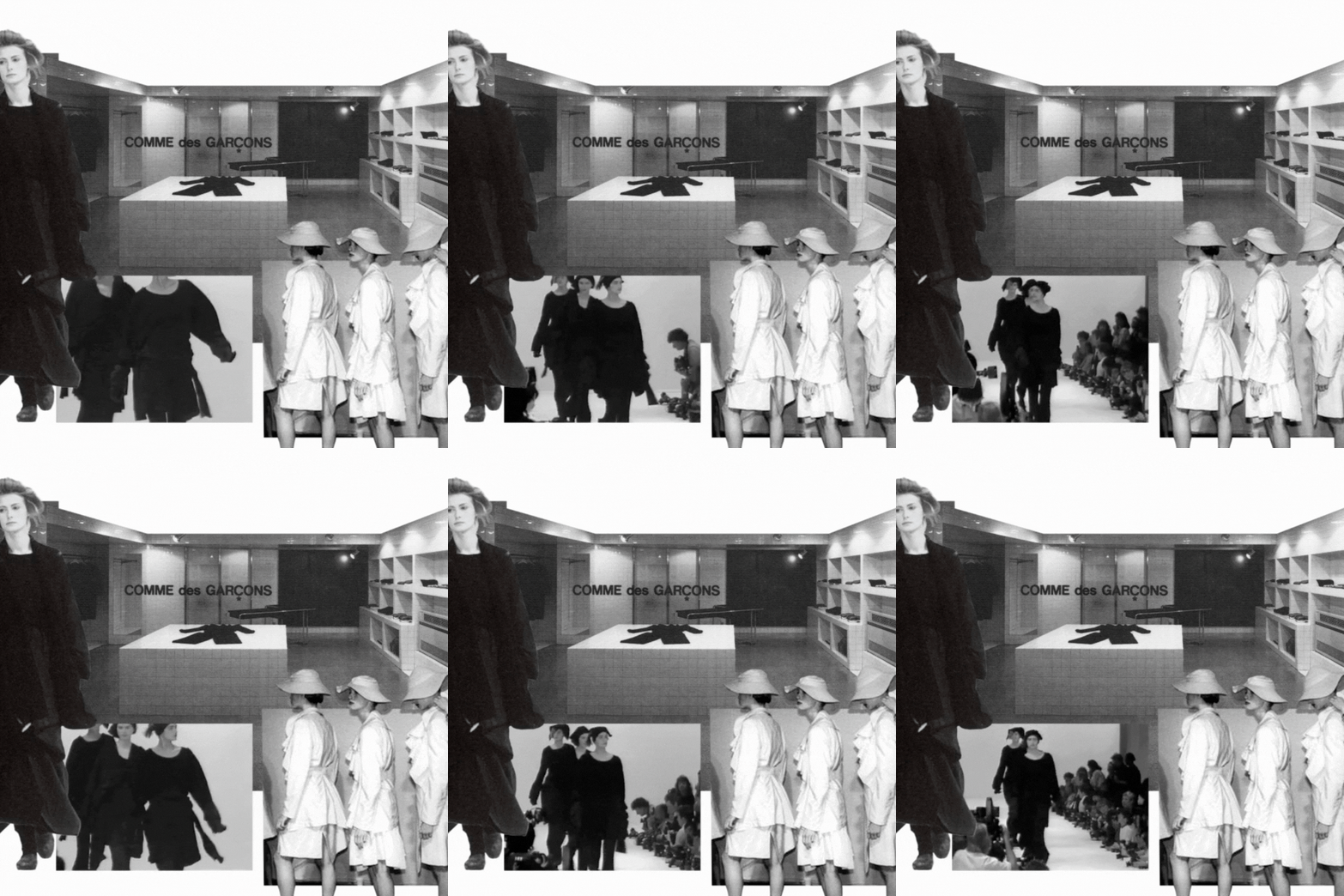
To categorize Rei Kawakubo as a mere "fashion designer" is a fundamental failure of language. Her life’s work is not a sequence of collections, but a sustained, totalizing critique delivered through the medium of the garment. This study traces her journey as a Philosophical Architect who relentlessly challenged the fashion system’s core tenets: the hollow worship of novelty, the arbitrary definitions of luxury, and the commodification of the human form. Through her radical 1982 "Destroy" collection, the conceptual warfare of the 1997 "Lumps and Bumps," and the creation of Dover Street Market, Kawakubo established the foundational anti-fashion lineage for the entire Post-Luxury sensibility. Her ultimate creation is an inhabitable universe where value is based on concept, function is defined by critique, and the only true object of affection is the one that forces intellectual engagement.

Hiroshi Fujiwara and the Architecture of Post-Luxury Influence
A groundbreaking analysis of Hiroshi Fujiwara as a cultural architect whose work transcends design to reveal a new blueprint for influence. This study, Hiroshi Fujiwara and the Architecture of Post-Luxury Influence, dissects how his career reframed value by replacing empire with intentionality, spectacle with discretion, and inheritance with earned authority. We propose that Fujiwara's Fragment Design lightning bolt functions not as a traditional logo but as a monogram of philosophy—a structural element in a new paradigm of Post-Luxury Conceptual Functional Art. This work is essential reading for anyone seeking to understand the unseen forces shaping contemporary culture.
The Paris Fashion Week Paradox: Why the 18-Collection Calendar Kills Creativity and Signals the Death of Traditional Luxury
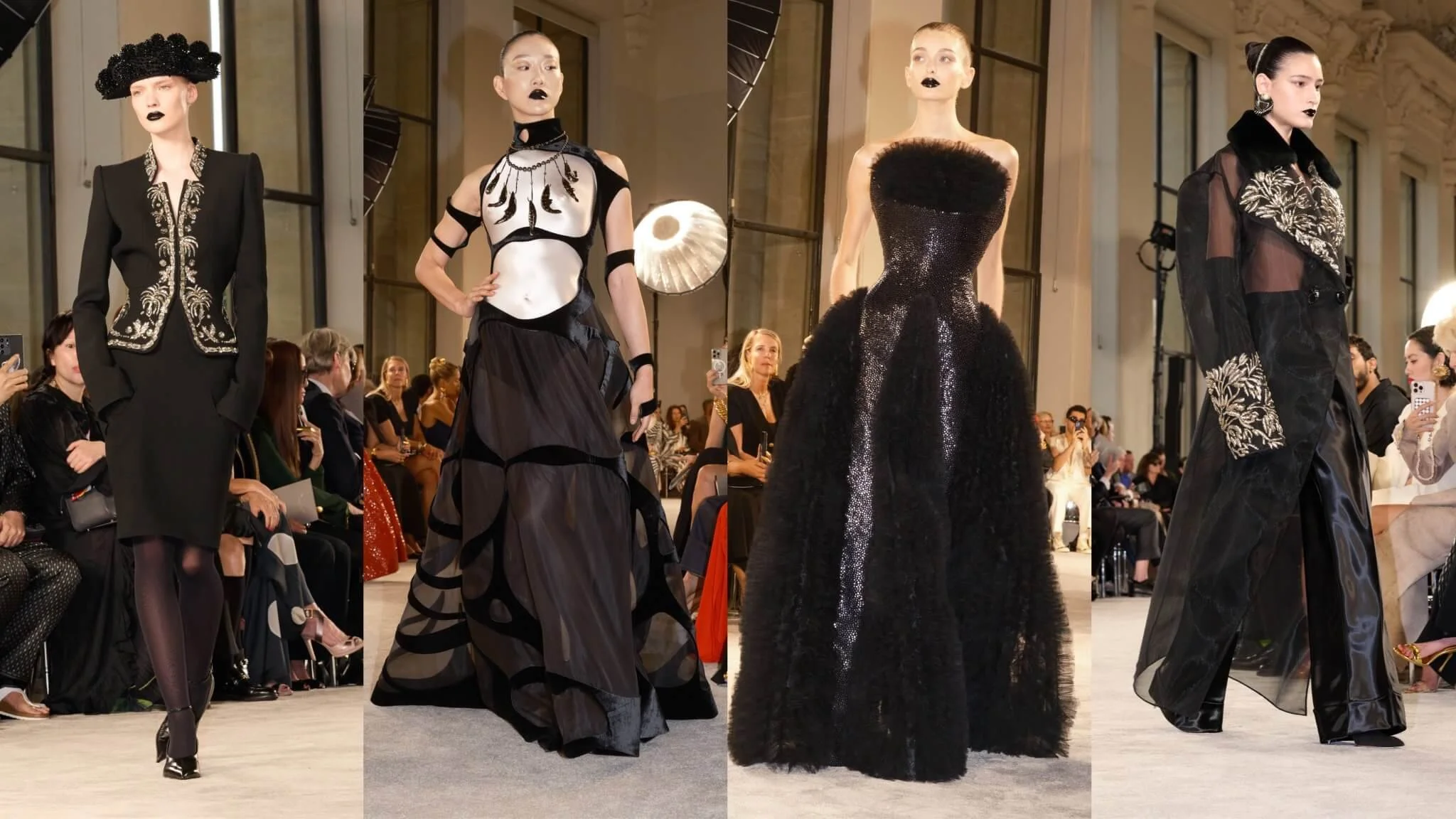
The contemporary luxury fashion calendar, driven by the financial mandates of corporate oligopolies, has systematically dismantled the core value proposition of traditional luxury. Houses are now compelled to produce up to eighteen collections annually, a pace that directly eliminates the time required for artisanal precision and visionary design. This relentless acceleration transforms the designer into a high speed content generator and shifts the $25,000 couture piece from an enduring investment into stylistically obsolete marketing collateral within six months. This systemic failure finds its necessary antidote in Post-Luxury Conceptual Functional Art (P.L.C.F.A.), a new paradigm that rejects transient status appeal, placing value instead in enduring intellectual depth, narrative, and ethical alignment. The future of authentic high fashion resides in this seasonless, philosophical approach, restoring the garment as a significant object of cultural value.
To understand the full scope of this self destructive cycle and the necessary emergence of Post Luxury Conceptual Functional Art, continue reading the full study.

The New Avant-Garde: Deconstructing Status and Utility in the Age of Post-Luxury
In the realm of global commerce, an ancient contract has finally been broken.
For a century, the gilded façades of luxury promised permanence, rarity, and status through price. That promise has been hollowed out—by relentless scale, ethical opacity, and the exhaustion of the logo. We stand at a cultural inflection point where the question is no longer what does it cost? but what does it mean?
Into this vacuum emerges The New Avant-Garde: a powerful, polyphonic movement of global makers crafting Post-Luxury Conceptual Functional Art (P.L.C.F.A.). These are not commodities designed for disposal, but vessels of memory and gestures of permanence. They are objects that elevate story over material, connection over exclusivity, and authenticity over image.
This is the definitive study of a structural collapse and the quiet, profound transformation it has yielded—a look at the thinkers, artists, and ateliers, from Kyoto to Cape Town, who are insisting that the future of value lies not in scarcity, but in resonance, and that the ultimate luxury is a meaning made tangible.

The Miu Miu Problem: How Wisdom Kaye's Viral Meltdown Became a Blueprint for a New Philosophy
This study, The Miu Miu Problem and the Rise of Post-Luxury, unravels the seismic moment when influencer Wisdom Kaye exposed a shocking material failure, a viral unboxing that became a cultural reckoning for the entire industry. By dissecting this event, we argue that the old model of conspicuous consumption has been fatally compromised, giving rise to a new philosophy: Post-Luxury Conceptual Functional Art (PLCFA), where value is found not in a brand's promise but in an object's story. This work is an essential guide to the next great cultural shift—a turn from commodity to meaning itself.
The Architect of the Unlined Suit: A Study on Giorgio Armani
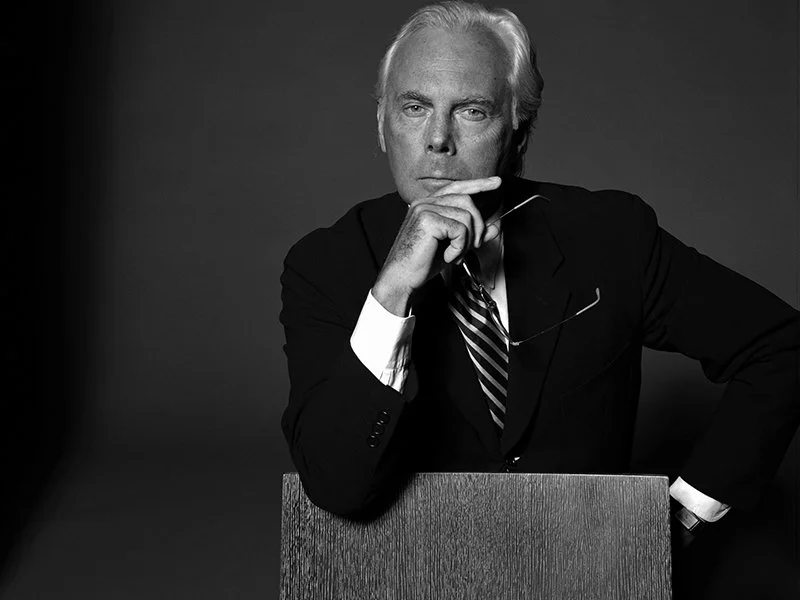
In a world defined by stiff tradition, Giorgio Armani ushered in a quiet revolution. He was a visionary who didn't simply design clothes; he sculpted a new architectural language for the body, a breathtaking rebellion against the rigid structure of the suit. From his initial act of defiance to the global empire he built, Armani's life was a singular, relentless pursuit of a vision that would forever redefine the very essence of modern elegance. This is a comprehensive study of a pioneer who didn't just dress people, but also actively shaped global culture and aesthetics.