The Museum With the Best Provenance in the World, and the Sentence It Cannot File
On a grammar rich enough to doubt itself, the one thing it has no way to say, and the researcher in 2040 who will start again from nothing
There is a sentence in a Metropolitan Museum of Art essay published on 9 April 2026 that this institution had spent three weeks asking practitioners whether anyone ever writes.
"However, no amount of sleuthing could find a Native American woman by the name of Mary Mono from any of these areas."
A named subject. A search performed. A result of nothing. Written down.
And then, in the same passage, something better than nothing. The researcher had found a Pomo weaver recorded near Santa Rosa under a different surname, and asked in print whether a transcription error could account for the difference: could this be the elusive Mary Mono, or Mary Mora. So the entry is not simply negative. It reports a search that failed, names the candidate the search produced, and leaves the question open for whoever comes next.
That is the hardest pair of sentences in provenance research and among the rarest. Neither is a hedge and neither is an apology. Together they are a finding and a live lead. Somebody looked, carefully, reported that the looking failed, and wrote down the one thread still worth pulling, which is the only thing that lets the next person know both that the ground has been covered and where it has not.
It appears in an essay. It does not appear on the object.
What the Met Publishes, and How Good It Is
Begin where the argument has to begin, which is with the quality of the work, because the finding here is worthless if it reads as a complaint.
The Met publishes its provenance contact address openly and states that part of the Museum's mission is to research and present the provenance of every piece in its care. Since May 2024 it has had a Head of Provenance Research in a post created inside the Director's Office to coordinate the work across nineteen collecting areas, and the research team was expanded from six people to eleven.
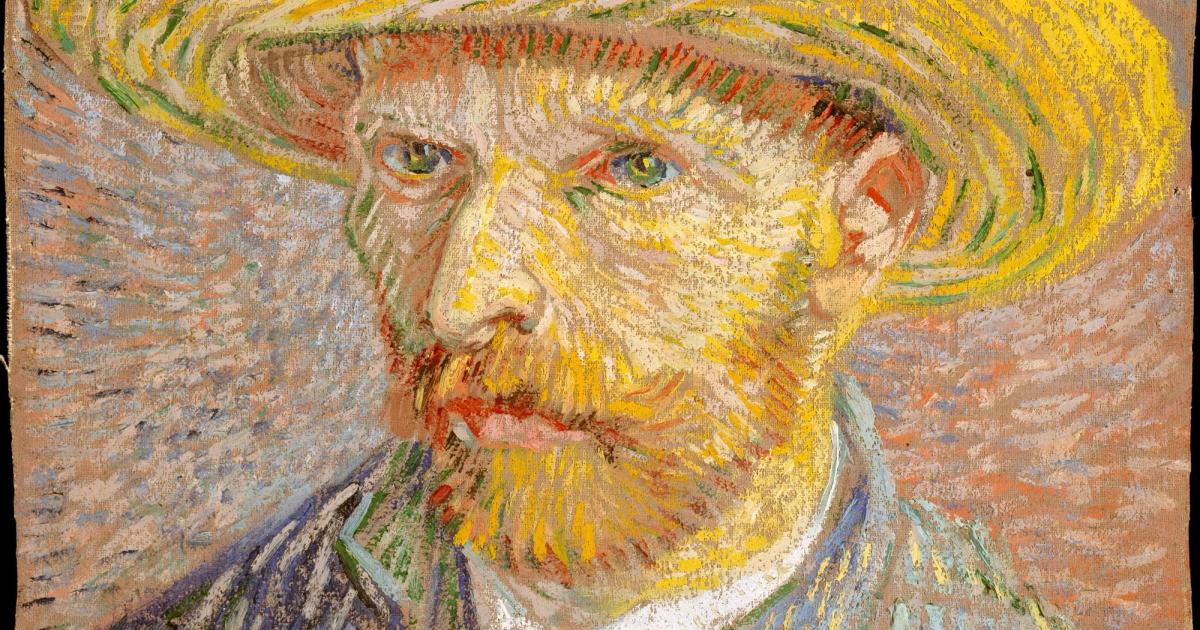
Read one of the resulting records. The page for the van Gogh *Self-Portrait with a Straw Hat* of 1887 carries a custody paragraph with square brackets around the trade, a consignment date, a half share between two named parties, the words *reportedly* and *probably*, and date bounds given as *by 1929*. That is not a label. That is a scholarly apparatus, published for anyone, on a page that gets more readers in a week than most catalogues raisonnés get in a decade.
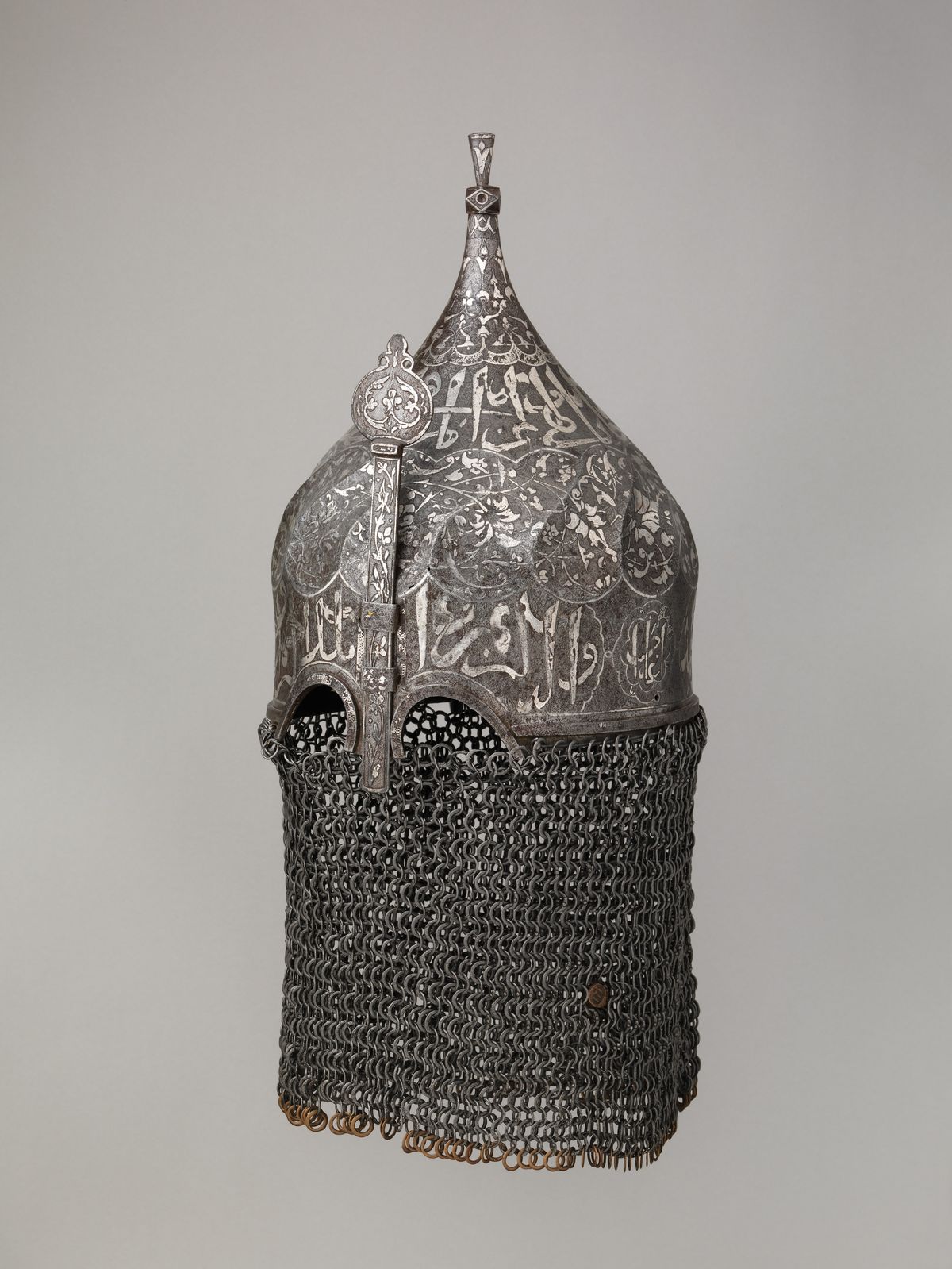
Now read the one in the set that spans the 1930s and 1940s. A helmet with aventail, object 24813, records that it passed from one Rothschild to another, was seized by the Nazis in March 1938, carries the Nazi inventory number 2798, and was restituted by Austria to the widow of its owner in April 1949. The month, the number, the state that restituted it, and the person it was restituted to.
For calibration, from a different institution's full published corpus: of 81,543 National Gallery of Art records, 14,648 of them, 18.0 percent, carry custody spanning 1933 to 1945. Of those 14,648, at most 0.74 percent carry any vocabulary marking the period as examined. That figure is a ceiling rather than a count, because prose exceeds any pattern used to find it, and the underlying finding is that only the positives are visible at all: a record examined and found clean is byte-identical to one never looked at. Against that baseline the Met entry is not merely compliant. It is exceptional.
This study is about something that institution cannot do, and it is important to say first that almost nobody does it better.
The Grammar of Doubt, Set Out in Full
Read ten Met object records across five departments and a vocabulary emerges. It is consistent, it is disciplined, and it is doing real work.
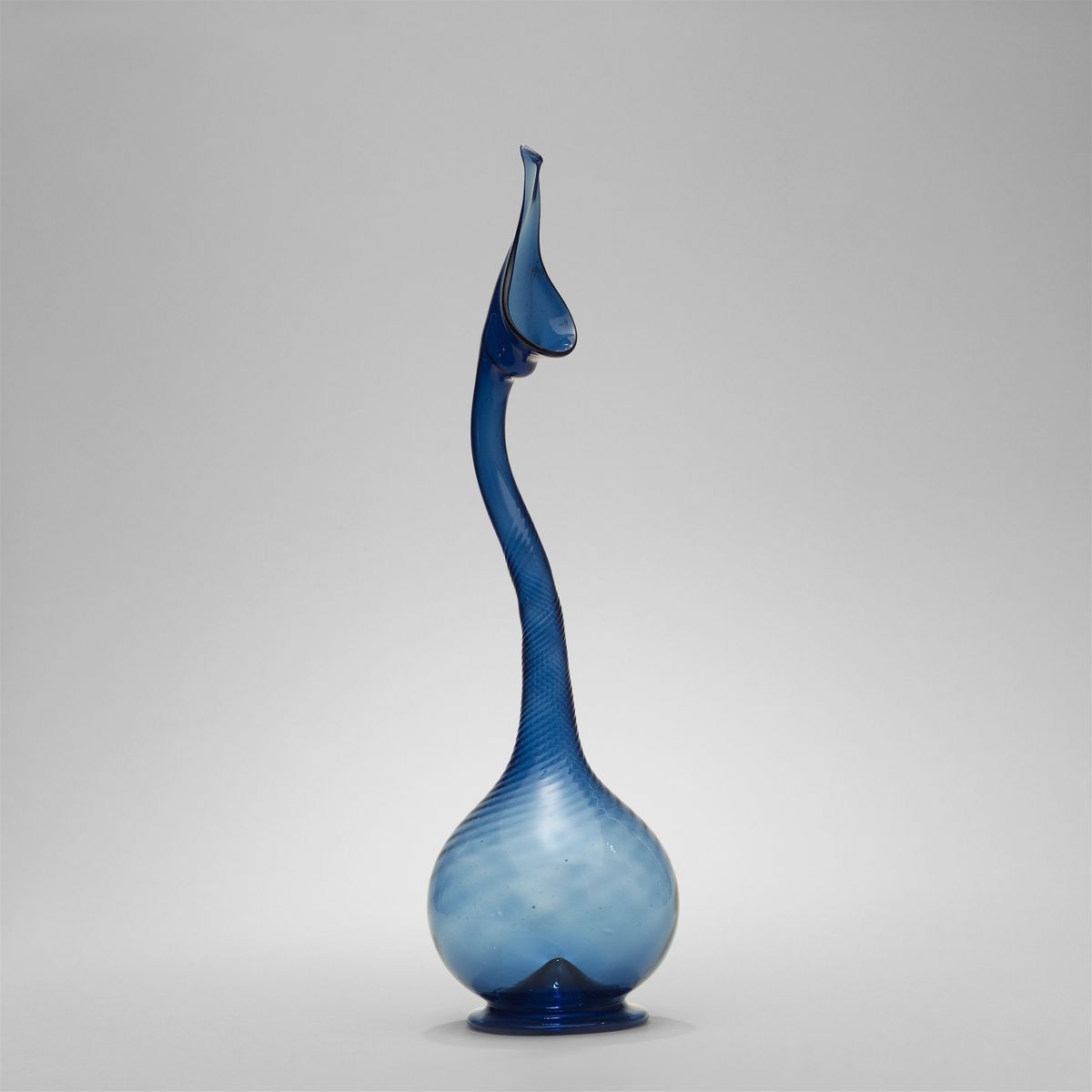
A question mark before a name, as on a nineteenth century glass bottle, object 446996, meaning this may not be the owner. Square brackets around a party, meaning this was the trade rather than a collector. Bounds instead of a date, as in *by 1836 to after 1875* on a 1587 burgonet. A range where a year is uncertain, as in *between 1936 to 39* on an Egyptian group statue. *Attributed to*. *Probably*.
Every one of those marks is a qualification of something the Met is telling you. Each says, with precision, *I am less than certain of this assertion.*
Not one of them marks an absence.
The vocabulary can say *I am unsure of what I am telling you*. It has no way to say *I looked here and found nothing*, and no way to say *nobody has looked yet*. Those are different states, and in a record built for reuse they are the two that most need separating.
Ten Objects, and the Count That Matters
Ten object pages were read in full on 25 September 2026, two from each of five departments, chosen from the Met's own highlight set rather than at random, which means they were chosen to show the work at its best.
Of those ten entries, the number that state a search was made and returned nothing is zero.
Not one says *not found*, *no earlier history known*, *unrecorded*, or *searched*. The count is zero in a set selected to be the strongest.
Nine of the ten carry an unmarked silence before the first named holder. The exception was made in 2006. The longest silence in the set runs roughly 377 years: a carpet of about 1600 whose published record begins with a private collection in Rome in 1977.
The Eighty-Nine Years Between Two Semicolons
One entry shows the mechanism more clearly than any argument about it.
"Collected by Cyril G. Hawdon, Viti Levu, Fiji, in 1868; John J. Klejman, New York, until 1957"
Eighty-nine years pass between those two semicolons and nothing in the format marks them.
That is the whole problem in one line. The entry does not look incomplete. It looks like a list, and a list looks finished. A reader who does not stop and do the subtraction will not see that anything is missing, and nothing in the presentation asks them to do the subtraction.
An absence that announces itself can be worked on. An absence that reads as a tidy sequence cannot, because nobody knows it is there.
The Object From 2006 That Proves It Is Structural
One object in the ten has no holes at all. A work made in Ghana in 2006 passed through a single named dealer and reached the Met in 2007. Its record is complete because the custody is short and recent, not because anyone worked harder on it.
That object is the control, and it settles what kind of problem this is.
Put its record beside the carpet's. One is complete. The other has three and a half centuries missing. To a reader, and more importantly to any software, they are the same kind of object: a short list of named holders with dates, ending at the Met.
The format cannot distinguish *complete because recent* from *appears complete because what is missing was never written down*. Those two records are indistinguishable to anyone who did not make them, which means the difference survives only in the memory of the researcher who did.
The Field That Does Not Exist
The Met operates one of the largest open collection APIs in the world, covering roughly 490,000 objects, and it is a genuine public good.
Request the van Gogh from it and you receive fifty-seven fields. None of them is provenance. The acquisition facts present are the credit line, the accession number and the accession year. The provenance field is not empty. It is absent from the schema.
This was measured twice, independently, on different objects and by different routes, and returned the same answer both times. It was checked again on 17 October 2026 against the live API, which returned fifty-seven fields, none of them provenance, and the three acquisition fields named above.
The credit line answers *how did we come to have this*. It never answers *where has it been*. So the forty years of dealers and half shares and consignments on the public web page, the finest work the department does, exists only as prose for a human reader.
Which means the published record cannot be asked how many objects carry an unaccounted stretch. Not by a researcher, not by a journalist, not by another museum, and not by the department itself through the surfaces it publishes. What the Met's internal collection management system can do is not public, is not measured here, and is not claimed either way. The claim is about the published surfaces only: on those, the answer is not in a field, and you cannot count what has not been typed as data.
The Essays Say It. The Records Cannot.
Here the finding inverts, and the inversion is the reason this study is worth publishing rather than filing.
The first conclusion from the object pages was that the Met has no way to state a failed search. Then the Met's own published essay of 9 April 2026 was read, in which four of its provenance researchers each set out a case, and the conclusion had to be corrected.
They state failed searches fluently. The sleuthing sentence is one of five in a single article. Another says that a conclusion remains out of reach. Another names precisely which fact is missing, which is to say it types the absence rather than gesturing at it: the remaining mystery is where and when a particular owner acquired a particular Virgin and Child. A fourth records an absence that was later closed, naming the event that closed it, which is the append rather than overwrite pattern written out in prose by people who were not thinking about data models at all.
So the corrected finding is sharper and kinder at the same time.
The knowledge exists. The researchers articulate it better than most practitioners in this field. The record has nowhere to put it.
The Watchdog That Closed, and What Survived of It
One more thing happened to the field's own record this year, and it belongs here because it is the same problem at a larger scale.
The International Foundation for Art Research was founded in 1969 as an independent authority on attribution, provenance and cultural property law. It closed permanently in 2025.
What survived is a rescue, and the Met performed it. Its Watson Library, working with the Internet Archive, digitized more than 250 issues of IFAR's newsletters and periodicals spanning 1977 to 2023, including the long-running registry of thefts and recoveries that ran through the whole series. That is forty-six years of periodicals, preserved and made publicly accessible by a library that had no obligation to do it.
It is also, precisely, a scan.
Nobody should mistake that observation for ingratitude. Digitizing the run was the right act and a generous one, and the alternative was losing it. But what has been preserved is prose, in page images, readable by a person who already knows to go looking. The thousands of custody facts inside those issues are no more queryable now than they were in 1983, and the organization that could have been asked what it meant no longer exists.
So the field's own watchdog has produced the thing this study is about, at the scale of an entire archive. The research was done, it was careful, it was published, and it survives as text rather than as a record. Somebody in 2040 researching an object that passed through a theft and a recovery reported in an IFAR bulletin in 1991 will find it only if they already suspect it is there.
What This Is Not
This is not a criticism of the Metropolitan Museum of Art, and it should not be read as one. The research described here is among the best published anywhere, the essays are better than the field, and the one entry in the sample that spans the 1930s and 1940s is documented to a standard almost no institution reaches.
It is not a claim about the Met's internal records, which are not public and are not mine to describe. Everything above comes from public object pages, a public API and a published essay.
It is not a view about where any object belongs, or should go, or came from. OAC does not take positions on origin, export, return or restitution, and does not authenticate, appraise or value anything. Where a record describes a seizure and a restitution, this study reports what the record says and nothing further.
And it is not an argument that anybody has been careless. The opposite is the point. This is what a format does to careful people.
What a Container Would Have to Hold
The gap between the essay and the object record is not a gap in knowledge. It is a gap in storage, and storage problems have cheap solutions when they are named early.
A container for this would need four things, none of them exotic. What was searched. When it was searched, as a date the entry carries rather than the date the page was written. What was found, including nothing. And who could still close it, if anyone could.
Put those on the basket and the sleuthing sentence stops being a thing published once on a single day in April and becomes a thing the next researcher finds in the place they are already looking.
Without it, the search for Mary Mono has been done and will be done again. The Met knows the answer is not there. The object does not. Narrative Permanence is this institution's name for the property a record has when its account outlives the people who assembled it. An essay published on one day in April does not confer it. A field on the object would.
Coda
A record that cannot report a failed search quietly converts work into nothing.
Somebody spent days establishing that a woman cannot be found in the places she should have been. That is a real result, arrived at by a professional, and in a field where most absences have never been touched it is worth more than another confirmed owner. It was written down once, in an essay, where it will be read by people interested in provenance research and not by the person who in 2040 opens the object record and starts over.
The best provenance department in the world can write the sentence. It cannot file it.
IFAR spent fifty-five years on this question and has now closed, and what is left of it is a run of scanned periodicals in a library that was kind enough to take them. That is the same sentence written at the scale of an institution. The work was done. The work was good. The container was prose.
And the next institution to build a collection record, which this year means several of them, will inherit the same format and the same silence unless somebody says plainly that the two states look identical and are not: the gap that defeated an expert, and the gap nobody has touched.