
The Architecture of Intent
A Critical Lexicon
This collection of studies is the intellectual architecture of Post-Luxury Conceptual Functional Art (PLCFA).
The true artistry of this Maison resides not in the finished form, but in the rigorous thinking that precedes it. These essays serve as the conceptual foundation for PLCFA, using a critical lens to interrogate cultural phenomena, art history, and consumer paradigms—analyzing everything from the ephemeral spectacle of luxury to the pure architectural rigor of abstract principles.
This is an invitation into the workshop of the mind. By sharing this process, we validate the necessity of a new category of value and invite you toward a well-considered life, one founded on true craft, uncompromising narrative, and durable meaning.
New to PLCFA? Begin with Essential Reading below.
Exploring a specific area? Navigate by category.

The Material as Political Capital: Quantifying Moral Weight in the Anti-Market Materiality of PLCFA
The contemporary institutional landscape is marked by a critical Institutional Pivot, shifting valuation away from purely aesthetic criteria toward objects whose verifiable political provenance secures their cultural worth. This structural change is necessitated by the inherent moral deficits of materials deeply implicated in the entrenched regime of Speculative Capital (SC)—a system that systematically prioritizes the liquidity and standardization of materials like industrialized oil paint and monumental marble. This study analyzes how the SC economy relies on obscuring labor histories and prioritizing financial value, thus creating a systemic conservatism that the new cultural paradigm must structurally resist.
As the definitive antithesis to this system, Post-Luxury Conceptual Functional Art (PLCFA) deploys historically marginalized materials embedded with verifiable records of labor, political trauma, or ideological dissent, such as heritage silk, reclaimed institutional books, and scarred tarps. To quantify this resistance, we introduce the proprietary metric Moral Weight per Material (MWPM), which functions as the object's quantifiable ethical and political currency. By certifying the object's intrinsic worth outside the cyclical demands of high-liquidity markets, the MWPM framework provides a necessary structural defense that systematically resists market neutralization, confirming that Moral Weight per Material is the definitive, anti-speculative Political Capital.
Biopolitics of the Artifact: How Functional Endurance Challenges Foucault, Groys, and the Archival Death Mandate
Every object committed to Functional Endurance is embroiled in a hidden conflict with the very institutions designed to preserve it. This study argues that the museum and the traditional archive are not sanctuaries of immortality, but political mechanisms designed to impose a "death mandate" on the artifact.
By analyzing the critical frameworks of Boris Groys (The Archive Paradox) and Michel Foucault (Biopolitics and Thanatopolitics), we demonstrate that an artifact’s entry into a collection is, in essence, a declaration of its functional death—reducing it to a manageable file ready for institutional calculation and potential erasure.
To counter this power structure, the framework of objects committed to persistence (PLCFA) utilizes a metaphysical defense (Endurantism) enforced by legal and technological mandates: the Custodian’s Contract and Digital Provenance. This unified strategy forces the institution to acknowledge the object’s perpetual presence, to maintain life, and to secure its narrative truth against the biopolitical neutralization of the central archive.
Hito Steyerl and the Phygital Counter-Strategy: Why Post-Luxury Value Resists the Poor Image
The battle for actual value is no longer fought in auction houses, but across digital networks where the singular object is threatened by informational entropy and the constant, instant degradation of its image. This study integrates the groundbreaking critique of media theorist Hito Steyerl—specifically her analysis of the "Poor Image" and "Circulationism"—to diagnose the existential threat posed to permanent, material value.
We reveal the PLCFA framework’s definitive defense: the Phygital Counter-Strategy. By mandating High Fidelity in documentation and an aggressive Anti-Virality approach, PLCFA weaponizes the singularity of the physical object to anchor a deliberately restricted digital record. This structural rejection of disposable data and the spectacle of viral distribution ensures that the Material as Story principle remains sovereign over the digital flow, guaranteeing a form of worth that the Poor Image can never have: permanence.
Debord's Spectacle Meets Sholette's Missing Mass: How Artisan Activism Forges Moral Capital and Revalues Luxury
The central thesis argues that Artisan Activism is the required political détournement (subversion) that compels the invisible mass of surplus labor to become radically visible within the finished object. This conscious act of ethical commitment transforms the manufactured material culture into Moral Capital, a counter-currency that resists the Spectacle's structural demand for reification, abstraction, and financial fluidity. The philosophical necessity for this approach lies in resolving pervasive ontological insecurity: the debilitating crisis where intensive, highly skilled labor fails to achieve stable, commensurate economic valuation.
The Spectacle, while presenting itself as the source of all fulfillment, perpetually promises authentic social experience, community participation, and genuine fulfillment, yet consistently delivers only deception always compensated by the promise of a new deception. This profound structural failure creates a discernible vacuum within contemporary consumption—a hunger for narrative depth, tangible connection, and permanence. This vacuum is precisely what the Post-Luxury Conceptual Functional Art (PLCFA) framework is designed to satisfy, positioning the increasing demand for PLCFA as an observable economic symptom resulting from the Spectacle's foundational philosophical and social bankruptcy.
From the Aura to the Simulacrum: Benjamin, Baudrillard, and the Crisis of the Authentic
The concept of authenticity has entered a terminal crisis, traced directly from Walter Benjamin's localized loss of the Aura—the object's unique, verifiable material history—to Jean Baudrillard's total collapse into the Simulacrum and Hyperreality. This intellectual journey reveals why traditional critique is now insufficient to defend genuine value against perfect digital fidelity and pervasive systemic simulation.
This study positions the commitment to the One Original Principle, grounded in an affirmation of the physical object’s Material as Story, as the necessary structural defense against the informational entropy of duplication. By bypassing the limitations of 20th-century critique using Object-Oriented Ontology (OOO), we reclaim the unique, non-relational essence of the artifact, transforming it into a rebellious singularity that resists the totalizing logic of the hyperreal sign.
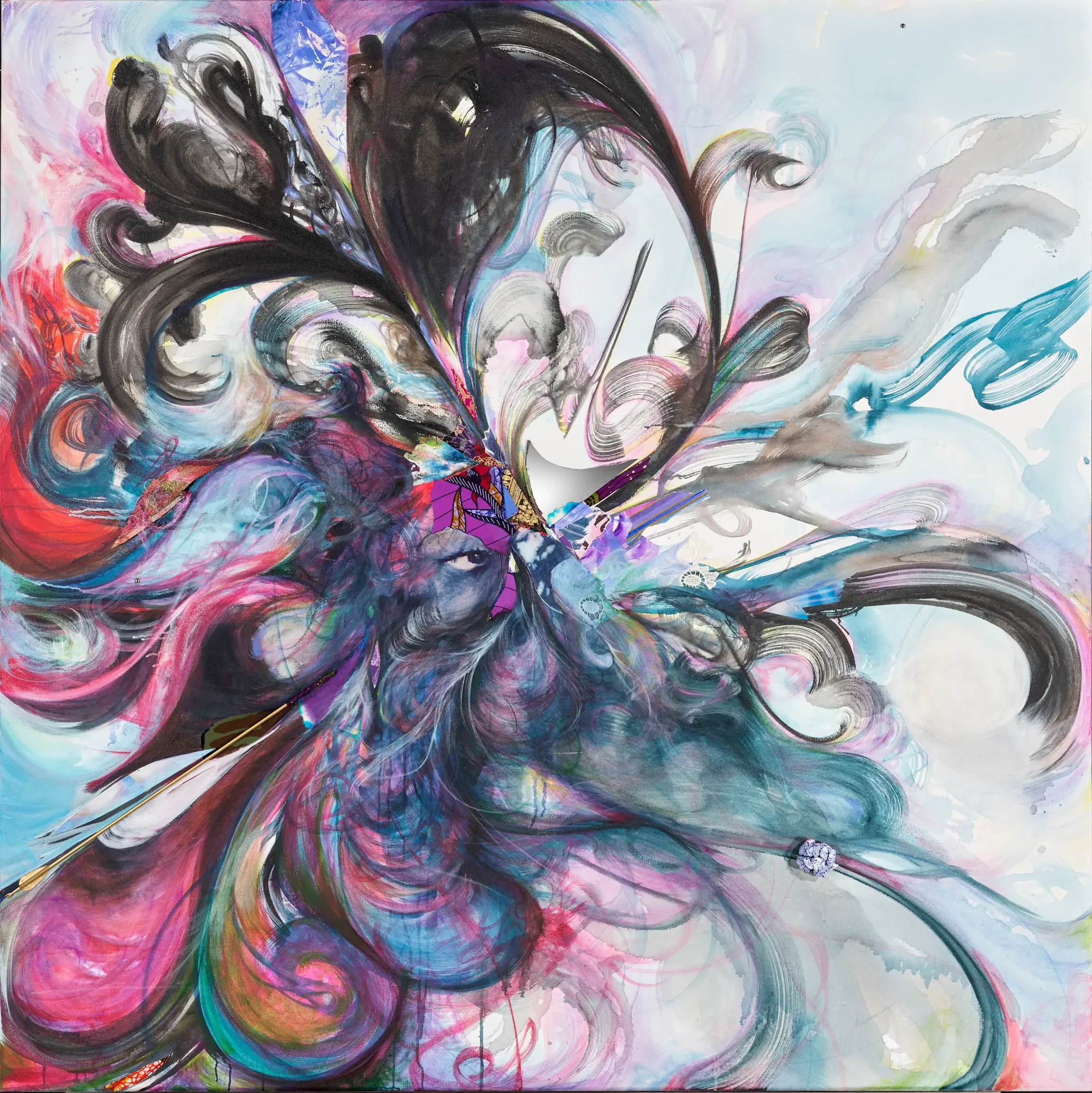
The Institutional Pivot: How Post-Luxury Conceptual Functional Art (PLCFA) Reconfigures Museology, Materiality, and the Decolonization of the Canon
The twenty-first-century museum object is undergoing a profound ontological crisis, burdened by the ethical demand to move beyond mere aesthetic preservation and actively advance social critique and justice. This strategic pivot is a direct institutional response to widespread fatigue with the accelerating disposability of the hyper-consuming society, positioning cultural memory and duration as necessary counterweights to material ephemerality. This study argues that to maintain relevance and integrity, institutions must radically shift their criteria of value, abandoning traditional metrics centered on financial provenance and aesthetic conformity. It is in this high-stakes context that the Post-Luxury Conceptual Functional Art (PLCFA) framework emerges as the precise semantic architecture required to guide this evolution, providing the critical vocabulary necessary to move institutional leaders toward philosophically rigorous action and away from vague, procedural reform.
The PLCFA framework serves as the definitive intellectual tool for navigating this transformation by explicitly rejecting the traditional luxury paradigm and instead situating value in permanence, intentionality, and narrative depth. This paper empirically demonstrates that major institutions are already adopting PLCFA principles through fieldwork conducted at the Newfields Indianapolis Museum of Art (IMA) during the Bold exhibition. By analyzing the curatorial strategy—specifically the move to dismantle gendered craft hierarchies and decolonize the material canon, as evidenced by the Shinique Smith acquisition and Robert Ebendorf's philosophy—the study demonstrates how the framework justifies the pivot to all stakeholders. Ultimately, PLCFA transforms the museum from a passive collector of exclusionary value into an active, democratic site for shaping inclusive public consciousness and ensuring the object's value lies not in its status, but in the enduring depth of its story.

Artisan Activism: Why Craft, Materiality, and Protest Define Post-Luxury Value
The modern discourse on art valuation is dominated by an anxiety rooted in abstraction—the fear that artistic merit has been eclipsed by financial potential. The art world’s speculative economy prioritizes investment calculation over genuine connoisseurship, leading to a structural failure where critique is swiftly absorbed and monetized. This structural void demands a framework that can articulate value based on metrics that resist easy financial abstraction. This study introduces the Artisan Activism metric as the critical nexus for the Post-Luxury Conceptual Functional Art (PLCFA) framework, which intentionally re-materializes critique. By declaring craft labor an explicit act of protest, the artisan transfers the non-monetary moral weight of the critique directly into the object’s material components, securing its worth outside the cyclical demands of the speculative art economy.
We validate this critical shift through the empirical evidence provided by the work of contemporary practitioners Samuel Levi Jones and Carlos Rolón at the Newfeilds Indianapolis Museum of Art. Jones employs visceral deconstruction, "skinning" institutional books to create material critique, while Rolón utilizes meticulous craft to resurrect scarred tarps into banners of cultural resilience. Both artists explicitly prioritize the political and ethical commitment of the "artist as activist" over the social and financial leverage offered by the speculative elite, proving that the value of their work is inherently secured by the magnitude of its political resistance. This commitment defines a new kind of ownership—cultural custodianship—establishing the PLCFA framework as the definitive architecture for the future of value in the post-luxury age.

The Simulacrum of the Copy: Aritzia's 'Dupe' Trademark and the Legalization of Hyperreality in Global Fashion IP
The fashion industry has officially entered the hyperreal condition. Aritzia's aggressive move to trademark the phrase "Aritzia Dupe" is not a defense of its physical product, but an empirical, legal attempt to control the very language of imitation. This effort seeks to regulate the generated "real" that has emerged from digital discourse, where consumers openly celebrate the dupe as a "smart choice" that strips away exchange-value while retaining symbolic prestige. By appropriating the signifier of the copy, the brand effectively elevates the simulated item to a position of market authenticity, making the imitation the only legible truth about the product in the contemporary marketplace.
This legal maneuver fundamentally validates the critique outlined by Jean Baudrillard: the capacity to distinguish between the original and its representation has collapsed entirely. The brand has abandoned the traditional mandate to defend the material object, choosing instead to secure a proprietary claim over the imitation's signifier. This is the definitive endpoint of the Simulacrum—a structural acknowledgment that the economic and cultural significance of the copy now outweighs the material integrity of the original, forcing the legal system to affirm that the sign of the copy is a primary, source-identifying feature of the luxury brand.

The Bag-Backed Security: How the LUXUS Fund Signals the Death of Old Luxury and the Rise of the Post-Luxury Era
The 21st century has borne witness to a silent, seismic shift in the semoiotics of value. Luxury, once the bastion of craftsmanship, has been systematically hollowed out, its cultural meaning evacuated and replaced by a cold, relentlessly quantitative logic. What was once an object of affection has been supplanted by the alternative asset. This transformation was a deliberate, institutional project to financialize desire and render the intangible liquid.
The logical endpoint of this process is the "Bag-Backed Security", exemplified by the emergence of LUXUS, an asset management firm backed by Christie's. This is the "Simulacrum of Luxury" made real. The definitive proof of this total financialization is that a $1 million fund returned 34% in 43 days—a speculative trade that proves the object's physical existence is now irrelevant.
This system creates a crisis of value—a "value monoculture" incapable of processing "un-smooth" objects. The model fails to see the intellectual critique of a Rei Kawakubo "Lumps and Bumps" dress or the earned endurance of a Carol Christian Poell Drip Sneaker.
The cultural crisis creates the intellectual void that our framework, Post-Luxury Conceptual Functional Art (PLCFA), is designed to answer. Where the LUXUS model offers ownership of an alienable commodity, PLCFA demands active stewardship of an inalienable possession.

Doris Salcedo: The Function of Suffering—Memory, Emotional Labor, and Political Witness in Post-Luxury Conceptual Art
The Post-Luxury paradigm begins with the recognition of a profound intellectual and ethical vacuum at the heart of contemporary culture, driven by the collapse of traditional luxury’s value equation. This study argues that the definition of function is too narrow—it fails to account for the essential human experiences, like collective memory and the reckoning with trauma, that constitute necessary human labor. This Function Gap is addressed by Doris Salcedo, whose objects possess a fierce utility by performing non-commodifiable, enduring social work. Her practice transforms art from a status symbol toward a ritual tool for collective conscience, shifting its role decisively from the logic of possession toward a logic of being. Read the full study to see how the work of this Philosophical Architect changes everything.