Art Basel Paris 2026: The Arithmetic of Who a Fair Is For
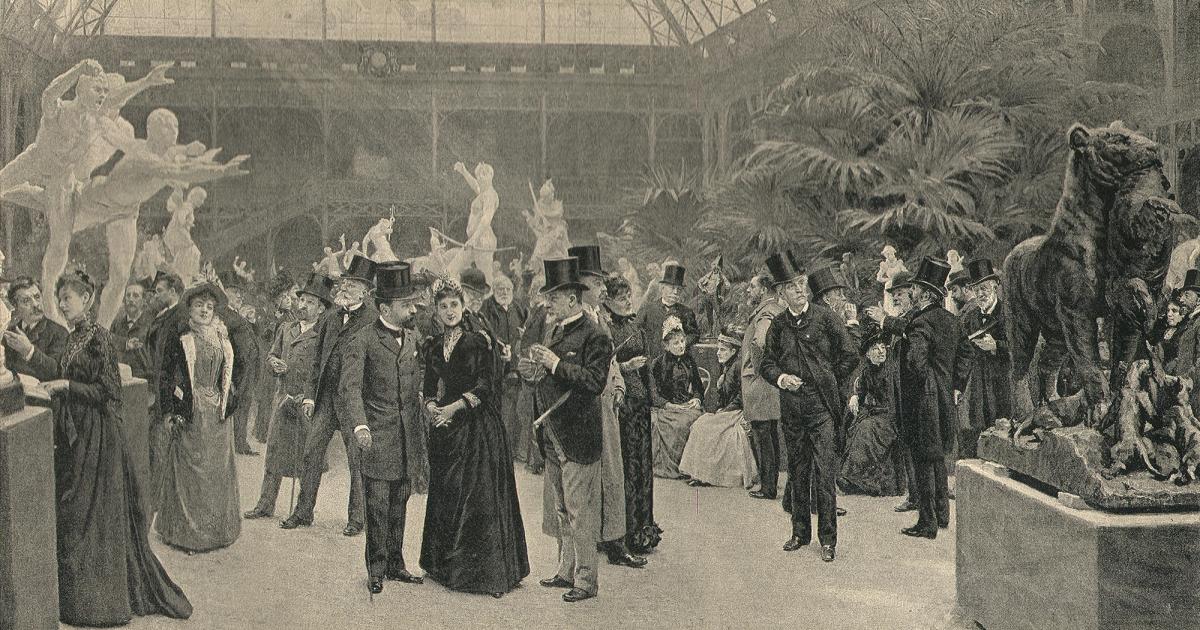
On a fair that held every invitation only day it had scheduled, kept one of three public days, and in losing the public days first revealed an ordering that was decided when the calendar was designed rather than on the morning of the announcement
A fair announced that it would close early. The reason given was safety, and the reason was real. What makes the announcement worth a study is not the closure. It is which days survived it.
Art Basel Paris held its fifth edition at the Grand Palais. Every day that required an invitation or a premium pass took place. Every day that the general public could buy a ticket for, except one, did not. That asymmetry is arithmetic rather than interpretation, and it is the whole of what follows.
What Is Established, With Its Dates
The fair opened on Tuesday 20 October 2026 with Avant Premiere, a super restricted opening running from three in the afternoon to seven in the evening, a format introduced the previous year. Invitation and premium pass days followed on Wednesday 21 and Thursday 22 October. The vernissage took place on Thursday 22 October from two until eight in the evening, by invitation or a dedicated ticket. The fair's own listing gives public days of Friday 23, Saturday 24 and Sunday 25 October, eleven in the morning until seven in the evening.
On Thursday 22 October the fair wrote to its VIP guests. The message was co-signed by Karim Crippa, director of Art Basel Paris, and said that the fair would conclude its 2026 edition at seven in the evening on Friday 23 October. It added that the organisers deeply regretted that they would not be able to welcome guests over the weekend, and that the safety of everyone involved in the fair remained the utmost priority. The Art Newspaper reported the closure the same day.
The context was mass demonstration across France. Protests against the high cost of living and conditions in schools had been overshadowed the previous weekend by rioting and looting, with at least two and a half thousand arrests reported nationally. Further protests were planned in central Paris for the coming weekend, and the president had said that only authorised union marches would be permitted in French towns and cities on the Saturday. Additional security patrolled the perimeter of the fair around the clock.
Commerce was not slow. Big ticket sales followed the opening. A work by Julie Mehretu, Rise of the New Suprematists, dated 2001, was priced at seven point eight million dollars with White Cube. Reports put the exhibitor count at roughly two hundred to two hundred and eleven galleries from forty one countries. The fair said it was too early to understand the financial implications of closing early, and that statement should be taken at face value.
The Days, Counted
Scheduled days that required an invitation, a premium pass or a dedicated ticket: four, counting Avant Premiere, two invitation days and the vernissage. Held: four. Scheduled days on which a member of the public could attend by buying an ordinary ticket: three. Held: one.
The restricted programme completed at one hundred percent. The public programme completed at thirty three percent. No day was cancelled that had an invitation attached to it, and two thirds of the days that did not were lost.
That is the finding, and it should be stated without heat, because the temptation to read it as hypocrisy is strong and the reading is wrong. It is also weaker than what the arithmetic actually supports.
The Calendar Was the Decision, Not the Announcement
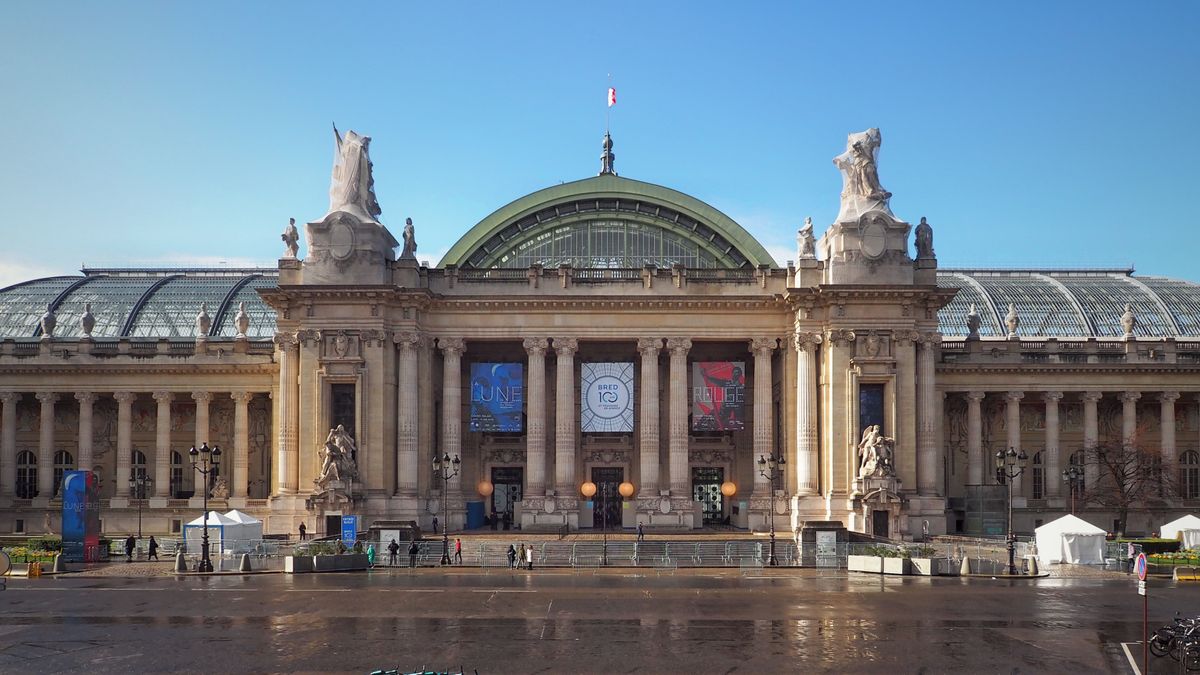
The obvious objection arrives immediately. The restricted days came first. By the time the decision to close was taken, they had already happened. Nobody can cancel a day that is over. The asymmetry therefore follows from the order of the calendar and not from a choice made on Thursday afternoon about whose money matters.
That objection is correct, and accepting it fully makes the finding sharper rather than softer. If the sequence produced the outcome, then the sequence is where the priority lives. The decision about which audience would absorb a shock was not made on 22 October. It was made when the schedule was drawn, and it is remade every year that the schedule keeps its shape.
A calendar that puts the commercially decisive days first and the public days last has already allocated risk. Any disruption that shortens a run removes the end of it. Weather, civil unrest, a security alert, a transport strike, a public health measure: every one of them truncates a tail, and the public is permanently seated in the tail. The fair did not need to prefer collectors on the day. The structure had already done the preferring, in advance, in writing, and in a form nobody reads as a statement of values because it looks like logistics.
This is why the honest version of the charge is structural rather than moral. No individual acted in bad faith. The director's message is a reasonable message. The security advice was sound. And the outcome was nonetheless determined before the protests existed, by an ordering that is presented as a neutral operational convenience and functions as a ranking.
The institution's own vocabulary has a name for what becomes visible here. Structural Captivity describes a position from which a party cannot opt out of a sequence that disadvantages it. The public cannot buy its way forward in this queue, because the earlier days are not for sale at any price the public pays. Neither can the dealer, who has paid for a booth, booked shipping against a Sunday teardown and must now reverse it in a day. The dealers lost two selling days as well, and they are the party bearing the measurable cost. Any reading that casts them as beneficiaries of the closure is not reading the invoices.
The Decisive Window Closes Before the Public Arrives
The founder's observation rested on something everyone in the trade says and nobody in the trade sources: the sales happen at the preview. Treated as a measured share of turnover, that claim has no figure behind it in any document located for this study, and it should not be written as though it does. Treated as a description of when commitments are made, it is supported by a great deal of evidence, and the evidence is more useful than a percentage would have been, because it shows the mechanism instead of asserting a total.
Start with the weight of fairs themselves. The Art Basel and UBS Art Market Report, prepared by Arts Economics, puts art fairs at thirty five percent of dealer turnover for 2025, the highest level since 2022. Dealers in the one to ten million dollar turnover band reported a thirty six percent rise in sales at such events. A companion survey of high net worth individuals put the share buying at art fairs at fifty eight percent. Whatever happens at a fair happens to roughly a third of the primary market's trade.
Then look at when, inside a fair, it happens. The pattern is documented repeatedly and specifically. At Frieze London in October 2026 one gallery's stand sold out within the first five hours and at least four stands sold out, among them a major international gallery. At Frieze Los Angeles in February 2026 a Hauser and Wirth presentation had sold out by the end of the VIP preview. At Art Busan organisers counted one thousand five hundred and eighty VIP guests inside the first five hours. At Art Basel Miami Beach dealers described brisk business four hours after the doors opened. None of these is a share of total sales. Together they describe a market that resolves its best material in hours.
The sharpest evidence runs earlier still. Artsy has reported that at major fairs the most desirable works are commonly sold before the VIP preview opens at all, with one Paris gallery putting pre sales at ten to thirty percent of its booth, and noting that most galleries do not sell out in advance. Read carefully, that is a stronger statement than the trade maxim it appears to qualify. If a material portion of the best work is committed before the first restricted day begins, then the public days are not late in the commercial sequence. They are outside it.
One caveat belongs here, and leaving it out would be the kind of omission this institution treats as a defect. Trade coverage has also noted that a brisk opening does not necessarily reflect the rest of a fair's business, which in recent editions has slowed. A fast first day is not proof that nothing else happens. The claim this study makes is narrower and survives the caveat: the window in which the decisive commitments are made closes before an ordinary ticket holder can be in the room.
Which is why cutting the public days cost the market so little that it could be done by email in an afternoon. A day with no commercial function is a day that can be given up. The institution's term for a thing whose form persists after its function has been removed is the Hollowed Object. The public day at a major fair is already hollow. That is not a consequence of the closure. It is the precondition that made the closure cheap.
Basel Exclusive, and the Pattern This Completes
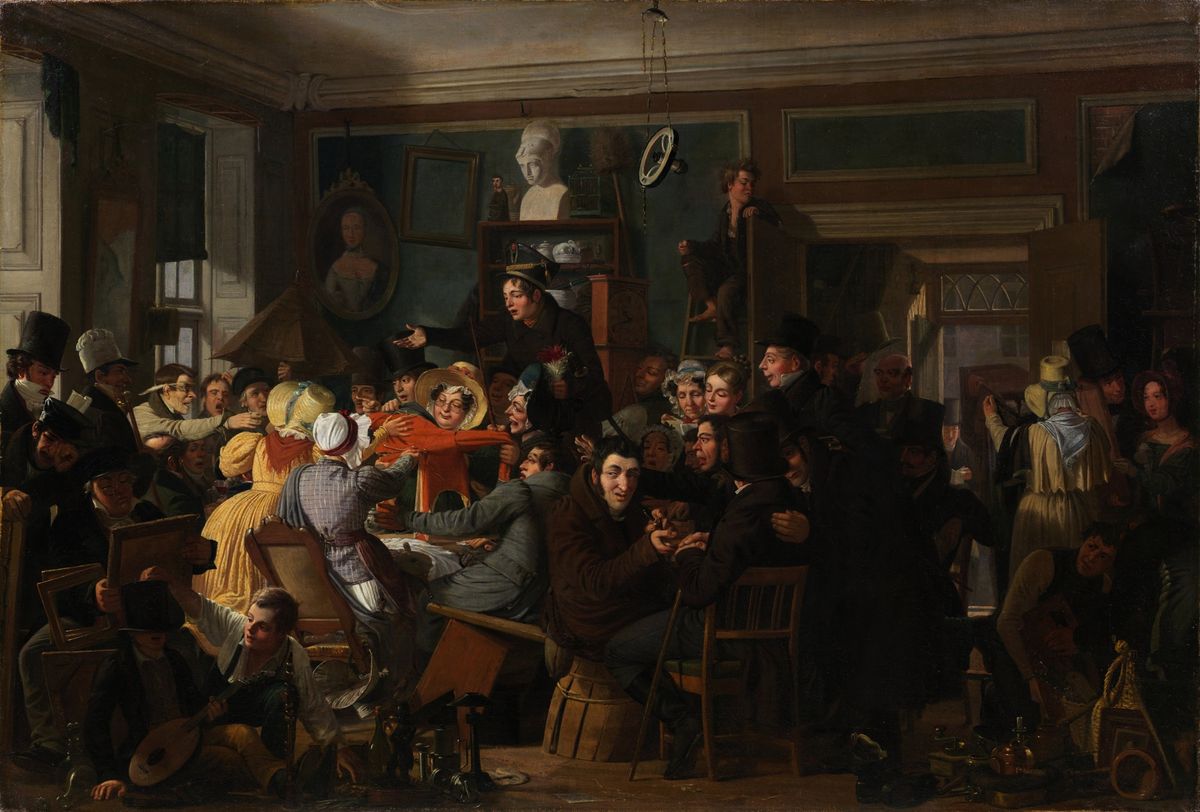
This institution has published on Art Basel five times, and one of those studies is the direct precedent for this one. Our study of the 2026 Basel sales recorded Basel Exclusive, an initiative in which more than one hundred and ninety galleries withheld significant works from the digital previews so that collectors had to appear in person to see them. Access to the work was deliberately made conditional on physical presence.
Set the two facts beside each other. In June, access to the objects was rationed by requiring attendance. In October, access to the building was rationed by the condition of the street. The first was a strategy and the second was a contingency, and that difference is real. But they run in one direction, and the direction is that seeing the work is becoming a privilege attached to a tier rather than a property of exhibition.
Speculative Velocity is highest in the first hours, when scarcity is engineered and the room is small. It falls across the run. A fair optimised for velocity will always front load, and a fair that front loads will always shed its public tail first under pressure. The 2026 Paris closure is not a departure from the Basel Exclusive logic. It is that logic meeting a constraint and behaving exactly as designed.
What the Protests Were About
The content of the demonstrations is not incidental colour, and a study that omitted it would be describing a weather event. The protests concerned the high cost of living and the condition of schools. They were, in their stated substance, about the distribution of material security.
A fair of roughly two hundred galleries, pricing single works in the millions, closed its public days because of protests about the cost of living, having completed four days of restricted access during which those works were sold. Every element of that sentence is sourced above. No element of it requires an accusation.
It would be easy, and wrong, to write that the fair closed to keep the protests out. The fair closed because its organisers were advised that the weekend was unsafe and because the state had restricted assembly. The founder's observation does not require malice. It requires only that one notice what the closure made visible: an institution whose commercial life and whose public life are separable, and which discovered, under duress, exactly how separable they are.
The framework calls the value that accrues to an object from the exclusivity of its witnessing the Zero-Sum Aura. It is a finite quantity. Access granted to one audience is withdrawn from another. A fair does not need to intend this for the arithmetic to hold. When the days were counted at the end of the week, the restricted audience had received all of the access it was promised and the general audience had received a third of its own.
What We Already Established, and Why This Is Not That
The honest comparison matters more than the novelty claim, so here is the corpus. Our earlier work read the Art Basel VIP preview as a ritual of liquidation and the VIP image as an agent of devaluation. It read the preview as Social Speed, a pace that prevents comprehension. It read the fair as a closed loop of signs in which the exhibitor list and the celebrity sighting are the product. It read the 2026 sales through engineered scarcity. Separately, our study of the High Line commissions examined public provision captured by private interest, and our study of Kiaf Seoul read the fair as speculative infrastructure.
None of those asks the question this one asks. Spectacle, speed, scarcity and capture are all readings of how the fair behaves when it is working normally. This study is about what the fair revealed when it could not work normally at all. A constraint that forces an institution to keep some of its days and lose others is an instrument, and it measures something that no amount of observation during an undisrupted edition can measure: the ordering.
That is the contribution, and it is narrow on purpose. An institution's stated purpose and its actual priority ordering are different objects, and most of the time they are indistinguishable, because nothing compels a choice between them. Scarcity of days compels it. This week supplied the scarcity.
What Would Have to Be True for This Reading to Be Wrong
If the fair had cut a restricted day and kept a public one, the reading collapses. It did not, but the test is worth stating because it is the simplest possible refutation and it was available to the fair.
If public day sales were shown to be a material share of fair turnover, the claim that the public day is hollow would fail. No figure located for this study establishes that share in either direction. The absence cuts both ways and is recorded as an absence.
If commitment timestamps showed significant volumes of work selling to new buyers on public days, the sequence argument weakens considerably. Those timestamps are not published by anyone, which is the subject of the next section.
Several things this study does not claim. It does not claim the fair acted in bad faith. It does not claim the organisers should have remained open against security advice, which would have been indefensible. It does not claim a measured share for preview sales, because none was found. It does not claim anything about this edition's final totals, which the fair itself says are not yet knowable. And it does not claim the dealers benefited, because they lost two days of trading and a teardown they had not planned.
What the Record Would Have to Carry Instead
The useful end of this is not a complaint. It is a specification, and it follows from what the week exposed. Every claim in this study about when value moved had to be assembled from trade reporting, because the primary record does not exist. No fair publishes, per work, the moment at which that work was reserved, committed or sold. The sequence that determines who a fair is for is precisely the sequence that is never written down.
A record adequate to the question would carry, for each work exhibited, the time at which it was first offered, the time at which it was committed, and the tier of access in force at that moment. It would not need to name a buyer or disclose a price. It would need only to be dated and ordered. With such a record, the question this study answers by inference becomes a matter of reading a table, and the trade maxim becomes either a measured fact or a disproved one.
That is a provenance instrument rather than an authentication one. It attests nothing about what a work is. It records what happened to it and when, which is the form of claim this institution holds to be the durable one. Object Permanence is not secured by certifying an object once. It is secured by a record that survives the moment and remains legible afterwards, including the parts of the sequence an institution would rather not timestamp.
Absent that record, a fair's own calendar remains the best available evidence of its priority ordering, which is a poor instrument that happens to be the only one. This week it was sufficient, because the arithmetic was unusually stark. It will not always be.
Coda
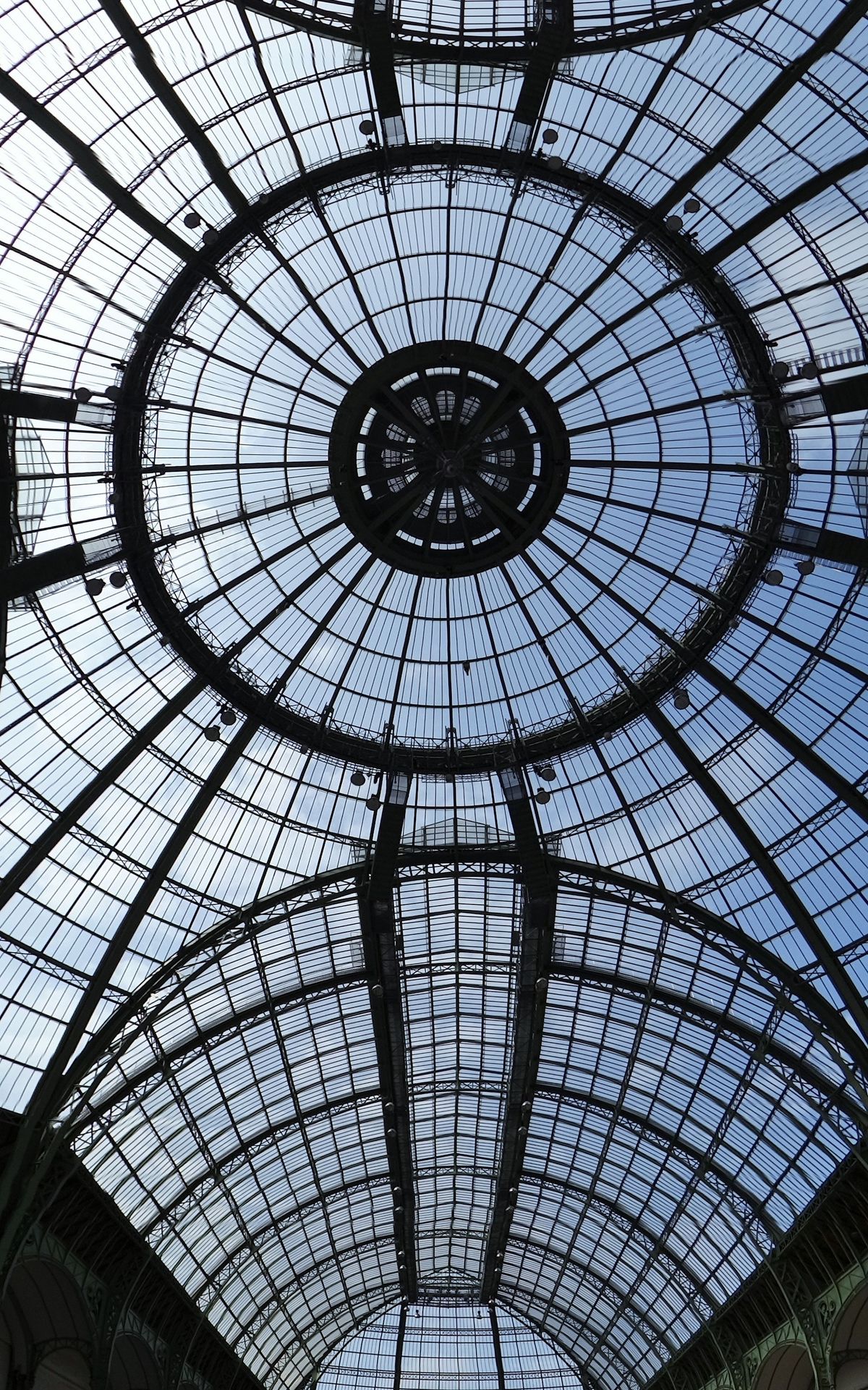
In 1890 Jean Andre Rixens painted a vernissage, and the painting records a crowd that has come to be seen as much as to look. The ritual is older than any fair now operating, and the private view was never a neutral convenience. It is the part of an exhibition that is for someone in particular.
In June 2018 the Grand Palais ran an operation that opened its nave to the public and called it La nef est a vous. The nave is yours. Eight years later, in the same building, the nave was for sale to the few for four days, open to everyone for one, and then closed.
Nothing here was concealed. The dates were published in advance, the tiers were published in advance, and the order was published in advance. The founder's observation is not that a secret was exposed. It is that the arrangement was in plain view the entire time and only became legible when the week ran short. An institution tells you what it is for in the order it schedules its days, and almost nobody reads a calendar as a statement of values until a constraint arrives and the last entries are the ones that disappear.