A Judge Asked Three Questions About 63 Objects. Colombia's National Museum Answered Two.
On 15 October 2026 objects left the walls of Colombia's national museum and nobody could say how many. Four public counts circulated. A judge asked three questions, and nine days later there was a list.
Why This Record Exists, and What It Is Not
This is a study about a record, written by an institution whose subject is what happens to an object's written account when the object moves. It is not a verdict on Colombian politics, and it does not argue for or against the decision that produced the events described. Every characterisation of motive in what follows belongs to the named person who made it.
The reason the case belongs here is narrower and, this institution thinks, more durable than the argument around it. Between 15 and 24 October 2026, a national collection moved dozens of objects out of public view, could not state how many, and was then required by a court to produce the inventory it had not published. The before and the after are both documented. That makes this one of the clearest natural experiments available on a question this institution keeps asking: what does an institution actually know about its own holdings at the moment it is asked, and what has to happen before it writes it down.
What Happened, Dated
Abelardo de la Espriella was sworn in as President of Colombia on 7 August 2026, having won by about 250,000 votes, a margin under one per cent.
On 13 October he issued a decree permitting riot police to use force on crowds.
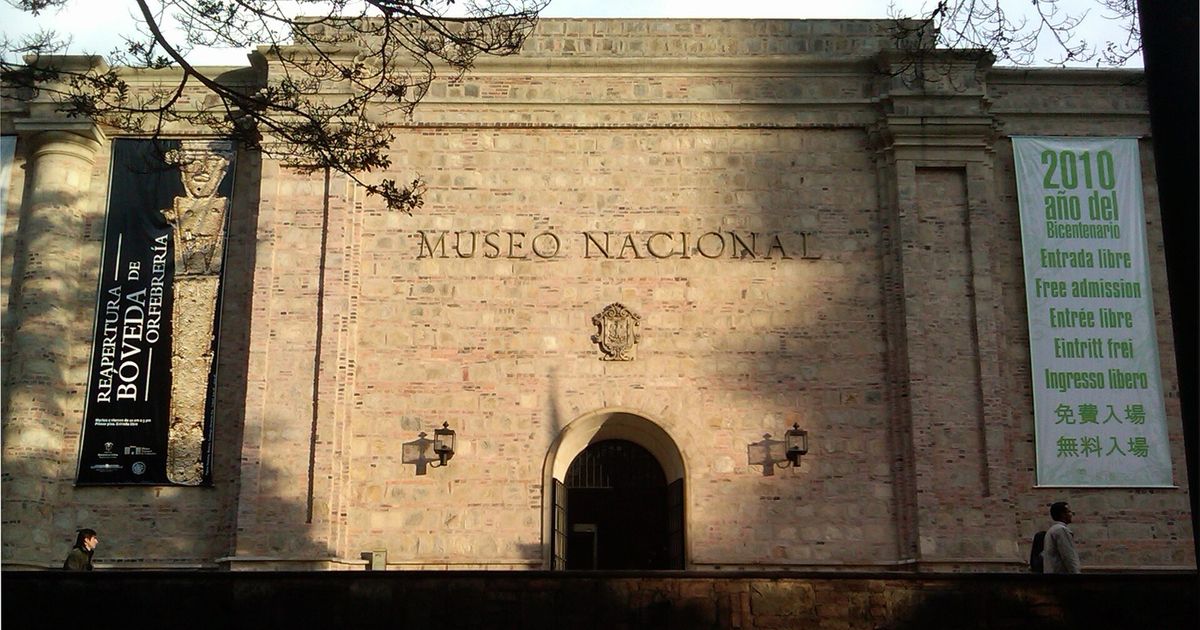
On 15 October, objects were taken down from five of the seventeen exhibition halls of the Museo Nacional de Colombia in Bogotá, an institution founded in 1823 and housed in the former Panóptico prison. The halls were Memoria y Nación, created 2003; Hacer Sociedad, opened 2019; Tierra como Recurso, created 2003; Ser y Hacer, established 2021; and Fuerza, Fe y Sustancia, created 2023. Reporting describes the secretary general of the Ministry of Cultures, Julián Sterling, walking the galleries with the museum's acting director and indicating items for removal in public view.
Over the weekend of 17 and 18 October, hundreds gathered outside the museum on the Carrera Séptima and were dispersed with tear gas, stun grenades and water cannon. The museum had become a focal point of a far larger national demonstration organised by trade unions, farming organisations, Indigenous groups and political parties, which Artnet reported at around 62,000 people. The two figures measure different things and are often quoted as though they measure the same one.
On 19 October the Juzgado 24 de Familia de Bogotá admitted a tutela, Colombia's constitutional protection action, brought by a member of the Unión Patriótica together with the collectives León Zuleta and Revolución en Rosa. Judge César Enrique Osorio Ortiz ordered the museum to keep the removed pieces in safe custody, barred their destruction, transfer, disposal or alteration, and prohibited further removals on grounds of content without an administrative act to justify them. He gave the ministry twenty four hours to file a detailed report.
From the same day, academics from the National University and the University of Los Andes began teaching free public classes on the street outside, under a name that is itself a records complaint: the censored objects of the National Museum are sought.
On 24 October the Ministry of Cultures, Arts and Knowledges filed its response. It runs to 144 pages and contains the inventory.
The Count Nobody Could Give
Before the court order, four different figures were in public circulation, each from a serious source, none of them the same.
Early reporting said around thirty pieces. The outlet Silla Vacía counted forty seven objects. Vanguardia, reconstructing from five halls, reported at least forty eight. A former curator of the museum, reached by telephone, estimated over sixty. Asked directly for a total, both the museum and the ministry declined to give one.
The filed inventory gives sixty three objects, of which twenty two are classified as heritage pieces.
Set the figures beside each other and the shape of the problem is legible at a glance.
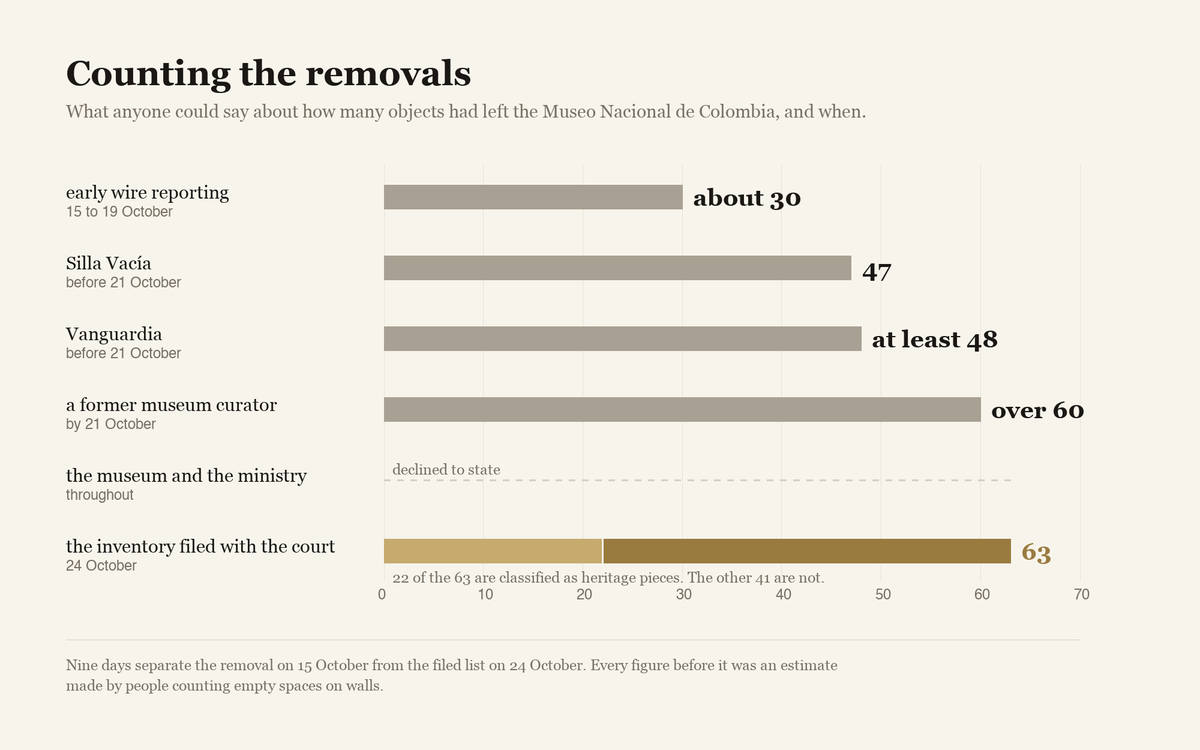
Nine days separate the removal from the list. In those nine days the only numbers available to the public, to the press, to an international museum body and to the court were estimates made by people counting empty spaces on walls.
Why the Counts Differed, and It Was Not Dishonesty
The temptation is to read that table as a cover-up unravelling. The evidence does not support it, and the real explanation is more useful.
The ministry's own filing uses two numbers for the same event. In its defence it states that it carried out the removal of twenty two pieces under strict compliance with the protocol for the care and conservation of works. Its inventory lists sixty three objects. Both statements are true. They count different categories, and the boundary between those categories had never been published.
A count is not a fact until its denominator and its category definition are stated beside it. This institution has written that line before and has had to apply it to its own work more than once. Here it accounts for the entire spread. Somebody counting framed works on walls gets one number. Somebody counting every object that left a vitrine, including a leaflet and a T-shirt, gets another. Nobody was lying, and for nine days nobody could tell which thing anybody else had counted.
The failure is not arithmetic and it is not candour. It is that a national collection had no published standing answer to the question how many objects are in this room, so when objects left, the only way to establish what had gone was to ask a court to compel it.
The Judge Asked Three Questions
The order of 19 October required the ministry to state, for each removed object, three things: where it is now, what condition it is in, and which authority or department ordered it removed.
Those are not the questions of a cultural critic. They are custody fields, and a reader of this institution's specification for provenance records with declared absence will recognise all three. A custody event in a conforming record names the object, states where custody sits and from when, and carries a source for every field. The third question is the one that separates a record from an anecdote, because it names the party responsible for the movement, and an entry whose authorising act is unnamed cannot be checked by anybody later.
A family court judge in Bogotá, working inside a twenty four hour deadline, specified a provenance record. He did it without using any of the vocabulary this institution has spent two years developing, and he got the fields right.
That is worth sitting with, because it cuts against a thing institutions like this one tend to assume. The requirement is not esoteric. When something is actually at stake, the three questions arrive on their own.
The Answer That Is Missing, and What Type of Absence It Is
The ministry answered the first two questions. It stated that the pieces never left the museum, that they are held in the technical reserve, and that they are under storage, custody and conservation conditions appropriate to their nature, in application of established institutional procedures.
The third answer is the one in dispute. The ministry's filing says the intervention was carried out in compliance with a presidential instruction, quoting itself as having proceeded to give full compliance to the presidential order, with the unfixing of some pieces exhibited in five of the seventeen halls, without having ordered the museum's closure. El Colombiano reported, reading the filed record, that while the ministry states that the deliberations of its heritage management committee are adopted by formal minute under a 2018 resolution, no such minute appears in the case file. Sterling's name appears on the object movement forms submitted to the court, as the requester.
So the record as it stands holds a movement, a mover, a destination and a condition, and does not hold the document that authorised any of it.
In the vocabulary of the specification cited above, that gap has a type, and choosing the type correctly is the whole exercise. It is not unknowable, because the instruction demonstrably exists and the ministry says so in writing. It is not inapplicable, because a national museum that moves heritage objects has a committee, a resolution and a procedure that produce exactly this document. It is an absence of the kind that can be closed, and the specification requires such an entry to name the party who can close it and to carry a date.
Here the party is named by the ministry's own filing. The record does not lack an author. It lacks a page.
That distinction is the reason this institution cares about typed absences at all. A record that says nothing about the authorising act invites the reader to assume it never existed. A record that says this is outstanding, here is who holds it, asked on this date, is a different document. It converts a silence into a task.
Twenty Two of Sixty Three
The classification in the inventory is the finding this study did not expect, and it is the one with the longest reach.
Twenty two of the sixty three objects are classified as heritage pieces. The ministry's assurances about conservation protocol are made in respect of those twenty two. The other forty one are described in the filing and the reporting as other elements.
Read the list of what those other elements are. A pen used to sign the 2016 peace accord with the FARC. An armband of the Alianza Democrática M-19. A T-shirt belonging to a group of lesbian mothers, dated 2003. A promotional flyer for a film cycle running 2001 to 2002. An informational leaflet about a peace organisation, from around 2004. The first issue of a magazine, 1997. A citizenship card issued in 2004, before the legal recognition of its holder's change of name and sex. A piece from the advertising campaign for a 2006 Pride march, attributed to the mayor's office of Bogotá.
Every one of those is a document of a civil rights history. Almost none of them is the kind of object a heritage classification was built for. Classification schemes were made for paintings, sculpture and antiquities, and they handle a signed canvas from 1968 confidently. A printed flyer and a cotton shirt enter the collection as evidence and sit outside the category that carries the protection.
The named artworks removed from the halls are mostly from the other side of that line, and they are substantial: works by Carlos Granada Arango, Aníbal Gil Villa, Luis Paz, Umberto Giangrandi, Augusto Rendón Sierra, Pedro Alcántara Herrán Martínez, Alfonso Quijano, Miguel Ángel Rojas, the Taller 4 Rojo, and a textile work by Antonio Caro, who is the subject of a forthcoming retrospective at the Reina Sofía.
This institution has argued that the burden of preservation falls hardest on the objects whose value is evidentiary and not aesthetic. The Colombian inventory puts a number on it. Two thirds of what left those rooms sits outside the class that the state's own conservation language was written to protect, and the two thirds is where the social history lives.
Nothing in that observation depends on what one thinks of the removal. It would be equally true of a refurbishment.
An Object That Is Itself a Record
One item on the list deserves to be read slowly, and this study names it by its description rather than by its holder, who did not choose to be part of this.
A Colombian citizenship card, issued 2004, carrying a name and a sex that the state later corrected.
That object is a record of an identity before the record of that identity was amended. It survives because a museum accessioned it as evidence of how legal recognition arrived for a group of people. It is, in the most literal sense available, a provenance document: an official account of a person that was superseded and kept.
It is among the forty one that are not classified as heritage.
What the Government Says
Fairness requires the other position in its own words, and it is on the record.
The culture minister, Paola Holguín, a former senator trained in politics and national defence, wrote that the museum's role is not to serve as an instrument of political indoctrination or a platform for spreading biased versions of our history, and said the museology and curatorial practice of the ministry's spaces are being reviewed and redesigned. The ministry denies that the removal violated fundamental rights and says the objects remain safe and in its custody.
A museum revising its own narrative is not, by itself, an extraordinary act. Permanent displays are rewritten regularly, and the halls in question were themselves created in 2003, 2019, 2021 and 2023, which is to say they are revisions. The former chief curator of the Museo Banco de la República, Laura Zarta, put the objection in professional terms when she said a museum can revise its narratives through professional criteria and not through intuitions that override institutional processes.
That is a dispute this institution is not qualified to settle. What it can observe is that the two positions make different records. A revision carried out through the committee, the resolution and the minute leaves a document naming who decided what and why. A revision that outruns those steps leaves empty walls and a court order.
The Field Responded in Writing, Which Matters
Six Colombian museums, among them the modern art museums of Bogotá and Medellín, issued a joint statement expressing deep concern and saying that no government should decide which parts of our history we can see based on its political preferences. CIMAM, the international committee for museums and collections of modern art, issued an alert calling for transparency in the decisions. The national human rights ombudsman requested full information on the pieces, the legal grounds, their condition, and whether they will be returned. Doris Salcedo, whose work this institution has studied, called the act grotesque in an interview and said she expects the museum she chairs to be targeted next.
Each of those is now a dated document about an event. Collectively they are more durable than the empty vitrines, and in forty years they will be most of what a researcher can reach.
Two Objects in This Story Were Made From Melted Weapons
The pen in the inventory is not a souvenir pen. It belongs to a class of object that Colombia made deliberately, and knowing what it is changes how the line item reads.
For the signing at Cartagena on 26 September 2016, roughly five hundred pens were manufactured from the casings of .50 calibre rounds fired during the war, each one combining a hollowed cartridge with a ballpoint spine. The project ran through the education ministry and took about six weeks. The pens carry an inscription saying that bullets wrote the country's past and education will write its future. One of them signed the agreement that ended fifty two years of conflict. One of them is now in a technical reserve in Bogotá, classified among the objects that are not heritage pieces.
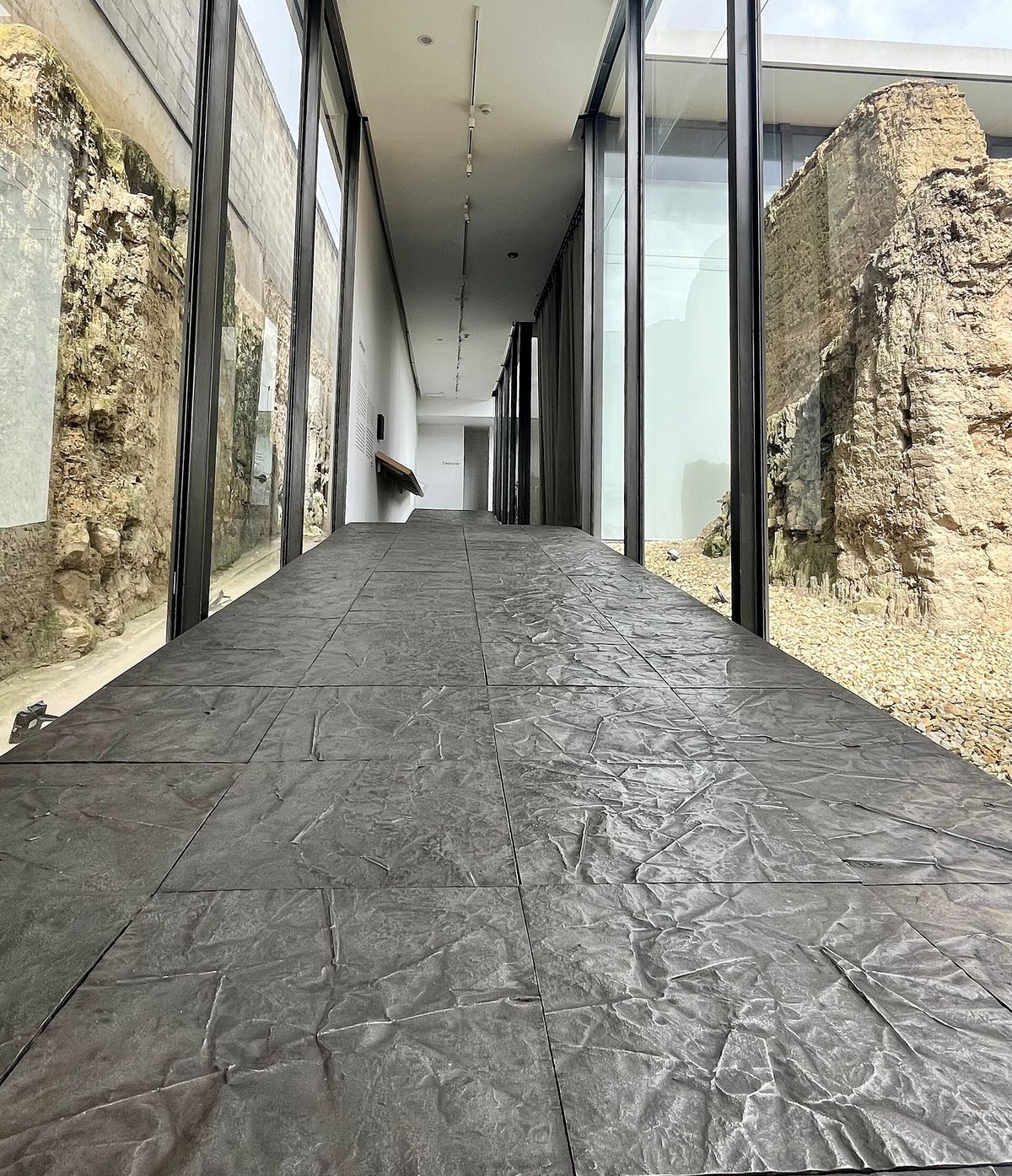
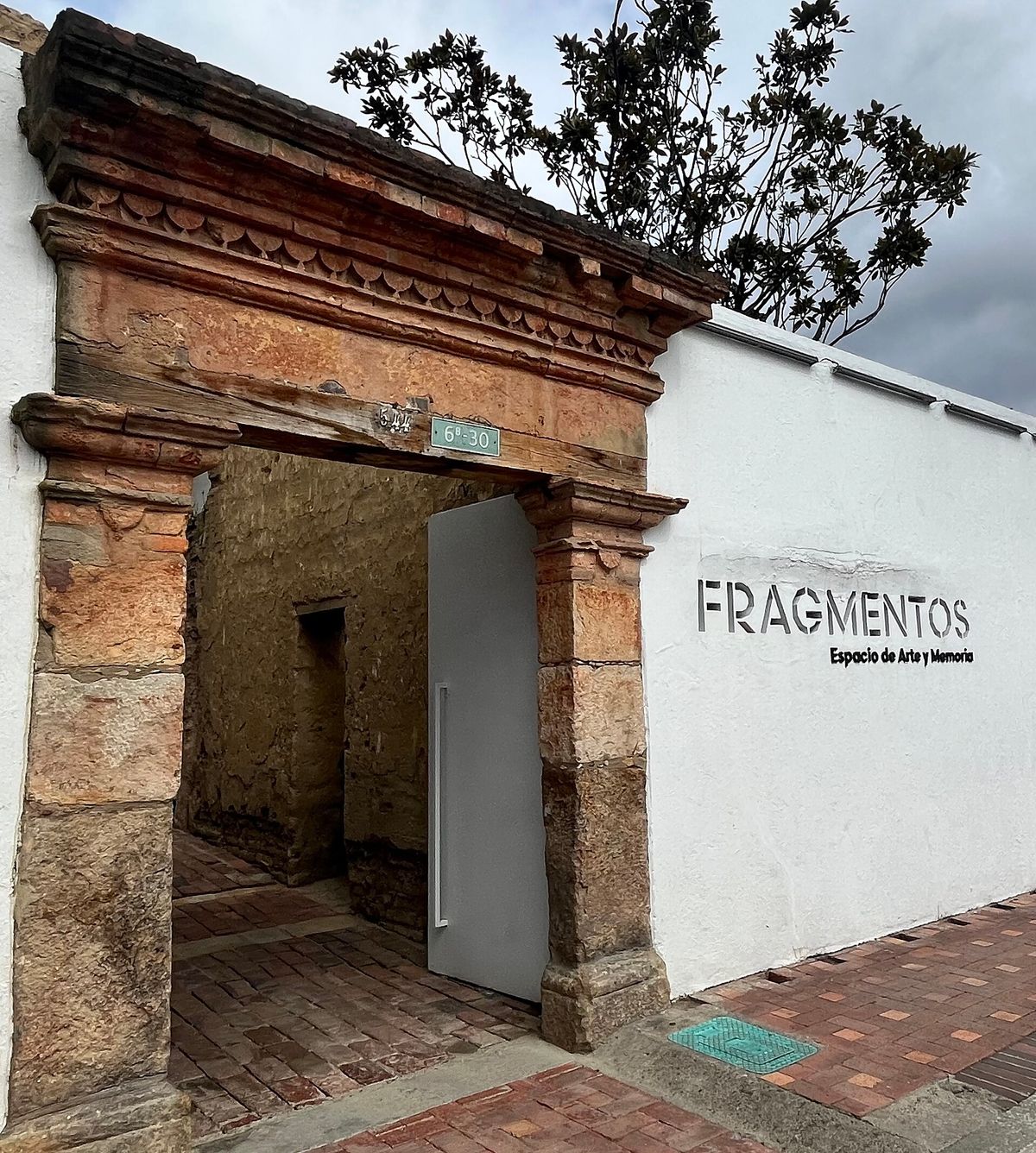
The same idea was built at architectural scale and it is the second object. Fragmentos, in Bogotá, is made from thirty seven tonnes of weapons surrendered by FARC fighters, melted and mixed with cold rolled steel and cast into about thirteen hundred floor tiles. The metal was hammered by women and girls who survived sexual violence during the war. Salcedo calls it an anti-monument, and visitors walk on it. She notes that the only foundry in the country capable of melting those weapons belongs to the army.
Salcedo chairs the board of Fragmentos, which the National Museum and the culture ministry operate. Asked whether she expected it to be targeted next, she said she was waiting for it to happen.
That is usually the point where a study would call her fear understandable and move on. The record supports something firmer. In 2021 the space was used by the administration of President Iván Duque to host meetings with religious leaders and people it presented as victims of the conflict, and Salcedo stated publicly that it had been used without her permission. Whatever one concludes about that episode, it establishes that the question of who controls the meaning of that floor has already been contested once, under a previous government, and that it was contested in public and left a dated record.
An object made from a melted weapon is a record of a decision to stop using the weapon. That is its entire content. It is also, in both of these cases, an object whose custody and interpretation are now matters of political dispute, which is the condition this institution has elsewhere called a problem of narrative permanence: the question of whether what an object was made to mean survives a change in who holds it.
Measured Against Our Own Prior Work
This institution published a study in October 2026 arguing that a cancellation documents itself: that a withdrawn exhibition which generates letters, statements and press leaves a record, and that the quieter withdrawals leave nothing at all and are therefore unresearchable.
Colombia is the loud case, and it confirms the thesis in a way that is slightly uncomfortable. The record exists because sixty two thousand people were already in the street, because an international body issued an alert, because six museums wrote a statement, and because a judge was asked to intervene within four days. Remove any one of those and the inventory of sixty three objects does not exist, because nothing in the ordinary operation of the institution produced it.
A record that depends on a protest is not a record. It is a reconstruction, performed under pressure, and it arrived nine days late in a case with the maximum possible amount of public attention. The honest reading is that the same removal, carried out in a provincial museum on a Tuesday, would still be uncounted.
What a Conforming Record of This Event Would Look Like
It is easy to say a record should exist and harder to show what one would contain, so here is the removal of a single object written out as a custody record of the kind this institution specifies. The pen is used because every fact in it is already public.
A record would carry an origin: the object was made in 2016, in a production run of approximately five hundred, from fired cartridge casings, under a project of the national education ministry. Source, the contemporaneous news reporting of the manufacture.
It would carry a held entry: the Museo Nacional de Colombia, on display in Sala 11, Hacer Sociedad, from the hall's opening in 2019. Source, the museum's own display record.
It would carry a transfer, dated 15 October 2026, from display to the museum's technical reserve, with the party who requested the movement named, because his name is on the movement form, and with the authorising act cited. That last field is the one that cannot currently be completed.
And so it would carry a fourth row, which is the one most institutions never write: a typed absence. Not a blank, and not a footnote. An entry stating that the administrative act authorising this movement has not been obtained, that the party able to produce it is the culture ministry, that the question was put on 19 October 2026 by a court, and that the entry is open.
Four rows. Nothing in them requires special software, a standard body's approval, or anybody's cooperation beyond the institution that already holds the object. The first two could have been written at any point in the last seven years. The third could have been written on the afternoon of 15 October by the person filling in the movement form. The fourth is the only one that needs an outside party, and it is the only one that says so.
The reason this matters beyond Colombia is that the fourth row is the row that makes the other three trustworthy. A record with no capacity to declare what it lacks has to choose between silence and assertion, and under pressure institutions choose silence, which later reads as if nothing happened.
What This Institution Is Not Saying
OAC takes no position on the politics of the Colombian government, on the election that produced it, or on whether any object should be returned to display. Those are questions for Colombians and for a court that is currently hearing them.
OAC does not authenticate, appraise or value, and nothing here is a judgment on the attribution or worth of any object named.
This study makes no claim that any object has been damaged, destroyed or lost. The ministry states the opposite, a court has ordered their preservation, and no source consulted here reports otherwise.
The characterisations quoted in this study belong to the people who made them. This institution's own claim is restricted to the record: that an inventory of a public collection's movements should exist before a court has to ask for it, and that the document authorising a movement is part of the record and not an optional extra.
The Declared Gaps
Stated so that silence is not read as completeness.
The case is unresolved. The order of 19 October is provisional, issued on admitting the tutela, and no decision on the merits had been published when this study was written. Anything here may be superseded by the ruling.
The full inventory has not been read by this institution. The figures of sixty three and twenty two, the five halls and the itemised works come from reporting of the ministry's filing, principally Infobae on 24 October. The filing itself has not been obtained.
The date of the Antonio Caro work is unsettled. The inventory as reported gives 2016. Artnet gives 2004. Other published sources give 2012 and 2013 for a work of that title. This institution has not established which is correct, and the fact that an official court filing and the international press disagree about the date of a named work in a national collection is noted rather than resolved.
Whether the authorising minute exists has not been established. The reporting states that none appears in the case file. That is a statement about a file at a date, and not proof that no such document was ever made.
The counts of forty seven and forty eight were not independently verified here. They are reported as published and are useful precisely as evidence of the spread.
The protest figures measure different things. Around 62,000 refers to the broader national demonstration. The gathering outside the museum on 17 and 18 October is described as hundreds. No source consulted gives a museum-specific crowd estimate.
La Septima Papeleta is reported as removed and does not appear in the itemised reporting of the filed inventory. Artnet names it among the objects taken down on 15 October. The published account of the ministry's list, which is itself partial, does not include it. Whether it is in the filing, in a category not itemised by the press, or not removed at all, is unresolved here.
The accession status of the pen is taken from reporting of the filing and not from the museum's catalogue. Its classification among the objects that are not heritage pieces follows from the ministry's own split of twenty two and sixty three and has not been confirmed item by item.
No party to these events has been contacted by this institution, and the government's position is taken from public statements and court filings rather than from any approach to it.
What Would Settle It
On the inventory: publication of the ministry's filed list in full, with accession numbers. Accession numbers are what make a list checkable by a second party, and no reporting consulted here states that the filed inventory carries them.
On the authorising act: the minute, or a statement that none was made. Either is a complete answer. The present condition, in which a document is required by a 2018 resolution and does not appear in a court file, is the only answer that is not.
On the classification question: the museum's own criteria for what makes an object a heritage piece, published. Twenty two of sixty three is a measurement whose meaning depends entirely on where the boundary sits, and the boundary is not public.
On whether this record would have existed anyway: the next removal, somewhere with no cameras. That is the test, and nobody can run it deliberately.
Coda
The object that keeps coming back to this writer is the pen.
A pen made for signing a peace agreement, used once, in 2016, by people ending a war that had run for more than half a century. It was kept, accessioned, and put in a case in a hall called Hacer Sociedad, which opened in 2019. On 15 October it was taken out of that case. It is, according to the ministry, in the technical reserve, in appropriate conditions, and it is one of the forty one objects that the heritage classification does not cover.
The pen is a strange thing to own, because its whole function is to be the instrument of a record. Somebody thought to keep the tool that wrote the document. That is custodianship of an unusually literate kind, and it is the instinct this institution's Custodian's Contract exists to formalise: the understanding that holding an object means holding what is known about it.
Nine days after that pen came off display, the country found out how many objects had moved, because a judge made somebody write it down.
The objects are the evidence. Somebody has to keep the list.