Repair Is Authorship: PoloFest Tokyo, Three Japanese Menders, and the Record With No Field for Them
Three Japanese repair practices mended vintage Polo for a festival in Harajuku. Ralph Lauren named all three, which almost nobody does. This is a study of what happens to that name once it reaches an object.
Why This Record Exists
A company marketing a three day festival in Tokyo wrote that in Japan the act of repair is also an act of creation, and then did something that is rarer than the sentence: it named the people who did the repairing.
The claim in the sentence is correct, and this institution has argued it in print. The interesting question starts one step later. If mending is authorship, then the mender is an author, and an author is the kind of fact a record is supposed to carry. So the question this study asks is narrow and answerable. When a garment is mended by a named hand and then changes owner, does the name travel with the object?
The answer, measured three ways across four hundred years, is no. It does not travel on the object, it does not travel in the national register that preserved the best surviving examples of this exact practice, and it does not travel in the specification this institution wrote to fix problems of precisely this shape. The last of those three is the finding that matters most, because it is ours.
What Happened, and When
PoloFest ran from 23 to 25 October 2026 at Jing Harajuku, 6-35-6 Jingumae, Shibuya, Tokyo. Admission was free and tickets were issued through a LINE account. It was built around vintage: twenty collectors from seventeen stores contributed stock to a themed market, and David Lauren, the company's chief branding and innovation officer, said ten thousand people had registered.
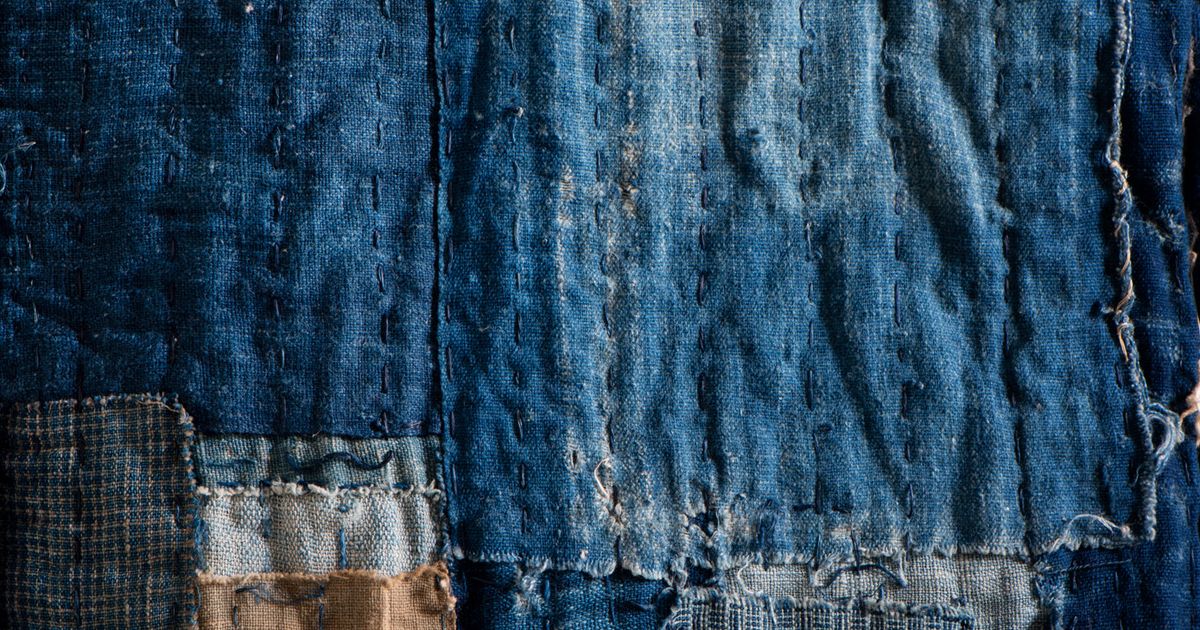
Alongside the market sat a set of one off pieces. Vintage Polo garments had been given to three Japanese repair practices and returned mended, patched and restitched. The company's own announcement describes them as upcycled pieces transformed by local artisans skilled in the Japanese tradition of mending and reinvention, and says they were available for purchase.
Two anniversaries sit behind the event and both are real, which is worth stating because they are easy to collapse into one. The festival marked fifty years since Polo entered the Japanese market in 1976 through Seibu's Ikebukuro store. Separately the company approaches its sixtieth year in 2027, counting from the introduction of Polo in 1967. David Lauren stated both in a single sentence to WWD. A reader encountering only the second number would conclude the first was wrong.
One account of the disposal of the mended pieces does not agree with the others. Highsnobiety reported that each piece entered a raffle with proceeds going to the company's Pink Pony cancer initiative. The company's own release, WWD's reporting and the Japanese trade press all describe the pieces as sold at the event and shipped to buyers afterwards, and none of the three mentions a raffle or a charitable destination. This study records the sale and treats the raffle as unsupported. The distinction is not pedantic: who paid, and whether the money went to a cause, changes what kind of transaction the object passed through, and a provenance record has to state that correctly or state that it cannot.
The Three Practices, Properly Identified
The press coverage is thin on all three and wrong in places about where they are. Each was checked at source.
Sasaki Yōhinten is in Iwadeyama, Ōsaki City, Miyagi Prefecture, and it is not in Aomori or Akita, where a search for its specialism will tend to point you. It was started in 2014 by a married couple. Its representative is Sasaki Mitsugu. The work is the repair of cotton workwear, principally noragi, the clothing of farmers and tradespeople, using old cloth patchwork and stitching. The shop showed in Paris in 2023 and marked its tenth year with an exhibition and sale of that Paris work in Harajuku. It sells internationally from its own shop.
Brown Tabby Works is in Higashi-Osaka and is also run by a couple. Its own description is a small shop for old clothing, goods and repair, and it states its purpose as extending the life of old things, with repair, remake and customisation offered as services. Yui Narita is its founder, and WWD reports that Narita produced thirty eight upcycled pieces for this event in six months.
That figure is the most useful number in the entire event, and it is the only one that measures work. Thirty eight garments in roughly twenty six weeks, by one person running a shop at the same time, is about one and a half pieces a week. It is a measurement of Labor Density, which is this institution's term for how much human work is actually resident in an object. Nothing else published about PoloFest quantifies anything a person did.
Sashiko Gals are in Ōtsuchi, a coastal town in Iwate Prefecture, and their history is not a craft history. Their predecessor project began in 2011, after the Great East Japan Earthquake, among women who had lost their homes and their jobs and who could not take part in the physical labour of rebuilding. Accounts of its size at peak differ, with figures around one hundred and around two hundred both reported, and this study does not settle that. The project became self sustaining in 2021 and relaunched under the present name on 11 March 2024, which is the thirteenth anniversary of the disaster. The relaunch was led by Arata Fujiwara of the clothing label KUON, with an operating company behind it. The group is described as fifteen women aged between forty and eighty, and one later profile says twenty three active artisans, so the number is growing or the counts are of different things.
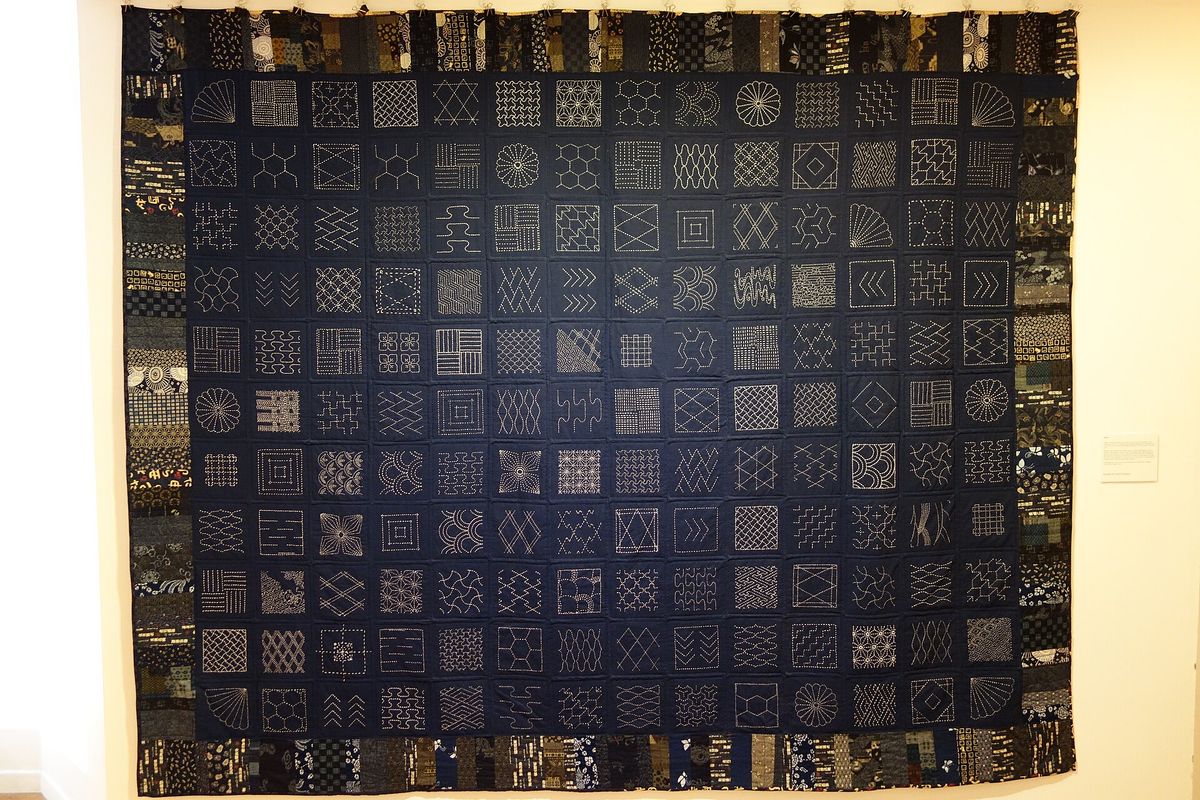
Their work is sashiko, the dense running stitch used to reinforce, repair and decorate cloth. They have worked with Veja, Maison Margiela, Isetan Men's, The North Face and New Era. One of them takes about a week to finish a pair of sneakers. Commissions are allocated by lottery because demand exceeds what fifteen pairs of hands can produce.
The Town That Lost Its Register
The Sashiko Gals are from Ōtsuchi, and what happened to Ōtsuchi on 11 March 2011 is a records event as well as a human one. This matters to the argument and is not set dressing, so it is stated with its sources and without embellishment.
The tsunami flooded about half the town. As of 31 August 2011, 799 residents were confirmed dead and 608 more were still missing, from a population of roughly sixteen thousand. The town hall was swept away. The mayor, Kōki Katō, was killed; his body was recovered on 19 March. Accounts of how many municipal officials died with him in that building differ, with thirty one and forty both reported, and this study does not settle which is right. Of 650 fishing boats, all but thirty were destroyed.
Then came the administrative consequence, which is the part relevant here. With the mayor dead and much of the town office gone, Ōtsuchi could not simply hold an election to replace him, because an election needs a register of voters, and a register of voters needs to say who is still alive. The town had to establish who had survived before it could resume governing itself. The record of who existed had to be rebuilt from the people themselves.
Set that beside the question this study is asking and the symmetry is uncomfortable. A town learned, in the hardest way available, that a list of names is infrastructure and that losing it stops everything. Women from that town then built a working craft business out of repair, and fifteen years later the objects they mend leave their hands carrying the name of the group and not the name of the woman.
Nobody did that to them. There is no villain in it. There is simply no field, and there never has been, and the absence is so normal that a company doing more naming than usual still produced objects with no maker on them.
What a Tag Can Date and What It Cannot Name
PoloFest was built on a collecting culture that is already, in practice, a provenance discipline. Japanese vintage Polo collecting involves reading garments closely: country of manufacture, the shape and typeface of the neck label, the wording of the brand name, the launch years of sub lines. Collectors date a garment to a period from those signals, and twenty collectors from seventeen stores brought stock to Harajuku on the strength of that expertise. Two of them, Laird Mackintosh of Thoroughbred NY and Kazutaka Yadomoto of Vault Up, were profiled by WWD.
It is worth being clear about what that apparatus is. The company never published a dating chart, the labels changed too often for anyone to compile a complete one, and the guides collectors rely on are reconstructions assembled from observation and trade. Care labels are also among the most frequently counterfeited parts of a garment. So the dating system is unofficial, incomplete, contested in its details, and good enough that a market runs on it.
That is a remarkable thing to have built, and it is exactly the shape of the problem. An entire informal science exists for answering when a Polo shirt was made and where. Nothing in it can tell you who repaired one. The label is attached at manufacture and never updated, so a garment that was made in 1987, worn for thirty years, and rebuilt by hand in 2026 still says only 1987, in the only writing the object carries.
A record that stops at origin is the ordinary condition of almost every object in the world. It is the condition this institution's specification exists to change, and it is why the vintage trade's own ingenuity is evidence for the argument instead of against it. People will do extraordinary work to recover a fact that somebody could simply have written down.
Japan Already Answered the Question This Study Asks, in 1983
The practice Ralph Lauren brought to Harajuku has been in the custody of the Japanese state for forty three years, and the terms of that custody are a matter of public record.
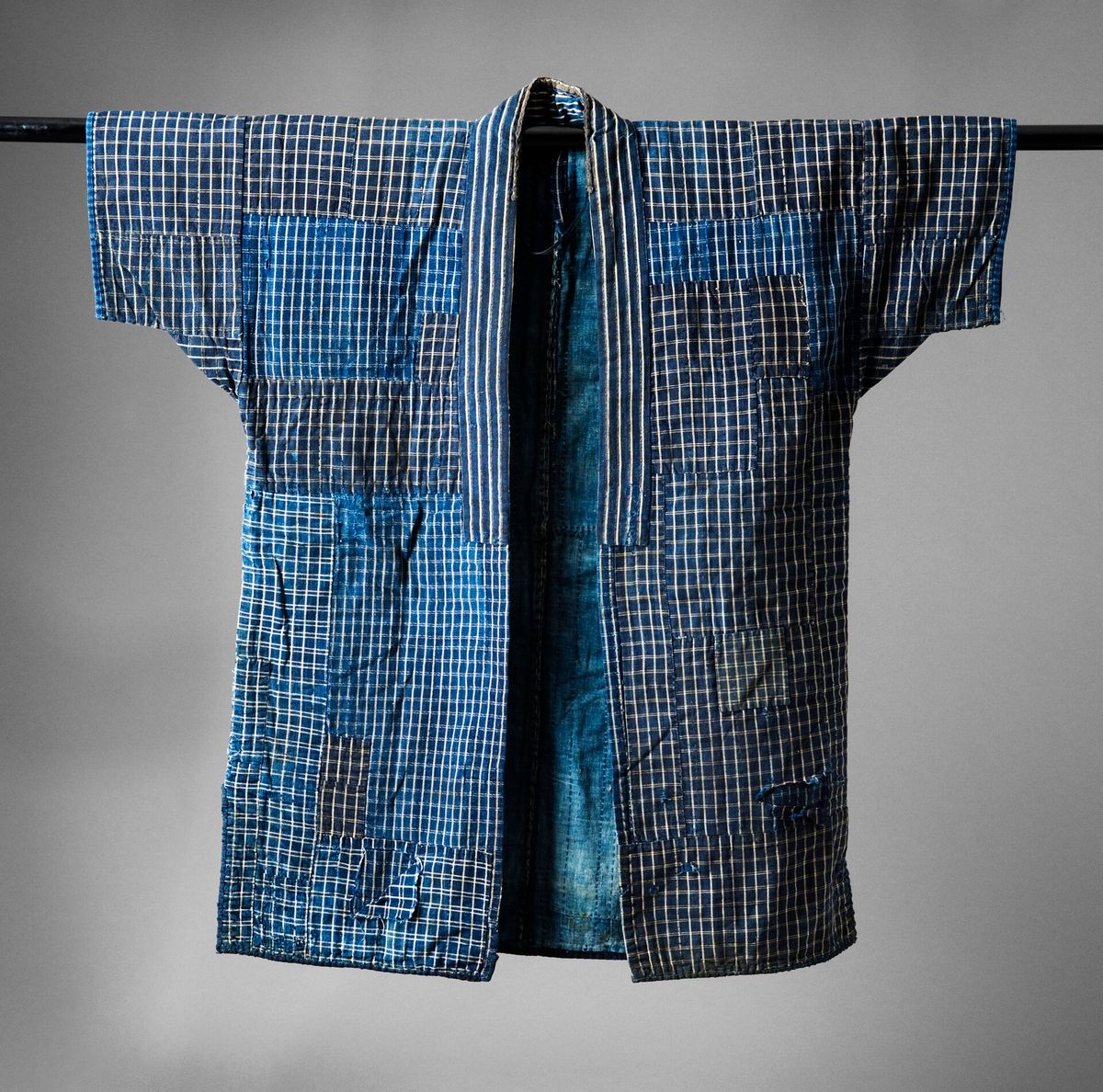
On 13 April 1983, 786 garments were designated an Important Tangible Folk Cultural Property under the name Tsugaru and Nanbu sashiko garments. The prefectural register gives the breakdown: 175 long garments, 174 short garments, 76 sleeveless garments, 324 work trousers and leggings, and 37 aprons. Those five figures sum to exactly 786, which is how this study knows it has read the register correctly and not a summary of it. The collection is held at the Aomori Prefectural Museum and is currently not on display, the museum being closed. The record is corroborated in the national Cultural Heritage Online database maintained by the Agency for Cultural Affairs.
Four things in that record do work that no amount of commentary can do.
The first is the designation category. It is not an art designation. The word in it is folk, and the English language sources that cite this collection consistently drop that word and call it an Important Tangible Cultural Property, which is a different and grander category. This institution's study 184 asserted that sashiko and boro were practical in origin and not aesthetic, and stated plainly in its own limits that the claim had never been traced to a primary source. It can be now. The state did not classify these garments as art that happened to be useful. It classified them as ethnographic evidence of how people lived.
The second is the vocabulary inside the entry. The register glosses three of the five garment types as work clothes, and describes the collection as material for understanding the everyday and working dress of ordinary farmers. The short garment is defined as a short work garment covering the upper body to the waist. The trousers are defined by how they are tied on. The apron is defined by which part of the body it protects. These are functional descriptions of equipment.
The third is the part that complicates the romantic reading, and it was not what this study expected to find. The national entry explains that the fine diamond patterned stitching, kogin and hishizashi, went into best clothes, and that the garments which became everyday and working dress were the worn out ones and the plainly stitched ones. The direction of travel is the opposite of the story usually told. This is not poverty made beautiful. It is beauty descending into labour, the good coat becoming the field coat as it wears, and the stitching intensifying as the cloth fails. A conclusion this institution had been willing to repeat turns out to need inverting, and the inversion came from four lines of a government gloss.
The fourth is the owner field. For 786 garments, it reads: an individual. No name.
Boro, and Why the Cloth Was Nearly Lost
The designation sits on top of a longer story, and the parts of it that are well attested are worth separating from the parts that are repeated without sourcing.
Cotton did not grow in the cold north of Japan and had to be brought in, so the fibres at hand in Tōhoku were hemp and ramie. Cloth was therefore valuable, worn until it failed, and then layered and stitched into something that would last a further season. The stitching intensified as the cloth weakened, which is why the oldest surviving pieces are the most densely worked. The ethic usually named in connection with this is mottainai, a refusal of waste. The word is real and in common use; whether it is the cause of the practice or a later description of it is not something this study can settle.
What happened next is better documented and is the reason so little survives. When cheap machine made cloth arrived after the Second World War, the old patched garments stopped being evidence of thrift and became evidence of poverty, which families had every reason to put out of sight. They were thrown away in large numbers.
Chūzaburō Tanaka collected them from the mid 1960s, walking villages in Aomori and asking for cloth that was on its way to being burned. Part of his collection became the 786 designated garments. A much larger part went on public display at the Amuse Museum in Asakusa, Tokyo, which opened on 1 November 2009, showed roughly fifteen hundred pieces at a time on rotation, and closed on 31 March 2019. A world tour of the collection was announced for the years after the closure; this study has not verified its venues or whether it ran.
So the state of the record is this. The practice was widespread for centuries and almost nothing from the early period survives. What survives does so because one man went looking in the 1960s for things people were ashamed of. The 786 garments that carry the highest level of legal protection in the country are held by an unnamed individual, in a closed museum, not on display. And the largest public collection of the same material was shown for nine years and five months in a building that is no longer a museum.
A practice can be celebrated worldwide while its physical record is this fragile. That is the ordinary condition of objects made by people whose names nobody recorded, and it is the reason this institution treats a register as a preservation instrument.
786 Objects, and Not One Maker
The register names no maker. There is no field for one.
This is not an oversight by Aomori Prefecture. It is what a provenance record is, and this institution has measured the same shape in four other countries. Across a national collection of 89,084 objects in Finland, a full census of every role the catalogue can assign to a person returns 110 distinct roles, and not one of them denotes ownership, donation, collecting or provenance. Of eleven institutions enumerated in their own languages, four publish machine readable custody. In a reference set of 131 provenance texts, twelve name a holder while withholding who that holder was, a result that four coders and a second model family reproduced as an identical set.
The garments in Aomori are the strongest possible case, because the people who made them are exactly the people the designation is about. The collection exists to document the working life of Tōhoku farmers. The stitching is the evidence. And the record carries 786 objects, five garment categories, one designation date, an anonymous owner, and no hand at all.
Chūzaburō Tanaka, a folklorist from Aomori who died in 2013, walked the farming and fishing villages of the north from the mid 1960s collecting this cloth from families who were ready to throw it away, and his collection is the reason any of it survives. Published accounts of its size vary between twenty thousand and thirty thousand pieces, so this study states neither as a figure. He is the one name the story reliably carries. He is the collector.
The Stitch Records the Repair and Not the Repairer
This institution has argued that a small number of repair traditions solve the provenance problem by refusing to separate the record from the object. Kintsugi is the famous case, and the usual reading, that it makes a break beautiful, is the shallow half. The structural point is that the repair is entered on the object in a material that cannot be mistaken for the original, so no owner can pass the thing on while withholding its history of damage. Study 184 put sashiko and boro in the same category.
That remains right, and it is only half of what the stitch does. The distinction is worth making precisely, because it is the difference between two kinds of record and this study turns on it.
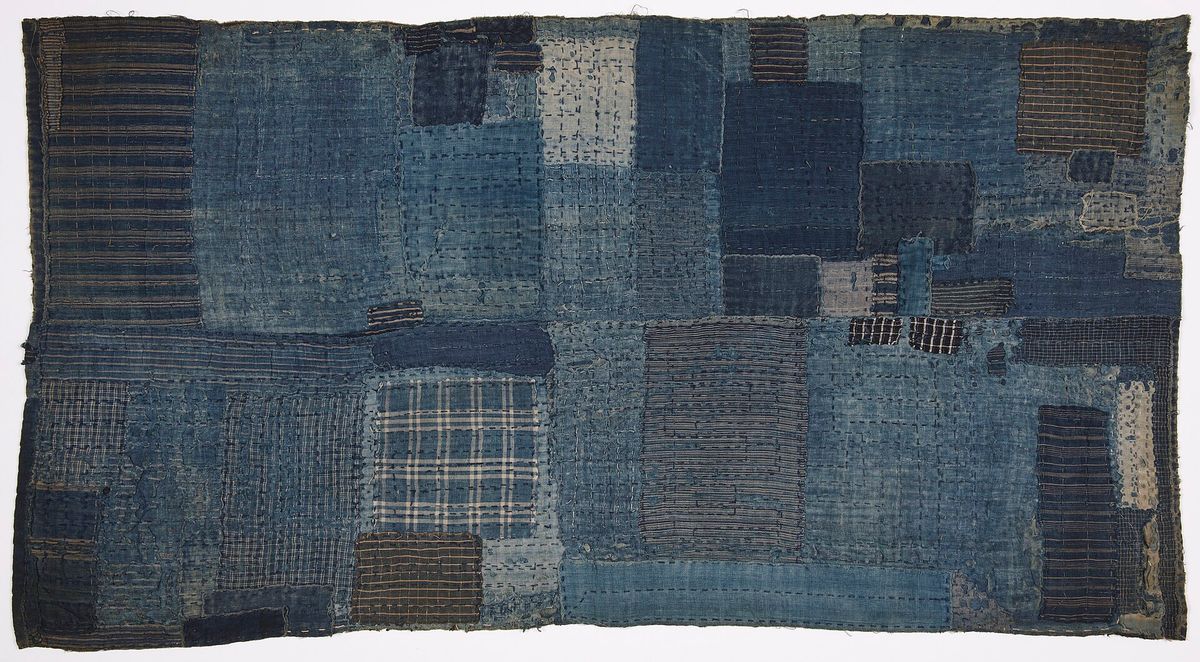
A visible repair is self recording as to the fact. Anyone handling a sashiko mended jacket can see that it failed, where it failed, how many times, and roughly in what order, because later stitching crosses earlier stitching. That is a maintenance log written in thread, unforgeable and inseparable from the object. It is better than most paperwork.
A visible repair records nothing whatever about the hand. The stitch says a repair happened. It does not say who. Two of the three practices at PoloFest are husband and wife shops, so even at the level of the premises the object cannot distinguish which of two people worked on it. For the fifteen or more women in Ōtsuchi the object cannot distinguish one from fourteen others.
So the tradition this institution admired for carrying its own record carries exactly one half of it: the event and not the agent. The half it carries is the half a conservation report would call the treatment. The half it loses is the half a conservation report calls the conservator, and professional conservation documentation has required that name for decades, which is the strongest available evidence that the field is recordable and that its absence here is a choice nobody consciously made.
Labor Density is this institution's term for the quantity of human work resident in an object. A densely stitched boro jacket is among the highest density objects a person can own: hundreds of hours, across years, by someone who needed it to keep working. The density is visible. The identity is gone. Those two facts have coexisted for four centuries and nothing in the market has ever required them to be reconciled.
What the Object Carries Today
The modern case can be measured, because the Sashiko Gals have shipped collaborations with several large companies and those products are described in public.
The attribution that reaches the object is the collective's. On The North Face collaboration a tag at the hem marks the collaboration with Sashiko Gals. Credit lines in press coverage name the group. KUON sells the New Era caps under a collection titled Powered by Sashiko Gals, which is the grammar of a component supplier. The caps run from ¥38,500 to ¥110,000, one of them listed at $386 and sold out, and they are allocated by lottery. A run of two pairs of New Balance 1300JP was distributed the same way.
In all of that coverage, one woman is named once. A member identified only by the surname Osawa told Highsnobiety, through a translator, that the group had not really known how famous it was. No piece carries the name of the woman who stitched it, in any source this study has found. The only individual level observation anyone publishes is that each artisan has her own character, so finish and speed vary. That is a description of authorship without an author attached.
This measurement has a stated limit and the limit is real. It was made over press coverage, brand pages and retail listings, not over a garment in hand. If there is an artisan's name inside a hem that no journalist has photographed, this study has not seen it and would withdraw the point. What can be said is that across every public description of four separate collaborations, the individual is never named, and a buyer reading everything available before purchase would not learn whose hands did the work.
So the structure is this. A cap can cost seven hundred dollars because a particular woman in Ōtsuchi stitched it by hand over days. The seven hundred dollars is paid for the hand. The hand is not in the record. And at the first resale the group's name is the only thing left to go on, by which point even that is a brand on a tag and not a custody fact.
An Artist Has a Resale Right. A Mender Has No Equivalent.
One asymmetry is worth recording without drawing a legal conclusion from it, because the legal question is not this institution's to answer.
Many jurisdictions give a visual artist a statutory share of later resales of their work. In Sweden, the subject of a recent study by this institution, the right is administered by the collecting society BUS and attaches to auction sales. Its practical effect is that an artist's name has to stay attached to the object for the money to find its way back, which makes the resale right the rare mechanism that gives somebody a financial motive to maintain a record of authorship.
A repairer has no comparable mechanism anywhere this study has looked. If repair is an act of creation, as the marketing copy for this festival correctly says, then a thirty eight piece body of work was produced in six months by one person in Higashi-Osaka, and every future sale of any of it will be a transaction in which that person's contribution is both the reason for the price and absent from the paperwork.
Whether that should change is a question of law and policy, and this institution takes no position on it and is not qualified to. What is inside its competence is the records observation underneath: the one place authorship reliably survives resale is where somebody is owed money for it. Absent that, the name goes. This is not a moral finding about art markets. It is a description of which facts institutions bother to keep.
The Thing Ralph Lauren Did Right, Stated Plainly
It would be easy and dishonest to write this study as a case of a conglomerate absorbing a craft. That is not what the evidence shows, and this institution has published on what absorption actually looks like.
Ralph Lauren named three independent practices, in its own marketing, by their own names, and did not rename them as a collection or a capsule. Two of the three are small family shops. The work they did was real repair of real worn garments and not a decorative finish applied to new stock. The company has also piloted a repair service of its own, reported in its 2025 global citizenship and sustainability report against a commitment made in 2022 to pilot rent, repair and recirculation; the pilot's scope and locations are not public, so this study states its existence and not its size.
Measured against the Aomori register, the company named more than the Japanese state did. The register has 786 garments and an anonymous owner. The festival had three named practices and a dated event. On the specific question this study is asking, the brand's record is better than the national one.
What the brand did not do, and what no party to this transaction did, is attach any of it to the objects in a form that survives the next owner. A credit in a press release is not a record. It is searchable for about as long as the page stays up, it is not indexed to the garment, and the garment does not know about it. Thirty eight pieces left Harajuku this weekend carrying no document naming the person who made them what they now are.
The Part That Is Ours
This institution is writing a specification for provenance records with declared absence, now at version 0.7. Its central claim is that a record must be able to say what it does not know, in typed and reasoned form, instead of going quiet.
Its custody events have four kinds. An object came into existence. A party held it. Custody moved. Or there is a declared gap in the chain.
There is no kind for an intervention.
A garment mended by Sasaki Yōhinten in 2026 generates no event in a conforming record. It did not come into existence, it was already there. It was not held in any new sense. Custody did not move, the repair happened while the owner stayed the same. And it is not a gap, because nothing is missing; something happened and it is known, dated and attributable. The most consequential physical act in the garment's recent life is unrecordable in a specification written by the institution that published, in study 184, the sentence that a provenance names every owner and no maker of the keeping.
Worse, section 13 of that specification exists for exactly this. It is headed Not yet specified, and its opening line states that it is there so silence is not read as completeness. It declares eight open questions, including alignment to CIDOC CRM, succession when a custodian dies, consent where a record names a living person, and whether a negative search deserves a row of its own. Repair is not among them. The document that makes a practice of declaring its own gaps has an undeclared one, and it sits in the spine of the schema.
The correction is not a new absence state and it is not a new vocabulary. It is one more event kind, with the same discipline the other four carry: what was done, when, by whom, on whose instruction, and with what source. A conservation report has carried those columns for decades. A paper conservator in Pune has already improved this specification once, by naming a defect in how it handles information that was never recorded against information deliberately withheld. The same profession has the answer to this one, because conservation documentation is the only records practice that has ever treated the mender as a person whose name belongs in the file.
Until that lands, this institution's position on PoloFest is uncomfortable in the correct way. We can describe what the record should have held. We cannot yet issue one that holds it.
What This Institution Is Not Saying
OAC does not authenticate, does not appraise and does not value. Nothing here is a judgment on whether any garment is genuine, nor an estimate of what any of them is worth. The prices quoted are published retail and auction figures from named sources and are reported as such.
This is not a claim that anybody was exploited. The Sashiko Gals are an operating business with named leadership that became self sustaining in 2021 and chose a disaster anniversary as its relaunch date. Sasaki Yōhinten and Brown Tabby Works are independent shops that sell their own work internationally and were commissioned, not absorbed. No party to this event has been asked by OAC for comment, and no party has made any statement to this institution.
It is not a claim that boro and sashiko are only utilitarian. The national register itself records fine diamond stitch work going into best clothes, which is aesthetic intent, and this study has corrected its own prior reading on exactly that point.
And it is not a claim that a hem tag is a dishonest thing to put on a garment. A tag naming a collective is an accurate statement about who was involved. It is simply not a record of who did the work, and the two are being asked to do the same job.
The Declared Gaps
Stated so that silence is not read as completeness.
Whether the PoloFest pieces carry any maker attribution is unknown. No photograph of a label from the Reimagined pieces has been published, and this institution has not examined one. If the garments are tagged with the individual repairer's name, the central measurement in this study narrows to the earlier collaborations and should be read that way.
How the pieces were allocated is only partly settled. Three sources including the company say sold at the event. One says raffled for Pink Pony. Nobody publishes a price, a quantity across all three practices, or a total.
The total number of mended pieces is not known. Thirty eight is Narita's output alone, confirmed in WWD. No figure has been published for Sasaki Yōhinten or for Sashiko Gals, so the size of the whole programme is unavailable.
The membership of Sashiko Gals is reported as both fifteen and twenty three. Both appear in published profiles. Neither has a date attached that makes them reconcilable, and this institution has not asked the group.
The owner of the 786 designated garments is recorded as an individual and is not named. Published accounts associate the collection with Chūzaburō Tanaka, and the register does not confirm it. Whether the designated holding is his, or part of his, or a separate holding, is a question for the prefecture and has not been put to it.
The size of Tanaka's collection is reported as twenty thousand and as thirty thousand. No source consulted here is primary on the point.
Whether cotton was legally forbidden to commoners in Edo period Japan is asserted in several popular sources and is not established here. Sumptuary restriction is a real feature of the period. The specific claim, in the specific form it circulates, has not been traced to a statute or to scholarship, and this study rests its necessity argument on the designation category and the garment types instead, both of which are primary.
The death toll in Ōtsuchi is reported in more than one form. This study uses 799 confirmed dead and 608 missing as of 31 August 2011, from a population of about sixteen thousand. A contemporaneous press report put the true figure far higher on a survivor head count, and officials would not confirm it. The number of municipal officials killed in the town hall is given as thirty one in some accounts and forty in others.
Whether the Amuse Museum's touring exhibition ran as announced is unverified. A world tour was announced for the years following the 2019 closure. Its venues and dates were not established here.
The vintage dating guides are not primary. No official Ralph Lauren label chronology exists. Collector guides are reconstructions, they disagree in detail, and care labels are frequently counterfeited. This study uses them to describe the existence of the practice and not to date any specific garment.
Ralph Lauren's repair pilot has no published scope. Its existence is in the company's own reporting. Where it runs, what it costs, what it accepts and how many garments have passed through it are not public.
What Would Settle It
On whether the attribution survives: a resale listing. When one of these mended garments, or a Sashiko Gals cap, appears on the secondary market, the listing will either name the maker or it will not. That is a cheap, dated and repeatable measurement, and this institution intends to make it.
On the maker's name reaching the object: one photograph of the inside of a hem.
On the specification: an event kind for an intervention, drafted with a conservator, exercised against a real repair with a real named repairer, and published with the gap it closes recorded as closed instead of deleted.
On the register: a question to Aomori Prefecture asking whether the makers of any of the 786 garments are recorded anywhere in the accession file, even where the designation does not carry them. The answer might be yes. Nobody has asked.
Coda
A child's sleeping mat survives from nineteenth century Japan, several layers of indigo cotton, patched and stitched until the stitching is most of what is left. It is in a museum. Its catalogue record gives its date as late nineteenth century, its construction in one line, and its maker as unknown.
Somebody made that mat for a specific child, and then kept making it, year after year, adding cloth as the cloth failed, which is why it exists at all. That person is the reason the object survived to be catalogued. The catalogue has a field for the photograph and no field for her.
That is the whole problem, and it is four hundred years older than any brand. The Custodian's Contract is this institution's attempt to bind obligations to an object so that keeping it is a recorded act with a name attached. The specification is the attempt to make such a record checkable by someone else. Both exist because of mats like that one.
Three repair shops in Japan spent this year turning worn clothes into objects people will keep. A large company named them, which is more than the register did. Everything about the transaction is better documented than usual, and the single fact that makes the objects what they are will be gone inside a decade, because there was nowhere to write it down.
The objects are the evidence. The hands are not in the file.