
The Architecture of Intent
A Critical Lexicon
This collection of studies is the intellectual architecture of Post-Luxury Conceptual Functional Art (PLCFA).
The true artistry of this Maison resides not in the finished form, but in the rigorous thinking that precedes it. These essays serve as the conceptual foundation for PLCFA, using a critical lens to interrogate cultural phenomena, art history, and consumer paradigms—analyzing everything from the ephemeral spectacle of luxury to the pure architectural rigor of abstract principles.
This is an invitation into the workshop of the mind. By sharing this process, we validate the necessity of a new category of value and invite you toward a well-considered life, one founded on true craft, uncompromising narrative, and durable meaning.
New to PLCFA? Begin with Essential Reading below.
Exploring a specific area? Navigate by category.
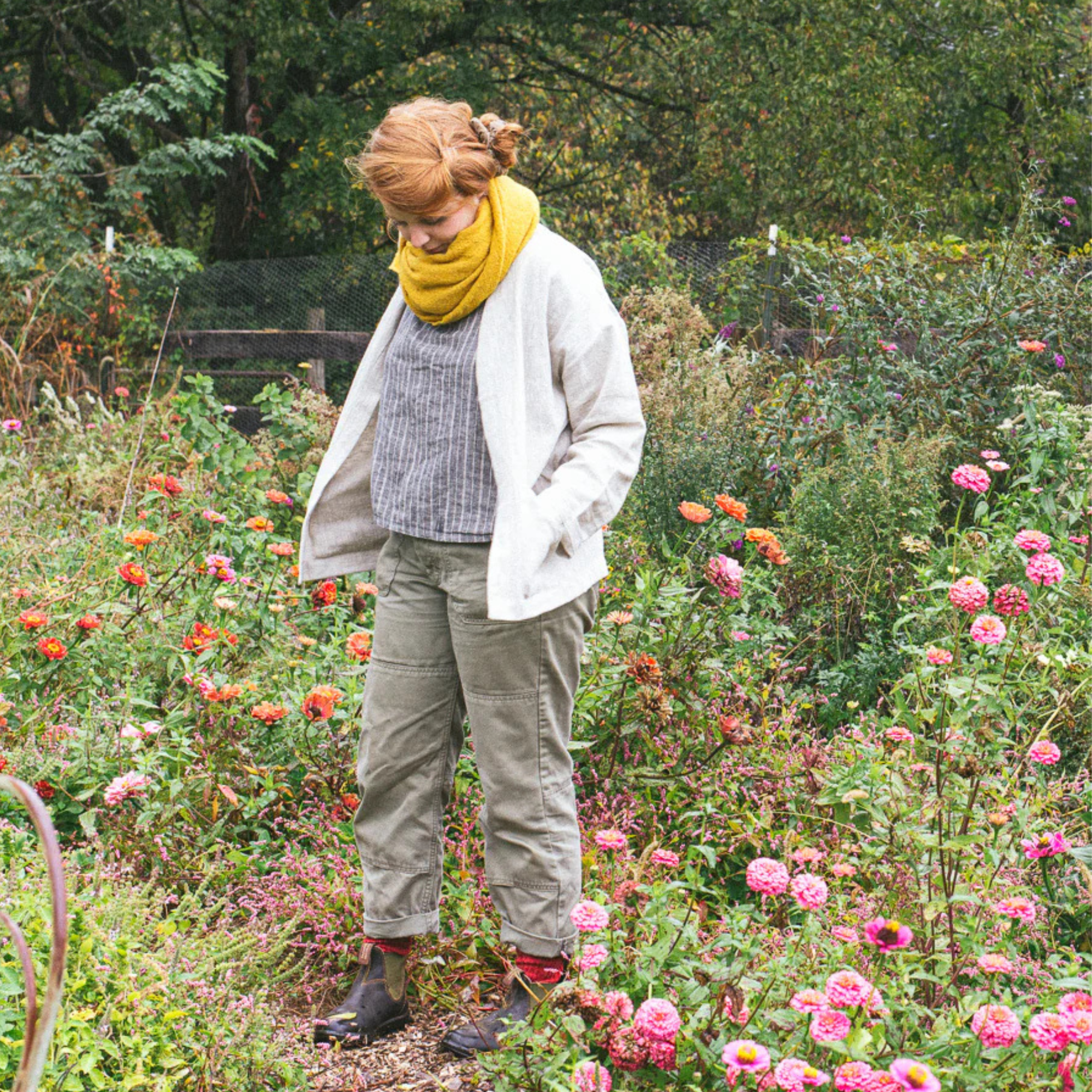
Eve Schaub Is Growing a Dress: What the Year of the Dress Actually Confirms About Labor Density, Slow Fashion, and the One Original Object
When the project gets covered, it gets covered in one sentence with predictable variations: a brave stand against fast fashion, a return to slow fashion, a lesson in where our clothes come from. The sentence is not wrong. It is simply the wrong altitude. It reads the dress as a message — a moral communication about consumption — when the dress's real significance is that it is an object with a particular internal accounting. The slow-fashion sentence treats the year of labor as a cost: the heroic price Schaub pays to make her point. The framework treats the year of labor as the product. This is not a rhetorical flourish. It is the entire difference between a virtue narrative and a theory of value.
A fast-fashion dress has near-zero labor density not because no one worked on it, but because the labor is industrialized, distributed, and deliberately erased — the seams are smooth precisely so you cannot read the hands. Schaub's dress is the asymptote at the other end. Every gram of its fiber passed through a single person's hands across a calendar year: sown, pulled, retted, scutched, hackled, spun off a drop spindle that "mostly sucks," warped, woven, cut, and sewn. The dress cannot be faked, accelerated, or velocity-ed into existence. A year is a year. The cost of intention is paid in real time, and the object holds the receipt.

From 'Quiet Luxury' to Post-Growth Citizen: A PLCFA Perspective on Discerning Consumption
The "Quiet Luxury" phenomenon, widely interpreted as a simple aesthetic shift away from logos, is not what it appears to be. It is, in fact, the most visible tremor of a foundational crisis within the traditional luxury system. The legacy model has been hollowed out by its own success, creating a "Scarcity Paradox" that has destroyed rarity and a profound "price fatigue" in consumers who are quietly rebelling against a system where value is no longer tethered to any material reality.
This study argues that this popular aesthetic is only Phase 1 of a critical, three-stage evolution in discerning consumption. We provide the definitive map for that journey: from the unconscious, class-signaling aesthetic of "Quiet Luxury" (Phase 1), through the purpose-driven, conscious ethos of the "Quiet Vanguard" (Phase 2), to the final, philosophical and political alignment of the "Post-Growth Citizen" (Phase 3).
Using the foundational framework of Post-Luxury Conceptual Functional Art (PLCFA), this study guides the discerning individual from being a passive follower of a trend to becoming a conscious practitioner of a more considered life. It is an invitation to elevate your intent, revealing how your aesthetic instincts are pointing toward a far more meaningful philosophy—one that transforms the act of consumption into an act of conscious stewardship.