
The Architecture of Intent
A Critical Lexicon
This collection of studies is the intellectual architecture of Post-Luxury Conceptual Functional Art (PLCFA).
The true artistry of this Maison resides not in the finished form, but in the rigorous thinking that precedes it. These essays serve as the conceptual foundation for PLCFA, using a critical lens to interrogate cultural phenomena, art history, and consumer paradigms—analyzing everything from the ephemeral spectacle of luxury to the pure architectural rigor of abstract principles.
This is an invitation into the workshop of the mind. By sharing this process, we validate the necessity of a new category of value and invite you toward a well-considered life, one founded on true craft, uncompromising narrative, and durable meaning.
New to PLCFA? Begin with Essential Reading below.
Exploring a specific area? Navigate by category.
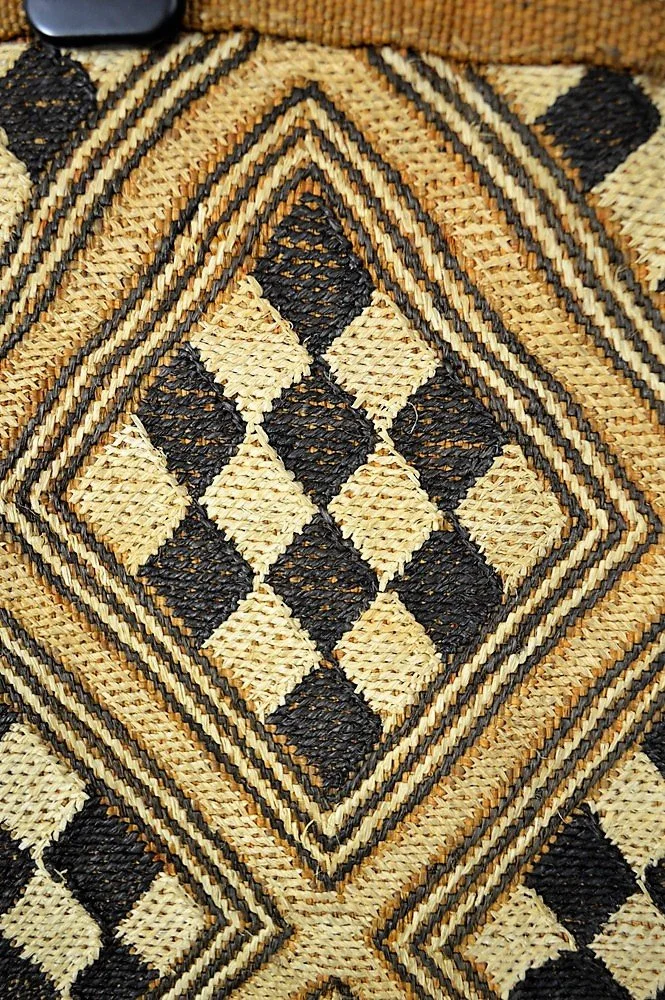
THE SHADOW OF THE LOOM: Semiotic Enclosure, Racial Capitalism, and the Architecture of Post-Luxury Reparation
The global luxury apparatus currently stands at a precipice defined by a second great detachment, where the financialized economy of the 21st century has alienated cultural signifiers from their ancestral origins. This study investigates the mechanism of semiotic primitive accumulation, a process where the multibillion-dollar valuations of European luxury brands are derived from the uncompensated enclosure of aesthetic commons. From the textile archives of the Kuba Kingdom to the sacred scripts of the Ekpe society, the industry draws its vitality from the Global South to fuel a Pattern Premium that values a mass-produced, vinyl-coated simulacrum at ten times the price of its handcrafted, culturally sacred original.
We must move beyond the critique of appropriation toward a definitive model of Reparative Stewardship. The "Object of Affection" in 2026 is one that acknowledges its debt, pays its rent, and heals the wound of its making through fractional repatriation. By utilizing blockchain-powered smart contracts to route heritage dividends back to originating communities, we can illuminate the Artistic Dark Matter that currently stabilizes the luxury galaxy. This report serves as a Truth and Reconciliation Commission for the world of objects, clearing the ground for a new architecture of value defined not by material exclusivity, but by the ethical depth of its provenance.
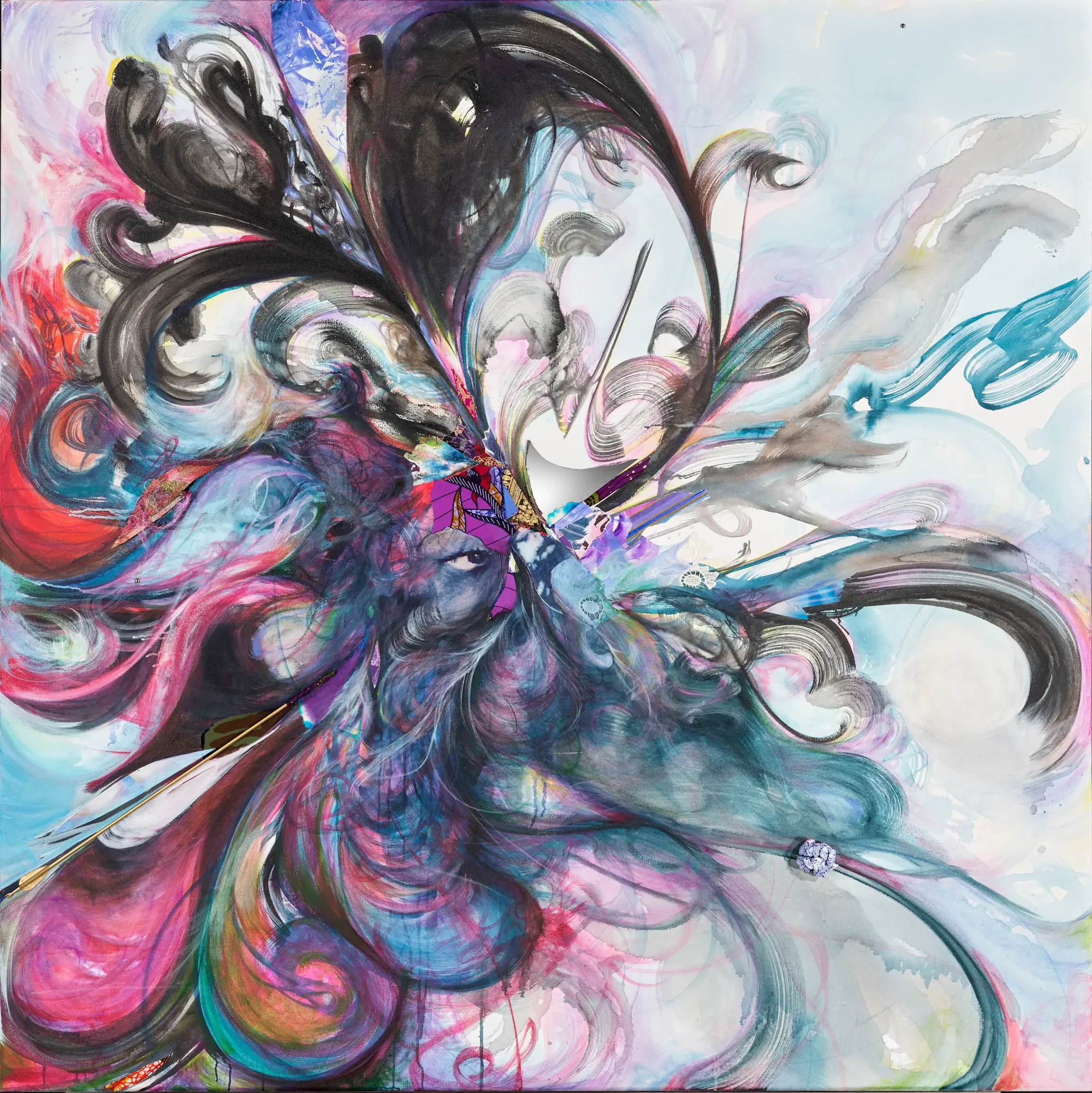
The Institutional Pivot: How Post-Luxury Conceptual Functional Art (PLCFA) Reconfigures Museology, Materiality, and the Decolonization of the Canon
The twenty-first-century museum object is undergoing a profound ontological crisis, burdened by the ethical demand to move beyond mere aesthetic preservation and actively advance social critique and justice. This strategic pivot is a direct institutional response to widespread fatigue with the accelerating disposability of the hyper-consuming society, positioning cultural memory and duration as necessary counterweights to material ephemerality. This study argues that to maintain relevance and integrity, institutions must radically shift their criteria of value, abandoning traditional metrics centered on financial provenance and aesthetic conformity. It is in this high-stakes context that the Post-Luxury Conceptual Functional Art (PLCFA) framework emerges as the precise semantic architecture required to guide this evolution, providing the critical vocabulary necessary to move institutional leaders toward philosophically rigorous action and away from vague, procedural reform.
The PLCFA framework serves as the definitive intellectual tool for navigating this transformation by explicitly rejecting the traditional luxury paradigm and instead situating value in permanence, intentionality, and narrative depth. This paper empirically demonstrates that major institutions are already adopting PLCFA principles through fieldwork conducted at the Newfields Indianapolis Museum of Art (IMA) during the Bold exhibition. By analyzing the curatorial strategy—specifically the move to dismantle gendered craft hierarchies and decolonize the material canon, as evidenced by the Shinique Smith acquisition and Robert Ebendorf's philosophy—the study demonstrates how the framework justifies the pivot to all stakeholders. Ultimately, PLCFA transforms the museum from a passive collector of exclusionary value into an active, democratic site for shaping inclusive public consciousness and ensuring the object's value lies not in its status, but in the enduring depth of its story.

Why Marine Serre’s Upcycling Is Not A Trend
Is sustainability a hyperreal gesture, or is radical change possible? This critical study challenges the conventional fashion narrative by defining Marine Serre not as a designer, but as the world's first true Artisan-as-Industrialist. We dive into the profound philosophical conflict at the heart of luxury: the easy, frictionless sign of change versus the difficult, material act of industrializing a solution. Serre cracked the most difficult nut in the business by demonstrating how to scale authenticity, making her Eco-Futurism a structural and financial blueprint. By explicitly rejecting the volume and velocity that causes Systemic Exhaustion , she engineered a new savoir-faire rooted in regeneration and the Aesthetics of Endurance. We analyze her acts of radical transparency—from the upcycled bedding campaign to the 1.3 tons of textile waste on the runway—to prove that her brand's crescent moon logo is not an arbitrary symbol, but an indexical sign of genuine, industrialized labor. This is the definitive thesis on why her model defines the Post-Luxury future and answers the question of value in the age of the circular economy.
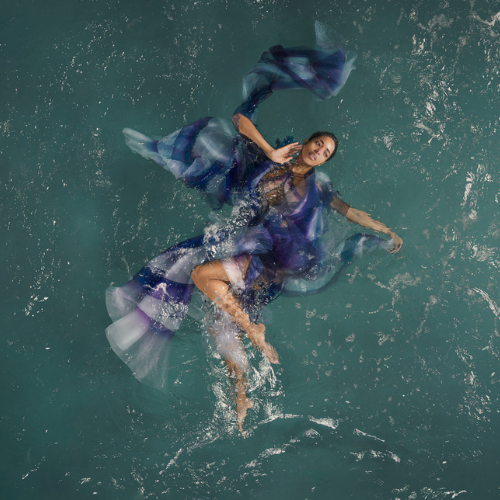
The Fluidity of Form: How Iris van Herpen is Rewriting the DNA of Haute Couture
In a world where fashion often feels constrained by its own heritage, Iris van Herpen is a visionary who dares to rewrite its very code. She doesn't simply design garments; she sculpts a new reality where the boundaries between biology, architecture, and technology dissolve into a sublime whole. Her groundbreaking creations, from 3D-printed liquid forms to gowns grown from mycelium, are not just clothing but living manifestos that challenge our perception of what a garment can be. This essay explores how van Herpen’s relentless pursuit of metamorphosis has launched haute couture into a new, boundless dimension where form is always in a state of flow.
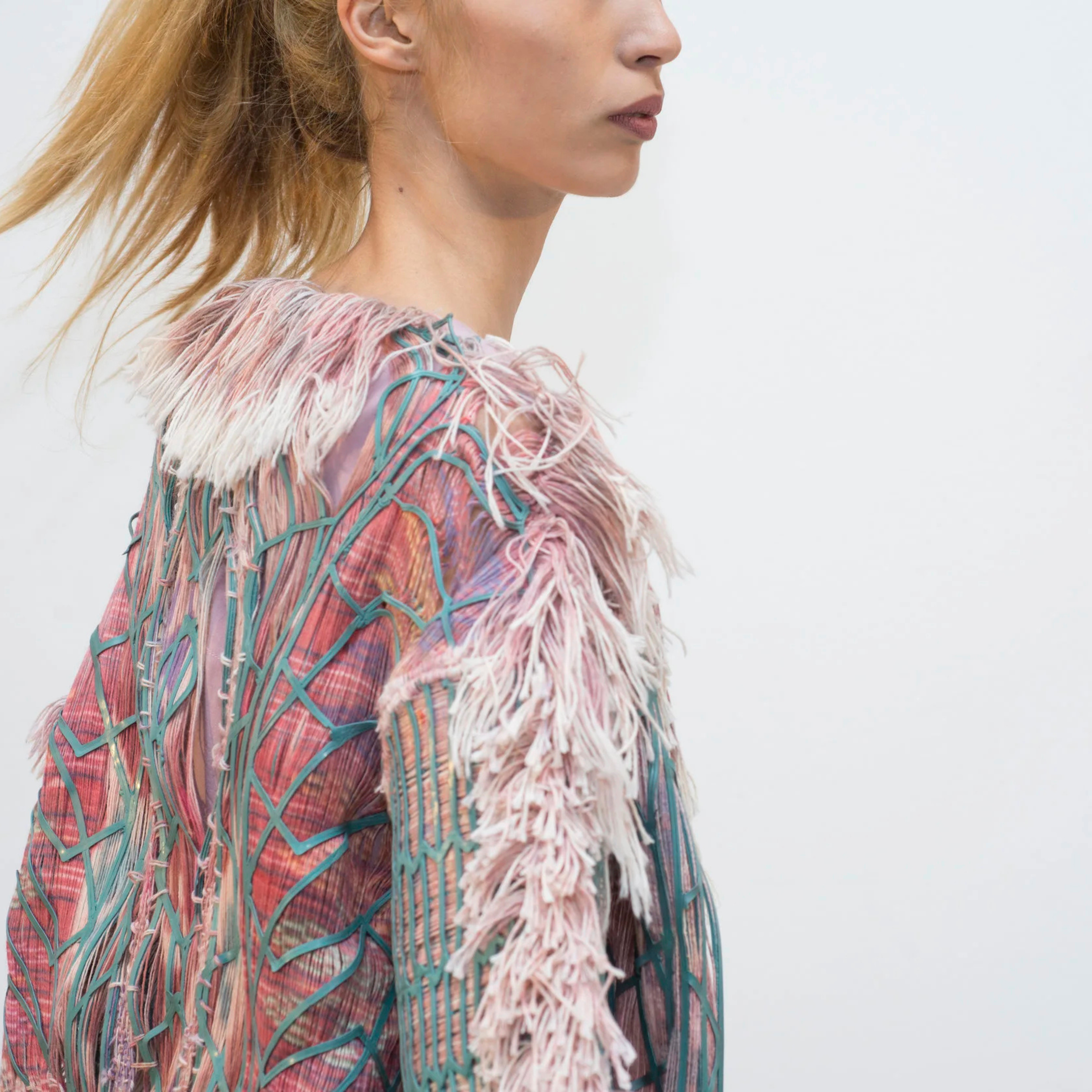
The Future of Luxury: Ganit Goldstein, The Generative Architect of Computational Textiles
Ganit Goldstein represents a paradigm shift in the domains of fashion and computational design. She operates not as a traditional designer, but as a technology developer who utilizes fabric as a platform for pioneering research and innovation. Her work is a profound philosophical synthesis of traditional craft techniques and cutting-edge digital fabrication tools. This "hybrid" or "backward and forward" workflow directly challenges the unsustainable practices of fast fashion by advocating for a system of on-demand, customized, and high-value garments. The work has evolved from creating aesthetically driven, craft-inspired pieces to developing programmable, interactive fabrics that respond to human gestures and environmental stimuli. Discover the full story of this generative architect's vision for a future of intelligent, interconnected garments.