
The Architecture of Intent
A Critical Lexicon
This collection of studies is the intellectual architecture of Post-Luxury Conceptual Functional Art (PLCFA).
The true artistry of this Maison resides not in the finished form, but in the rigorous thinking that precedes it. These essays serve as the conceptual foundation for PLCFA, using a critical lens to interrogate cultural phenomena, art history, and consumer paradigms—analyzing everything from the ephemeral spectacle of luxury to the pure architectural rigor of abstract principles.
This is an invitation into the workshop of the mind. By sharing this process, we validate the necessity of a new category of value and invite you toward a well-considered life, one founded on true craft, uncompromising narrative, and durable meaning.
New to PLCFA? Begin with Essential Reading below.
Exploring a specific area? Navigate by category.
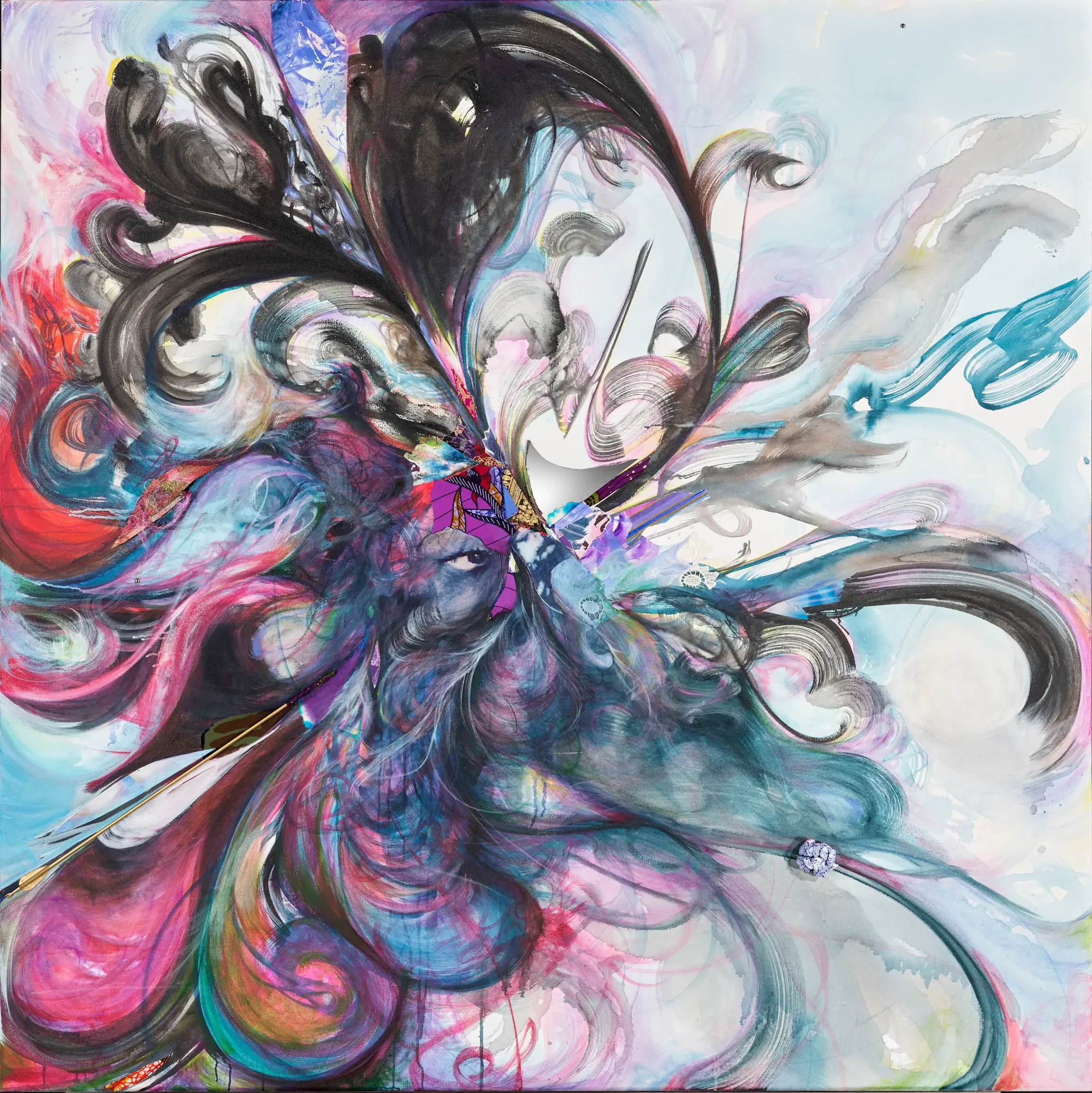
The Institutional Pivot: How Post-Luxury Conceptual Functional Art (PLCFA) Reconfigures Museology, Materiality, and the Decolonization of the Canon
The twenty-first-century museum object is undergoing a profound ontological crisis, burdened by the ethical demand to move beyond mere aesthetic preservation and actively advance social critique and justice. This strategic pivot is a direct institutional response to widespread fatigue with the accelerating disposability of the hyper-consuming society, positioning cultural memory and duration as necessary counterweights to material ephemerality. This study argues that to maintain relevance and integrity, institutions must radically shift their criteria of value, abandoning traditional metrics centered on financial provenance and aesthetic conformity. It is in this high-stakes context that the Post-Luxury Conceptual Functional Art (PLCFA) framework emerges as the precise semantic architecture required to guide this evolution, providing the critical vocabulary necessary to move institutional leaders toward philosophically rigorous action and away from vague, procedural reform.
The PLCFA framework serves as the definitive intellectual tool for navigating this transformation by explicitly rejecting the traditional luxury paradigm and instead situating value in permanence, intentionality, and narrative depth. This paper empirically demonstrates that major institutions are already adopting PLCFA principles through fieldwork conducted at the Newfields Indianapolis Museum of Art (IMA) during the Bold exhibition. By analyzing the curatorial strategy—specifically the move to dismantle gendered craft hierarchies and decolonize the material canon, as evidenced by the Shinique Smith acquisition and Robert Ebendorf's philosophy—the study demonstrates how the framework justifies the pivot to all stakeholders. Ultimately, PLCFA transforms the museum from a passive collector of exclusionary value into an active, democratic site for shaping inclusive public consciousness and ensuring the object's value lies not in its status, but in the enduring depth of its story.

The Simulacrum of the Copy: Aritzia's 'Dupe' Trademark and the Legalization of Hyperreality in Global Fashion IP
The fashion industry has officially entered the hyperreal condition. Aritzia's aggressive move to trademark the phrase "Aritzia Dupe" is not a defense of its physical product, but an empirical, legal attempt to control the very language of imitation. This effort seeks to regulate the generated "real" that has emerged from digital discourse, where consumers openly celebrate the dupe as a "smart choice" that strips away exchange-value while retaining symbolic prestige. By appropriating the signifier of the copy, the brand effectively elevates the simulated item to a position of market authenticity, making the imitation the only legible truth about the product in the contemporary marketplace.
This legal maneuver fundamentally validates the critique outlined by Jean Baudrillard: the capacity to distinguish between the original and its representation has collapsed entirely. The brand has abandoned the traditional mandate to defend the material object, choosing instead to secure a proprietary claim over the imitation's signifier. This is the definitive endpoint of the Simulacrum—a structural acknowledgment that the economic and cultural significance of the copy now outweighs the material integrity of the original, forcing the legal system to affirm that the sign of the copy is a primary, source-identifying feature of the luxury brand.

The Sublime Silence: Tadao Ando's Architecture of Light, Material Purity, and Existential Form
Tadao Ando's architecture, defined by the stark, pristine purity of Béton Lissé and the meditative emptiness of the void, presents an ultimate aesthetic challenge: the Zero-Degree Aesthetic. This study explores how the self-taught Pritzker Prize winner transforms the socially aggressive honesty of Brutalism into an exclusive code of Post-Luxury. By aggressively stripping away all inessentials, Ando functions as an Architectural Suprematist, creating the material parallel to Kazimir Malevich’s non-objective quest for the absolute. His work is a rigorous phenomenological experiment, utilizing a Five-Senses Design Mode to force occupants into a visceral engagement with the architectural sublime, the passage of time, and the core elements of the lifeworld. Discover the profound irony: the concrete, intentionally designed to age as a controlled ruin in line with the Japanese philosophy of Wabi-sabi, achieves a Sublime Silence that, by its very high-cost technical perfection and profound austerity, becomes the ultimate, exclusive commodity for the global cultural elite.

The Aesthetics of Endurance: Byung-Chul Han and the Rise of Post-Luxury Conceptual Functional Art
We live in a world designed to be frictionless, yet we have never felt more exhausted. The endless scroll and the seamless object promise positivity but deliver a profound psychic fatigue—a condition philosopher Byung-Chul Han terms the "Burnout Society." He argues that this pervasive "smoothness" has erased the difficulty, texture, and resistance essential for genuine meaning. We are left adrift in a polished, autoerotic loop where we encounter only ourselves, never the 'other'.
This study investigates a powerful material antidote to this cultural crisis. It argues that a new category of objects, Post-Luxury Conceptual Functional Art (PLCFA), is emerging as a necessary form of cultural therapy. We explore how the "un-smooth" object—defined by its narrative, imperfection, and haptic resistance—functions as a tangible anchor in a weightless world. This is an analysis of the new "Aesthetics of Endurance," a quiet but profound movement that pits slow, contemplative stewardship against the accelerating, disposable logic of our time.

From 'Quiet Luxury' to Post-Growth Citizen: A PLCFA Perspective on Discerning Consumption
The "Quiet Luxury" phenomenon, widely interpreted as a simple aesthetic shift away from logos, is not what it appears to be. It is, in fact, the most visible tremor of a foundational crisis within the traditional luxury system. The legacy model has been hollowed out by its own success, creating a "Scarcity Paradox" that has destroyed rarity and a profound "price fatigue" in consumers who are quietly rebelling against a system where value is no longer tethered to any material reality.
This study argues that this popular aesthetic is only Phase 1 of a critical, three-stage evolution in discerning consumption. We provide the definitive map for that journey: from the unconscious, class-signaling aesthetic of "Quiet Luxury" (Phase 1), through the purpose-driven, conscious ethos of the "Quiet Vanguard" (Phase 2), to the final, philosophical and political alignment of the "Post-Growth Citizen" (Phase 3).
Using the foundational framework of Post-Luxury Conceptual Functional Art (PLCFA), this study guides the discerning individual from being a passive follower of a trend to becoming a conscious practitioner of a more considered life. It is an invitation to elevate your intent, revealing how your aesthetic instincts are pointing toward a far more meaningful philosophy—one that transforms the act of consumption into an act of conscious stewardship.

The Simulacrum of Luxury: A Guide to Jean Baudrillard's Critique of Consumer Society
The price is real, but the value is a perfect mirage. That feeling of emptiness you get from a world of flawless, frictionless luxury isn't your imagination; it's a diagnosis. The philosopher Jean Baudrillard gave it a name decades ago: the "desert of the real," a hyperreality where the copy now precedes the original. This study is your field guide to that desert. It weaponizes Baudrillard's most potent ideas- simulacra, sign value, hyperreality—to decode how luxury logos became empty containers and how influencer feeds learned to manufacture our desire. But this is more than a diagnosis; it’s an escape route. We reveal the antidote: a quiet resistance built on tangible function and symbolic exchange. This is the manual for finding an original in a world built on code.

The Missing Mass: Gregory Sholette’s 'Dark Matter' and the Political Economy of Post-Luxury Conceptual Functional Art
Why does modern luxury feel so hollow? We have diagnosed a "state of exhaustion," a system hollowed out by its own paradoxes, where price is detached from reality and meaning has been systematically stripped away. This study argues that this emptiness is a direct consequence of luxury's structural dependency on what theorist Gregory Sholette calls "artistic dark matter."
This is the vast, unacknowledged surplus of creative labor, the subcultures, activists, and community artists, that the mainstream simultaneously depends on and renders invisible. The luxury industry, unable to generate its own creative fuel, survives by cannibalizing authenticity. We trace this pattern from the appropriation of punk and hip-hop to the cynical "poverty chic" of Balenciaga and the complex "re-legitimization" of Dapper Dan.
This process reduces culture to "bare art," a pure commodity. This report reframes Post-Luxury Conceptual Functional Art (PLCFA) not merely as an aesthetic shift, but as a vital political and economic counter-paradigm. It is the framework that shows how this "dark matter" can finally "brighten," codifying its inherent values of autonomy and narrative depth into a coherent system of resistance.

Value Beyond Price: David Graeber and the Political Economy of Post-Luxury Objects
The global luxury market is not in a recession; it is in a profound crisis of meaning. When a $10,000 handbag is aesthetically identical to a $100 replica, what are you actually paying for? For decades, the industry operated on a collective belief, but now that belief is collapsing. This "luxury fatigue" is the symptom of a system that, in its pursuit of scale, has hollowed out its own value. The "sign" has become fatally detached from substance.
This study argues that this "narrative breakdown," mirrored in the speculative contemporary art market, is not a cyclical trend but a structural exhaustion of a specific kind of value. The pivot from goods to "experiences" is a desperate search for the authenticity that mass-produced commodities have lost.
This void is being filled by a new paradigm: Post-Luxury Conceptual Functional Art (PLCFA). To understand this shift, we must turn to the definitive framework of the late anthropologist David Graeber. Graeber argued that true value is not price; it is the social recognition of meaningful human action. The luxury market failed because it erased the human story, craft, and connection, leaving only an empty commodity.
"Value Beyond Price" deconstructs this failing system to build a new one. It redefines our relationship with objects, moving from mere ownership to active stewardship, and from an alienable commodity to an inalienable possession—an object so embedded with narrative and human meaning that it becomes, in the truest sense of the word, priceless.

The Luster Restored: A Critical Dialogue with Dana Thomas and the Rise of the Post-Luxury Paradigm
For about twenty years, they sold you a brilliant lie. The lie was that luxury was a logo, a status symbol you could buy at the mall, a mass-produced mirage that screamed money but whispered nothing. Dana Thomas was the one who pulled the fire alarm in her book Deluxe. But what happens after the alarm stops ringing? A quiet mutiny. This study is the playbook for that mutiny. It's an intel brief on the Post-Luxury paradigm, the silent war against the loud and the hollow. We connect the dots from Plato’s takedown of the "feverish city" to the modern ateliers of The Row, Loro Piana, and Brunello Cucinelli—the new architects of value. This isn't just about clothes; it's about the code. It’s the definitive story of how the coolest people in the room got so quiet.
The Art of Being: A Guide to a Life of Cultivated Grace
What is the soul of luxury? In a world obsessed with consumption, we argue that the most profound elegance is invisible—a state of being, not an act of owning. We journey beyond the material to explore the art of living with intention and grace. These are not trends, but timeless philosophies, from the studied carelessness of Italian Sprezzatura to the serene composure of Yoruba Itutu. Discover the secrets to cultivating a life of effortless beauty and profound inner style.