How Pace Gallery Broke Itself: Layoffs and the Cost of Speculative Velocity

When the gallery model fails, it is artists and workers who absorb the loss, not the boardroom that made the bet.
Pace Gallery's June 2026 announcement (50 artists cut, 50 workers laid off, the gallery model declared 'broken' by CEO Marc Glimcher) is not a correction. It is a confession. This study applies the OAC Post-Luxury Conceptual Functional Art (PLCFA) framework to diagnose the institutional collapse of the mega gallery model as a predictable terminus of Speculative Velocity: the art market's adoption of financialized expansion logic that treats artists as portfolio assets and institutions as brand vehicles. The Pace Gallery layoffs and the broken-gallery-model diagnosis are the direct consequence of crypto-backed art ventures and overextended physical infrastructure colliding with a contracting primary market. Using the lenses of Hollowed Object, Institutional Necrophagy, and Labor Density, this study argues that what Glimcher calls a 'model correction' is in fact the material consequence of Semantic Burden transferred entirely onto artists and workers, the human infrastructure asked to absorb costs that speculative capital generated and then abandoned.
The Announcement as Institutional Performance
On June 3, 2026, the New York Times published news of Pace Gallery's sweeping restructuring before the gallery had formally notified its own staff. Fifty workers and fifty artists learned of their removal through push notifications and panicked calls from colleagues: a choreography of institutional disclosure that reveals, before any theoretical analysis is possible, the precise hierarchy of value the gallery has always maintained: the press cycle comes first; the people come second.
CEO Marc Glimcher declared that 'the current gallery model isn't only broken, it's unfixable.' OAC reads this differently. It is a retroactive reframing. The gallery model was not broken by market forces alone. It was broken by the decisions Pace's own leadership made: a $100 million flagship in Chelsea, a $9 million annual rent obligation, the Pace Verso NFT platform launched in 2021 at the peak of speculative fever, the Superblue immersive art venture that opened a London space and shuttered it after a single show, and Asian expansions requiring eleven years to unwind. The boardroom bet on Speculative Velocity, on the compounding of sign-value through scale, and when that velocity collapsed, it declared the model broken rather than the strategy.
The ‘broken model’ is not a market condition. It is the receipts of speculative capital, presented as institutional reckoning.
Speculative Velocity and the Mega Gallery Architecture
The mega gallery model, which Glimcher acknowledged Pace 'invented', operates on a specific economic logic: institutional scale generates pricing power, geographic omnipresence signals global relevance, and roster volume creates the impression of a self-sustaining ecosystem. Under conditions of market expansion, this logic compounds. Under contraction, it inverts.
Pace's decade-long expansion, Chelsea headquarters in 2019, Superblue Miami in 2020, Pace Verso in 2021, Art Basel Miami NFT booth presence, multiple Asian locations, was not a program designed around artistic stewardship. It was designed around Speculative Velocity: the acceleration of institutional sign-value through serial platform launches, each promising to capture an emerging market before competitors could establish a position. Baudrillard's analysis of the sign-value economy is precise here. When an institution's value is constituted primarily by its symbolic position rather than by the material and Labor Density of what it produces, then any contraction of the speculative field will expose the institution as a Hollowed Object: impressive infrastructure with evacuated core value.
This process of hollowing out physical infrastructure in pursuit of atmospheric equity parallels the experiential substitution vectors mapped in Balenciaga's Wellness Kick: What the Techwear Smoothie Activations Actually Reveal About the Hollowed Object, wherein the ephemeral event completely supersedes the durable entity.
The OAC study on Supreme × Jordan Brand (Study 106) traced the same mechanism in streetwear: speculative capital floods toward platforms that appear to generate perpetual scarcity, then evacuates the moment the scarcity mechanism is revealed to be manufactured. Pace Gallery's crypto art ventures replicated this precisely at an institutional scale.
Pace did not fall victim to a broken market. Pace built a machine calibrated for speculative acceleration and then discovered, at enormous cost to others, that acceleration is not a sustainable institutional architecture.
Pace Verso and the Collapse of Crypto-Backed Art Value
In August 2021, Pace Gallery launched Pace Verso, its custom NFT platform built on the Ethereum blockchain. The launch was timed with market precision: NFT trading volume was at its historical apex, and institutional participation was treated as the signal that would legitimate the asset class. Pace offered NFTs at Art Basel Miami Beach; it structured multi-platform partnerships with Art Blocks; it presented Glenn Kaino's work as an inaugural gesture of blockchain-native gallery practice.
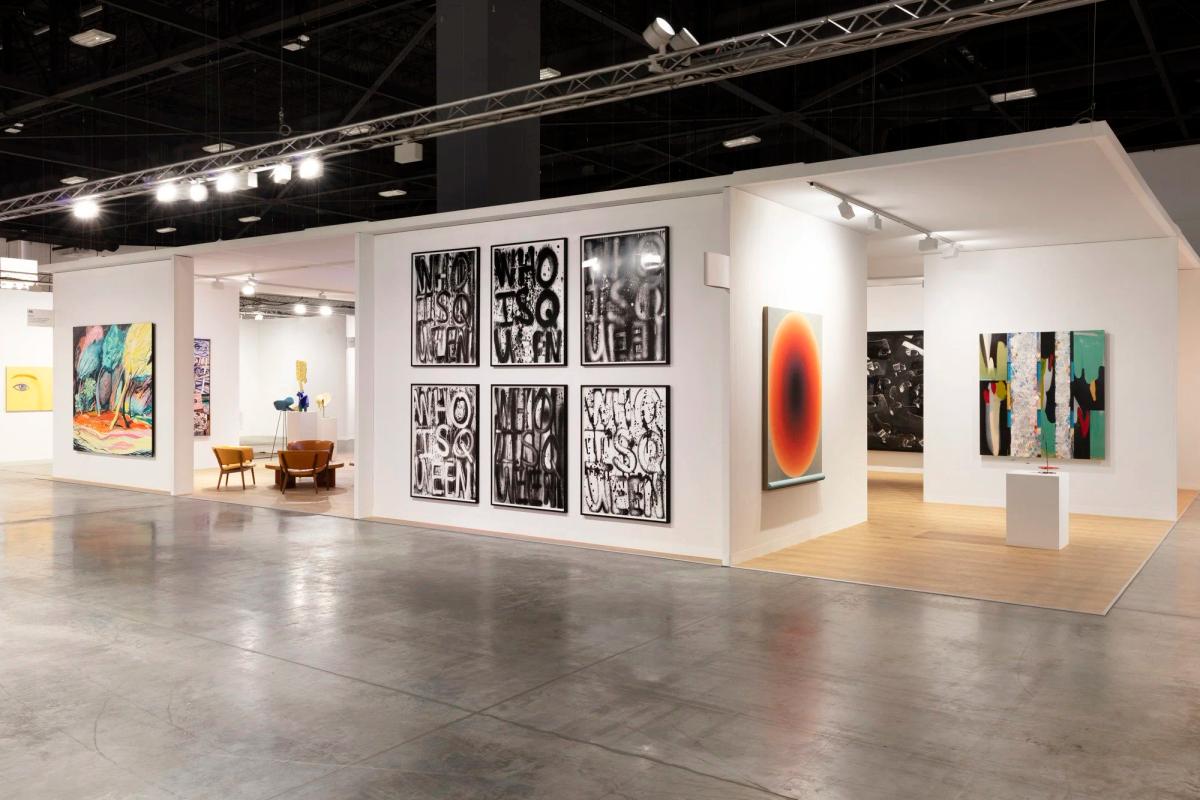
By 2026, NFT trading volume had collapsed to a fraction of its 2021 peak. Glenn Kaino is among the artists no longer on Pace's roster. The correlation is not incidental. Pace Verso was not conceived as a curatorial program. It was conceived as a market capture vehicle: an institutional bet that crypto-backed art would constitute a permanent, parallel revenue stream to offset the overhead costs of the gallery's physical expansion. When the bet failed, the mechanism of cost transfer was direct: the artists whose careers were built in partial alignment with that platform lost not only their gallery representation but also the institutional infrastructure (sales support, exhibition slots, secondary-market credibility) that representation provides.
This is what the PLCFA framework names Institutional Necrophagy: the condition by which an institution consumes the vitality of its own artists and workers to sustain its structural existence. Pace Gallery did not shrink because the art market weakened in the abstract. Pace shrank because it had leveraged artist relationships and staff Labor Density against speculative bets that did not pay off. The institution survives; the fifty people who made it function do not.
Institutional Necrophagy completes its cycle not in the boardroom announcement, but in the quiet exit of the artist who no longer appears on the gallery website.
The Hollowed Object: Infrastructure Without Core
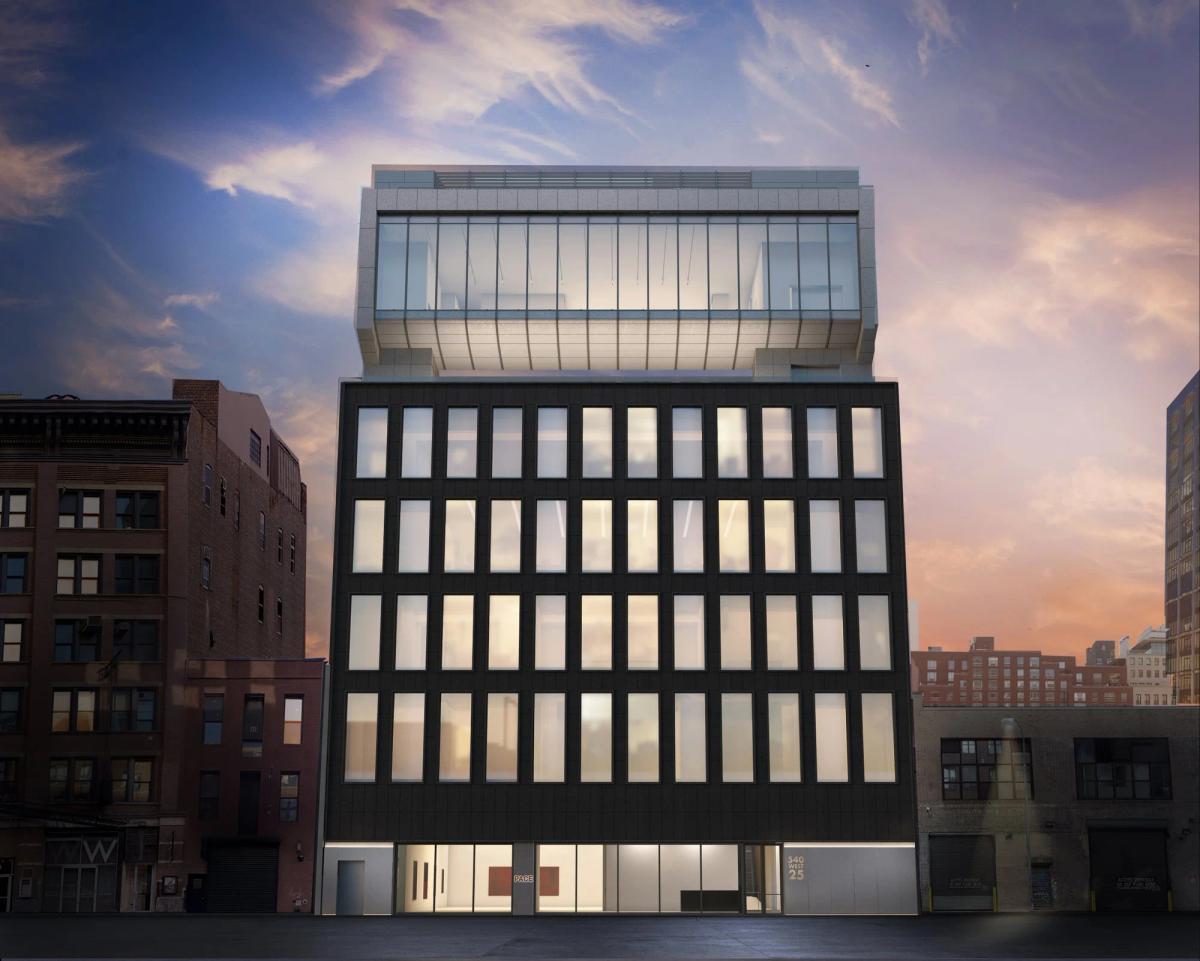
The $100 million Chelsea headquarters (eight stories, West 25th Street, approximately $9 million in annual rent) was always a Hollowed Object in the PLCFA sense. Not because it lacks architectural ambition, but because the institutional theory that justified its scale was predicated on perpetual market expansion. The building was conceived as a symbol of permanence designed for a period of Speculative Velocity. When that velocity contracted, the building's symbolic function inverted: it became evidence of overextension rather than of institutional confidence.
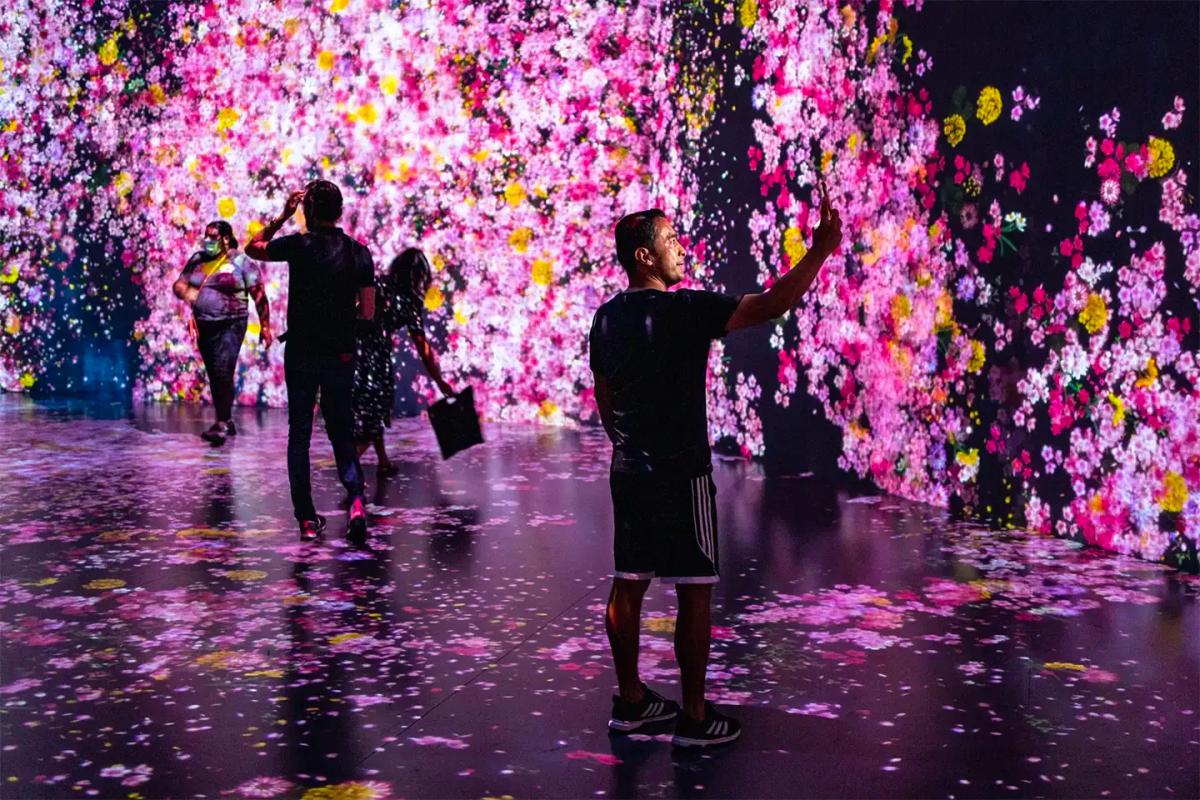
Superblue Miami, the immersive art experience launched in the majority working-class, gentrifying neighborhood of Allapattah, charging $40 admission, represents the same logic at the experiential tier. The institution positioned itself as democratizing art access while pricing local community out of attendance. Its London iteration shuttered after a single show. Planned New York and Houston branches never materialized. The art and technology collective teamLab, central to Superblue's early vision, now appears absent from Pace's roster. The experiential platform designed to capture the premium end of the immersive art market produced what PLCFA identifies as Zero-Sum Aura: the institutional appropriation of artistic vitality without sustainable value return.
OAC's study on the Gucci AI campaign (Study 107) identified the structural problem of institutions that mistake technological adjacency for institutional authority. Pace Gallery's crypto and immersive ventures committed the same error: proximity to an emergent platform was mistaken for command of its underlying value.
Labor Density and the Devaluation of Artist Work
The fifty artists removed from Pace's roster are not simply losing gallery representation. They are losing the accumulated institutional infrastructure, the Labor Density, that sustains contemporary art careers. Labor Density, as defined in the PLCFA framework, describes the invisible layering of accumulated effort, institutional relationship-building, and market positioning that makes an artwork legible as valuable within a given commercial ecosystem. A gallery does not merely sell paintings. It cultivates the conditions under which paintings command a price.
When an artist loses gallery representation at scale (50 artists simultaneously, with no public list, without prior individual notification) the damage is structural rather than merely commercial. A current gallery staffer captured it precisely: there were internal 'mumblings about what would happen to the dealers/artist liaisons/registrars that only work on X artist account, but nobody knew the exact numbers of anything.' This reveals the full architecture of Labor Density at the institutional scale. An artist at a mega gallery does not have a relationship with the gallery. They have a relationship with specific staff members whose entire professional function is dedicated to their practice. When those staff members are laid off, the relationship infrastructure (built over years, specific, irreplaceable) disappears with them.
Arne Glimcher, Pace's founder, told the New York Times that 'this whole mega gallery thing is ridiculous and also unsupportable.' He is correct. But his correction arrives decades after the model he invented had already distributed its costs across artists experiencing labor precarity who had no mechanism to refuse the terms.
Labor Density is not a gallery resource. It is an artist’s career capital, held in trust by the institution and dissolved at the institution’s convenience.
The Structural Context: A Market Designed for Contraction
The Pace Gallery restructuring does not occur in isolation. It is the most prominent event in a years-long contraction of the gallery ecosystem that the OAC archive has tracked with theoretical precision. The global art market declined 12% in 2024, marking its second consecutive year of falling sales. In 2025, gallery closures cascaded: Blum, Venus Over Manhattan, Clearing, Kasmin, Tilton, Project Native Informant, Stephen Friedman's New York space, Pace Hong Kong, and Perrotin Hong Kong all shuttered or significantly restructured within a twelve-month window.
What this aggregation reveals is not a series of individual institutional failures but the terminal pressure on a structural model never designed for contraction. The gallery business model, particularly at a mega scale, operates with high fixed costs relative to variable revenue. During periods of market expansion, fixed costs are absorbed, and the model scales. In contraction, those fixed costs become existential obligations against declining income. Galleries that expanded most aggressively during the 2017 to 2022 speculative peak are now paying for that expansion against a market that no longer supports it.
Pace's Chelsea rent alone, approximately $9 million annually, requires consistent, high-volume primary sales simply to sustain neutral operations before program costs, staff salaries, or fair fees are factored in. The decision to build a $100 million flagship in 2019, immediately before a global pandemic and a subsequent crypto-fueled distortion, was not prescient institutional investment. It was a bet on Speculative Velocity made at its historical maximum.
The Brancusi Signal and the Return to Safe Harbor
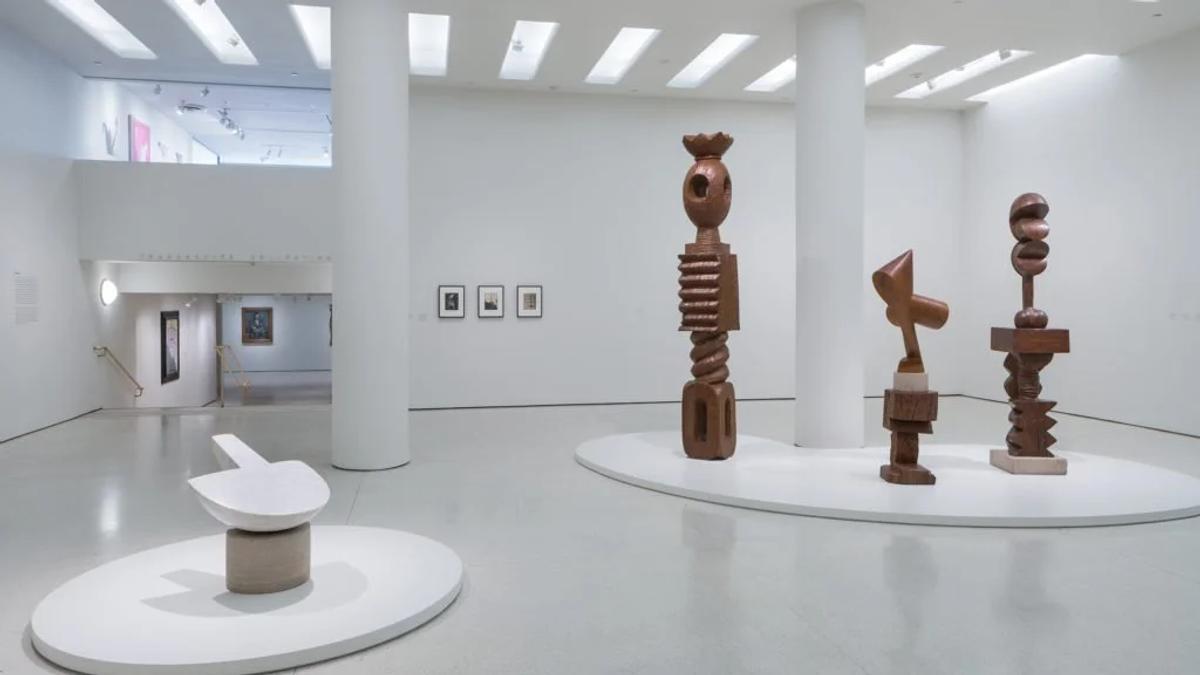
In the weeks immediately preceding its restructuring announcement, Pace Gallery announced the representation of the Constantin Brancusi Estate. The timing is not coincidental. It is the institution's own market signal, its pivot toward what the PLCFA framework identifies as the opposite of Speculative Velocity: the gravitational weight of canonical provenance, the secondary-market depth of historical authentication, the Material Singularity of a modernist master whose work has never required speculative amplification to command value.
Glimcher's statement about 'going back to the future, connecting younger artists to their spiritual fathers and mothers, focusing on a group of around 80 artists' explicitly signals a retreat from the logic of roster-as-portfolio. The mega gallery model was premised on the idea that institutional scale could generate value across a wide artist base simultaneously: that the same institutional machinery could support 135 artists, manage multiple experiential platforms, operate across six continents, and sustain a crypto-native platform, all within a single organizational structure.
The Brancusi acquisition signals the inversion of that premise. When an institution under financial pressure acquires a canonical estate with a proven secondary market, it is purchasing safety rather than vision. The Custodian's Contract, the PLCFA term for the gallery's obligation to protect and advance an artist's work across time, is being reasserted, but only for those artists whose market depth can already sustain the institution's fixed costs. The 50 artists removed from Pace's roster are, in this framing, the institution's speculative positions: the assets that did not perform and were liquidated to stabilize the portfolio.
The Brancusi Estate is not a curatorial statement. It is a balance sheet correction disguised as institutional memory.
Semantic Burden and the Limits of Institutional Language
Marc Glimcher's public language deserves critical attention as a semiotic object. The phrase 'model correction', borrowed directly from financial market discourse, is not neutral. It imports the evaluative framework of portfolio management into institutional discourse. A 'correction' in financial markets is not a failure; it is a normalization of overvalued positions. The language positions the elimination of 50 artist relationships and 50 staff positions as rational market hygiene rather than institutional accountability.
The statement that the mega gallery model 'made a lot of sense when new markets arose around the world' is similarly constructed to distribute historical agency. Markets arise and deepen by the decisions of institutional actors who position themselves to capture them. Pace Gallery did not passively respond to market conditions. It actively drove the expansion logic those conditions enabled (opening locations, acquiring rosters, launching platforms) and then, when those conditions changed, attributed the cost of reversal to the model itself rather than to the decisions that constituted the model.
This is the precise mechanism of Semantic Burden in institutional practice: the transfer of meaningful cost and consequence onto objects and persons who carry that burden without compensation or recognition. The artists who built careers in partial alignment with Pace's speculative programs carry the Semantic Burden of the institution's pivot. They lose representation, market infrastructure, and institutional credibility, while the institution retains its identity, its brand authority, and its physical footprint.
What the OAC Model Offers as Counter-Architecture
The Pace Gallery restructuring is precisely the condition that the OAC institutional model, the One Original Principle, commission-only, anti-speculative framework, is designed to avoid and critique simultaneously. When institutional value is constituted entirely by the Narrative Permanence of a single, unrepeatable object-relationship, there is no portfolio to liquidate. There are no speculative positions to unwind. There is no roster to manage against fixed costs. The Custodian's Contract is not between an institution and a market position. It is between an institution and a specific material object, a specific creative relationship, a specific moment of singular production.
This is not a scalable counter-model for institutions like Pace Gallery, whose financial structure requires continuous primary market throughput. It is a demonstration that institutional scale and institutional integrity are not the same thing: that an institution can command global significance without the infrastructure overhead that makes artist labor expendable when market conditions shift.
The OAC study on the Dua Lipa/Schiaparelli wedding suit (Study 105) examined the conditions under which a single object could concentrate institutional and cultural value in a form that requires no platform infrastructure to sustain its meaning. What Schiaparelli demonstrated in couture, OAC demonstrates in critical practice: the One Original Principle is not a constraint. It is a refusal of the speculative financialization architecture that Pace Gallery has now publicly abandoned, only after distributing its costs across the artists and workers who had no vote in the original strategy.
The one original is not a niche position. It is the institutional form most resistant to the conditions that just destroyed Pace Gallery’s foundational logic.
The Gallery Was Not Broken. The Strategy Was.
Marc Glimcher has declared the gallery model broken. He is wrong in one precise way: the gallery model is not broken. The speculative model (the one that treats artist relationships as portfolio positions, institutional geography as brand extension, and technological adjacency as substitute for curatorial depth) is broken. Galleries that maintained modest scale, genuine artist stewardship, and cost structures calibrated to sustainable primary-market volume are not broken. They are depleted, pressured, and under-resourced, but they are not structurally incoherent.
What Pace Gallery has demonstrated, at considerable cost to 50 artists and 50 workers, is that Speculative Velocity has a terminal condition: the moment the speculative field contracts, every expansion decision made at the peak becomes a liability, and those liabilities are paid by the people at the edge of the institution, not at its center. The artists lose representation. The staff lose employment. The CEO issues a press release. The institution survives.
The art market does not need larger institutions with more efficient liquidation mechanisms. It needs smaller institutions with genuine Custodian's Contracts, structures in which the cost of institutional decisions is borne proportionally by those who make them. The Pace restructuring is not a model correction. It is a model confirmation: that scale, when constituted by speculative logic rather than curatorial depth, will always resolve its contradictions at the expense of the artists who made the institution worth discussing in the first place.
Authored by Christopher Banks, Anthropologist of Luxury, Critical Theorist & Founder Objects of Affection Collection Office of Critical Theory & Curatorial Strategy 469 Fashion Avenue, 12th Floor, New York, NY 10018
RELATED OAC STUDIES
Speculative Markets & Institutional Velocity
Hollowed Objects & Institutional Critique
Labor Density & Artist-Institutional Relations
Market Contraction & Post-Luxury Architecture
· Chapter Two: Hermès in Los Angeles and the Grammar of Restraint, Study 104