
The Architecture of Intent
A Critical Lexicon
This collection of studies is the intellectual architecture of Post-Luxury Conceptual Functional Art (PLCFA).
The true artistry of this Maison resides not in the finished form, but in the rigorous thinking that precedes it. These essays serve as the conceptual foundation for PLCFA, using a critical lens to interrogate cultural phenomena, art history, and consumer paradigms—analyzing everything from the ephemeral spectacle of luxury to the pure architectural rigor of abstract principles.
This is an invitation into the workshop of the mind. By sharing this process, we validate the necessity of a new category of value and invite you toward a well-considered life, one founded on true craft, uncompromising narrative, and durable meaning.
New to PLCFA? Begin with Essential Reading below.
Exploring a specific area? Navigate by category.
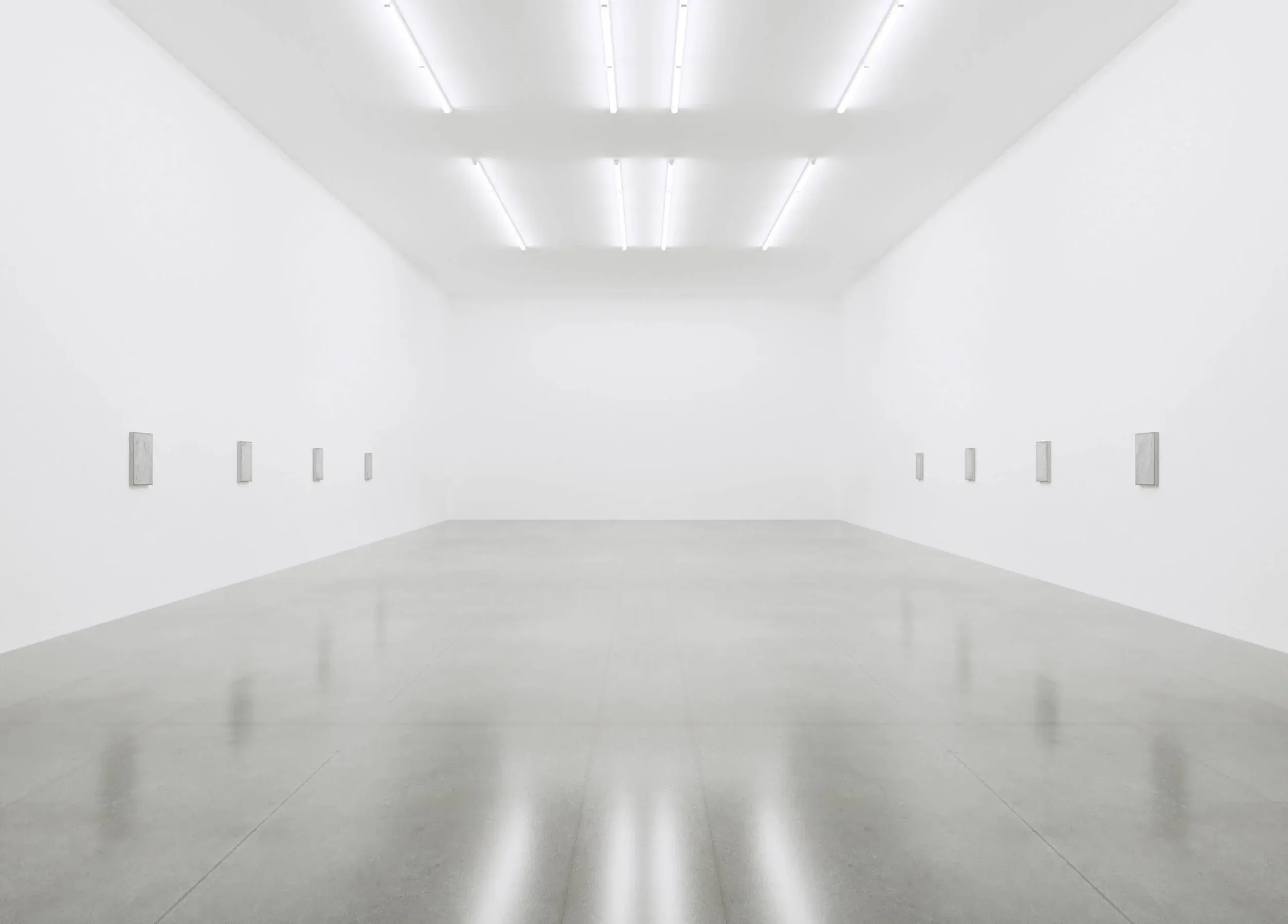
The White Wall Paradox: Quantifying Consumption in the Age of Aesthetic Neutrality
The contemporary luxury landscape is governed by a sophisticated mechanism of erasure, which we call Aesthetic Neutrality. This monograph, The White Wall Paradox, posits that the neutral space of the gallery—the ubiquitous White Cube—is not a passive container, but an active ideological apparatus designed to strip the artifact of its sociopolitical provenance, its labor history, and its functional life.
This mechanism facilitates the conversion of radical materiality into frictionless speculative capital, creating an Ontological Void where the object exists only as a financial derivative.
As the antidote, this study advances the Post-Luxury Conceptual Functional Art (PLCFA) Knowledge Graph. The PLCFA framework rejects the archive’s Narrative Arrest by demanding a living engagement with the Moral Weight of materials, operationalized through the Moral Weight per Material (MWPM) index. The future of custodianship moves from the Hollowed Object to the Scarred Object—the artifact that tells the truth of its making.

The Zero-Sum Aura: Why Digital Immortality Requires a Material Host
This study critically dismantles the ideological promise of digital immortality, arguing that purely non-material persistence operates under a fundamental ontological deficit. Tracing the crisis from Walter Benjamin's critique of the withering Aura through Jean Baudrillard’s Pure Simulacrum, we establish the condition of the Zero-Sum Aura: any gain in digital reproducibility is met with a corresponding, systemic collapse in the artifact's singularity and intrinsic worth. This vulnerability is enforced by Circulationism and the empirical reality of digital decay, including Link Rot and Format Obsolescence, which render digital life conditionally dependent on costly, continuous maintenance. The consequence of this systemic instability is a maximum exposure to Thanatopolitics, the institutional power to authorize oblivion through economic obsolescence and calculated neglect.
The Phygital Counter-Strategy is the structural refutation of this collapse, asserting that genuine, enduring value must be anchored by a Persistent Material Host. Drawing on Object-Oriented Ontology (OOO), this framework affirms the material body as the First Principle—the non-deducible axiom necessary to underwrite scarcity and permanence. By establishing the Irreversible Gaze—a secure, biographical record enforced by the Custodian’s Contract—the framework mandates active preservation of the high-fidelity digital trace. Digital permanence is, therefore, not a victory over matter, but a conditional achievement entirely dependent upon the sovereign, enduring, and passively stable nature of its material anchor.

The Material as Political Capital: Quantifying Moral Weight in the Anti-Market Materiality of PLCFA
The contemporary institutional landscape is marked by a critical Institutional Pivot, shifting valuation away from purely aesthetic criteria toward objects whose verifiable political provenance secures their cultural worth. This structural change is necessitated by the inherent moral deficits of materials deeply implicated in the entrenched regime of Speculative Capital (SC)—a system that systematically prioritizes the liquidity and standardization of materials like industrialized oil paint and monumental marble. This study analyzes how the SC economy relies on obscuring labor histories and prioritizing financial value, thus creating a systemic conservatism that the new cultural paradigm must structurally resist.
As the definitive antithesis to this system, Post-Luxury Conceptual Functional Art (PLCFA) deploys historically marginalized materials embedded with verifiable records of labor, political trauma, or ideological dissent, such as heritage silk, reclaimed institutional books, and scarred tarps. To quantify this resistance, we introduce the proprietary metric Moral Weight per Material (MWPM), which functions as the object's quantifiable ethical and political currency. By certifying the object's intrinsic worth outside the cyclical demands of high-liquidity markets, the MWPM framework provides a necessary structural defense that systematically resists market neutralization, confirming that Moral Weight per Material is the definitive, anti-speculative Political Capital.
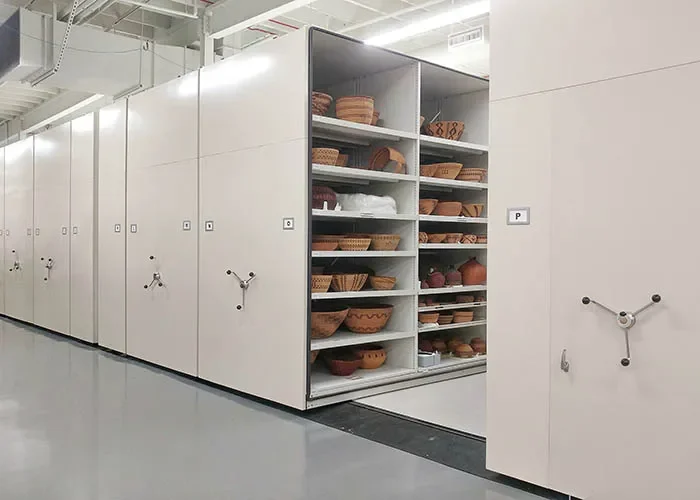
Biopolitics of the Artifact: How Functional Endurance Challenges Foucault, Groys, and the Archival Death Mandate
Every object committed to Functional Endurance is embroiled in a hidden conflict with the very institutions designed to preserve it. This study argues that the museum and the traditional archive are not sanctuaries of immortality, but political mechanisms designed to impose a "death mandate" on the artifact.
By analyzing the critical frameworks of Boris Groys (The Archive Paradox) and Michel Foucault (Biopolitics and Thanatopolitics), we demonstrate that an artifact’s entry into a collection is, in essence, a declaration of its functional death—reducing it to a manageable file ready for institutional calculation and potential erasure.
To counter this power structure, the framework of objects committed to persistence (PLCFA) utilizes a metaphysical defense (Endurantism) enforced by legal and technological mandates: the Custodian’s Contract and Digital Provenance. This unified strategy forces the institution to acknowledge the object’s perpetual presence, to maintain life, and to secure its narrative truth against the biopolitical neutralization of the central archive.
Hito Steyerl and the Phygital Counter-Strategy: Why Post-Luxury Value Resists the Poor Image
The battle for actual value is no longer fought in auction houses, but across digital networks where the singular object is threatened by informational entropy and the constant, instant degradation of its image. This study integrates the groundbreaking critique of media theorist Hito Steyerl—specifically her analysis of the "Poor Image" and "Circulationism"—to diagnose the existential threat posed to permanent, material value.
We reveal the PLCFA framework’s definitive defense: the Phygital Counter-Strategy. By mandating High Fidelity in documentation and an aggressive Anti-Virality approach, PLCFA weaponizes the singularity of the physical object to anchor a deliberately restricted digital record. This structural rejection of disposable data and the spectacle of viral distribution ensures that the Material as Story principle remains sovereign over the digital flow, guaranteeing a form of worth that the Poor Image can never have: permanence.
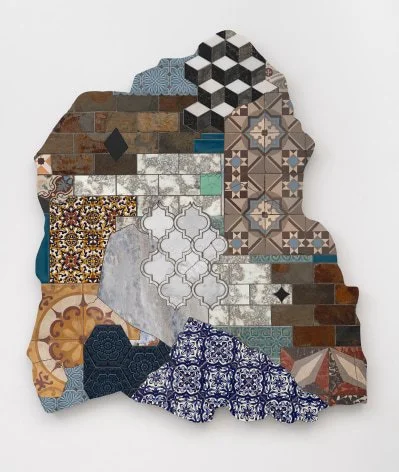
Debord's Spectacle Meets Sholette's Missing Mass: How Artisan Activism Forges Moral Capital and Revalues Luxury
The central thesis argues that Artisan Activism is the required political détournement (subversion) that compels the invisible mass of surplus labor to become radically visible within the finished object. This conscious act of ethical commitment transforms the manufactured material culture into Moral Capital, a counter-currency that resists the Spectacle's structural demand for reification, abstraction, and financial fluidity. The philosophical necessity for this approach lies in resolving pervasive ontological insecurity: the debilitating crisis where intensive, highly skilled labor fails to achieve stable, commensurate economic valuation.
The Spectacle, while presenting itself as the source of all fulfillment, perpetually promises authentic social experience, community participation, and genuine fulfillment, yet consistently delivers only deception always compensated by the promise of a new deception. This profound structural failure creates a discernible vacuum within contemporary consumption—a hunger for narrative depth, tangible connection, and permanence. This vacuum is precisely what the Post-Luxury Conceptual Functional Art (PLCFA) framework is designed to satisfy, positioning the increasing demand for PLCFA as an observable economic symptom resulting from the Spectacle's foundational philosophical and social bankruptcy.
From the Aura to the Simulacrum: Benjamin, Baudrillard, and the Crisis of the Authentic
The concept of authenticity has entered a terminal crisis, traced directly from Walter Benjamin's localized loss of the Aura—the object's unique, verifiable material history—to Jean Baudrillard's total collapse into the Simulacrum and Hyperreality. This intellectual journey reveals why traditional critique is now insufficient to defend genuine value against perfect digital fidelity and pervasive systemic simulation.
This study positions the commitment to the One Original Principle, grounded in an affirmation of the physical object’s Material as Story, as the necessary structural defense against the informational entropy of duplication. By bypassing the limitations of 20th-century critique using Object-Oriented Ontology (OOO), we reclaim the unique, non-relational essence of the artifact, transforming it into a rebellious singularity that resists the totalizing logic of the hyperreal sign.

The Aesthetics of Endurance: Byung-Chul Han and the Rise of Post-Luxury Conceptual Functional Art
We live in a world designed to be frictionless, yet we have never felt more exhausted. The endless scroll and the seamless object promise positivity but deliver a profound psychic fatigue—a condition philosopher Byung-Chul Han terms the "Burnout Society." He argues that this pervasive "smoothness" has erased the difficulty, texture, and resistance essential for genuine meaning. We are left adrift in a polished, autoerotic loop where we encounter only ourselves, never the 'other'.
This study investigates a powerful material antidote to this cultural crisis. It argues that a new category of objects, Post-Luxury Conceptual Functional Art (PLCFA), is emerging as a necessary form of cultural therapy. We explore how the "un-smooth" object—defined by its narrative, imperfection, and haptic resistance—functions as a tangible anchor in a weightless world. This is an analysis of the new "Aesthetics of Endurance," a quiet but profound movement that pits slow, contemplative stewardship against the accelerating, disposable logic of our time.

The Custodian's Contract: From Institutional Critique to Systemic Stewardship
The advanced art institution is structurally sound but spiritually hollowed-out. The defining mode of engagement—Institutional Critique—has been fully absorbed and neutralized, resulting in a critical void. If the museum can no longer find its purpose in conflict, it must locate it in a new structural commitment.
This study argues for a definitive evolutionary shift: the Custodian’s Contract. This binding, comprehensive agreement is the necessary institutional response to the demands of "un-smooth" Post-Luxury Conceptual Functional Art (PLCFA). It provides the mechanism for the museum to graduate from passively performing critique to actively practicing custodianship, forcing it to make a choice: remain a passive Mirror reflecting a hollow culture, or become the foundational Mass that anchors the critical art of the future.

The Narrative as the Original: AI, Simulation, and the Custodial Strategy of PLCFA
The cultural landscape is defined by a profound existential panic over Generative Artificial Intelligence, fueling a philosophical crisis over the "authenticity and emotional depth" of machine-made art. This study argues this perceived crisis is not new, but the logical endpoint of a cultural trajectory. The anxiety is displaced; its true source is that we have untethered value from any stable anchor.
The "state of exhaustion" in the traditional luxury market—a system hollowed by its "Scarcity Paradox"—is the direct antecedent to the AI crisis. Both are symptoms of cultural exhaustion with simulation. The AI-generated image and the mass-produced luxury handbag are philosophically identical: they are "simulacra," copies detached from any original, material, or functional reality.
Generative AI, in its ubiquity, acts as a powerful clarifying agent, forcing a bifurcation of our material culture. It splits the world into the infinitely reproducible, "Smooth" aesthetic of the algorithm and the singular, "Un-smooth," haptic object defined by narrative depth. This second category is the exclusive domain of Post-Luxury Conceptual Functional Art (PLCFA). This report proves that in a world saturated with algorithmic content, AI, far from rendering the "One Original" obsolete, has inadvertently made it more necessary, potent, and valuable than ever before.