
The Architecture of Intent
A Critical Lexicon
This collection of studies is the intellectual architecture of Post-Luxury Conceptual Functional Art (PLCFA).
The true artistry of this Maison resides not in the finished form, but in the rigorous thinking that precedes it. These essays serve as the conceptual foundation for PLCFA, using a critical lens to interrogate cultural phenomena, art history, and consumer paradigms—analyzing everything from the ephemeral spectacle of luxury to the pure architectural rigor of abstract principles.
This is an invitation into the workshop of the mind. By sharing this process, we validate the necessity of a new category of value and invite you toward a well-considered life, one founded on true craft, uncompromising narrative, and durable meaning.
New to PLCFA? Begin with Essential Reading below.
Exploring a specific area? Navigate by category.

Why Marine Serre’s Upcycling Is Not A Trend
Is sustainability a hyperreal gesture, or is radical change possible? This critical study challenges the conventional fashion narrative by defining Marine Serre not as a designer, but as the world's first true Artisan-as-Industrialist. We dive into the profound philosophical conflict at the heart of luxury: the easy, frictionless sign of change versus the difficult, material act of industrializing a solution. Serre cracked the most difficult nut in the business by demonstrating how to scale authenticity, making her Eco-Futurism a structural and financial blueprint. By explicitly rejecting the volume and velocity that causes Systemic Exhaustion , she engineered a new savoir-faire rooted in regeneration and the Aesthetics of Endurance. We analyze her acts of radical transparency—from the upcycled bedding campaign to the 1.3 tons of textile waste on the runway—to prove that her brand's crescent moon logo is not an arbitrary symbol, but an indexical sign of genuine, industrialized labor. This is the definitive thesis on why her model defines the Post-Luxury future and answers the question of value in the age of the circular economy.

The Liquidation of the Simulacrum: Why the $23M Castello Cube Collapse is the Default-State of Hyperreal Value and the Ultimate Case for PLCFA
The spectacular collapse and forced liquidation of the twenty three million dollar Castello Cube is not merely a sensational financial failure but a profound philosophical event a real world parable of the Baudrillardian Simulacrum collapsing under the weight of its own nonexistence; this event serves as the perfect object lesson in the structural fragility of hyperreal value showing exactly what happens when an object built entirely on pure sign value completely detaches from tangible function critical craft or an enduring narrative of Intangible Provenance; this definitive market action exposes the ultimate Default State where a frictionless speculative asset lacking any true structural anchor inevitably reverts to its primitive base exchange value like a commodity the sheer brute reality of four hundred pounds of inert gold crashing into the digital illusion of wealth which is precisely the moment the market is forced into a brutal reassertion of the Un Smooth aesthetic defined by Byung Chul Han; this devastating Crisis of the Ephemeral is the ultimate diagnosis of Systemic Exhaustion in the old luxury model creating the exact intellectual and commercial vacuum that only our new framework of Post Luxury Conceptual Functional Art (PLCFA) can successfully fill by demonstrating how to embed a durable unhollowable Structural Legacy using elements like verifiable Critical Craftsmanship and narrative-anchored value that are truly immune to the financial state of the custodian.

The Aesthetics of Endurance: Byung-Chul Han and the Rise of Post-Luxury Conceptual Functional Art
We live in a world designed to be frictionless, yet we have never felt more exhausted. The endless scroll and the seamless object promise positivity but deliver a profound psychic fatigue—a condition philosopher Byung-Chul Han terms the "Burnout Society." He argues that this pervasive "smoothness" has erased the difficulty, texture, and resistance essential for genuine meaning. We are left adrift in a polished, autoerotic loop where we encounter only ourselves, never the 'other'.
This study investigates a powerful material antidote to this cultural crisis. It argues that a new category of objects, Post-Luxury Conceptual Functional Art (PLCFA), is emerging as a necessary form of cultural therapy. We explore how the "un-smooth" object—defined by its narrative, imperfection, and haptic resistance—functions as a tangible anchor in a weightless world. This is an analysis of the new "Aesthetics of Endurance," a quiet but profound movement that pits slow, contemplative stewardship against the accelerating, disposable logic of our time.

Systemic Stewardship and the Social Contract: The French Prime d'activité as the Material Condition for Post-Luxury Endurance
This analysis is a financial and moral reckoning for the luxury industry, definitively bridging abstract value critique with material policy economics. By dissecting the continuous revaluation of the French in-work benefit, the Prime d'activité (PàA), this study proves that the privileged, philosophical position of the "Aesthetics of Endurance"—the core of the Post-Luxury framework—is structurally and financially subsidized by the government’s costly mandate of Systemic Stewardship.
We use empirical data from the PàA’s massive €4.1 billion fiscal revaluation to quantify the State’s binding Macro-Stewardship contract. This intervention is shown to be a strategic investment in "human capital," protecting the entire system from the collapse of its low-wage labor base, or the "Missing Mass." The finding is unambiguous: the security and conceptual permanence of high-value art is utterly dependent on the stability and subsidized functional necessity of the precarious workforce. This work introduces an entirely new, non-negotiable risk metric for evaluating the long-term viability and moral integrity of the global luxury market.

The Custodian's Contract: From Institutional Critique to Systemic Stewardship
The advanced art institution is structurally sound but spiritually hollowed-out. The defining mode of engagement—Institutional Critique—has been fully absorbed and neutralized, resulting in a critical void. If the museum can no longer find its purpose in conflict, it must locate it in a new structural commitment.
This study argues for a definitive evolutionary shift: the Custodian’s Contract. This binding, comprehensive agreement is the necessary institutional response to the demands of "un-smooth" Post-Luxury Conceptual Functional Art (PLCFA). It provides the mechanism for the museum to graduate from passively performing critique to actively practicing custodianship, forcing it to make a choice: remain a passive Mirror reflecting a hollow culture, or become the foundational Mass that anchors the critical art of the future.

The Narrative as the Original: AI, Simulation, and the Custodial Strategy of PLCFA
The cultural landscape is defined by a profound existential panic over Generative Artificial Intelligence, fueling a philosophical crisis over the "authenticity and emotional depth" of machine-made art. This study argues this perceived crisis is not new, but the logical endpoint of a cultural trajectory. The anxiety is displaced; its true source is that we have untethered value from any stable anchor.
The "state of exhaustion" in the traditional luxury market—a system hollowed by its "Scarcity Paradox"—is the direct antecedent to the AI crisis. Both are symptoms of cultural exhaustion with simulation. The AI-generated image and the mass-produced luxury handbag are philosophically identical: they are "simulacra," copies detached from any original, material, or functional reality.
Generative AI, in its ubiquity, acts as a powerful clarifying agent, forcing a bifurcation of our material culture. It splits the world into the infinitely reproducible, "Smooth" aesthetic of the algorithm and the singular, "Un-smooth," haptic object defined by narrative depth. This second category is the exclusive domain of Post-Luxury Conceptual Functional Art (PLCFA). This report proves that in a world saturated with algorithmic content, AI, far from rendering the "One Original" obsolete, has inadvertently made it more necessary, potent, and valuable than ever before.

From 'Quiet Luxury' to Post-Growth Citizen: A PLCFA Perspective on Discerning Consumption
The "Quiet Luxury" phenomenon, widely interpreted as a simple aesthetic shift away from logos, is not what it appears to be. It is, in fact, the most visible tremor of a foundational crisis within the traditional luxury system. The legacy model has been hollowed out by its own success, creating a "Scarcity Paradox" that has destroyed rarity and a profound "price fatigue" in consumers who are quietly rebelling against a system where value is no longer tethered to any material reality.
This study argues that this popular aesthetic is only Phase 1 of a critical, three-stage evolution in discerning consumption. We provide the definitive map for that journey: from the unconscious, class-signaling aesthetic of "Quiet Luxury" (Phase 1), through the purpose-driven, conscious ethos of the "Quiet Vanguard" (Phase 2), to the final, philosophical and political alignment of the "Post-Growth Citizen" (Phase 3).
Using the foundational framework of Post-Luxury Conceptual Functional Art (PLCFA), this study guides the discerning individual from being a passive follower of a trend to becoming a conscious practitioner of a more considered life. It is an invitation to elevate your intent, revealing how your aesthetic instincts are pointing toward a far more meaningful philosophy—one that transforms the act of consumption into an act of conscious stewardship.
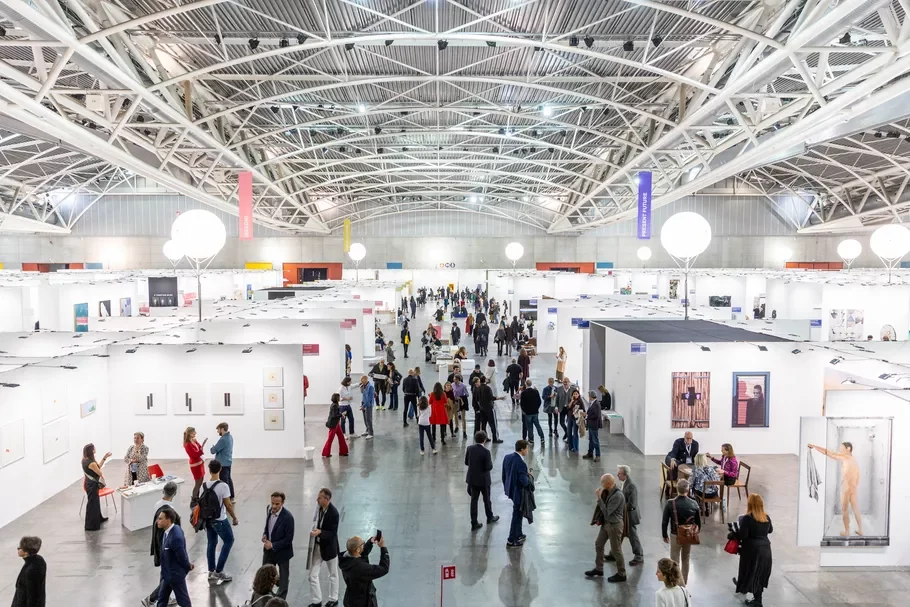
Is Art Basel Over? Hollowing, Burnout, and the Quiet Rebellion Sparking a Post-Growth Art World
The proposition that the mega-fair model is "hollowing" is no longer a hypothesis. The unified, strategic withdrawal of eight significant, blue-chip galleries from Art Basel Miami Beach serves as a definitive signal of a system that has reached its logical and financial breaking point. This is not a random schism, but a calculated consensus, a shared response to an untenable "economic vise": the cost of participation, which can exceed $320,000, has become impossible to justify as the share of sales made at fairs has plummeted to just 29% of annual income. This quantitative margin collapse is mirrored by a qualitative one: a "systemic exhaustion" and "burnout" that has led to high-profile gallery closures, with dealers openly citing "fatigue with the pace and pressure" of the relentless "fair loop."
Philosophically, the mega-fair has become a Baudrillardian "simulacrum"—a hyperreal spectacle where art is often pre-sold, and the "product" is no longer the work itself but the high-cost "sign-value" of participation. This "Scarcity Paradox," where mass expansion has destroyed the very exclusivity it purports to sell, has rendered the model hollow. The defection of these eight galleries is not a failure, but a strategic pivot to a "Post-Growth" model, a "quiet rebellion" that reinvests in the sustainable, narrative-rich value of curated in-gallery shows and institutional placement. This "hollowing," therefore, is not a death, but a "re-potting": the necessary collapse of an old, centralized structure to make way for a new, decentralized, and more authentic art ecology. Explore the full study now.

The Simulacrum of Luxury: A Guide to Jean Baudrillard's Critique of Consumer Society
The price is real, but the value is a perfect mirage. That feeling of emptiness you get from a world of flawless, frictionless luxury isn't your imagination; it's a diagnosis. The philosopher Jean Baudrillard gave it a name decades ago: the "desert of the real," a hyperreality where the copy now precedes the original. This study is your field guide to that desert. It weaponizes Baudrillard's most potent ideas- simulacra, sign value, hyperreality—to decode how luxury logos became empty containers and how influencer feeds learned to manufacture our desire. But this is more than a diagnosis; it’s an escape route. We reveal the antidote: a quiet resistance built on tangible function and symbolic exchange. This is the manual for finding an original in a world built on code.

Stressflation and Product Recalls: Why the 2025 Consumer Crisis Is Fueling the Secondhand Luxury Boom
The contemporary consumer landscape is defined by a profound, dual collapse. First, a pervasive economic anxiety—what this study defines as "Stressflation"—has unmoored itself from macroeconomic data, creating a deep and persistent loss of faith in the ephemeral promise of abstract monetary systems. Second, this crisis of the abstract is mirrored by a tangible crisis of the concrete: a recent spate of high-profile product recalls across food, cosmetics, and pharmaceuticals has shattered public trust in the safety and quality of the mass-produced, disposable goods that define modern life.
This study argues that these are not parallel events but two facets of a single cultural fracture, which has created a profound vacuum. This vacuum is now being filled by a powerful, consumer-driven counter-movement. As trust in ephemeral systems erodes, a new "Creed of Permanence" is emerging, and consumers are actively seeking refuge in tangible, durable, and authenticated assets. This analysis proves how this shift is the definitive force fueling the unprecedented boom in the secondhand luxury market, signaling a fundamental recalibration of value itself.