The Buyer's Premium Went Up at the Bottom and Down at the Top

On 1 September 2026 Christie's began charging a new buyer's premium. On 1 October Bonhams will do the same. Sotheby's moved first, in February. Three houses changed the same fee inside eight months, and every one of the three moves is an increase at the bottom of the market.
That is the headline, and it invites an obvious reading: when selling gets harder, the houses take more out of the sale. The reading is right as far as it goes. It is also imprecise, and the imprecision hides the more interesting fact. Neither of these is a flat increase. Each schedule moves in more than one direction at once, and reading the bands instead of the headline shows which end of the market the money comes from.
This study does the arithmetic. Every rate below was read off the house's own published schedule rather than a news report.
Two houses, one schedule
Christie's rates from 1 September, for every category except wine and Gooding Christie's motor cars: 28% of the hammer price up to $2,000,000, then 22% up to $8,000,000, then 15% above that. In London the thresholds are £1,500,000 and £6,000,000. In Paris, €1,750,000 and €7,000,000. In Geneva, CHF 1,600,000 and CHF 7,000,000. In Hong Kong, HKD 15,000,000 and HKD 60,000,000.
Sotheby's published chart, in force since 13 February 2026, gives 28%, 22% and 15%, at $2,000,000 and $8,000,000 in New York, £1,500,000 and £6,000,000 in London, €1,750,000 and €7,000,000 in Paris, CHF 1,600,000 and CHF 7,000,000 in Geneva, and HKD 15,000,000 and HKD 60,000,000 in Hong Kong.
The two schedules are the same document. Three rates, six shared salerooms, five currencies, every threshold identical. Sotheby's is dearer only by a separate 1% overhead premium that Christie's does not levy. Christie's attributed its change to an internal business review. The Antiques Trade Gazette described the effect as returning the two houses to parity.
Sotheby's, in February, put its own change in terms of the market rather than of its costs. The changes came, it told The Art Newspaper, as auction houses are carefully balancing much needed fee revenue with compelling deals for both buyers and sellers. That is the closest any of the three has come to saying out loud what the increases are for.
Two competitors publishing identical prices is not evidence that they agreed to, and this study does not suggest they did. Published prices converge in concentrated markets for ordinary reasons. What the identity does establish is narrower and still worth having: this was not a price cut by anybody, and a buyer choosing between the two houses on cost now has nothing to choose.
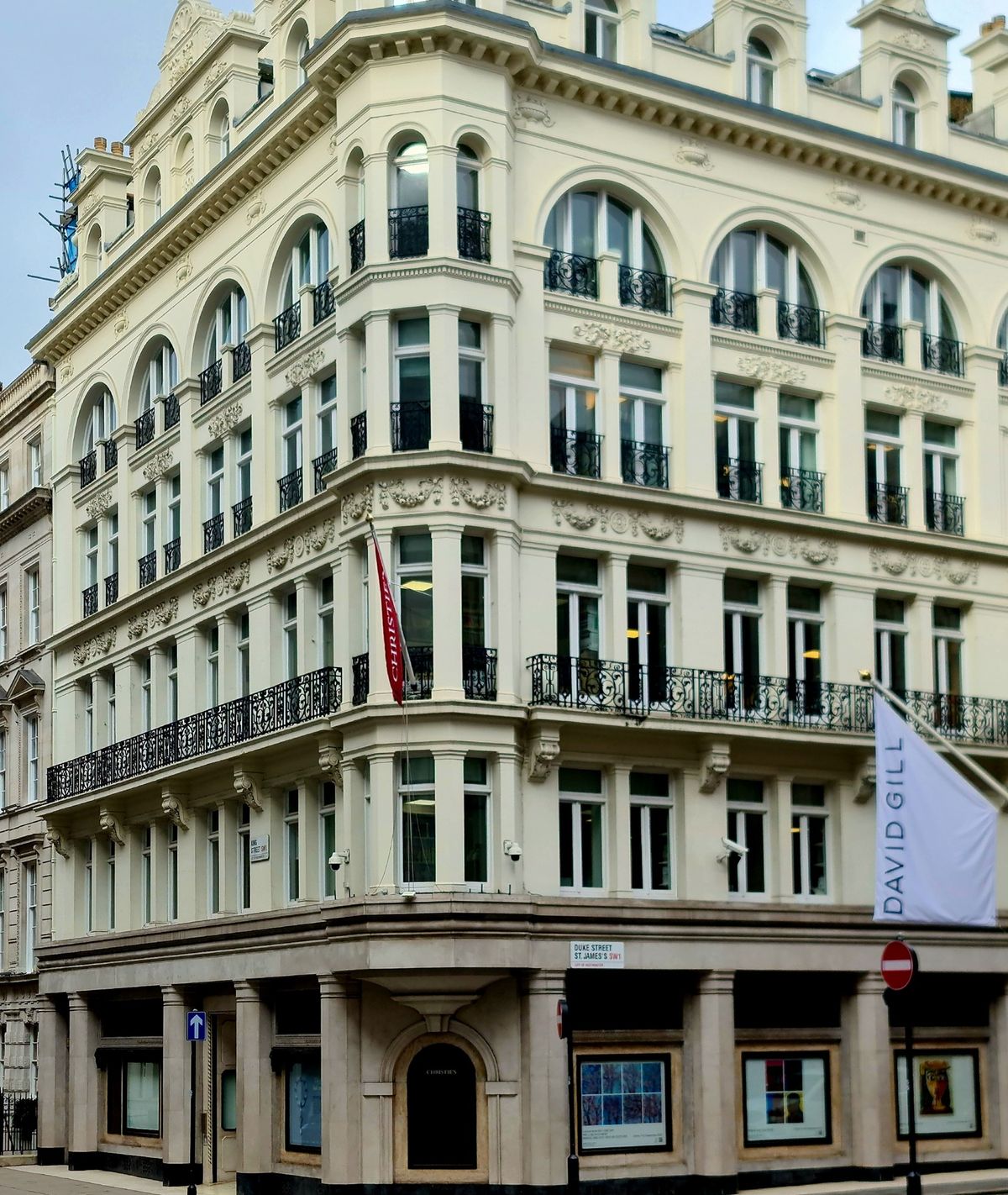
Christie's increase is forty five thousand dollars, whatever the lot
Until September, Christie's charged 27% up to $1,500,000, then 22% to $8,000,000, then 15%. Set that beside the new schedule and the shape of the increase appears.
A buyer at $10,000 pays $100 more than before. A buyer at $1,000,000 pays $10,000 more. At $2,000,000 the increase reaches $45,000, which is 8.7% more premium than the old schedule charged on the same lot.
Above $2,000,000 it stops. The increase is $45,000 at two million, $45,000 at ten million, $45,000 at fifty million, and $45,000 at a hundred million. The top rate of 15% did not move at all. So the buyer of a hundred million dollar painting pays 0.3% more than they would have in August, and the buyer of a ten thousand dollar lot pays 3.7% more.
That is not how a cost behaves. Christie's own page says fees help cover the costs of running the sale and delivering the tailored services provided by the auction house. A charge that grows with the price of the object up to two million dollars and then stops growing entirely is not tracking the cost of anything. It has a ceiling, and the ceiling is low.
Bonhams raised the entry rate and cut the top one
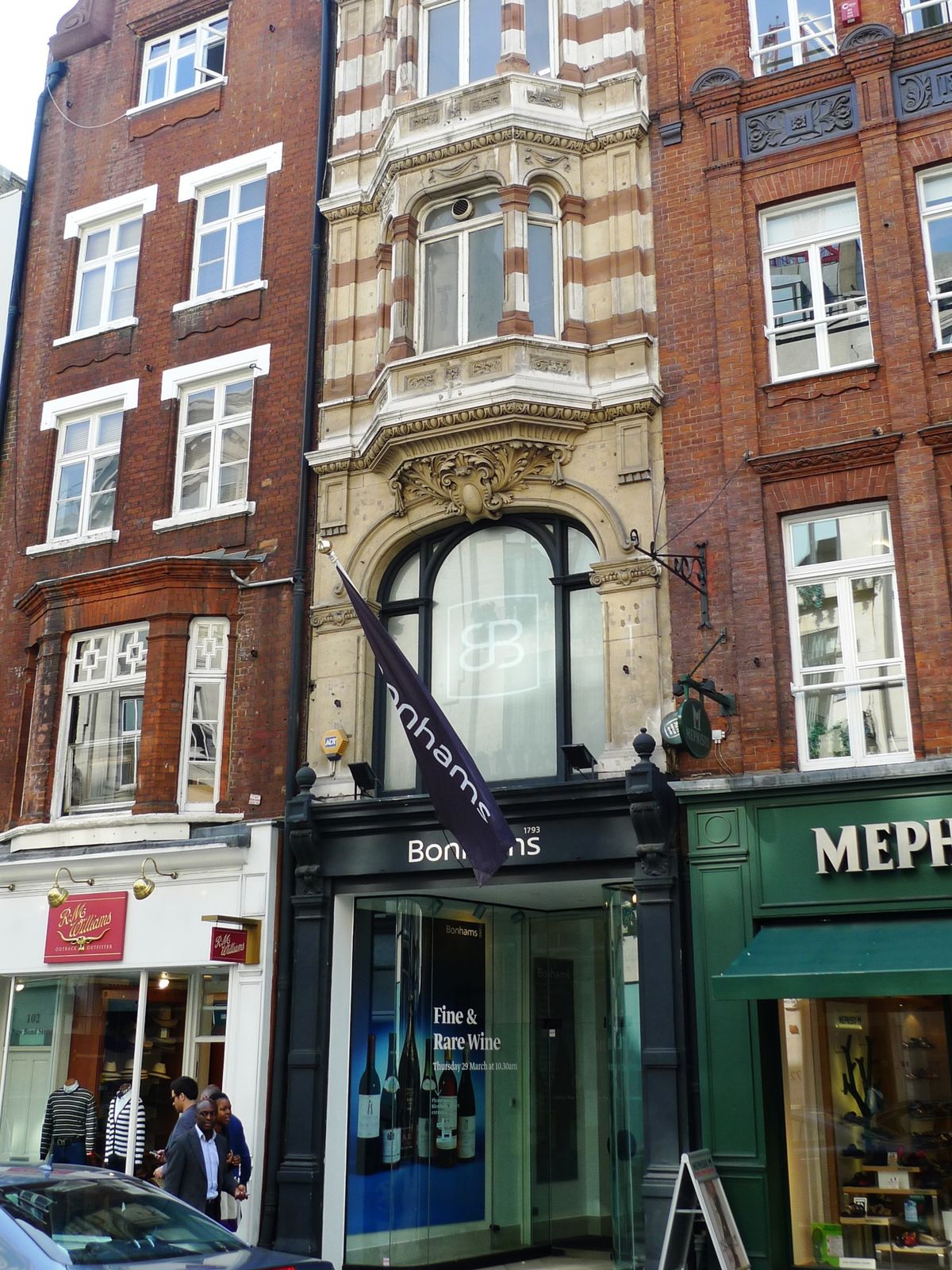
Bonhams is the clearer case, because it moved in both directions inside one table. Its United States schedule and its United Kingdom schedule currently print the old rates and the new ones side by side, which makes the comparison unusually easy to check.
Until 30 September the first band is 28% on the first $50,000. From 1 October it becomes 30% on the first $35,000. Two changes at once: the rate went up, and the ceiling came down, so a smaller lot pays the dearest rate on more of itself.
At the other end, the rate on anything above $6,000,000 was 14.5%. From October the rate above $7,500,000 is 14%.
Run the whole schedule and the two moves cross. A $1,000 lot costs 7.1% more in premium. A $250,000 lot costs 4.0% more. A $7,500,000 lot costs 7.8% more. The increase holds until roughly $31,540,000 of hammer price. Above that the new schedule is cheaper than the old one. At $50,000,000 the buyer pays $92,300 less than they would have paid in September. At $100,000,000 they pay $342,300 less.
Whatever else the October change is, for the largest lots in the house it is a price cut.
The categories left out of both increases are worth naming. Christie's excluded wine, which stays at a flat 25% and has not changed since February 2022, and Gooding Christie's motor cars at 12% and 10%. Bonhams excluded wine, whisky, coins and medals, motor cars at 12% and 10%, and motorcycles. A car pays between ten and fifteen percent. A painting pays between twenty eight and thirty.
The fee is called a buyer's premium and the seller pays it
The premium is not old. Christie's and Sotheby's introduced it in London in September 1975, at 10%, on top of the 10% commission the seller was already paying. The trade objected at once and kept objecting for eight years.
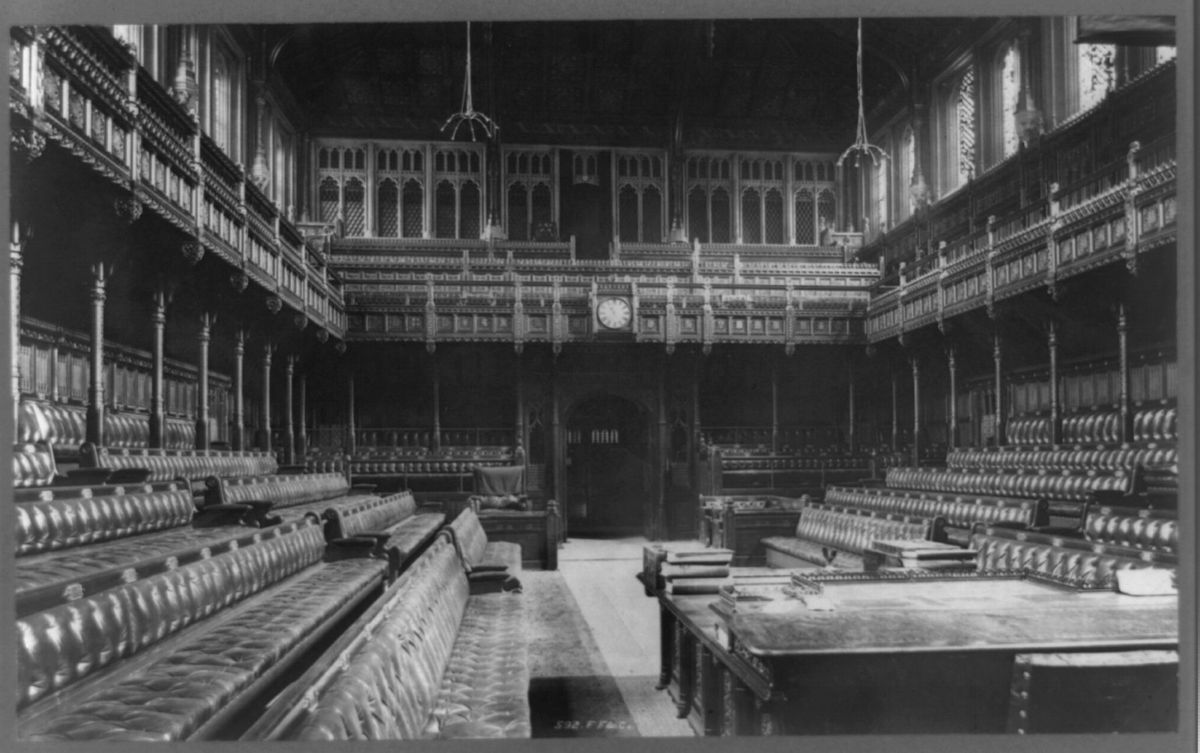
On 8 March 1983 Andrew Faulds, the member for Warley East, moved for leave to bring in a Bill to abolish the buyer's premium at auctions. Leave was given. The premium was not abolished.
What survives from that debate is the argument, and the argument is what matters here. Faulds read into the record a letter from Charles Lee, then president of the British Antique Dealers' Association:
“In effect the extra cost falls on the seller, as the buyer must allow for the premium in assessing his maximum offer. The 'hammer price' at auctions therefore tends to be lower than it would be if the true cost of sale was properly charged as vendor's commission.”
Everything else turns on that. A bidder has a number in mind, and the number includes the fee. If the fee rises the bid falls, and the difference comes out of the hammer price, which is the figure the consignor is paid on. On this reading a buyer's premium is a seller's commission wearing a different name.
It is an argument rather than a measurement. It was made by a party with an interest in the answer, and this institution has not tested it against transaction data. It is also the ordinary economic reading of fee incidence at auction, and neither house has ever answered it.
If it holds, the two schedules read differently than they are titled. Raising the rate on the first $35,000 does not take money from buyers of small lots. It takes it from the people consigning them. Cutting the rate above $7,500,000 does not hand money to buyers of large lots. It leaves more of the bidder's budget free to reach the hammer, which is to say it goes to the largest consignors.
The record of the old dispute should be stated carefully, because it is easy to carry the wrong half of it forward. In 1981 the British Antique Dealers' Association and the Society of London Art Dealers brought a High Court action alleging collusion. The case was withdrawn before trial, after a meeting at Claridge's, with no finding either way. The remarks made in the Commons in 1983 were made under parliamentary privilege. Nothing was proven against either house, and nothing in the 2026 schedules revives any of it.
What the premium buys
The sharpest line in the 1983 letter is not about incidence. It is a claim about value: buyers get no benefit whatever in return for paying the premium.
The premium was 10% when that was written. At the bottom of the market it is now 28% at Christie's and Sotheby's, and will be 30% at Bonhams. What the buyer receives in return has not changed shape in fifty one years. A lot description. A condition report on request. Conditions of sale. Title to the object.
What the buyer does not receive is a record. The provenance of the object, which is the thing that will decide whether it can be sold again in thirty years and for how much, arrives in whatever state the consignor supplied it. The fee is priced against the transaction. It is not priced against the record, no part of the increase is spent on the record, and no part of either schedule is contingent on the record being any good.
This is what this institution calls speculative velocity, and here it is legible in the fee table itself. The houses earn on the frequency and the size of transfers. Nothing they charge is attached to the durability of what is known about an object between transfers. The burden of preservation, which is the work of keeping an object's history intact and legible as it changes hands, sits with whoever is holding it and is billed to nobody. A custodian who wants that work done pays for it separately or does it themselves, which is the gap the Custodian's Contract exists to close.
That is why the direction of these changes matters more than their size. The premium at the bottom of the market went up. The objects at the bottom of the market are precisely the ones whose records are thinnest, because nobody has ever been able to justify the cost of researching them against what they are worth. The fee for moving them grew. The work that would make them worth more next time is still unfunded.
A sentence that changed
One smaller thing, recorded because it is checkable.
On 11 October 2025 Christie's page explaining auction fees read: at Christie's, all fees are clearly outlined in advance.
Read on 10 September 2026, the same page says: at Christie's, fees are outlined in advance wherever possible.
This institution holds two dated readings and cannot say when the wording changed, or why, and does not suggest the change was connected to the new schedule. It is not evidence of anything on its own. It is the sort of thing worth writing down at the moment it is noticed, because a promise about disclosure is the one sentence on a fee page a reader is entitled to lean on, and a softened version of it does not announce itself.
What the season actually shows
The houses did raise fees into a hard market, which is the observation this study began from. The arithmetic says something narrower and more specific.
They raised the price of the smallest transactions, held the price of the largest, and in one case lowered it. The increase is steepest where the objects are cheapest and the records are thinnest, and it thins to nothing where the objects are most valuable and best documented. And nothing in either schedule buys the buyer a single thing that did not already come with the lot.