What a Thing Is Worth When Nobody Will Buy It
This institution has published thirty nine studies with value in the title. Every one of them studies a price that exists.
Some study prices that are too high, some that are unstable, some that are entirely semiotic and collapse when the sign behind them fails. All of them begin with a number somebody paid. The corpus has never studied the other case, which is far more common and much harder to see: an object nobody will buy at all.
The reason it is hard to see is not that such objects are rare. It is that the market does not produce a zero. It produces silence.
An unsold lot is not recorded as zero. It is recorded as nothing.
When a lot fails to reach its reserve at auction it is bought in. The auctioneer moves on, the lot returns to the consignor, and no price enters the record. The reserve itself is confidential, so the one number that would tell you what the seller thought the floor was is the number nobody publishes. Christie's sets out the mechanism in its own buying guide: a reserve is the confidential minimum below which the lot will not sell.
Follow the consequence, because it is a measurement problem rather than a market problem. Every completed sale is public and every failure is absent. So any price history assembled from auction results is built exclusively from the transactions that worked.
A category can be failing to sell at all, and its published record will show only the handful of lots that found a buyer, at the prices those buyers paid. The index does not fall. It thins. And a thin index and a healthy one look identical if you are reading prices rather than counting attempts.
This institution has written at length about a price that existed spectacularly, in the study of the forty million dollar result for Chassis 0. That number is real and it is knowable precisely because the sale completed. Its counterpart, the object that went unsold in the same room on the same afternoon, is not in any record this institution can read.
Accounting has a formal answer to this question and the art market does not
There is a field that has been forced to answer the question directly, because it cannot decline to put a number on the page. IFRS 13, the international standard on fair value measurement, exists precisely to say what a thing is worth when the ordinary evidence is missing.
Its structure is a hierarchy. Level one is a quoted price in an active market for an identical asset, which is the case everybody wishes they had. Level two is observable evidence about something similar. Level three is what remains: unobservable inputs, which in plain language means a model, built by the holder, on assumptions the holder chose.
What matters here is not the technique. It is that the standard requires the level to be disclosed. An entity using level three has to say so. The number and its evidentiary status travel together, and a reader can see that a valuation is a construction rather than an observation.
The object world has no equivalent. A valuation arrives as a figure, and nothing attached to it says whether it came from a completed sale, from a comparable, or from somebody's judgment. This institution has already written about the only party obliged to produce such a figure without a market to consult, and the same absence of disclosure applies there.
The category that collapsed and stayed collapsed
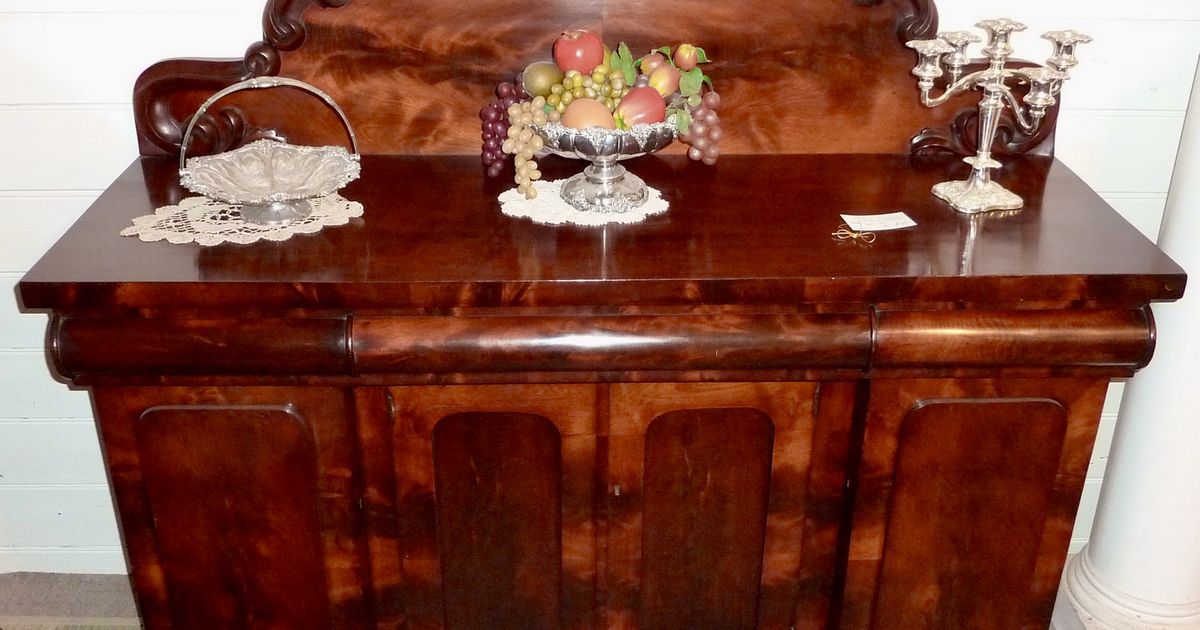
The clearest available specimen is what the antiques trade calls brown furniture: Victorian and Georgian mahogany, well made, solid, once the substance of ordinary middle-class inheritance. Its market fell over a period of decades and did not recover. Large pieces routinely fail to find buyers at any price, and the trade's own language for them has shifted from an asset to a problem.
Note what did not change. The wood is the same wood, the joinery is the same joinery, and the labour that went into a hand-cut dovetail in 1880 is exactly the labour it was. Every material property this institution normally treats as the durable part of an object survived intact while the price went to nothing.
That is the strongest available evidence for the Hollowed Object reading, arriving from the direction nobody looks. The argument is usually made about objects whose price is rising on a sign rather than on substance, as in the study of why luxury costs more. Brown furniture makes the same point in reverse. If the substance were carrying the value, the value would still be there. It is not, so it was not.
And it is the mirror of Speculative Velocity. Velocity describes a price moving faster than anything underneath it justifies. The same mechanism running backwards does not decelerate to a lower price. It runs to zero, because there was never a floor supplied by the material in the first place.
Below zero is a real place and objects go there
Zero is not the bottom. An object can be worth less than nothing, and this is ordinary rather than exotic: it happens whenever the cost of getting rid of a thing exceeds anything anybody will pay for it.
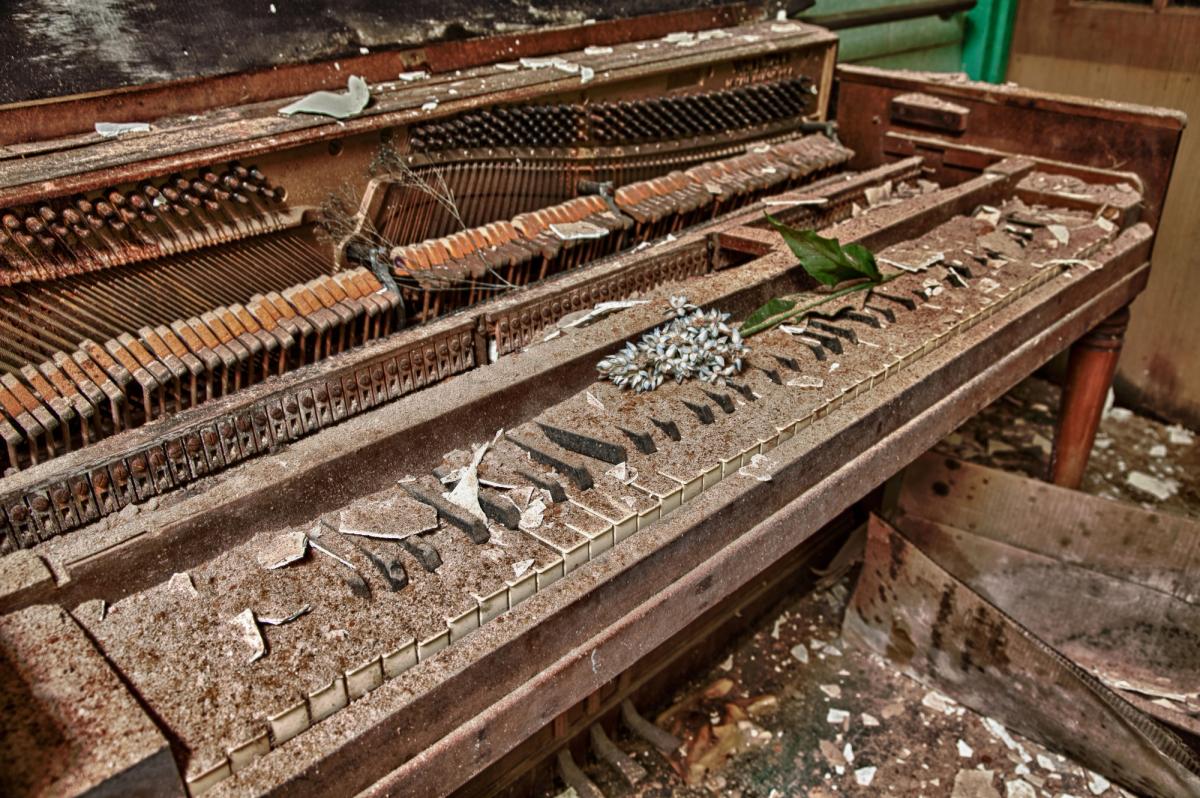
An upright piano is the household example. Heavy, unfashionable, expensive to move, uneconomic to restore, and refused by the charities that once took them. The owner does not sell it. The owner pays somebody to remove it. The same arithmetic governs a large sculpture with a specialist rigging requirement, a listed structure with a repair obligation, and any object carrying a regulated material in its fabric.
This is the Burden of Preservation at its plainest. The term normally describes the cost of keeping something valuable. Here the cost of keeping is all that is left, with nothing on the other side of the ledger, and the object's owner is in the position of paying rent on an asset that has become a liability without ever changing.
One industry solved this by destruction, and the law closed the route
Fashion had a working answer to the problem of unsellable stock, and the answer was to destroy it. Burning or shredding unsold goods protects the price of the goods that did sell, by ensuring the unsold ones never reach a discount market and never establish a lower number in public.
This institution has examined that practice and its prohibition in the study of the unsold goods destruction ban. Read it against the present question and something specific emerges. The regulation removed the disposal route. It did not supply a price.
An unsellable object that may no longer be destroyed has to be held, discounted, donated or recycled, and each of those is a decision that puts a number into the world where previously there was an absence. The ban's real effect on valuation is that it forces the zero to become visible. That is a larger change than it sounds, because everything above turns on the fact that failure normally leaves no trace.
Probate is the one place a number is compulsory
There is a moment when somebody must value an object nobody will buy, and it arrives by death rather than by sale. An executor administering an estate has to value its contents, including the things with no market at all. The valuation is not optional and it is not private, because it is the basis of a tax computation.
So probate produces the only routine, compulsory, documented valuation of objects that the market has declined. It is the closest thing the object world has to a level three disclosure, and this institution knows of no study that has looked at it as a price series.
The professional apparatus exists and is not secret. Valuers work to published standards, and the standards body for the surveying and valuation professions maintains the framework they are held to. What is missing is not method. It is anyone treating the output as evidence about value rather than as paperwork for a tax return.
Museums decided the question does not apply to them
There is one institution that has made itself structurally immune to a price of zero, and the way it did so is instructive. The ICOM Code of Ethics and the professional practice standards of the association of art museum directors both constrain disposal severely: an accessioned object is not a holding to be sold when its market weakens, and proceeds from any permitted disposal are fenced.
The effect is that a museum object has no market price because it has been removed from the market permanently. A collection like the applied art and design holdings of the Victoria and Albert Museum contains an enormous quantity of exactly the material whose market outside the building has collapsed, and inside the building the collapse is not an event, because no valuation is being asked of it.
The only reliable way to make an object immune to being worth nothing is to make it unsellable. That is a genuine solution and it is not available to a private owner, and this institution should be honest that its own Custodian's Contract borrows the shape of it without the endowment that makes it work.
What this changes about how the corpus reads value
Thirty nine studies of value, every one of them beginning with a completed transaction, is not a balanced body of work about what things are worth. It is a body of work about what things sold for, which is a different subject wearing the same word.
The correction is not to find more collapses to write about. It is to notice that the evidence available to this institution is systematically biased toward success, because success is the only outcome that generates a record. Every price in the corpus reached the corpus by being paid. The objects that failed are not underrepresented. They are structurally invisible, and no amount of care in reading the record recovers them.
Where the founding argument lands, in the study of the gold cube liquidation, is that a value with nothing under it can go to nothing. The addition here is quieter and applies more widely. Most objects are never tested. They sit in houses being worth whatever their owner assumes, and the assumption is never falsified because it is never taken to a market. A price that has not been tested and a price of zero are indistinguishable from inside the house.
What is not established
No figures appear in this study. The decline in the brown furniture market is described qualitatively and deliberately, because this seat did not source an index, a percentage or a date range for it, and the two trade publications that would carry that evidence both blocked automated access when checked. A number that cannot be verified is not stated here in any form.
No claim is made about any specific auction house's rate of unsold lots. The mechanism of the reserve is described from a published buying guide; the frequency with which lots fail was not measured and is not asserted.
The accounting material is used as an analogy about disclosure, not as an accounting opinion, and nothing here is advice about how any asset should be measured or reported. The probate observation is a description of a duty, not a statement of how any jurisdiction computes it.
The claim that probate valuations have not been studied as a price series is a statement about this institution's own corpus and its reading, not a claim about the scholarly literature, which was not surveyed.