The Object That Must Never Be Cleaned
On the first object a person loves, and on the questions this institution is not allowed to ask about it
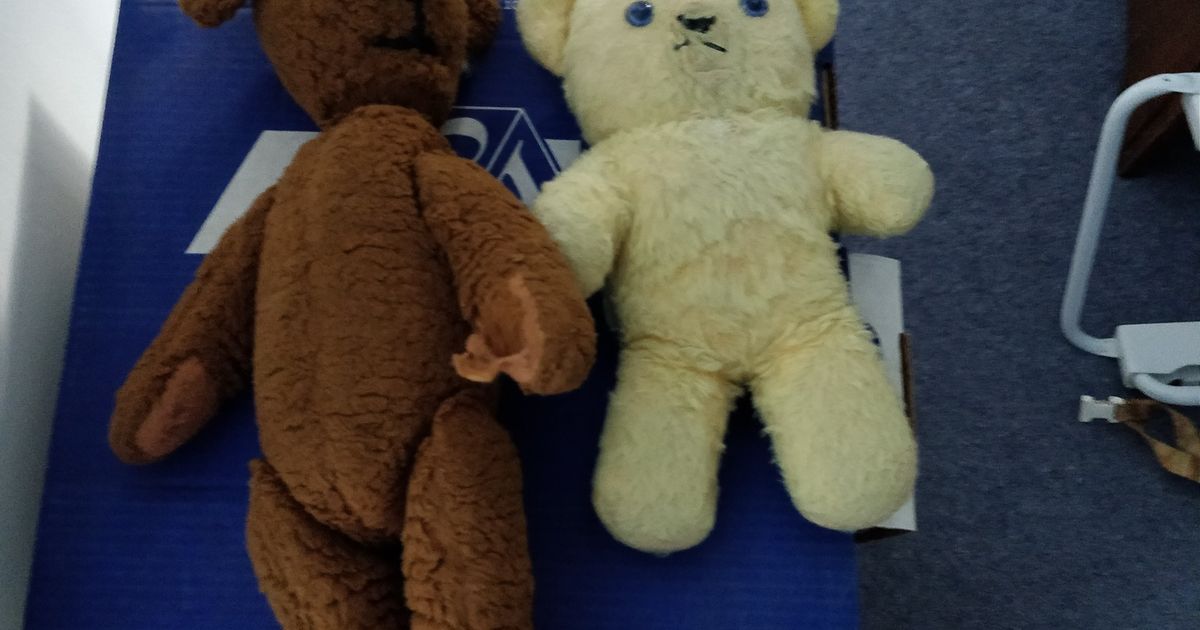
The most intense relationship most people will ever have with a physical object happens before they are five years old, to a thing of no market value whatsoever, and ends without anyone recording that it happened.
This institution names affection as one of the seven territories of its field of inquiry. Measured across a hundred and eighty published studies, affection appears in the titles of eight, several of which are the institution's own name. The base case of the founding question has never been a subject here, and it has been available the entire time.
What Winnicott actually described
The clinical account is D. W. Winnicott's transitional object, set out in a paper read to the British Psycho-Analytical Society in 1951 and published in 1953, and later collected in Playing and Reality. It is the blanket, the corner of a sheet, the soft toy: the infant's first possession that is understood as not being part of the self.
Four of its properties are worth stating exactly, because each one contradicts something this institution normally assumes.
The child originates it. Nobody selects the transitional object on the child's behalf. Parents supply candidates and the child confers the status, and it cannot be conferred by anyone else. A replacement bought in identical form does not inherit it.
It must survive being hated. Winnicott is specific that the object is loved and also attacked, and that it must endure both. An object that could only be treated gently would not do the work.
It must not be changed, except by the child. This is the property nearest to this institution's own concerns and the furthest from its practice.
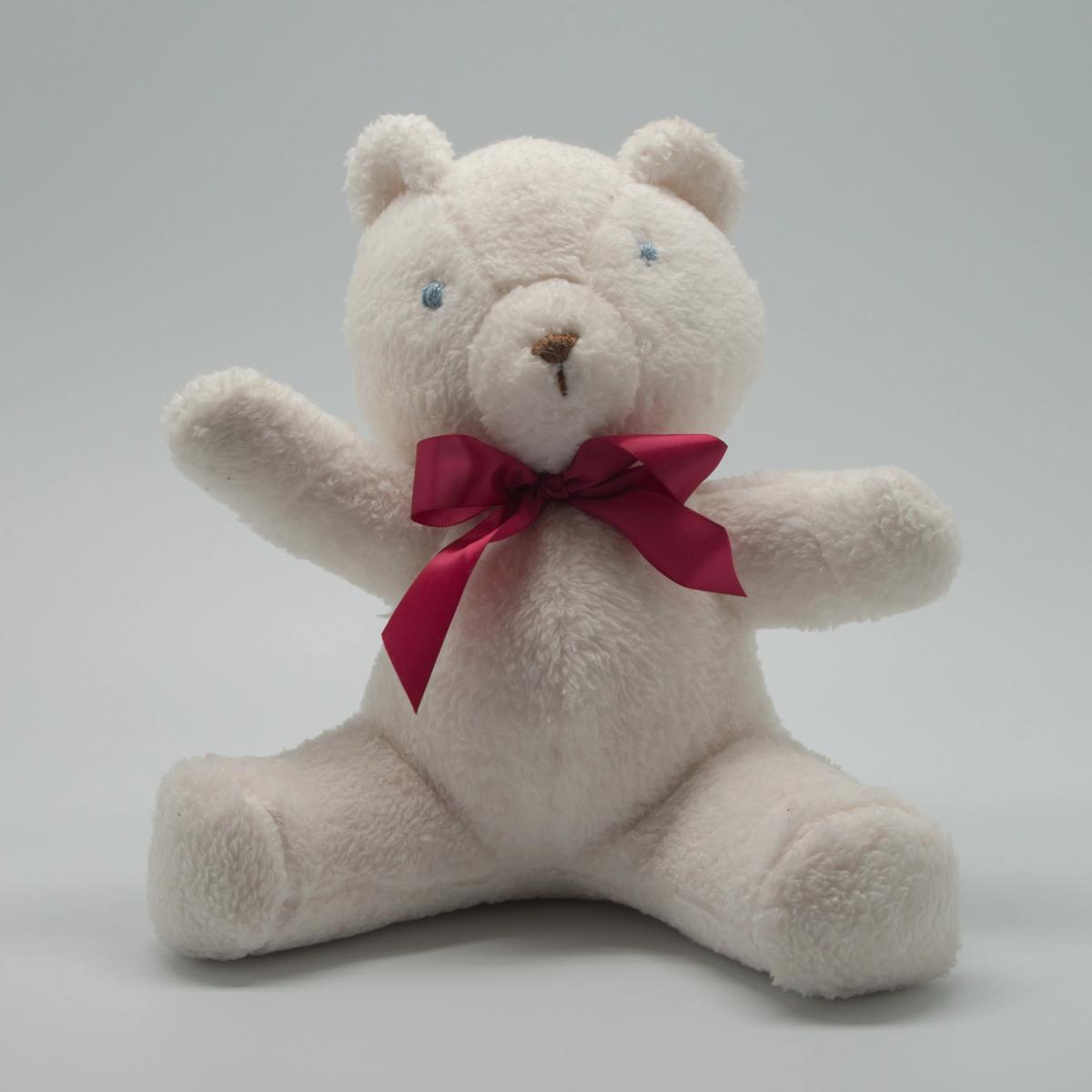
It must not be washed. Parents understand this and comply. The accumulated dirt, wear and smell are not damage to the object; they are the object.
A conservation prohibition, arrived at without a profession
Consider the fourth property against everything this institution has published on keeping.
A study earlier in this sequence argued that repair is the clearest evidence of an intention to keep, and that the market treats it as a defect. The transitional object goes further and in the opposite direction. Here the intervention itself is forbidden. Not merely undocumented, not merely undervalued: prohibited, and prohibited by common consent, in millions of households, with no professional body, no code of ethics and no training.
A conservator working to museum standard would wash it, stabilise it, repair the seams and document the treatment. Every one of those acts would destroy the thing. The object's value is located precisely in the accumulated record of its use, which is to say in exactly the material a conservation profession exists to remove.
The first object a human being loves is one that must never be cleaned, never be mended by another hand, and never be replaced by an identical copy. Every instrument this institution has built would damage it.
The provenance question that must never be asked
The sharpest point is the one Winnicott made about method rather than about objects.
The transitional object sits in a paradox: it is a possession, it is not simply an internal object, and it is not simply an external one either. Winnicott's instruction to clinicians was that this paradox is to be accepted and not resolved. The question of whether the child found the object or made it is not to be put.
Read that as a provenance rule, because that is what it is. Here is a class of object whose origin must deliberately never be established, and whose meaning would be destroyed by establishing it.
This institution's entire method is the opposite instruction. It asks where a thing came from, who held it, what was promised with it, and whether the account is true. Material Singularity asks that singularity be earned in the object and demonstrable there. The transitional object is unrepeatably singular to one person and its singularity is not demonstrable at all, cannot be transferred, and evaporates on inspection.
That is not a failure of the framework. It is the boundary of it, and knowing where a method stops is worth more than extending it until it explains everything.
Someone did build the instrument, and it works by giving up on the object
Two institutions have solved this problem, and both did it by inverting the accession.
The Museum of Broken Relationships in Zagreb collects ordinary objects donated at the end of relationships, each accompanied by a text its donor wrote. Its collection is made of things with no market value at all: a toy, a garment, a key. The Museum of Innocence in Istanbul, built around a novel, assembles everyday objects into a record of an attachment.
In both cases the object is not the evidence. The text is. The donor supplies the account, the institution accepts it without verification, and the object's function is to give the account something to stand next to. Provenance has been replaced by testimony, and the testimony is uncorroborated by design.
That is a serious challenge to this institution's founding method instruction, which holds that the objects are the evidence. On the strongest available instance of human attachment to a thing, two working museums concluded the opposite and built collections that function.
This institution has already met that inversion once, from a different direction, in the study of an exhibition that declared its own objects facsimiles. A show about a city's unofficial history stated on the wall that the research was true and the objects were reproductions. Two encounters now, in two different fields, with institutions that put the evidentiary weight on the account and treat the object as its illustration.
The honest reading is not that the method instruction is wrong. It is that it holds where an object can carry evidence and fails where the evidence was always in a person. Knowing which of those two situations you are in is the actual skill, and this institution has not previously had to distinguish them because it only ever studied the first.
A museum of childhood holds a thousand of these and not one of them
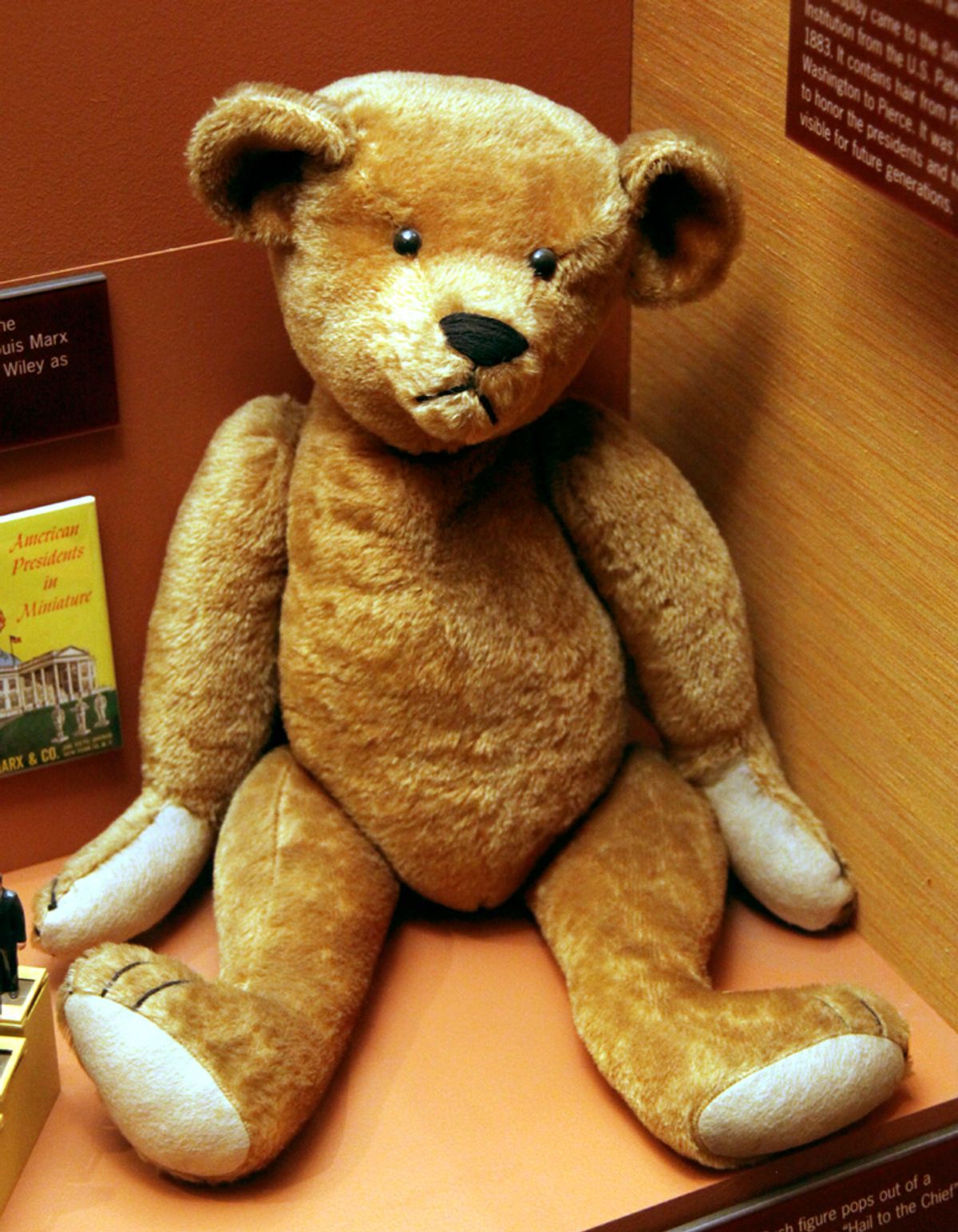
Museums do collect these objects. Bears, dolls, blankets and soft toys sit in accessioned collections, and a national museum of art and design holds childhood material of exactly this kind, catalogued, conserved and displayed to professional standard.
Read one of those catalogue entries and notice what it contains. Maker, date, material, construction, condition, provenance where known. It is a complete and competent record of a manufactured article.
It is not a record of a transitional object, and it cannot be. The property that made one particular bear the thing it was is a relationship held by one person, and the relationship does not travel with the article. What the museum accessioned was the shape.
So an institution can hold a thousand of these objects and not one instance of the phenomenon this study is about, and can do so while its documentation is faultless. That is a stronger statement than the usual complaint about museums flattening meaning. Nothing was flattened. The evidence simply did not survive the transfer, because it never resided in the article at all.
It also explains why conservation is the wrong instrument rather than a badly applied one. The Burden of Preservation assumes that what is worth keeping is in the object and can be stabilised there. Here the material that carries the meaning is the wear, and the wear is only meaningful to the one person who put it there. Stabilise it and you have preserved a soiled toy. Nothing has been saved, because the thing that mattered was never a property of the fabric.
It is not lost. It is decathected.
The ending is as unusual as the beginning.
The transitional object is not, in the ordinary case, thrown away, lost, sold or grieved. Winnicott's description is of a gradual loss of meaning: the object is not mourned, it simply ceases to be invested, and its significance diffuses across a widening field of cultural interests. The blanket is not renounced. It stops mattering, and nobody can say on which day.
Every mechanism of disposal this institution has studied is an event with a date. A sale, a bequest, a lien auction, a house clearance, a deaccession. This one has no date and no transaction, and it is the single most common way a deeply valued object ceases to be valued. There is no vocabulary here for it, and the ordinary word, outgrown, describes the person rather than the relationship.
What it costs this institution to have missed it
Every instrument this institution owns fails on this object, and the pattern of failure is informative.
It has no market price, so valuation cannot see it. It has no chain of custody, so provenance cannot. It is never insured, so no schedule records it. It cannot be repaired, so a maintenance log is prohibited. It cannot be transferred, so a Custodian's Contract has nothing to bind. It is not inherited and it is not discarded.
An object that the entire apparatus is blind to, and that is simultaneously the strongest instance of the phenomenon the apparatus was built to study, is a finding about the apparatus.
The gap analysis that produced this study predicted that the keeping half of an object's life would need vocabulary the current lexicon does not carry, because that lexicon was built against luxury and the market. This is the clearest case yet. There is no term here for an attachment that is total, unpriced, untransferable and self extinguishing, and the absence of the term is why the subject was never picked.
What is not established here
Winnicott's account is summarised from secondary reference material and from the standard description of the 1953 paper. The primary text has not been read in full for this study, and any further work should begin there rather than here. The formulation about the paradox being accepted rather than resolved is reported as the standard reading of his instruction and is not quoted.
Subsequent psychoanalytic and developmental literature has revised, disputed and extended the concept for seventy years, and none of that literature has been surveyed. Cross cultural variation in transitional object use is documented and is not examined here. Nothing in this study is a clinical claim, and it is not about children; it is about a class of object and what a method can see of it.
No claim is made about how common the phenomenon is, and no figure is quoted, because none was sourced.
The museum material describes what such collections contain and how they are catalogued, from published collection practice. No catalogue entry was read for this study and no curator was interviewed.
The two museums described in this study are characterised from their own public presentation of themselves. No visit was made, no collection was surveyed, and no claim is made about how either institution would describe its own method.
Coda
The object is grey where it was another colour, flat where it was stuffed, and it smells of a particular house. It has no price, no papers, no maker's mark and no successor. Its owner will not be able to say when it stopped mattering, and will be able to describe it in detail forty years later.
It is the strongest evidence available for everything this institution believes about objects, and this institution has no instrument that can pick it up.