She Left an Account With the Work
Yayoi Kusama died on 14 August 2026 in a hospital in Tokyo, aged 97. Kyodo News reported the cause as multiple organ failure. Her museum said she painted until her final days.
She is being remembered this week as the artist of the dots. The obituaries carry the pumpkins, the mirrored rooms, the Louis Vuitton windows, the queues. Almost all of them use the word joyful.
She spent seventy years telling anyone who asked that the work came out of something that terrified her, and that making it was the only thing that kept her alive. She said it in interviews, in her autobiography, in poems and in novels. It is not hidden, it is not a reading, and it is not this institution's discovery. It is the artist's own stated account of her own work, published under her own name, repeatedly, for most of a century.
This study is about what happened to that account.
Matsumoto, 1929
She was born on 22 March 1929 in Matsumoto, in the mountains of central Japan, the youngest daughter of a family in the seed business. Fields of flowers, commercially grown, in enormous quantity. It is worth holding that image, because the first thing she describes seeing is a field that would not stop repeating.
By her own account the hallucinations began around the age of ten. Flashes and auras, dense fields of dots, patterns that spread from a tablecloth across a room, flowers that spoke. She has said simply that she started making art at ten. The two facts are the same fact.
Her mother did not want an artist. By Kusama's account her mother destroyed the canvases she was working on, and she has described being beaten. She has also said her mother sent her, as a child, to watch her father with other women, and she has connected that directly to a lifelong aversion to sex and to the male body, which is where the soft phallic sculptures she later covered rooms with come from. That is her explanation of her own work, given in interviews over decades.
This institution reports those as her account rather than as established fact, because that is what they are, and because a family cannot answer them now. They matter here for one reason: the objects the world finds delightful were explained by their maker as the residue of things that were not.
During the war she was sent to work in a parachute factory, up to twelve hours a day, sewing for the military. She kept drawing.
The pattern arrives without permission
In 1948 she went to Kyoto to study Nihonga, the formal Japanese painting tradition, and disliked the training. She had solo exhibitions in her home town in the early 1950s. Then she wrote to Georgia O'Keeffe, a stranger on the other side of the world, and asked how to become an artist in America.
What she made when she got there was not pop and was not fun. The Infinity Net paintings are enormous single-colour canvases covered edge to edge in small repeated marks, made in sessions that ran for days. They look, in a photograph, like a decorative field. In a room they read as what they are: a hand doing the same thing tens of thousands of times without stopping.
She wrote that dissolution and accumulation, propagation and separation, particulate obliteration and unseen reverberations from the universe were to become the foundations of her art.
She called the thing she was after self-obliteration. The word is hers. It does not mean transcendence and it does not mean wonder. It means the disappearance of the self into the pattern, which is what she described the hallucinations doing to her without being asked.
New York, and the part that gets left out
She was in New York from the late 1950s until 1973, and she was not a quiet studio artist. She made the first mirrored room in November 1965 at the Castellane Gallery, a floor of soft dotted protrusions repeated to the horizon by mirrors.
She staged happenings, painted dots on naked bodies in public, and used them politically. Anatomic Explosion on Wall Street, 15 October 1968, put naked dancers outside the New York Stock Exchange as a protest against the Vietnam War. Her line was that you cannot eradicate violence by using more violence. In 1966 she walked through the city in a pink kimono for a piece called Walking Piece.
She was also, repeatedly, first. Mirrored environments, soft sculpture, obsessive repetition, the artist's body used as the surface of the work. Other artists with better representation showed similar things shortly afterwards and were credited with them. She has spoken about what that did to her, and about a breakdown that followed.
She went back to Japan in 1973, ill and largely written out of the story she had helped start. For most of the next two decades she was, in the international art world, forgotten. She wrote fiction and poetry through those years. The account kept being made, in a form nobody was collecting.
The room she chose
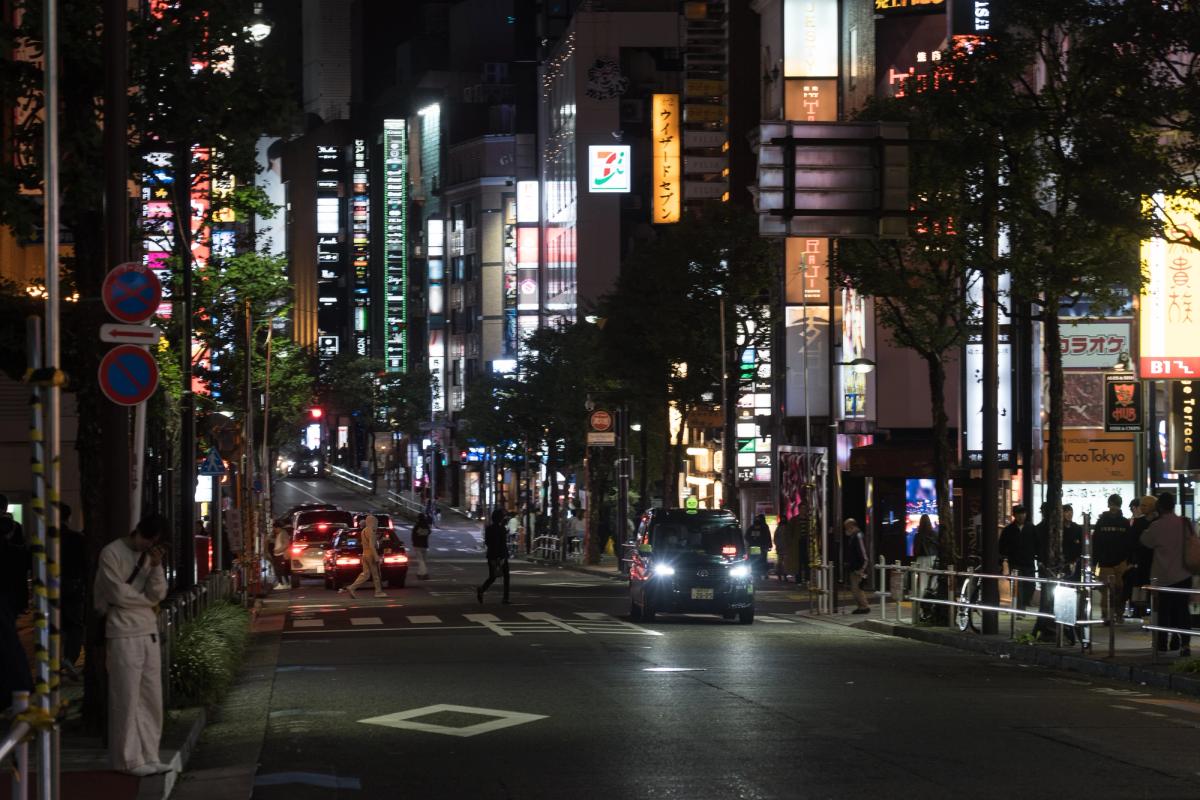
In March 1977 she admitted herself to Seiwa Hospital in Shinjuku, Tokyo, and lived there voluntarily until her death. She bought a studio within walking distance and worked in it nearly every day. Forty-nine years.
That should be stated plainly, because it is usually told as either a tragedy or a triumph and it is neither. It was an arrangement she made and kept, and it is where the work the world now queues for was made from. The most reproduced artist of her generation had one address for half a century and it was a psychiatric hospital she checked into herself.
She has said that the only method she found that relieved her illness was to keep creating art. She has said, more bluntly, that if it were not for art she would have killed herself a long time ago.
Those are not decorative statements and they are not the artist mythologising herself. They are a description of a working arrangement: a hospital, a studio a short walk away, and a daily obligation to produce the only thing that made the rest of it bearable.
The second life, and the machine that came with it
In 1993 she represented Japan at the Venice Biennale, the first woman to do so alone, with a mirrored room and pumpkins. The rediscovery was complete and it was fast.
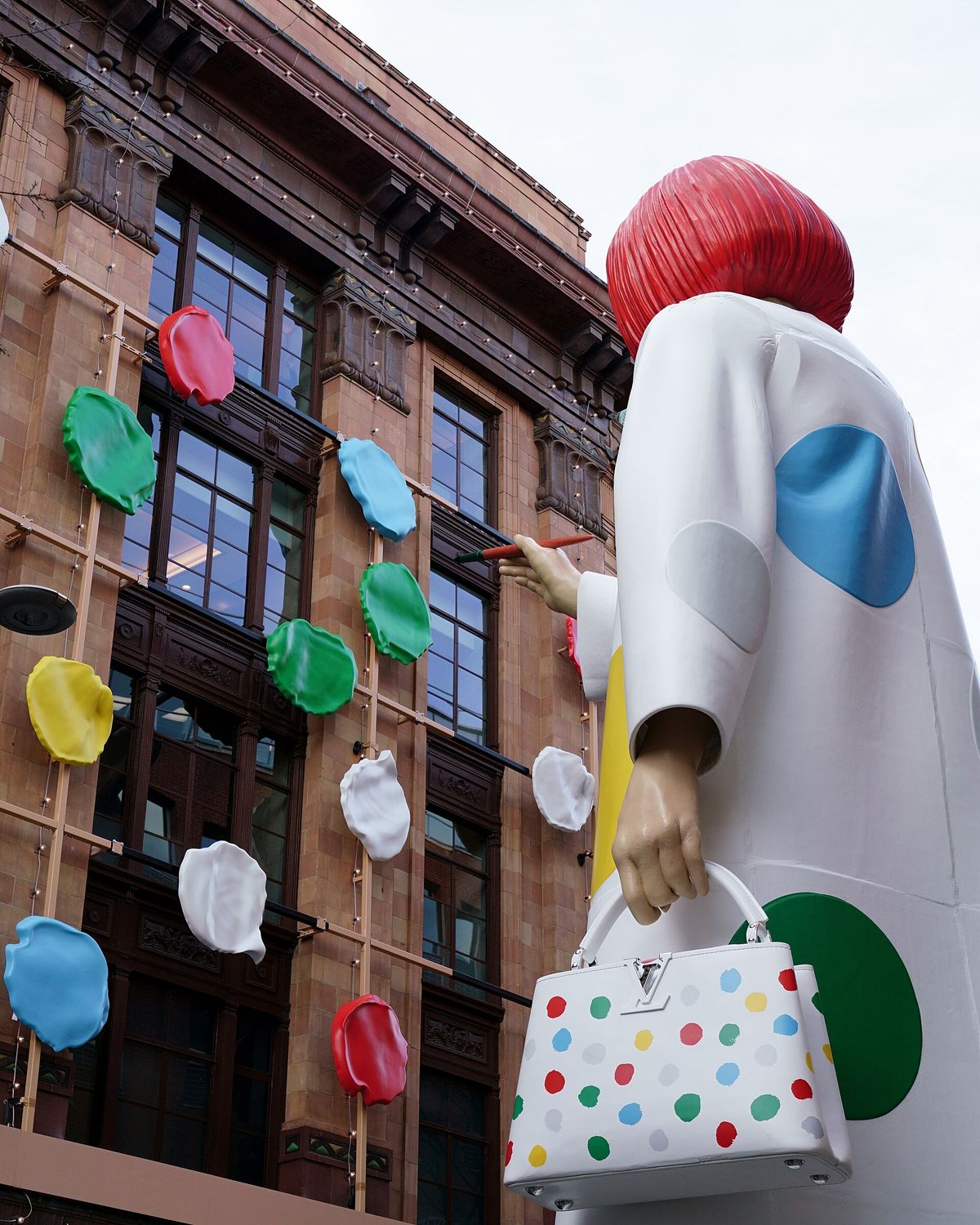
What followed was a scale of attention no living artist had experienced. Museums built shows around the mirrored rooms and discovered they were destination attractions: timed entry, tickets sold in advance, queues around buildings, and a visit measured in tens of seconds inside the room itself. Then the collaborations, the storefronts, the giant figure of her leaning over a Louis Vuitton shop, the merchandise, the phone case with the cosmos on it.
The rooms work. That is not in dispute here and it should not be. What a person feels standing in one is close to what she described wanting them to do.
The account did not travel with them.
A visitor who has stood in an Infinity Room can almost always say it was beautiful and overwhelming. Very few could say that the artist made the first one at thirty-six, that she described the pattern as something that arrived without her consent, or that the word for the effect is obliteration and that she meant the disappearance of the self rather than a photograph of it.
Why she is filed as a pop artist, and what the filing costs
There are real reasons for the misfiling. The work is bright, repetitive, immediately legible and endlessly reproducible. She was in New York in the 1960s alongside the people who defined pop. She collaborated with a luxury house and let her name go on objects. She is, by any commercial measure, one of the most successful artists who has ever lived.
But pop is an argument about mass production and surface. Its subject is the image of a thing rather than the thing. Kusama's subject was never surface. It was what happens to a person when the surface will not stop multiplying, which is the opposite proposition wearing similar clothes.
The cost of the filing is that it makes the work look like it is about fun. A visitor primed to expect pop will read a mirrored room as a spectacle and a pumpkin as a joke, and will not have been given any reason to think otherwise, because the wall text is short and the queue is long and the room is booked for the next group.
Everyone sees it differently, and almost everyone sees it as fun. She never once described it that way.
The object survived. The account did not.
This is this institution's own subject arriving in an unfamiliar form.
A provenance record is a claim about an object across time: what it is, where it came from, who held it, what was promised with it. Kusama's work has the strongest record imaginable. It is exhibited, insured, catalogued, authenticated, and photographed more than almost anything else made in the twentieth century. Nothing physical has been lost.
What was lost is the account that came with it, and it was lost while every material fact about the object was preserved perfectly.
In a study published this week this institution described thieves who destroy an object in order to sever it from its record. This is the same severance performed gently, by an admiring audience, with the object left entirely intact and the artist alive to keep explaining.
Narrative Permanence is the pole that names what should have happened here and did not. Object Permanence names the survival of the thing, and the thing survived completely. Nothing in this institution's lexicon names the survival of the reason for it. That is a gap in our own vocabulary and the honest place to record it is the study that found it.
A Hollowed Object is normally a thing priced far above its material because of a story attached to it. This is the inverse. The story was true, it was hers, it was published, and it was exchanged for one that photographs better.
And the exchange was not done to her by enemies. It was done by museums that gave her the largest shows of her life, by a market that made her the most successful woman in the history of art, and by millions of people who queued in the rain to stand in her rooms. Nobody stole anything. The account was simply not carried, because carrying it would have made the experience heavier, and nothing in the system that moved the work had any reason to make it heavier.
Every photograph here was taken by somebody else
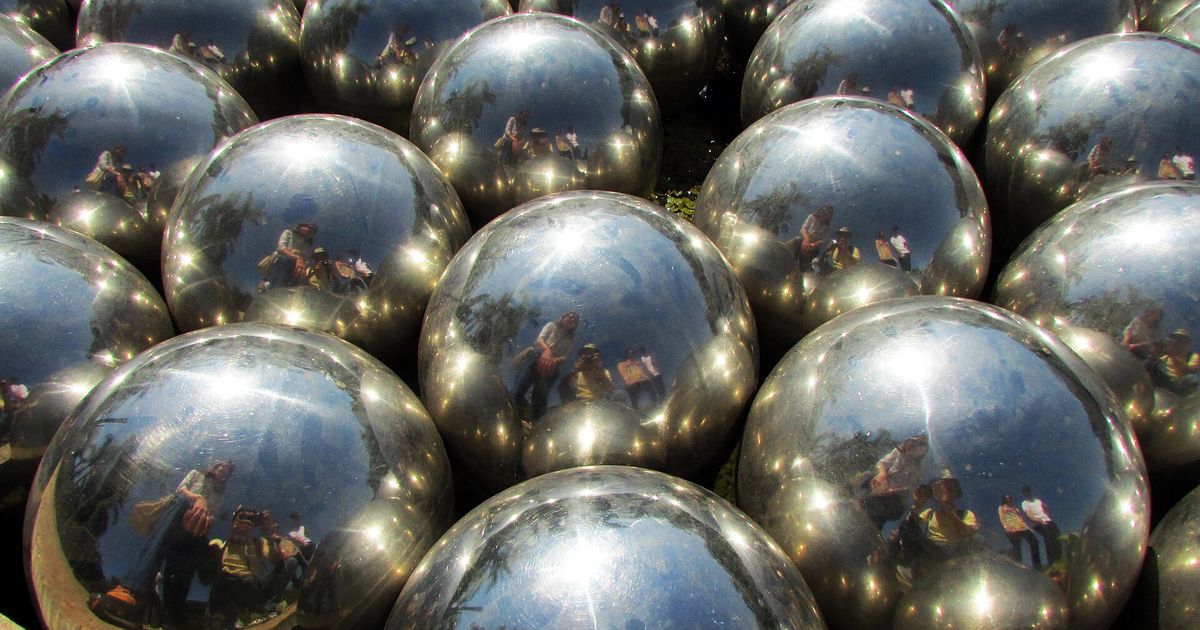
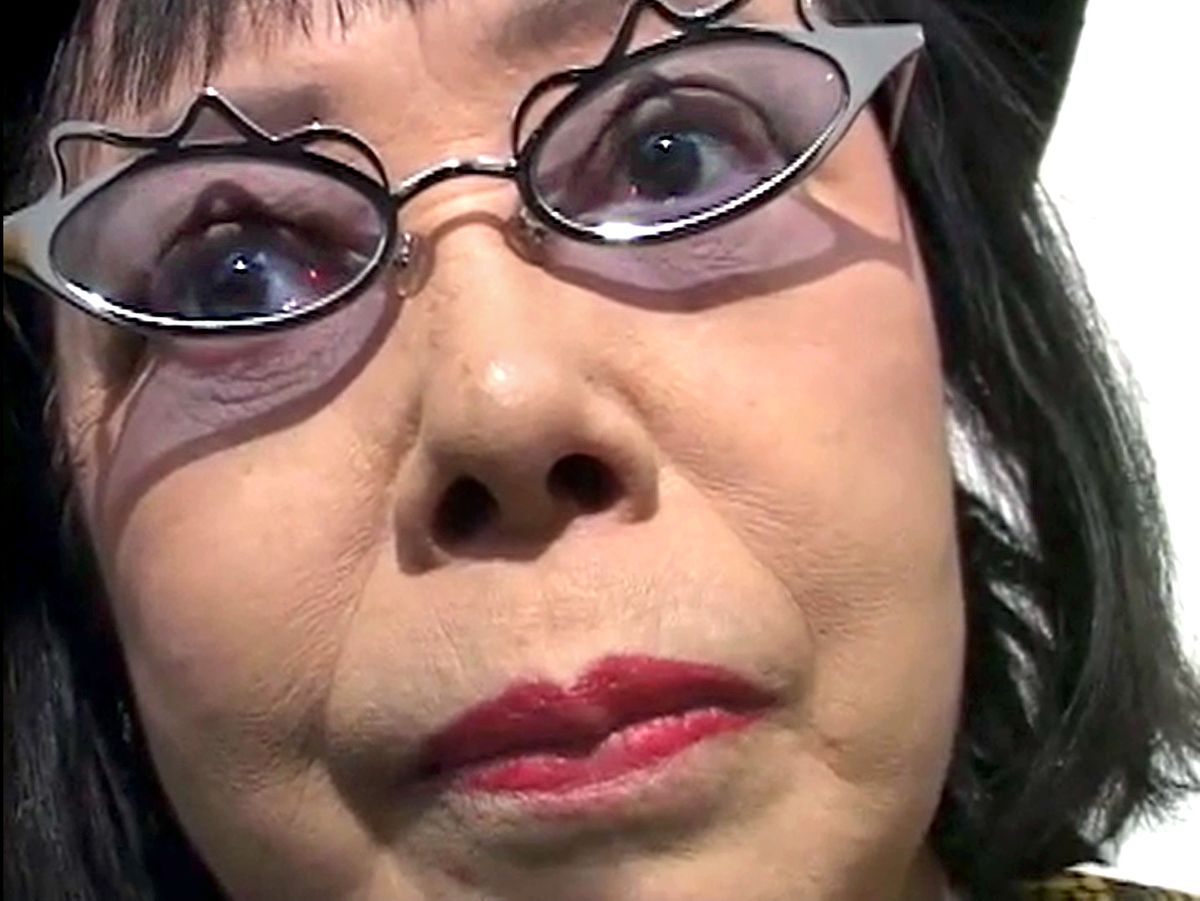
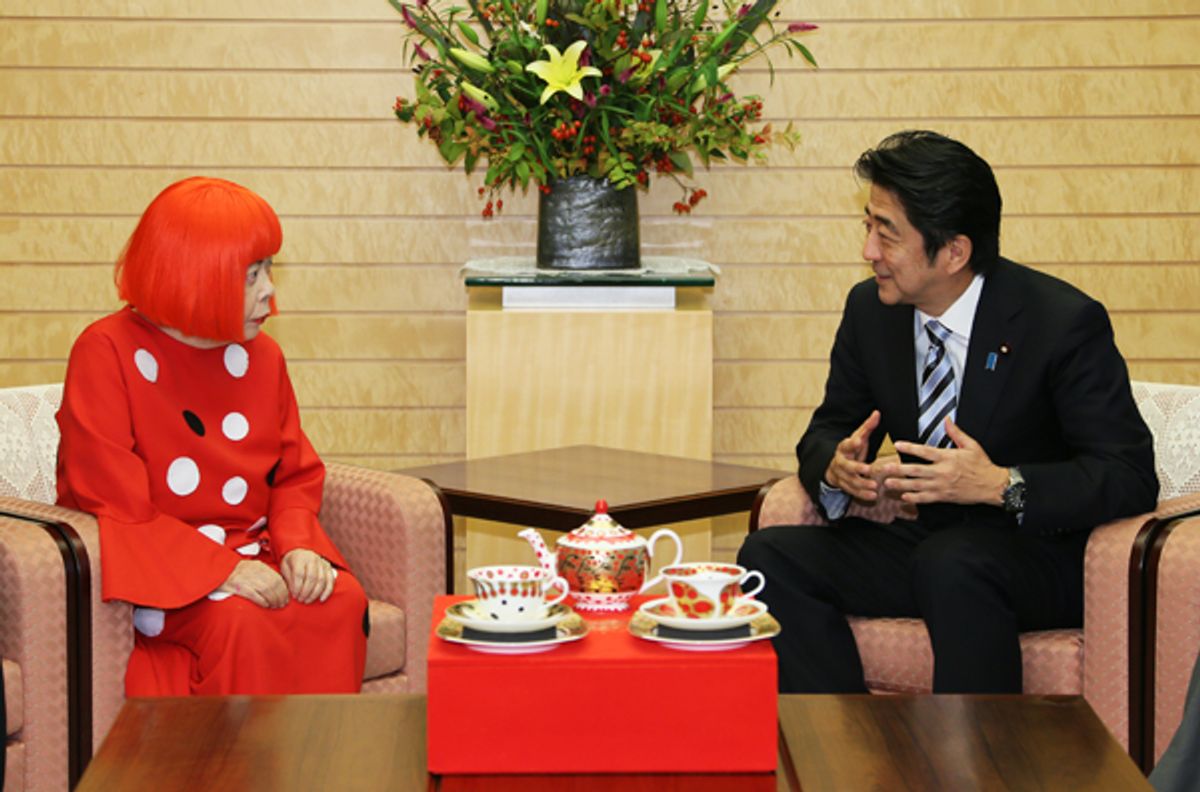
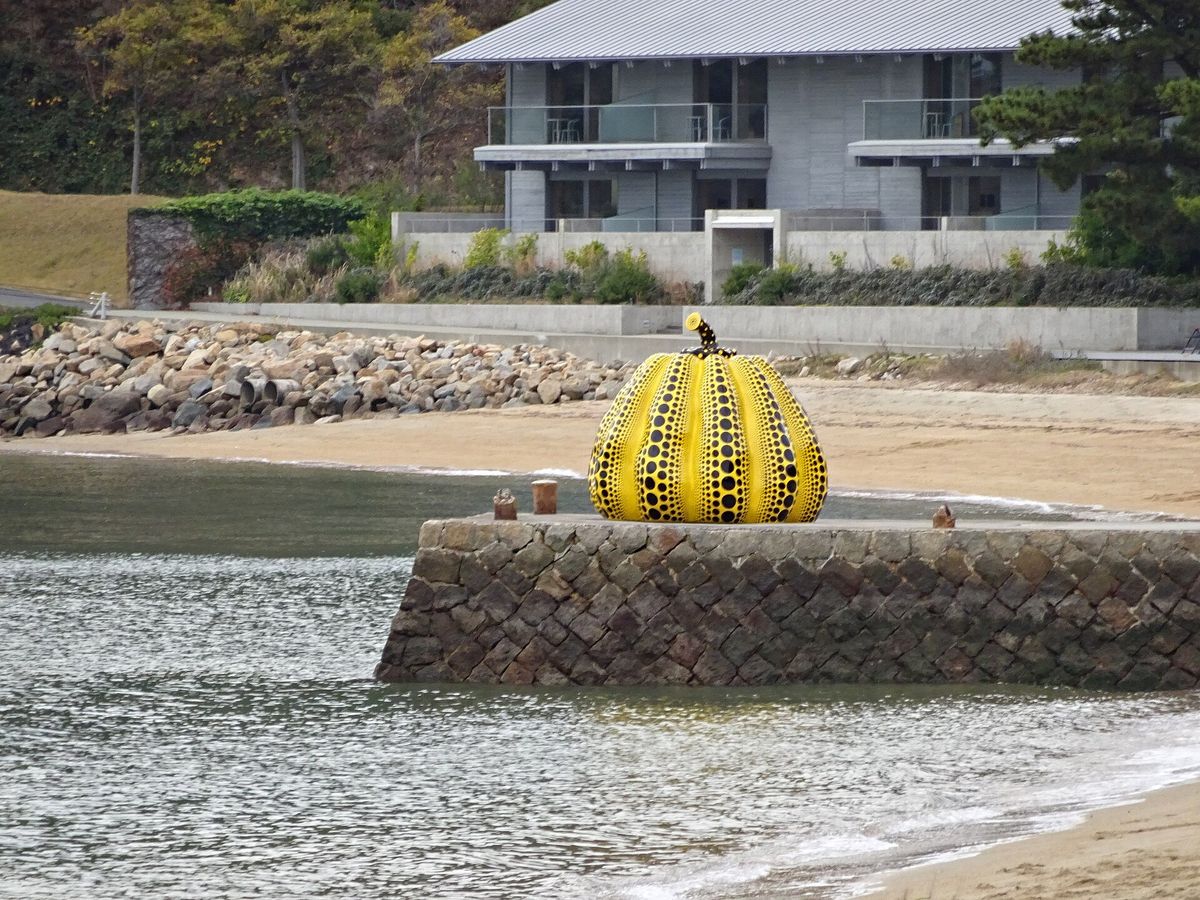
Her work is under copyright and OAC holds no licence to reproduce it. What appears above are other people's photographs, published under free licences: a portrait made for an artist's film, a state photograph from the Prime Minister's office, a pumpkin on a pier in the Inland Sea, mirrored spheres in Brazil, and an effigy of her on the side of a London department store.
That constraint turned out to be the most useful thing in this study, because it forced a look at what those photographs contain. Almost every freely available image of her work has other people in it. In the mirrored spheres at the top of this page, every single sphere carries a reflected visitor holding a camera. The only pictures of her work this institution can lawfully show are pictures in which the audience has already arrived and is standing where the work is.
Which is the finding, arrived at from the other direction. The rooms have been seen by millions of people. Her face is not what any of them were looking at, and in the photographs they took, the thing in the middle is usually them.
What this institution will not say
It will not name a diagnosis. Sources routinely attach clinical labels to her, and she did not use them about herself. What she described, consistently and in her own words, were hallucinations that began in childhood, an illness she wanted relief from, and a wish to die that art held off. Those are her terms and they are sufficient. A label added by strangers to a woman who is now dead adds nothing this study needs.
It will not write the study in which the illness explains the art. That reading is already the most repeated thing said about her, it flattens seventy years of deliberate decisions into a symptom, and repeating it here would make this study one more instance of its own finding.
And it will not praise her courage. Praise of that kind makes the illness the subject and turns a working life into an inspirational object. Her subject was infinity, and she said so for six decades.
What is not established here
The date of death is reported by Kyodo News and confirmed by her gallery. The date on which the death was made public is NOT established here, and this study asserts no interval between the death and its announcement.
Sources differ on the year she entered the hospital, with 1975 and 1977 both appearing. This study uses March 1977, which is the date carried by the fuller accounts, and records the disagreement rather than hiding it.
The accounts of her childhood, her mother, and what she was sent to witness are HERS. They are reported here as her account, given repeatedly in interviews and in her autobiography, and not as findings. No other party is in a position to answer them and none is accused of anything here.
Her claim to have been first, and the question of who took what from whom in New York in the 1960s, is a live art-historical dispute. This study states that she has spoken about it and does not adjudicate it.
Sources differ on the publication year of the English edition of her autobiography, so no year is given. No claim is made about her estate, her market, or the value of anything she made.
Coda
She was ten when the room started repeating. She was nineteen when she left for Kyoto, twenty-eight when she left for New York, thirty-six when she built the first mirrored room, forty-four when she went home ill and was forgotten, forty-eight when she checked herself into the hospital, sixty-four when Venice gave her back, and ninety-seven when she died still painting.
For every one of those years she gave the same explanation of what the work was for, in plain language, on the record, under her own name.
The work went everywhere. The account stayed in the room.
Rest in infinity.