Antiparos Gallery: L'Appartement and the Aura Machine
On destination, remoteness, and the geography of manufactured aura in the contemporary art market...
The Scene: Antiparos and "Melting Beauty"
On the edge of an infinity pool on a private terrace on Antiparos, a small island in the Cyclades, a waist-high bronze rabbit sits facing the Aegean Sea. The figure wears a tented skirt and carries the animist logic of its maker, the Japanese-European artist Leiko Ikemura, whose "Good Rabbit" (2018-24) took six years to cast. The turquoise water beneath the terrace, the windswept Cycladic light, the whitewashed walls of the private home behind it: all of this is the backdrop for "Melting Beauty," the inaugural off-site exhibition of L'Appartement, the Geneva gallery founded in October 2024 by Thea Montauti d'Harcourt Lyginos.
The exhibition runs through August 31, 2026, curated by Craig Burnett, and features works by Sean Scully, Yinka Shonibare, Amy Sillman, Arlene Shechet, Kennedy Yanko, Joan Snyder, Liliane Tomasko, Alekos Fassianos, and Ikemura. Burnett has described his selection as works chosen to evoke "the sensual qualities that are so present in the Greek landscape," works "in the middle of disintegration" that register the island's atmosphere through their material condition. This is the language of genuine curatorial intent. OAC takes it seriously, and interrogates it precisely because it is sincere.
What "Melting Beauty" stages on Antiparos is not a fraud. It is something more structurally interesting: a sophisticated contemporary art event whose mechanisms of value-making operate independently of, and frequently in opposition to, the custodial commitments the exhibition's framing implies. The bronze rabbit faces the Aegean, and the encounter is real. So is the economic logic that converts that encounter into something other than what the curator's statement promises.
The infinity pool does not neutralize the Aura Transaction. It concentrates it. The bronze rabbit, in that light, in that location, accessible only to those who know, becomes a different economic object than it was in the studio.
The Gallerist's Architecture: L'Appartement and the Salon Against the White Cube
Thea Montauti d'Harcourt Lyginos studied arts economics and management at Bocconi University in Milan. She began her institutional career at Sotheby's in London, moved to Gagosian in Geneva, then spent seven years running a private advisory practice for collectors of Post-War and Contemporary Art before opening L'Appartement in October 2024 in the city's Eaux-Vives district. The gallery's inaugural exhibition was "Sound and Silence," featuring TAKIS and Yves Dana.
The name is not accidental. L'Appartement is deliberately positioned against the white cube: a gallery that looks and functions like a well-curated apartment on the second floor of a historic Geneva building, referencing the 17th and 18th-century salon tradition as its template, a form of art presentation historically associated with female intellectual and aesthetic leadership. Montauti d'Harcourt Lyginos has spoken explicitly about wanting to create "a warm space that contrasted with the white cube gallery model." The residential exhibition model, she argues, cultivates slowness and genuine encounter over the transactional rhythms of the fair circuit.
This positioning is not simply aesthetic preference. It is a market argument. The salon model generates intimacy, and intimacy generates a different kind of desire than the art fair booth. The collector who visits L'Appartement in Geneva feels, at least for the duration of the visit, as though they have been invited into a private collection rather than a commercial space. When L'Appartement exports this model to Antiparos, it does not simply expand its geographic reach. It amplifies the intimacy premium: now the work is not merely in an apartment-gallery in Geneva, but in a private home on an island the collector likely had to research and travel deliberately to reach.
The Structural Captivity of the destination model operates through this logic. The remoteness is not incidental to the experience of the art; it is constitutive of the value of the encounter. Distance manufactures desire, and manufactured desire is the engine of speculative appreciation.
"Good Rabbit" and the Animist Bronze: Leiko Ikemura's Material Commitment
Leiko Ikemura was born in 1951 in Tsu, Mie Prefecture, Japan. She studied languages at Osaka University of Foreign Studies before moving to Spain in 1973 to study at the Academias de Bellas Artes in Granada and Seville, then settled permanently in Europe, with studios in Cologne and Berlin. Now represented by Lisson Gallery, she has spent more than five decades working at the intersection of Japanese animism and European postwar figuration, producing paintings, drawings, glass works, and bronze sculptures whose central motif is the rabbit-girl: a hybrid creature embodying transformation, vulnerability, and the dissolution of the boundary between human and animal form.
"Good Rabbit" (2018-24) is among the most resolved works in this lineage. The bronze took six years to reach its final form, a duration that itself carries Labor Density. Bronze is irreversible. The casting is a commitment the sculptor cannot take back. The alloy holds the accumulated decisions of six years of reckoning with what the rabbit-girl figure means: the tented skirt, the upright posture, the long ears facing the horizon.
OAC identifies in "Good Rabbit" a genuine instance of Material Singularity: this specific bronze, in this configuration, with this duration of making behind it, is an object that cannot be replicated by a different process or a different hand without becoming a different object. The six years of iterative bronze work are encoded in the final form. The rabbit's posture is not a decision made in an afternoon; it is the residue of a long reckoning with animist tradition and sculptural form.
The question OAC puts to the "Melting Beauty" context is whether the infinity pool terrace on Antiparos serves this material commitment or instrumentalizes it. Ikemura's animist concerns, the rabbit as vessel for transformation and Japanese spiritual tradition, do not naturally find their home on a private terrace during a summer art event attended by the well-traveled and the affluent. The mismatch is not disqualifying. But it is structurally significant: a work whose making is oriented toward contemplation and transformation is displayed in conditions optimized for encounter and desire.
Geographic Exclusivity as Aura Engine
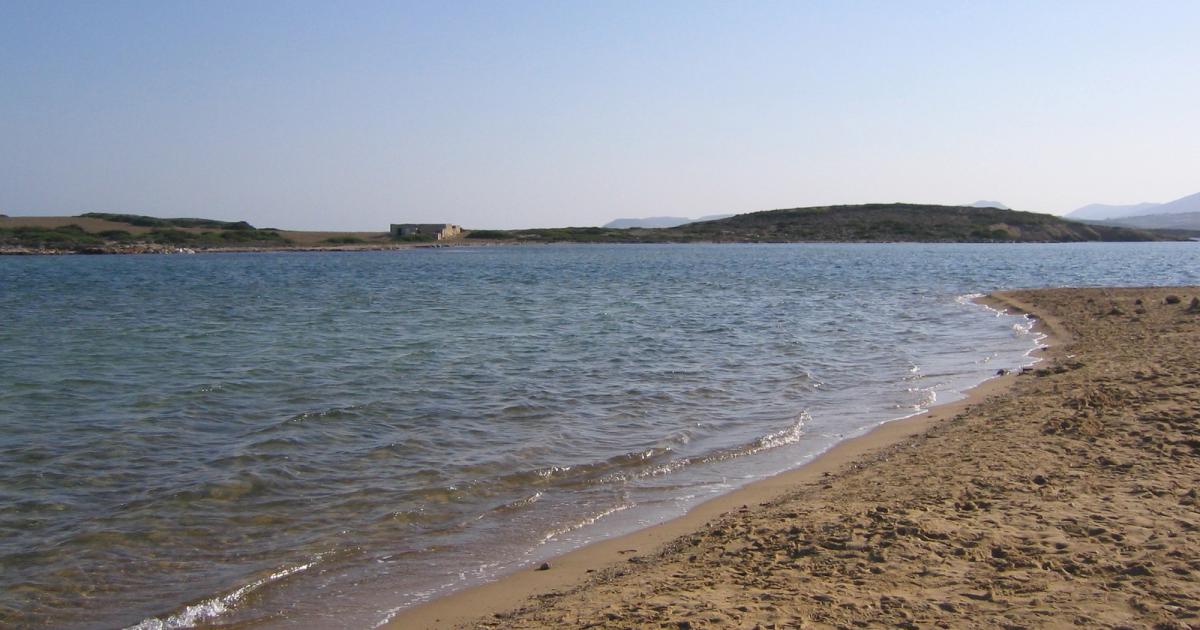
Antiparos is a small island in the western Cyclades, reachable by a short ferry from Paros. It is not among Greece's most famous islands, which is part of its appeal to a certain class of traveler. Its relative obscurity, the suggestion of discovery, the sense of arriving somewhere that requires research and intention: all of this constitutes what OAC calls Aura Transaction, the exchange in which symbolic and cultural capital move between objects, locations, and experiences, altering the perceived value of each.
When a gallery exhibition is held not in a city but on a remote island, accessible only to those who have already committed to travel, the audience is pre-selected for a combination of economic capacity and cultural aspiration. This pre-selection is itself an Aura Transaction. The works are seen only by people who already signal, by the act of being there, that they understand the value of the encounter. The self-selection loop amplifies Speculative Velocity precisely because it registers as exclusivity rather than commerce.
Burnett's framing, that the works were chosen to evoke "the sensual qualities of the Greek landscape," maps the artworks onto the island's atmosphere. This is a curatorial strategy with legitimate precedent: the history of site-specific art includes many instances where location transforms meaning. But there is a distinction between work made for or with a specific landscape and work selected to resonate with a landscape that also happens to function as a luxury destination.
The Cycladic light does not belong to any collector who spends a summer on Antiparos. But the exhibition converts it into an ambient asset that the collector's encounter with the work can claim.
Montauti d'Harcourt Lyginos has framed the Antiparos project as evidence that "meaningful encounters with art can and should happen beyond the established centers." This is a position OAC endorses in principle: the decentralization of art from the major-city circuit is a structural good. But decentralization to a private terrace on a luxury destination island is not the same as decentralization to an underserved community or a non-commercial public space. The center has not been challenged; it has been replicated in a more exclusive setting.
The Roster and the Speculative Cast
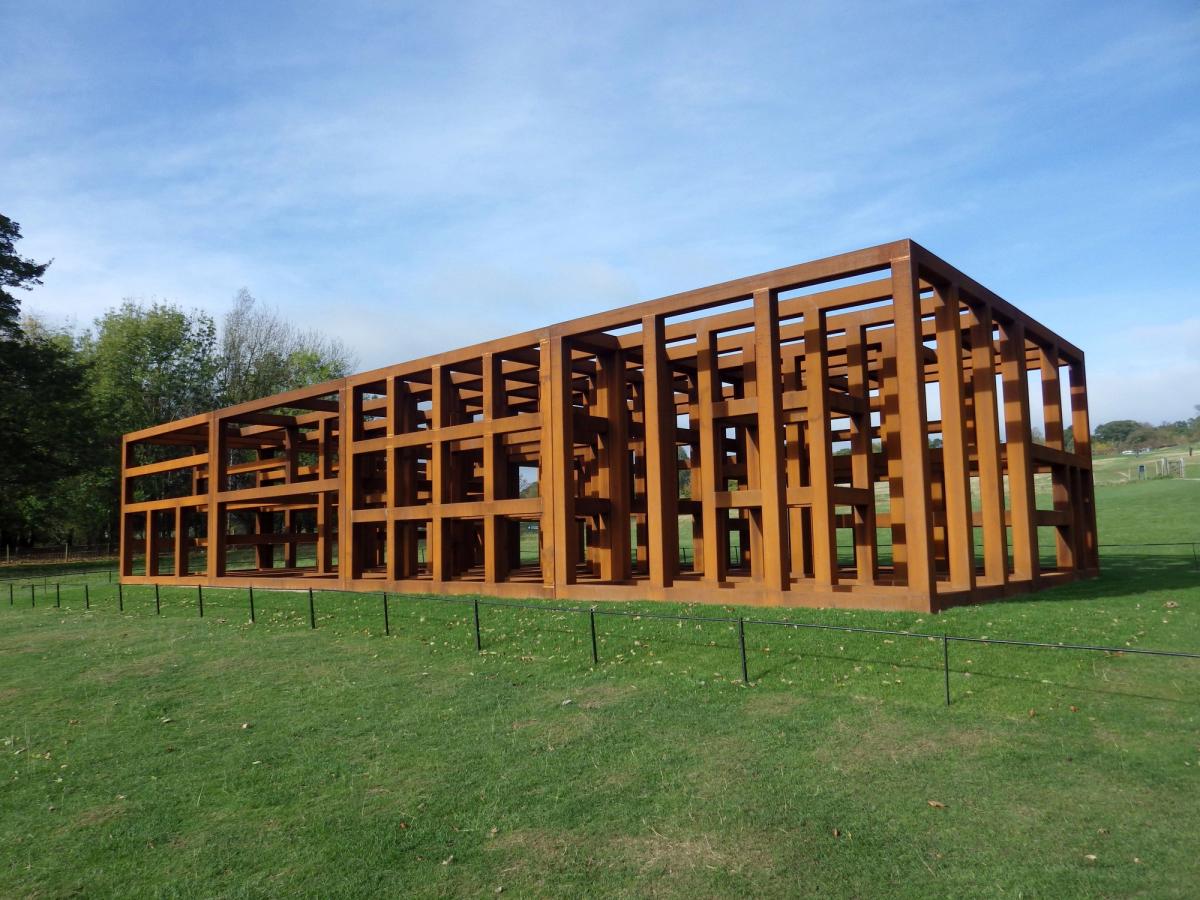
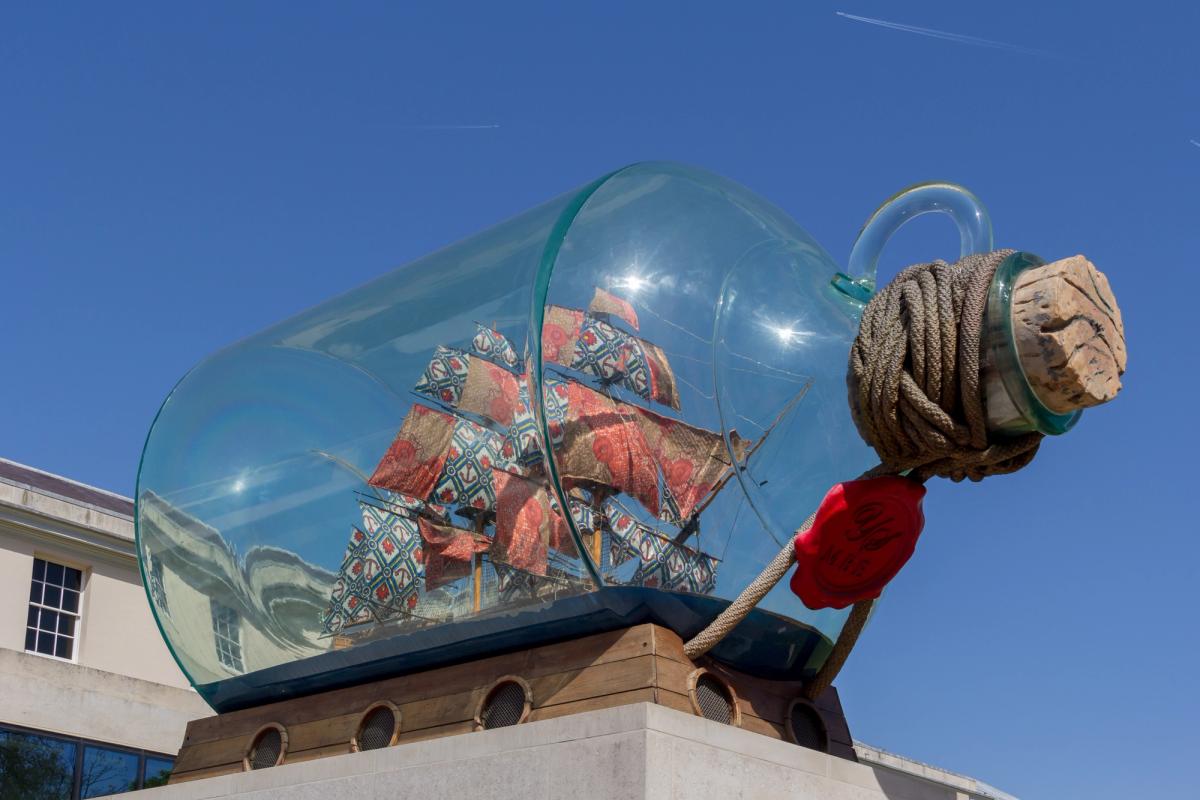
The artist list for "Melting Beauty" is not assembled from emerging or underrepresented practitioners. Sean Scully (born 1945, Dublin; based between New York, Munich, and Barcelona) is among the most market-visible abstract painters alive, his striped canvases appearing regularly at major auction houses. Yinka Shonibare (born 1962, London) holds a CBE and is represented by major galleries on multiple continents; his public sculpture "Nelson's Ship in a Bottle" (2010) was a Fourth Plinth commission in Trafalgar Square, London. These are not artists whose market position requires development; they are artists whose institutional legibility is already fully established.
OAC reads this roster as a Zero-Sum Aura configuration. The named artists bring their accumulated cultural authority to the Antiparos context, which in turn lends its geographic exclusivity to their market desirability. Neither the artists nor the location loses in this exchange; but the exchange itself is inseparable from the speculative economy of the contemporary art market that "Melting Beauty" implicitly frames itself against.
Alekos Fassianos (1935-2022), the Greek painter included in the exhibition, provides a different inflection. Fassianos spent his career in a position adjacent to the international market rather than inside it; his flat-patterned, jewel-toned figures derived from ancient Greek pottery and Byzantine iconography. His inclusion gestures toward the locality that the exhibition claims to honor. But Fassianos died in 2022; his work enters "Melting Beauty" as an estate holding with established provenance, which is a different custodial arrangement than the living participants face.
The Semantic Burden carried by each artist's name in this context is asymmetric. Scully and Shonibare are legible to the international market that will read the press coverage of "Melting Beauty." Fassianos is legible primarily to those who already know Greek modernism, a smaller audience whose cultural capital is more localized. The exhibition's press value flows primarily through the internationally recognized names; the local cultural reference functions as texture rather than content.
Institutional Necrophagy and the Island as Backdrop
OAC's structural diagnosis: "Melting Beauty" is an instance of Institutional Necrophagy. Not because the gallerist's intentions are cynical, nor because the curation is incoherent, but because the structural logic of the enterprise converts a living landscape into a consumed symbolic resource.
Institutional Necrophagy, as OAC uses it, describes the process by which a cultural or commercial institution extracts the symbolic value of something it did not produce and cannot sustain. The Antiparos project extracts the symbolic value of the island itself: its Cycladic light, its relative obscurity, its suggestion of unspoiled Mediterranean life. None of these values were produced by L'Appartement. All of them are consumed in the sense that the exhibition's staging depletes and commercializes the very qualities of the island that make it an attractive venue.
This is not unique to "Melting Beauty." The same logic operates in every destination gallery event, from art weeks staged in exclusive coastal locations to summer exhibitions in private estates. The critique is structural, not personal. What distinguishes OAC's analysis here is the specific form the necrophagy takes: the private home, the infinity pool, the curated intimacy. The exhibition does not merely use the island as a backdrop; it uses the intimacy of the residential setting to produce an encounter that feels like the opposite of commercialization while functioning as its most sophisticated form.
The risk the artworks themselves face in this context is the Hollowed Object: the work whose material reality is progressively subordinated to its function as a marker of taste, access, and social position. "Good Rabbit" is not a hollow object by nature; it is a hollow object in potential, and the potential is activated by the specific economic and social conditions of its display on Antiparos.
As OAC's study of Kiaf Seoul 2026 established, art fairs function as speculative infrastructure, converting the art encounter into a financial instrument through the apparatus of the fair itself. The destination gallery performs a similar function with different aesthetic camouflage: the fair's commercial directness is replaced by the destination's cultivated intimacy, but the economic logic is structurally identical.
The Custodian's Contract at Sea
OAC insists on making the strongest possible case for the opposing position. The Custodian's Contract does not automatically fail in a non-institutional setting. There are precedents for significant art encounters in private, temporary, geographically specific contexts that served the work's long-term meaning rather than depleting it.
Craig Burnett's curatorial statement, selecting works "in the middle of disintegration" to evoke the Cycladic sensory experience, is a genuine intellectual position. Joan Snyder's "Deep Pond" (2026), described as a muddy taupe square with a sticky acrylic void at its center, makes specific material arguments about dissolution that are not falsified by their Antiparos context. The thematic coherence of "Melting Beauty" is real, and Burnett's engagement with it is serious.
But the Custodian's Contract requires more than curatorial coherence. As OAC's analysis of the Esposito Warhol collection demonstrated, the custodian's obligations extend beyond the quality of the current encounter to the structural conditions of the work's long-term stewardship. When "Melting Beauty" closes on August 31, 2026, what protocols govern the care of the objects that traveled to Antiparos? What documentation captures the material conditions of their display? What legal frameworks protect their Narrative Permanence against the commercial pressures the exhibition's success generates?
A beautiful description of art in a beautiful place is not evidence that the custodial conditions meet the standard the works' material integrity requires.
The Burden of Preservation falls most heavily on temporary exhibitions precisely because they lack the institutional infrastructure that permanent collections provide. The private home on Antiparos is not a museum; it does not offer climate control calibrated to conservation standards, the logistical infrastructure for secure transport of significant works, or the curatorial staff whose ongoing attention constitutes institutional care. The aesthetics of the encounter are elevated; the preservation conditions are not.
Beyond Antiparos: The Destination Gallery as Emerging Form
"Melting Beauty" is not an isolated experiment. The destination gallery model is an accelerating tendency in the contemporary art market. From coastal art weeks in the Mediterranean to summer exhibitions in private estates across Europe and the Americas, the logic is consistent: geographic exclusivity, residential or near-residential settings, high-profile artist rosters, and a framing of the encounter as cultural rather than commercial. Each instance intensifies the premium of the encounter by adding the cost and difficulty of arrival to the cost of the art itself.
OAC's analysis of how art is priced against material value establishes that the art market's speculative function is not dependent on formal institutional settings. Wherever significant art is displayed for a selected audience, the mechanisms of speculation are activated. The destination gallery does not escape these mechanisms by choosing a private terrace over a white cube; it intensifies them by adding the premium of geographic exclusivity. As OAC has established in its foundational study of Invasive Commodification, the most sophisticated forms of market capture operate precisely by appearing to resist the market.
The regulatory environment around art market transparency is increasingly relevant here. The EU's evolving anti-money-laundering framework already requires professional art traders to conduct customer due diligence for high-value transactions, and further transparency obligations are advancing as part of the broader 2026 European regulatory moment in luxury and consumption markets. Destination exhibitions, by their nature, operate at the intersection of art collecting and luxury travel, a zone where the provenance of capital and the terms of acquisition have historically been opaque. The Custodian's Contract cannot be evaluated only on aesthetic grounds; it must also be read against this structural transparency deficit.
The Invasive Commodification of the destination model is not simply that it sells art in a beautiful place. It is that it uses the aesthetics of non-commerciality, the private home, the summer gathering, the intimate curator's conversation, to make the commercial transaction feel incidental. The Anti-Sale Covenant, which would require the work's long-term custodial conditions to be encoded in the terms of any transaction, has no natural home in this context.
Coda
Ikemura's bronze rabbit will leave the Antiparos terrace when August ends. The sculpture will carry its animist intention intact, the six years of casting decisions encoded in the alloy, the tented skirt, the ear-line facing the horizon. What the summer will also have given it is a story: "Good Rabbit" on an infinity pool in the Aegean, at an exhibition that combined the residential salon model with the curated atmosphere of a luxury destination. That story is now part of the work's provenance, and provenance, in the contemporary art market, is inseparable from value.
The study of Betye Saar as sovereign object established that an artist's refusal to permit certain institutional framings is itself a form of custodial practice, the Monastic Veto exercised at the level of display conditions. Ikemura's "Good Rabbit" arrived on Antiparos without that veto having been invoked. Whether the Antiparos summer enhances or diminishes its long-term meaning is a question the bronze cannot answer, and the market will answer in its own register.
OAC's position is not that destination galleries are incompatible with genuine custodial care, nor that beauty is an illegitimate condition for art. The Cycladic light is real. The curatorial coherence of "Melting Beauty" is real. What is also real is the structural logic of geographic exclusivity as an Aura Transaction engine: the island, the private home, the selected audience, the bronze rabbit facing the sea. These are not innocent aesthetic choices. They are mechanisms, and mechanisms have consequences that outlast the summer.