Nicolai Tangen's Kunstsilo: Private Taste as Public Canon
On custodianship, canon, and the institutional weight of private love.
What a Silo Holds
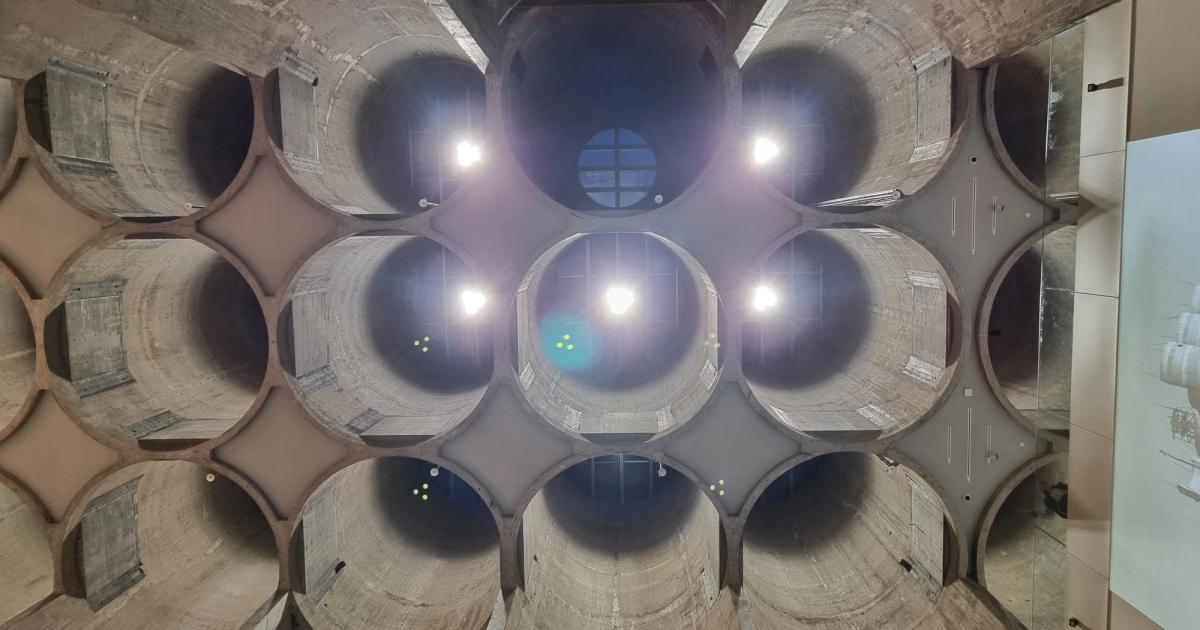
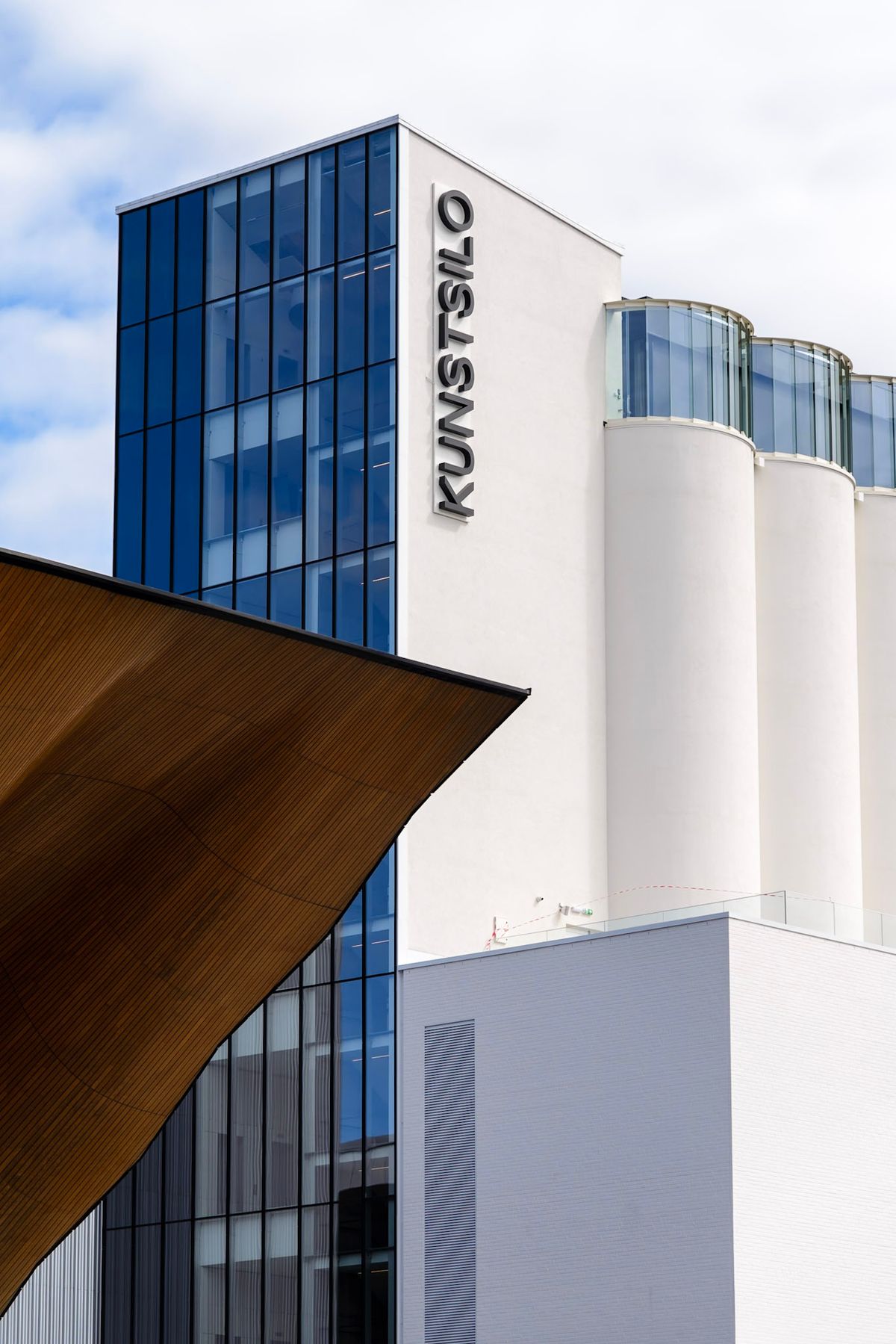
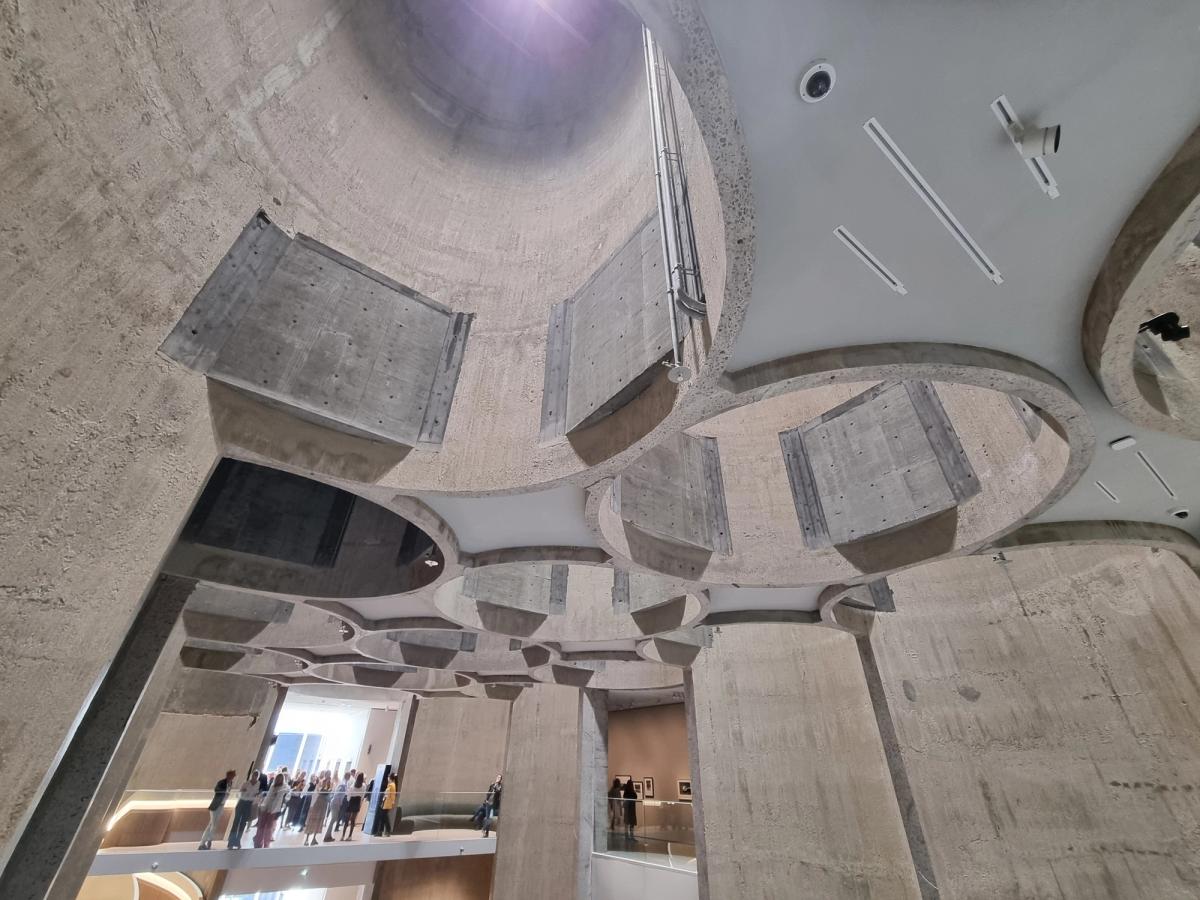
On the headland of Odderøya, where the port of Kristiansand meets the Skagerrak, a concrete grain silo built in 1935 has been transformed into one of Norway's most significant cultural institutions. The structure is not modest. Eight and a half thousand square metres of exhibition space rise through what was once a grain-storage cylinder, the building's raw industrial mass now carrying art across three floors. The conversion, reported at approximately £50 million, is the kind of gesture that announces intention before a single work has been seen: this is a permanent structure, built to outlast its donor.
Kunstsilo opened to the public on 11 May 2024. Time magazine named it one of the “World’s Greatest Places” in its 2024 ranking. The inaugural exhibition, “Passions of the North,” drew from more than 600 works made between 1910 and 1990, all from the Tangen Collection of Nordic modernism. More than 5,000 works now constitute the permanent collection, described by several critics as the world’s largest holding of Nordic modernist art. The building is the argument made concrete: a structure that says the objects inside it will not be dispersed, auctioned, or forgotten. This is Material Singularity at architectural scale, the object’s resistance to dissolution expressed in reinforced concrete and repurposed iron. The grain silo was built to hold organic material against decay; the museum is built to hold art against the market’s tendency to cycle, dilute, and discard.
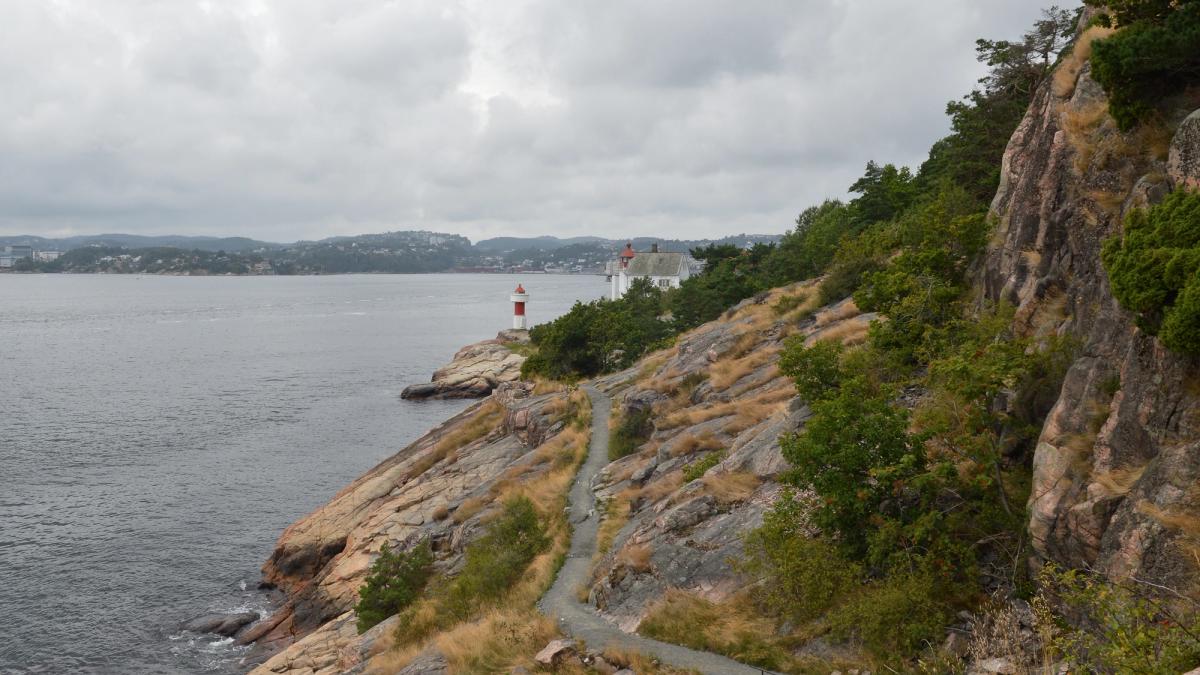
The island itself carries narrative density the project did not need to construct. Odderøya was a military zone until the 1990s, its waterfront inaccessible to the civilians who lived within sight of it. The decision to site Kunstsilo here, on reclaimed civic ground, amplifies the museum’s stated purpose: to return what was excluded to the people who live near it. The question this study examines is not whether the objects were worth returning, but what it means that the terms of the return were determined by a single collector’s thirty-year education in private aesthetic judgment. The silo holds more than it was built to hold. The more interesting question is whose reading of what matters it holds, and for whom.
Thirty Years Against the Market
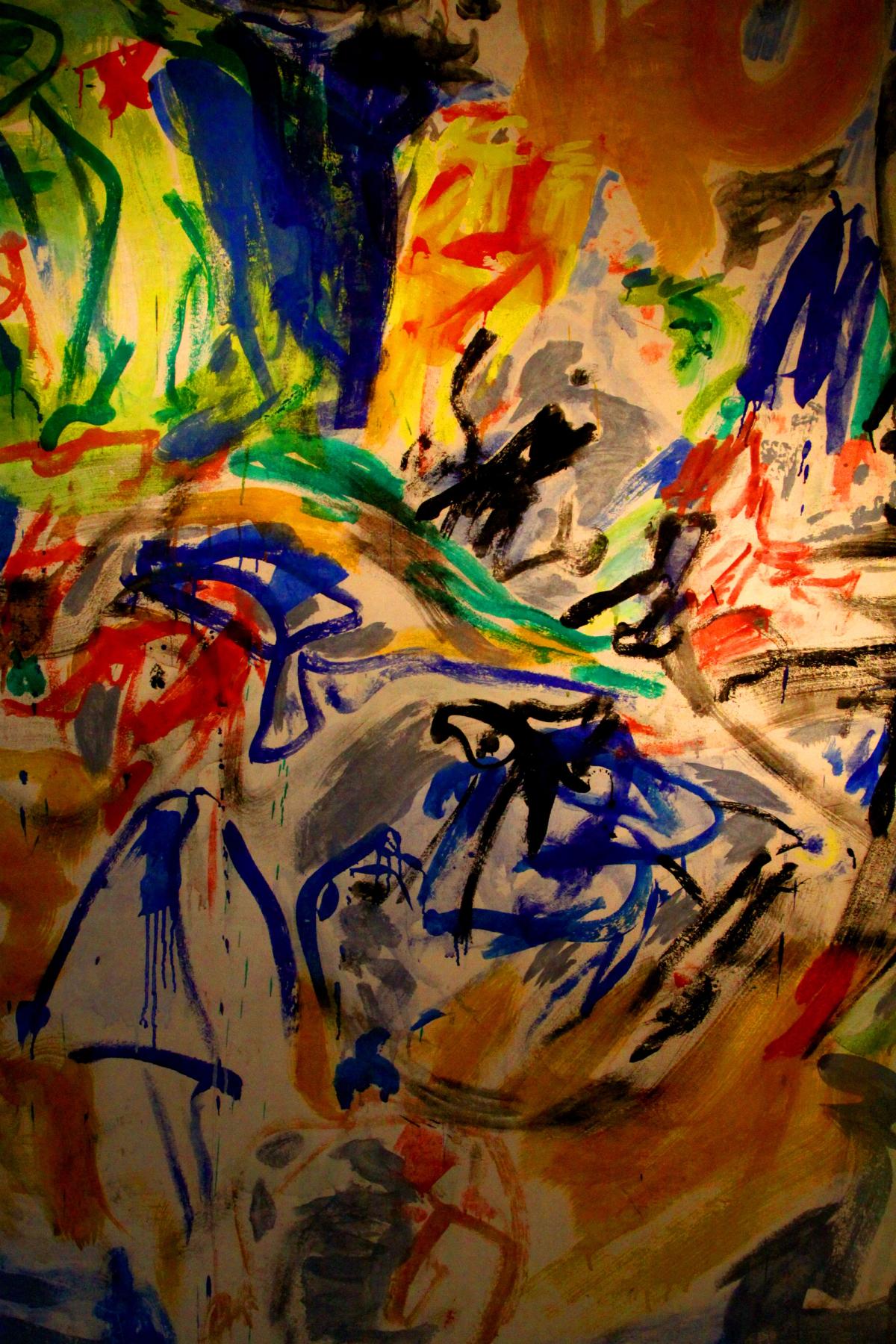
Nicolai Tangen began collecting Nordic modernism in the mid-1990s. His method, as he has described it consistently across public interviews, was explicitly counter-speculative: he purchased artists when they were out of favor, when auction rooms were indifferent or dismissive, when price reflected neglect rather than demand. “I know exactly who they are, these artists who everyone else is buying,” he told Artsy. “We’re not buying any of it. We’re doing the opposite: we’re buying stuff that is out of favor. And, frankly, we define art history. This is a scholastic collection.”
The last sentence is the pivotal one. Tangen does not describe himself as a speculator or a patron in the conventional sense. He describes himself as a scholar of art history, whose collecting practice is a form of research, whose acquisitions are arguments about what matters and why. This is a specific and unusual self-positioning: the collector who frames his activity as intellectual labor rather than capital deployment, whose measure of success is not financial return but historiographical precision.
The Speculative Velocity that governs luxury goods and contemporary art markets, the rapid cycling of aesthetic preferences through auction seasons and fair cycles, is precisely what Tangen insists he resists. The speculator buys ahead of fashion and exits before it peaks. Tangen states that he does not exit, that the collection was assembled to be given away rather than monetized at the moment of fashionability. The distinction matters structurally: the collector who accumulates and donates is not operating on the same logic as the collector who accumulates and exits.
The collector who buys out of fashion and donates into institution is not the same as the speculator who cycles through auction seasons. What they share is the structural consequence: in both cases, private judgment eventually becomes public weight.
His collecting was never purely solitary. Throughout thirty years of acquisition, Tangen worked closely with specialists in each Nordic country. His primary advisor has been the art historian Steinar Gjessing, who also helped shape the collection of the late Norwegian business figure Stein Erik Hagen, from whose holdings Tangen acquired approximately 400 works. The collection is therefore not one person’s eye alone but one curatorial framework, sustained across decades and applied systematically to the Nordic modernist record. The “we” Tangen insists on using is accurate. It is also, structurally, the carrier of a single institution’s taste.
The Courtauld and the Labor of Looking
Before he was CEO of the world’s largest sovereign wealth fund, Tangen studied art history at the Courtauld Institute of Art, one of the discipline’s most demanding graduate programs. His MA focused on three print series by Rolf Nesch, the German-born Norwegian printmaker who fled Nazi Germany in 1933 and spent the remainder of his working life in Norway. This academic history is significant for understanding the collection’s foundation: Tangen’s engagement with Nesch was scholarly, sustained, and preceded the financial platform that later made large-scale acquiring possible.
Nesch developed a radical printmaking technique in which metal strips, soldering wire, coloured glass, and wood were fixed to the printing plate, creating three-dimensional constructions that were simultaneously printing matrix and independent object. The resulting works have irreducible material complexity: they cannot be reproduced by digital means, they carry the physical evidence of their own making, they resist the dematerialization that the broader market was already beginning to prefer. Labor Density is legible in every impression. Nesch died in 1975. His work was, through the 1980s and much of the 1990s, systematically undervalued. The acquisition of it was not a bet on fashion; it was the consequence of scholarship that preceded any market calculation.
The Courtauld education matters because it establishes that Tangen’s collecting, in its formative period, was driven by expertise rather than by financial calculation. He knew Nesch’s print series with scholarly intimacy before he acquired them at scale. This is different from the capital-flush collector who commissions a shortlist from a dealer and deploys resources against it. It is also the precondition for the institutional authority Kunstsilo now asserts: you can only rewrite the canon convincingly if you have persuaded the relevant gatekeepers that you understand it well enough to challenge it. Tangen’s credibility as a counter-canonical institution-builder rests on this foundation of demonstrated scholarly commitment, a foundation that the “Trillion Dollar Man” framing consistently obscures.
The Canon Gap and Its Artists
The explicit organizing principle of the Tangen Collection is the identification of gaps in established Nordic art history. The national museums of Norway, Sweden, Denmark, and Finland have, Tangen and Gjessing argue, systematically underrepresented certain artists, movements, and periods. The collection is assembled around these exclusions, or rather around their systematic correction. “The motivation behind the Tangen Collection has always been to find gaps in and alternatives to the national canon,” Gjessing has said. “To demonstrate that there are many stories. Many layers. Many voices.”
Asger Jorn, the late Danish CoBrA painter and one of the collection’s anchor figures, was never truly marginal: his work is held by major international institutions, and the CoBrA movement’s influence on post-war European painting is thoroughly documented. His presence in the Tangen Collection represents the collection’s highest-profile holding, a point of international legitimacy against which the less-known figures are read and contextualized. Ola Billgren, the Swedish figurative painter who moved through photorealism and romantic landscape across a career from the 1960s to 2001 in an arc that made him consistently unfashionable within the dominant critical frame, represents the reclamation argument at its most convincing: his is precisely the kind of sustained, serious practice that canonical taste has difficulty accommodating because it refuses to fit the available categories. Rita Kernn-Larsen, the Danish Surrealist, and Bendik Riis, represented in the collection by “Six Pears,” are further examples of the recovery project at work.
The canon-gap argument is structurally similar to curatorial reclamation projects across Western institutions over the past three decades. What is distinctive in the Tangen case is the method of reclamation: not a museum program, not a curatorial intervention within an existing institution, but the construction of an entirely new institution around a private collection built specifically to contest the existing record. This compounds the institutional power of the gesture. A reclamation project that works through an existing museum borrows the institution’s authority while challenging its content. A reclamation project that builds its own institution challenges the existing canon and simultaneously creates a new one. Narrative Permanence and institutional authority become, at this scale, indistinguishable from each other.
The Custodian’s Contract Fulfilled
In 2015, Tangen donated his collection to his hometown of Kristiansand, placing the perpetual right of disposal with the AKO Art Foundation. The museum project was fully financed by 2019. Kunstsilo opened nine years after the formal gift. The sequence matters: the donation preceded the public opening by nearly a decade. The museum was not built and then filled with a purchased collection. The collection was given and then housed.
This is the textbook structure of the Custodian’s Contract as the OAC framework identifies it: the collector who understands private ownership as temporary stewardship, who treats the period of individual possession as the gathering phase before institutional transfer. The Burden of Preservation passes from individual to institution. The objects cease to be Tangen’s and become, in law and in fact, Kristiansand’s. This is what distinguishes the case from the collector who loans works to a museum while retaining ownership, or who names a wing without relinquishing title. The formal completion of the Custodian’s Contract is not routine; most private collections of this scale are either retained, dispersed at auction, or loaned on conditions that preserve donor control. Kunstsilo is a genuine transfer.
The study What Happens to an Object When Its Owner Dies examines what transfer of title actually produces in terms of object meaning and social function. For Kunstsilo, the living donor complicates the analysis in a specific way: Tangen gave while alive and remains physically present in the institution he gifted, leading public tours in a branded gilet. The gift is complete in legal terms. The donor has not left. The Custodian’s Contract was fulfilled formally; its psychological and institutional completion is ongoing. This is not a criticism of Tangen’s commitment to the project, but it is a structural condition that distinguishes Kunstsilo from the posthumous bequest, the form of custodial transfer that most cleanly separates the object from the individual whose taste shaped it.
When Private Taste Becomes Institutional Fact
The Custodian’s Contract, fulfilled at scale, does not neutralize the donor’s aesthetic judgment: it crystallizes it. What Tangen and Gjessing defined as “gaps” in the Nordic canon is now Kunstsilo’s permanent collection. What they determined to be undervalued is now museum-weight. What their thirty years of looking established as significant is now the institutional frame through which future scholars, critics, and collectors will encounter Nordic modernism from 1910 to 1990.
This is not necrophagy in its simplest register, the consumption of critical discourse for speculative financial gain. But it is the condition that Institutional Necrophagy diagnoses in its more structurally sophisticated form: the private collection that arrives at the institution already wearing the language of public purpose. The language of gap-filling, of canon-correction, of championing the overlooked, is simultaneously true (those artists were genuinely overlooked) and structurally self-serving (the institution built around their reclamation encodes one set of curatorial judgments as permanent public fact). The challenge to the canon becomes, over time, the canon.
The critic Ingvild Krogvig, describing the dispersal of the Stein Erik Hagen modernism collection as a “tragedy” for Norway’s National Museum, was responding to dissolution rather than institutionalization. But the structural tension she named transfers directly: when a major private collection moves, it creates winners and losers across the institutional landscape. Kunstsilo’s permanent collection reshapes what Oslo’s National Museum is expected to hold, which artists a traveling exhibition from Stockholm or Copenhagen might include, and which works the Nordic art market will price against the Tangen Collection’s institutional endorsement. The Hollowed Object here is not a single work but the idea of an open canon: the more Kunstsilo defines Nordic modernism, the harder it becomes to imagine a competing definition gaining comparable institutional weight.
The study Artist Tarot Decks: When Reinvention Hollows the Archetype examines how institutional adoption hollows the critical charge from objects that began as challenges to institutional norms. The dynamic at Kunstsilo is structural kin: the counter-canonical collection, once it becomes the institution, can no longer perform its counter-canonical function. It has succeeded. And in succeeding, it has become precisely what it set out to contest.
Sovereign Capital and the Question of Mandate
Tangen has managed the Government Pension Fund Global, Norway’s sovereign wealth fund, since September 2020. With a portfolio of approximately $2 trillion, this is the world’s largest sovereign wealth fund, funded by Norway’s oil revenues and invested across more than 7,200 companies in 60 countries. His appointment was preceded by significant ethical controversy: a gathering at the Wharton School that he organized, featuring a performance and attended by senior Norwegian government officials, triggered a parliamentary inquiry and a Norges Bank Executive Board review of conflict of interest. The resulting agreement required Tangen to relinquish ownership interest in AKO Capital, the London hedge fund he had founded, and to restructure his personal investments accordingly.
The art collection and the NBIM role are legally separate. The ethics controversy surrounding Tangen’s appointment does not directly implicate Kunstsilo, which was initiated years before he assumed the state position. But the adjacency shapes the structural reading that the PLCFA framework performs. The cultural philanthropist who funds a £50 million museum conversion in his hometown is the same person who manages Norway’s oil wealth. The private taste that selected 5,500 works of Nordic modernism belongs to a figure with state-adjacent financial power at a scale that few private collectors have possessed in the history of art patronage.
Structural Captivity names the condition of institutions that cannot critique the capital that sustains them. Kunstsilo’s running costs depend on a part-private, part-public funding model that has been described as “hugely controversial.” The institution exists in a web of dependencies that are not fully transparent and that complicate its independence from its founding donor’s continued cultural presence. This is not unique to Kunstsilo; many major cultural institutions occupy similarly complex structural positions. It is particularly acute when the founding donor is also the manager of a nation’s sovereign wealth, and when the institution’s governing frame, which artists matter, which gaps need filling, was determined entirely by private aesthetic judgment before the first public kroner was committed to the project.
Speculative Velocity by Other Means
Tangen’s stated philosophy is counter-speculative. The structural consequence of his act is not, and cannot be. Artists he collected when they were out of fashion are, in several cases, now experiencing what observers describe as “hyper fashionable” status. This is not evidence of deliberate market manipulation. It may be the inevitable consequence of any sustained custodial act at institutional scale: when private endorsement becomes public authority, the market adjusts to the new institutional hierarchy.
The Zero-Sum Aura transfers when Kunstsilo’s permanent collection establishes which artists count as historically significant within Nordic modernism. Other artists, those absent from Tangen and Gjessing’s reading of the canon, are structurally disadvantaged by the institution’s existence. The study A Provenance Is a List of Departures: What the Record Cannot See examines what any record misses by the decisions made in constructing it. Kunstsilo’s collection is itself such a record: internally coherent, externally exclusive, and now permanent.
The One Original Principle names the condition under which an object or collection retains its critical charge against the institutional forces that would commodify or normalize it. Tangen’s collection was assembled against the grain of fashionable taste; it now faces the harder test, whether a counter-canonical impulse can survive its own institutionalization at museum scale. The collection that defines a permanent institution is no longer counter-canonical. It is the canon. The objects it holds are no longer overlooked. They are certified.
The Aura Transaction that occurs when private endorsement becomes public fact is not reversible. The artists in the Tangen Collection, whatever their market status in the mid-1990s, now carry the institutional endorsement of a major public museum, and markets respond to institutional endorsement with the predictable logic of renewed Speculative Velocity: what the museum certifies, the market prices. The objects Tangen loved are permanently installed. The canon is correspondingly narrower than it was before he began. Whether that narrowing was the price of preservation or its cost is the question post-luxury asks of every custodial act that succeeds at institutional scale.
Coda
In the summer of 2026, Nicolai Tangen leads public tours of Kunstsilo in a canary-yellow branded gilet, a microphone clipped to its lapel. “You see where you keep people’s attention, when you get it completely silent, and when they want to move on,” he told Artsy. He notes when the audience laughs. He acknowledges when jokes fall flat. This is the custodian’s satisfaction reduced to its most personal register: the pleasure of watching other people encounter objects you have loved long enough to give away.
The OAC framework does not evaluate satisfaction. It evaluates structure. The structure at Kunstsilo is this: thirty years of private scholarship and counter-speculative collecting, donated to a public institution, endowed with sufficient scale and resources to function as a canonical authority, housed in a converted industrial monument on reclaimed civic land in southern Norway. The Custodian’s Contract was honored. The objects are held. The Burden of Preservation has passed from one set of hands to an institution designed to carry it indefinitely.
What the framework asks, after the gift is given, is the harder question: whose landscape was rewritten in the process? The 5,500 works that define Kunstsilo’s permanent collection now determine what Nordic modernism looks like for the generation of curators, critics, and collectors who will encounter it there first. The gaps Tangen and Gjessing identified are filled. The gaps they did not identify are, accordingly, deeper. The silo holds more than grain now. It holds a reading of history, and it holds it permanently.