Sundaram Tagore Gallery: Anti-Speculative Covenant
On relational capital, custodial architecture, and the gallerist who refuses the market's primary logic...
When Sundaram Tagore opened his first gallery in SoHo, New York, in 2000, he was making a structural wager that the contemporary art market was not yet prepared to credit: that the relationships sustaining an object's circulation (between gallerist, artist, collector, and institution) are not incidental to the market but constitutive of it. A gallery, on this reading, is not a neutral display apparatus. It is a relational system, one that either amplifies or dampens the speculative forces acting on the objects it holds in trust.
This study does not recapitulate the gallery's success as a story of friendship. The OAC framework is skeptical of exactly that register: the warm narrative of personal connection that so often functions as cover for the market dynamics operating beneath it. What the Sundaram Tagore Gallery's twenty-five-year trajectory offers is a more productive object of analysis: a case study in whether relational capital can function as a genuine anti-speculative infrastructure, or whether it inevitably replicates the Speculative Velocity it claims to resist. The gallery's critics arrive at conflicting diagnoses; both the custodial defense and the necrophage indictment contain partial truths. This study reads both against the documentary record.
The Founding Premise: New York, 2000
Sundaram Tagore founded his first gallery in SoHo at a moment when the New York art market's geography was still organized around a clear hierarchy: Chelsea for the primary market's commercial operations, the Upper East Side for the established blue-chip, SoHo for a residual experimentalism that was already beginning its commercial migration. To open in SoHo in 2000 was to position at the edge of that migration, on a block that would, within a decade, be reorganized entirely by retail and tourism. This spatial positioning is not biographical detail. It tells us something about what kind of institution Tagore was attempting to build: one whose commercial viability was tied to curatorial conviction rather than address prestige.
The gallery's stated founding mission, consistently articulated across its institutional communications, emphasizes cross-cultural explorations and a commitment to artists whose practice engages with materiality, permanence, and intellectual rigor. These are not unusual claims for a contemporary gallery. What is less common is the persistence with which the gallery's programming has maintained them across twenty-five years and three continents, without the market-driven pivot that typically accompanies a gallery's growth from a single space to an international institution.
The OAC framework requires that we test such persistence against its own structural conditions. A gallerist who maintains curatorial commitment under commercial pressure is performing a version of the Custodian's Contract: the obligation to advocate for the artist's long-term interests against the short-term preferences of the market. Whether Tagore's model has sustained that contract across the gallery's expansion is the central question this study pursues.
The Architecture: Three Continents, One Network
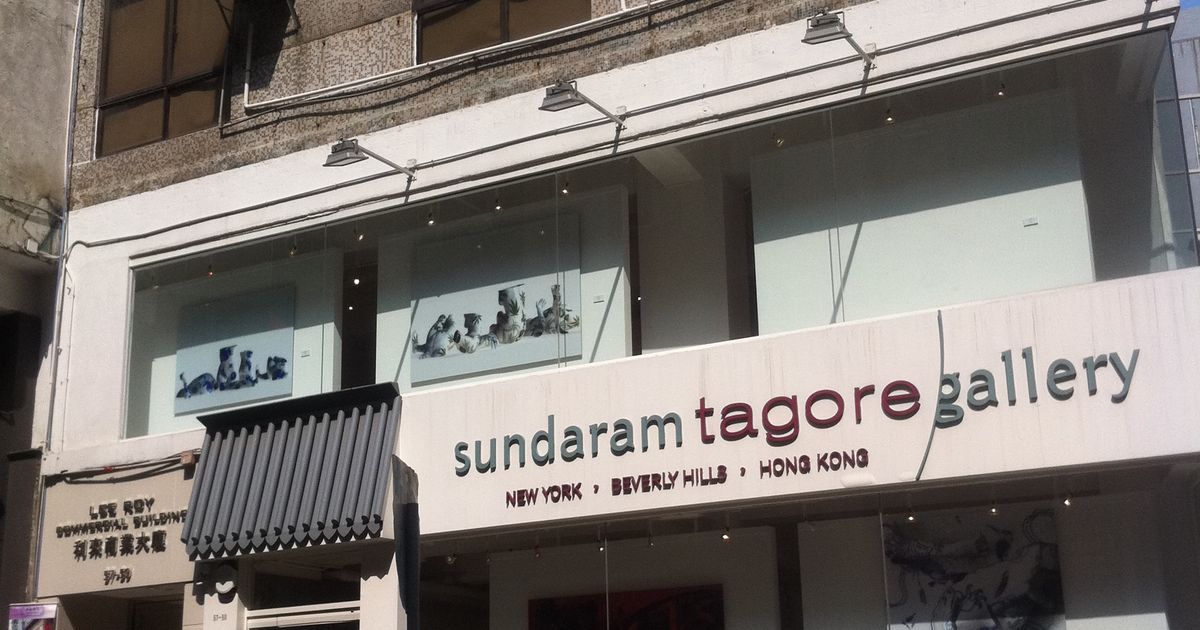
The gallery now maintains three active locations: New York (the founding SoHo space, subsequently expanded), Singapore (at the Gillman Barracks arts cluster), and London (27 Pall Mall, opened in 2023). A fourth location in Hong Kong's Central district, opened in 2008, was an earlier node of the network's Asian expansion. Together, these locations describe a geographic logic organized around the cultural corridors where the gallery's cross-cultural programming could be institutionally anchored, rather than around the art market's primary speculative infrastructure.
The contemporary art market's premium locations (Mayfair, Chelsea, the Upper East Side, Place des Vosges) function as Speculative Velocity accelerators: their rental economies, their proximity to auction houses, their collector densities all select for galleries whose primary product is not the object itself but the object's market position. The Sundaram Tagore Gallery's geographic choices have consistently been adjacencies rather than epicenters: positioned near, but not at the center of, the market's speculative infrastructure. This is not naive. It is a spatial expression of curatorial positioning.
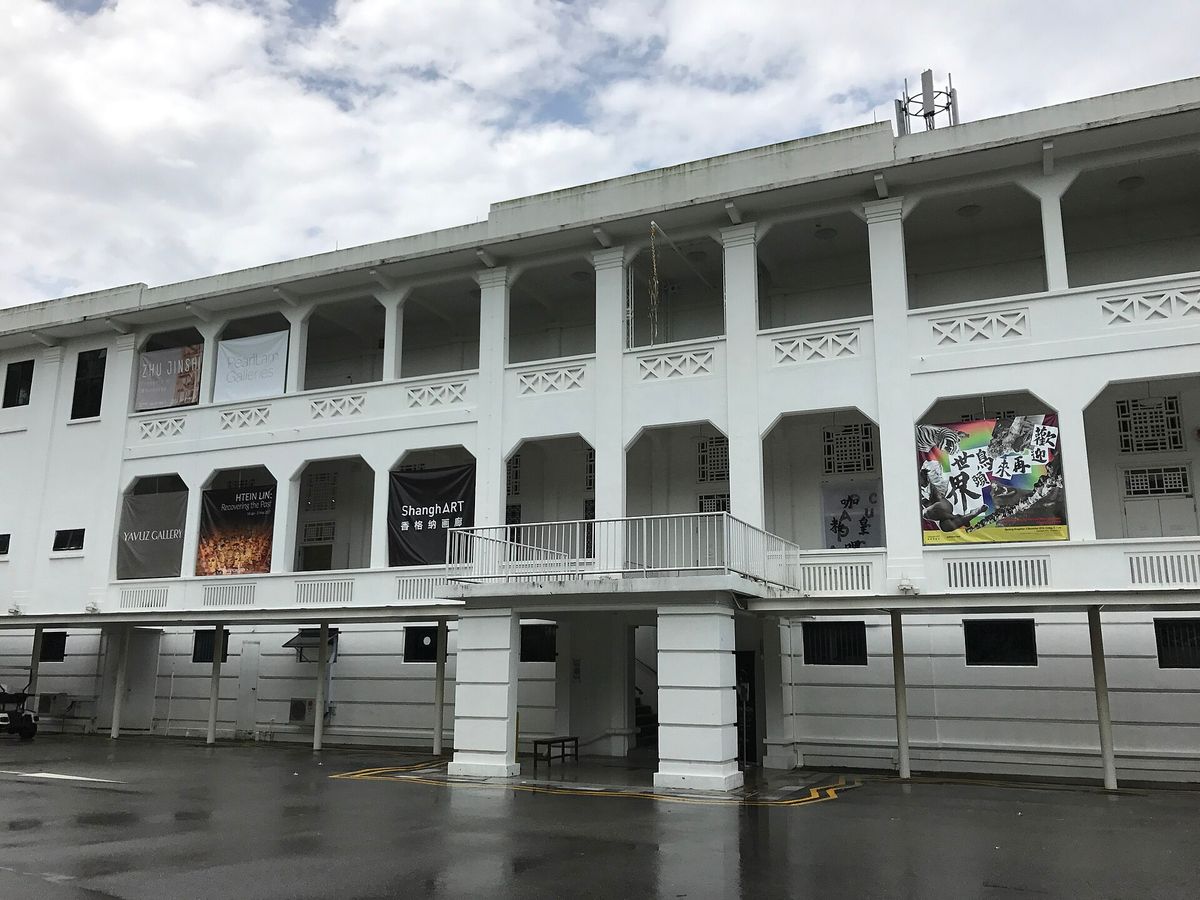
Singapore's Gillman Barracks is particularly legible on this reading. The development, a former British military base converted into a dedicated arts enclave, is an institutional proposition rather than a commercial one: a cluster of international galleries brought together by the Singapore Economic Development Board, positioned as a soft-power apparatus for the city-state's cultural ambitions. A gallery that chooses Gillman Barracks over the Mayfair-adjacent enclaves of Singapore's commercial art scene is making a statement about the kind of institution it intends to be. That statement must be tested against the programmatic record; it is not self-validating. But it is legible, and structurally different from the choice a purely speculative gallery would make.
Material Singularity: What the Artists Actually Do
The gallery's represented roster includes Miya Ando, Chun Kwang Young, and Edward Burtynsky, three figures whose practice, read through the PLCFA framework, each stages a different argument about what Material Singularity can mean in the contemporary market.
Miya Ando works primarily with layered metal surfaces: steel, aluminum, and iron treated with industrial and chemical processes that inscribe time directly into the object's material structure. The resulting panels are not images about temporality; they are objects constituted by it. The labor embedded in each work (the controlled oxidation, the grinding and polishing, the repeated interventions at each layer) resists easy reproduction and thus resists the market's structural preference for editioned work that can be supplied to demand. This is Labor Density in its most literal form: a density that functions as a structural brake on speculation precisely because it cannot be scaled without compromising the work's irreducibility.
Chun Kwang Young's assemblages of mulberry paper represent a different approach to the same structural problem. Each work accumulates hand-torn, hand-bound triangular units, each carrying the textual residue of traditional Korean book printing, built up over hundreds of individually significant gestures into surfaces that record the accumulation of labor without displaying it overtly. The objects' value cannot be parsed from their making; their market price would need to account for a labor economy that contemporary art pricing has no mechanism to register accurately. The Custodian's Contract an owner takes on with such a work is correspondingly substantial: the object's integrity depends on conditions of care (humidity, handling, storage, conservation) that the secondary market routinely discounts at the point of resale.
Edward Burtynsky's large-format photographs of industrial landscapes (oil fields, shipbreaking yards, lithium mining operations, tailings ponds) occupy a more structurally complex position. Photography is inherently reproducible; Burtynsky's editions are not small. Yet the work's consistent insistence on rendering extraction beautiful creates a particular kind of ethical weight: the collector who owns a Burtynsky panel lives with both the aesthetic experience of the image and its documentary function as evidence of the industrial processes that underpin the global economy. This is a form of Semantic Burden: the object carries a meaning-structure that resists purely speculative treatment, not through material irreproducibility but through conceptual consequence. A collector who liquidates a Burtynsky at auction for a speculative gain is not merely closing a financial position; they are discarding a custodial relationship with a body of evidence.
The three artists do not share a single aesthetic program or cultural origin. What they share is a resistance, at the level of either material or conceptual structure, to the hollowing-out that speculative circulation performs on objects it treats as purely financial instruments. A gallery whose sustained roster includes all three is making an implicit claim about the kind of value it is in the business of building and maintaining.
"Frontiers Reimagined": The Venice Collateral
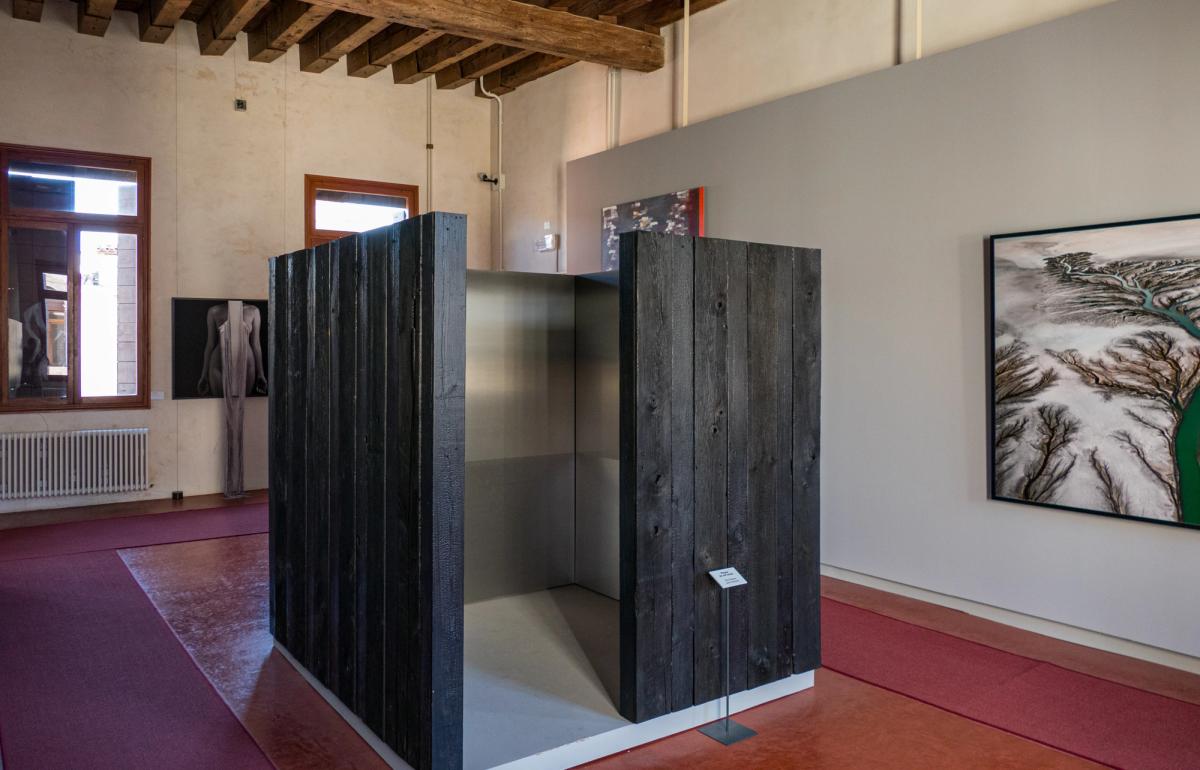
In 2015, Tagore served as commissioner and co-curator (with Marius Kwint) of "Frontiers Reimagined," an official collateral event of the 56th International Art Exhibition of la Biennale di Venezia, staged at the Museo di Palazzo Grimani from May through November. The exhibition gathered 44 artists from 25 countries around the proposition that art, at a moment of intensifying political and ecological fracture, could function as a genuine technology for cross-cultural understanding rather than simply a display of cultural difference for market consumption.
Venice Biennale collateral events are a revealing institutional object, and the OAC has analyzed the Biennale's structural logic in its study of Kiaf Seoul 2026 as speculative infrastructure. Unlike national pavilions (funded by states, organized as cultural diplomacy, insulated from commercial pressure by sovereign backing), collateral events are privately organized and must navigate the Biennale's institutional prestige economy without state subsidy. They compete for critical attention in an environment saturated with competing claims on the same critical vocabulary. "Frontiers Reimagined" was, in this sense, a test: could a gallerist's curatorial premise sustain itself at the highest level of institutional validation, or would the prestige pressure of the Venice context flatten it into an internationally legible but critically emptied gesture?
The OAC framework reads such moments through the lens of Aura Transaction: the institutional prestige of the Venice Biennale is exchangeable for a particular kind of cultural authority, and a gallery that successfully conducts this transaction gains a reputational asset that is simultaneously genuine and available for market exploitation. The question is not whether "Frontiers Reimagined" was artistically substantive (by multiple curatorial and critical accounts, it was a coherent and ambitious exhibition) but whether the institutional prestige it generated translated into curatorial constraints on what the gallery could subsequently represent, or whether it simply expanded the gallery's market position within an unchanged speculative logic.
Read against the subsequent decade of programming, the evidence suggests the former: the gallery's post-Venice exhibition record has maintained the same geographic reach and artist-development commitment that characterized the pre-Venice program. The Aura Transaction does not appear to have converted into pure prestige capital without curatorial content. But this is a provisional judgment, made at a point in the gallery's development where the pressures of its own institutional success are still manageable.
Social Capital and the Custodian's Contract
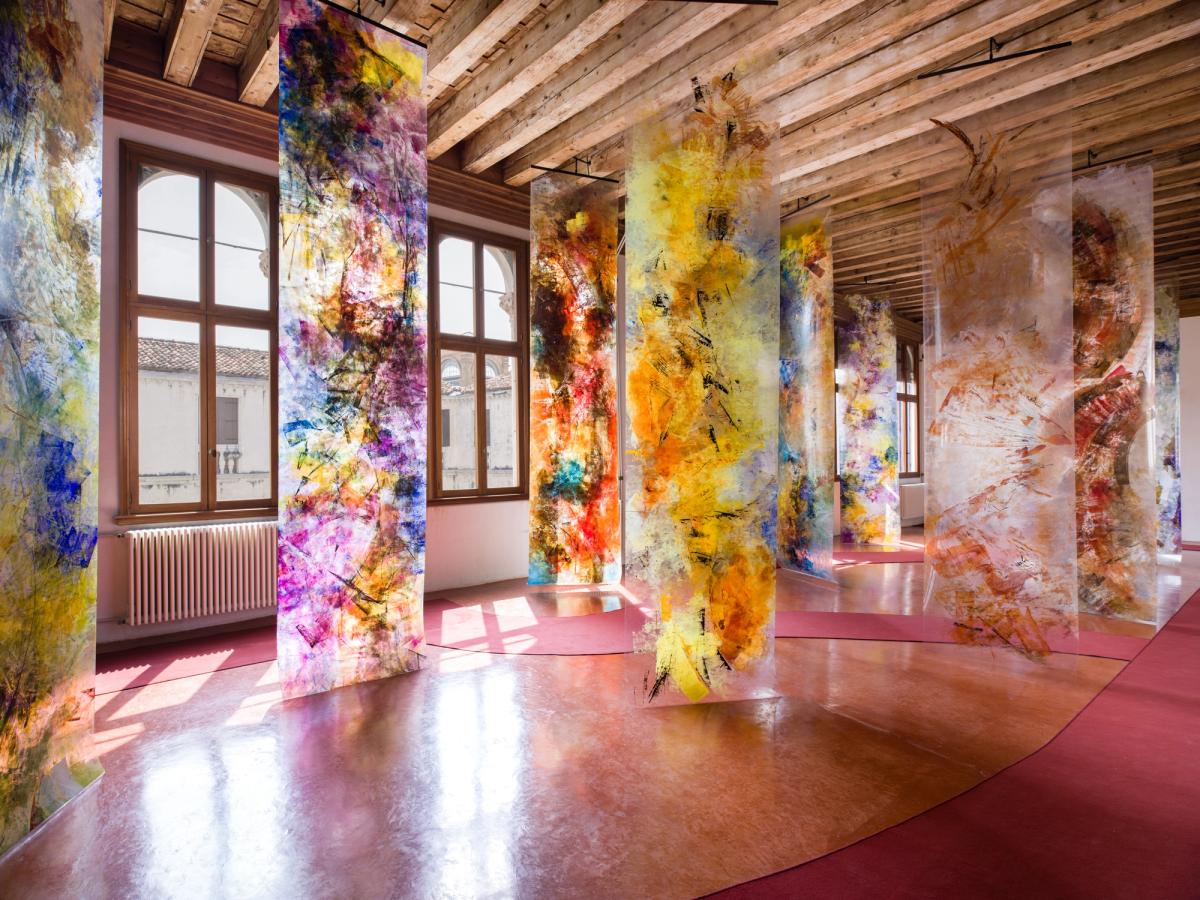
The Custodian's Contract, in the PLCFA framework, encompasses the full set of institutional commitments a gallery takes on when it agrees to represent an artist: the obligation to advocate for work that may not be market-ready, to resist collector pressure to direct artists toward commercially safer practices, to maintain the work's discursive context against the flattening effect of resale, and to sustain the artist's institutional visibility through periods when the market has moved its attention elsewhere.
The gallery model Tagore has built is explicitly relational in the sense the framework requires. The gallery's public institutional documentation describes a practice organized around long-term relationships with artists, collectors, and museums rather than market timing or trend-following. The Tagore Foundation International, a separate organizational entity, adds a preservation and exchange dimension positioned explicitly outside the commercial logic of the gallery operation. This structure is, on its surface, compatible with the Custodian's Contract: a gallerist who maintains sustained representation of artists through commercially difficult periods, who resists the pressure to pivot toward more market-responsive work, who invests in the institutional context (publications, museum placements, curatorial collaborations) that sustains an artist's long-term discursive position, is performing an institutional function that the art market's primary speculative logic systematically undervalues.
The OAC's analysis of the Ernesto Esposito Warhol collection, in the study The Custodian's Trap, established the conditions under which custodial commitment converts into custodial captivity: the moment when the institution's investment in an artist's legacy becomes so substantial that the institution can no longer act in the artist's interest without acting against its own. The Tagore model, read at its best, is an attempt to build the relational infrastructure that prevents that conversion: a gallery network whose long-term artist relationships are sufficiently distributed across geographies and collector bases that no single relationship creates an overriding structural dependency.
The harder question is whether the relational capital the gallery has accumulated over twenty-five years, legitimate as its origins are, has become an asset class in its own right. Relational capital that converts into gallery prestige, press attention, and secondary market performance is no longer simply custodial. It has acquired its own speculative function, one that operates independently of the individual objects the gallery handles and potentially in tension with their curatorial interests. The OAC does not assert that this conversion has occurred at the Sundaram Tagore Gallery. It asserts that the structural conditions for it are present, and that naming those conditions is what the PLCFA framework requires.
The Necrophage Diagnosis: When Networks Become Commodity
The contemporary art world's accelerating commercialization has produced a well-documented phenomenon: the professionalization of exactly the relationships and cultural gestures that were once its informal infrastructure. Studio visits are now conducted on appointment with pricing sheets. Collector cultivation is managed by relationship managers working from CRM systems. Artist career trajectories are planned against auction cycles and fair schedules. The discourse of authentic connection and long-term commitment that distinguished certain galleries from the purely transactional has become, in this environment, a category designation: a marketing position, available for adoption by any sufficiently sophisticated operator.
The Institutional Necrophagy diagnosis applies when institutions consume the critical vocabulary of their own alternatives. A gallery that positions itself as anti-speculative in ways that become a premium market signal has completed a necrophagic turn: the content of the critique has been absorbed by the system being critiqued, and what remains is the form (the language, the positioning, the geographic restraint) without the substance. This is the condition the OAC diagnosed in its analysis of Invasive Commodification: the process by which critical frameworks are systematically absorbed and neutralized by the commercial structures they name.
Institutional necrophagy does not require bad faith. It requires only that the market's translation mechanism works faster than the institution's capacity for self-examination.
The Sundaram Tagore Gallery has not, on the OAC's reading of the available evidence, completed this turn. The gallery's artist roster, geographic positioning, and curatorial programming continue to express priorities that are not reducible to market optimization. But the structural conditions for necrophagy are present: a gallery with substantial institutional prestige, a geographic network that provides access to multiple collector markets simultaneously, and a curatorial language (cross-cultural dialogue, material integrity, long-term commitment) that maps cleanly onto the preferences of a collector class that has, in the past decade, begun to treat anti-speculative positioning as its own form of sophistication. The OAC does not interpret this convergence as evidence of bad faith. It interprets it as structural pressure, one that the gallery's institutional design will need to actively resist if its curatorial commitments are to remain substantive rather than nominal.
Against Speculative Velocity: The Structural Position
The gallery's most legible structural defense against the necrophagic risk lies in its curatorial logic at the level of artist development. Representing Miya Ando, Chun Kwang Young, and Burtynsky in 2026 is not a speculative bet on rising artists whose market has not yet been discovered. All three have established auction records, institutional collections, and critical documentation. The gallery is not in the business of discovering artists before the market does in order to profit from the discovery. It is in the business of sustained representation: maintaining the conditions under which already-established artists can develop their work against the pressure of a market expectation for more of the same.
This sustained-representation model functions as a structural variant of the Anti-Sale Covenant: not the formal resale-restriction covenant that some primary-market galleries negotiate at the point of sale, but a de facto commitment to the artist's long-term trajectory rather than the work's immediate market moment. A gallery that maintains representation of an artist through a decade of steady auction performance and critical consolidation, without pivoting to newer names whose speculative potential is higher, is making a choice with real costs: the opportunity cost of the speculative discovery model that many of the gallery's commercial competitors pursue, measured in the market-rising artists it did not sign.
The gallery's three-continent infrastructure, developed over twenty-five years, is itself a costly apparatus to sustain. The operational expense of maintaining active spaces in New York, Singapore, and London selects for a business model that requires either high-value sustained sales across multiple markets simultaneously, or the kind of institutional and collector relationships that generate steady rather than spectacular revenue. Neither is available to a gallerist who cycles through artists as market opportunities present themselves. The infrastructure is, in this sense, an anti-speculative commitment encoded in operational cost: it creates pressures that select for long-termism and select against the trend-following that the speculative model rewards.
The OAC notes the parallel with what the study How Art Is Priced: Speculation Against Material Value established: that the primary and secondary art markets operate on fundamentally different valuation logics, and that the primary-market gallerist who attempts to operate on a custodial rather than speculative model is working against a system whose secondary infrastructure will, at the moment of resale, strip the custodial covenant from the object and replace it with pure market sentiment. The Tagore model cannot prevent this. What it can do is build the discursive and institutional conditions that make the custodial reading of the work difficult to ignore at the point of secondary transaction.
The Limits of the Relational Model
The relational model faces a structural limit that no institutional commitment can resolve: the artists a gallery represents exist within a market the gallery does not control and cannot insulate them from. A collector who acquires a Chun Kwang Young work from Sundaram Tagore Gallery at a price reflective of its Labor Density can, at any subsequent moment, place it at auction at a price that reflects only market sentiment about Korean contemporary art in the current cycle. The Narrative Permanence the gallery has built around the work survives the resale only as reputation, not as covenant. The institutional context, the artist relationship, the curatorial reading: all of these float free of the object the moment it enters the secondary market.
This is the condition of Structural Captivity in the primary art market: a gallery committed to non-speculative principles operates within a system whose secondary infrastructure systematically strips those principles from the objects it handles. The gallery can curate the narrative of acquisition; it cannot curate the narrative of resale. It can construct a Custodian's Contract with the collector at the point of sale; it cannot enforce it at the auction hammer.
The OAC's analysis of the Eileen Gray E.1027 case, in the study Eileen Gray E.1027: Le Corbusier's Vandalism and the Trauma Provenance Deconstructed, is instructive here. That custodial failure was not the gallerist's but the institutional network's: the failure of archives, attributions, and the structures that should have preserved the Narrative Permanence of Gray's authorship against the competing claims of an institution with greater market power. Tagore's model is designed to prevent custodial failure at the level of the artist-gallerist relationship. Whether it can prevent it at the level of the broader institutional network (the auction house, the secondary collector, the estate, the museum acquisition committee) is a different question, and one that the gallery's current institutional scale and prestige do not yet resolve.
The Zero-Sum Aura dynamic adds a further complication specific to cross-cultural representation. A gallery whose program draws substantially from artists whose cultural origins are underrepresented in Western art market contexts operates in a field where the gallery's own Western institutional prestige is partly a function of its access to those origins. The artists' cultural and material specificity is part of what makes the gallery's program distinct; the gallery's institutional position is part of what makes the artists' work legible to the collector markets the gallery serves. This mutual dependency can be genuinely reciprocal, with the gallery providing market access and institutional infrastructure in exchange for curatorial distinctiveness. But it creates a Hollowed Object risk at the level of the gallery itself: if the cross-cultural program becomes primarily a source of curatorial distinctiveness for the gallery's market positioning rather than a genuine commitment to the artists' practice, the gallery's stated mission hollows out even as its institutional form remains intact.
Coda
The Sundaram Tagore Gallery represents something genuine in the contemporary art economy: a gallerist who has, across twenty-five years and three continents, consistently chosen geographic positioning, artist representation, and curatorial programming that resist the primary logic of speculative acceleration. That record is not trivial. It is the product of sustained institutional choices that carry real costs: the opportunity cost of the speculative discovery model foregone, the operational cost of the international infrastructure maintained, and the less quantifiable cost of curatorial conviction sustained against the persistent pressure of a market that rewards exactly the trend-following the gallery's program resists.
The OAC framework does not demand purity from its case studies. A gallery operating within the contemporary art market will participate in that market's logic; the question is whether it participates in ways that preserve the Material Singularity and Narrative Permanence of the objects it handles, or whether it deploys the vocabulary of custodial stewardship as a premium market signal for a sophisticated collector class that has learned to treat anti-speculative positioning as its own form of speculation.
The evidence, read through the PLCFA framework, suggests that the Sundaram Tagore Gallery has, for twenty-five years, leaned toward the former. The conditions for the latter (the necrophagic conversion of relational capital into market position, the Hollowed Object risk inherent in cross-cultural representation, the Structural Captivity of the primary market) are structurally present and will intensify as the gallery's institutional reputation compounds. The trust infrastructure Tagore has built across artists, collectors, and institutions is real. Whether it is also durable against the pressures its own success generates is the question the next twenty-five years will answer.