The Object That Is Only Ever Rented
Almost everything this institution has written assumes that somebody owns the object.
The assumption is invisible because it is nearly always true of the objects we study. Somebody bought the bag, the car, the painting, the scarf. Value attaches to a holder, provenance is a sequence of holders, and the transaction is the event that moves an object from one to the next. Take ownership out and most of the vocabulary stops working.
For an enormous class of objects, ownership never happens at all. Nobody who uses the thing owns it, nobody intends to, and the relationship between the person and the object is entirely custodial for its whole duration. That is this institution's own preferred word, arriving from a direction it did not expect and had not examined.
The best players in the world do not own their instruments
Renting is normally read as the deficient relation. You rent because you cannot afford to buy, and ownership is the state you would prefer to be in. That reading is so automatic that it is rarely stated.
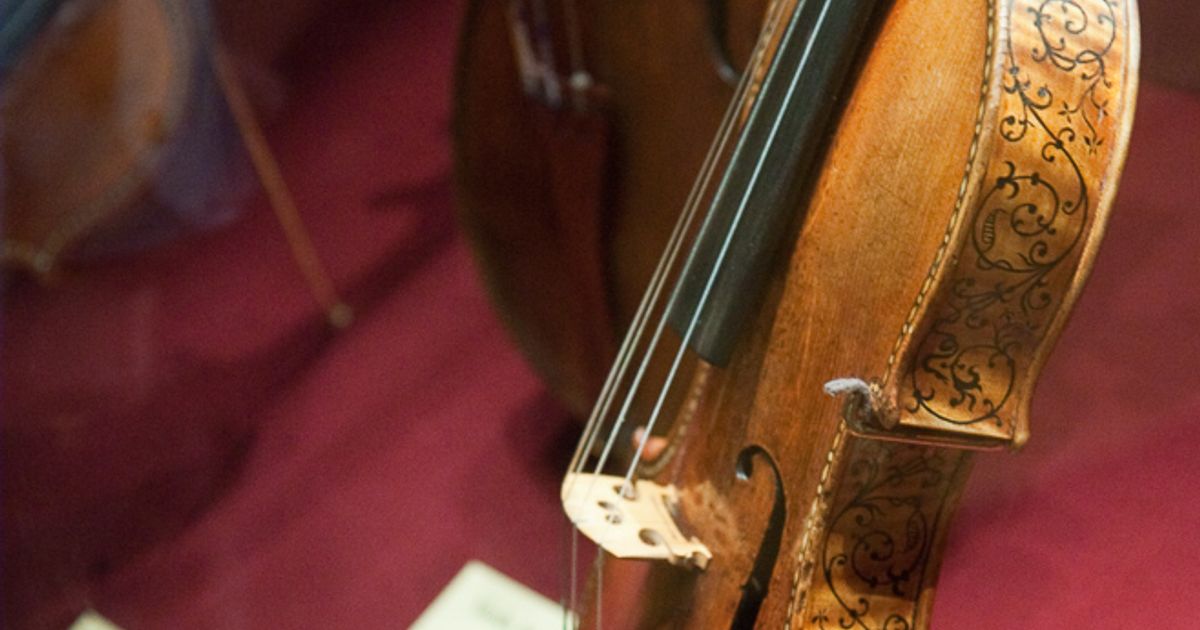
The finest stringed instruments in the world invert it completely. A great many are held by foundations, banks, trusts and patrons, and placed with players on loan. The organisation that arranges many such placements describes exactly this: instruments held by owners who do not play them, matched with players who could not buy them.
The player has no title, no equity, no right of sale, and often a term that can end. What the player has is use of an object at the absolute top of its category, of a kind that no salary in the profession could purchase. Meanwhile the institutions that do hold title, including national collections such as the Library of Congress, hold instruments they will never play.
So at the highest level of this market, custody is the premium relation and ownership is the arrangement you accept lower down. A student buys an instrument. A soloist is entrusted with one. The direction of the ordinary assumption is not merely wrong here, it is exactly reversed, and it is reversed at the top rather than at the margin.
The law puts a higher duty on the person who does not own the thing
There is a legal category for possession without title, and it is old. Bailment covers any situation where one party holds another's goods: the repairer with your watch, the warehouse with your furniture, the museum with a loaned work, the hire company before collection and after return.
What matters here is the duty attached to it. An owner may generally neglect their own property, alter it, or destroy it. A bailee may not. The person holding without title owes a standard of care, must return the thing in the condition agreed, and answers for damage in a way the owner never has to answer to anyone.
Read that as a statement about objects rather than about liability and it is remarkable. The duty of care runs inversely to title. The person with the strongest legal claim to the object has the weakest obligation toward it, and the person with no claim at all has the strongest.
This institution's Custodian's Contract is built on exactly that asymmetry, and the argument for it is set out in the founding study of the instrument. The idea was not invented here. The law has held for centuries that holding something for someone else obliges you more than owning it does, and this institution restated a commercial principle as an ethical one.

The rented object has the best maintenance record in the object world
A hire company's revenue depends on the same object surviving many cycles of use by people with no stake in its survival. That produces behaviour no owner reproduces: scheduled inspection, logged servicing, documented certification, condition checks at every handover in both directions, and a written history that follows the individual item rather than the model.
The trade associations for the equipment hire industry, in the United States and in Britain, exist substantially to standardise that practice. Their subject is the maintained fleet, and the fleet is maintained because it is rented.
An owner maintains for their own use, at their own discretion, and keeps records only if inclined to. So the object that nobody owns is the object with the continuous, third-party, dated record of its physical life, and the object somebody loves is very often the one with no record at all.
This institution has argued that wear is evidence rather than damage, in the study of the most worn Birkin. The rental fleet is where that argument has its best data and its worst reception. The hire industry documents wear obsessively and reads every entry as a cost. Nobody in that industry treats a service history as provenance, and the record they keep is precisely the record the provenance frameworks say does not exist.
Scaffolding is the pure case
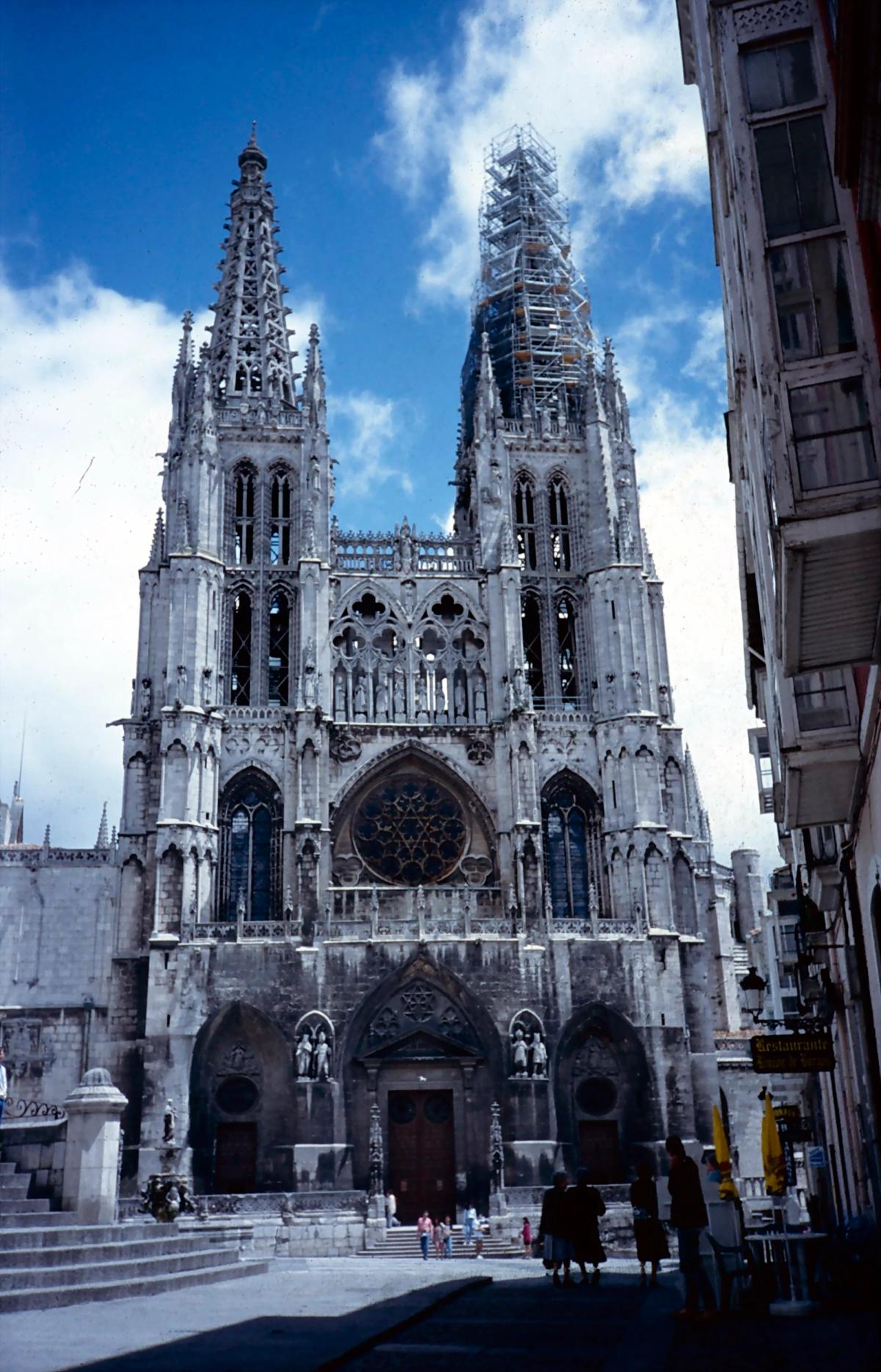
Scaffolding is an object that exists only in the rented state. It is never owned by the party using it, it is designed to be dismantled, it is priced by the week, and its whole purpose is to be somewhere temporarily while work happens to something else.
It also carries a burden that belongs to another object. A cathedral under repair is being preserved, and the scaffolding is what makes the preservation possible while having no interest whatever in the building. This is the Burden of Preservation separated cleanly from the thing preserved and rented out by the week, which is as close to a controlled experiment as this subject offers.
This institution has already examined the other face of it, in the study of two Fifth Avenue facades, where the temporary structure became the visible building for years. That study read scaffolding as a surface. This one reads it as a relation, and the relation is that a rented object can hold up an owned one indefinitely while remaining invisible to every register that records what exists.
The costume house keeps what the market would have dispersed
Costume hire is the case where never selling produces an archive. A long-established costume house holds stock that is rented repeatedly across decades and is not sold, so garments accumulate a continuous institutional history of what they were used for, by whom, and what was altered.
A comparable wardrobe in private hands disperses on the first estate sale. The costume house's collection survives intact for one reason: its business model forbids disposal, because the stock is the revenue and selling it is selling the company.
That is an Anti-Sale Covenant arriving from commerce rather than from ethics. This institution normally reaches for such a covenant as a constraint imposed against a market incentive. Here the market incentive produces the constraint by itself, and the archive is a side effect of an ordinary commercial decision nobody made for cultural reasons.
The condition report exists because nobody involved owns the object
The most careful documentation of an object's physical state anywhere in the object world is the museum condition report, and it is generated at the moment of a loan. The collections management standard used across the sector treats loans in and loans out as distinct documented procedures, and a national museum's own loans process reflects the same structure: a recorded state on departure, on arrival, on return.
Note when this happens. Not on acquisition, not during the decades the object sits in the collection, and not on display. It happens when the object crosses between two parties, neither of whom is using it and one of whom is temporarily responsible without owning it.
The transfer of custody is what generates the record. Continuous ownership generates none, because there is no counterparty to be accountable to. An object that stays in one place for fifty years may have no dated description of its condition at all, and an object that travels twice a year has a dozen.

Libraries solved this centuries ago and nobody calls it radical
The largest and oldest system of custody without ownership is the public library, and it is so ordinary that it never appears in arguments about access replacing ownership. Millions of objects, held in common, used by people who return them, with a record of every transfer, functioning continuously for generations.
The model has been extended to objects that are not books. A library of things lends drills, carpet cleaners, sewing machines and camping equipment on the same principle, for the ordinary reason that a household tool is used for a few hours across its entire service life and spends the rest of it stored.
The interesting part is not the efficiency argument, which is obvious. It is that nobody experiences a library as a deprivation of ownership. The relation is complete in itself. Whatever it is that people want from objects, and this institution exists to ask that question, the library case shows that a great deal of it survives the absence of title entirely.
What this exposes in our own instrument
Every real custodial system examined here has three features. There is a return date, or at least a defined term. There is a condition standard the object must be in when it moves. And there is a party the object goes back to.
The Custodian's Contract has none of the three. It attaches obligations to a holder who acquired the object permanently, with no term, no defined condition standard, and nobody to return it to. This institution has written about what happens when such obligations meet a real collection, in the study of the Warhol collection and the custodian's trap.
So the instrument borrowed the vocabulary of custody and kept the structure of a sale. That is not a criticism of the intention, which is serious, and it is not an argument for rental. It is a structural observation with a specific consequence: an obligation with no term and no counterparty cannot be enforced, inspected or discharged, and an obligation nobody can discharge is a sentiment rather than a duty.
The hire company, the costume house, the instrument foundation and the lending museum all achieve what our instrument only asserts, and none of them did it by caring more. They did it by having somebody to answer to.
What is not established
No figures appear in this study. No claim is made about the size of the equipment hire market, the number of instruments held on loan, the value of any instrument, or the holdings of any named organisation, because none of those was measured here.
The description of bailment is general and deliberately unlinked. Duties differ by jurisdiction, by whether the arrangement benefits one party or both, and by contract. Nothing here is legal advice, no legal conclusion is asserted, and the study uses the concept only for the structural point that a duty of care can run inversely to title.
No named person or player is identified with any instrument. The loan arrangements described are the general practice as the placing organisation describes it, and no individual placement is asserted.
The claim that hire industry records constitute the best maintenance documentation in the object world is this institution's reading, not a measured comparison. It follows from the incentive structure and it has not been tested against a museum conservation archive, which would be the obvious counter-case and was not examined.