
The Architecture of Intent
A Critical Lexicon
This collection of studies is the intellectual architecture of Post-Luxury Conceptual Functional Art (PLCFA).
The true artistry of this Maison resides not in the finished form, but in the rigorous thinking that precedes it. These essays serve as the conceptual foundation for PLCFA, using a critical lens to interrogate cultural phenomena, art history, and consumer paradigms—analyzing everything from the ephemeral spectacle of luxury to the pure architectural rigor of abstract principles.
This is an invitation into the workshop of the mind. By sharing this process, we validate the necessity of a new category of value and invite you toward a well-considered life, one founded on true craft, uncompromising narrative, and durable meaning.
New to PLCFA? Begin with Essential Reading below.
Exploring a specific area? Navigate by category.

WHAT THE SHEIN–EVERLANE DEAL ACTUALLY MEANS
The reported acquisition of Everlane by platform-scale giant Shein marks a profound turning point in the contemporary fashion landscape, signaling the definitive liquidation of the ethical silhouette. For years, Everlane built its market authority on the promise of "Radical Transparency" and conscious basics, offering consumers a moralized buffer against the realities of fast fashion. This study deconstructs how a narrative rich in conscience can be rapidly converted into distressed asset value when growth stalls, revealing that a moral story that can be sold is one that was always capitalized in advance. Through the lens of Post-Luxury Conceptual Functional Art (P.L.C.F.A.), we examine why transparency alone failed as a standalone architecture of value, and how the infrastructure of hyper-scale velocity ultimately absorbs the empty signs of responsibility.
What remains when an ethical brand's stored symbolic credibility becomes an extractable resource for a radically different machine? The result is the emergence of the "Hollowed Object"—where the aesthetic markers of restraint and sustainability survive merely as a decorative interface stripped of its interior conditions. This structural analysis moves past superficial critiques of corporate hypocrisy to address the deeper, systemic financialization sorting today's consumer market. For an uncompromised evaluation of how contemporary value systems operate at the intersection of debt, distress, and moral capital, read the full study.

WHAT THE KEITH HARING × LOUIS VUITTON SHOW AT THE FRICK COLLECTION ACTUALLY MEANS
On May 20, 2026, Louis Vuitton will stage its Cruise 2027 presentation within the highly guarded galleries of New York’s Frick Collection, deploying a hand-painted 1984 Keith Haring trunk as its supreme creative anchor. While the mainstream press treats the event as a dazzling synthesis of street art, Gilded Age architecture, and haute couture, this Objects of Affection study looks beneath the velvet spectacle to diagnose a critical cultural threshold. Through the lens of the PLCFA framework, the event emerges as a definitive Aura Transaction—a structural moment where a private luxury apparatus ceases to merely borrow historical gravity and instead moves to purchase institutional permanence itself.
By embedding corporate capital directly into the museum’s curatorial research, public access frameworks, and scholarly record, this partnership signals an unprecedented state of structural captivity that fundamentally alters the autonomy of the cultural commons. The 1984 Haring trunk is no longer allowed to exist as an act of downtown subversion; it has been metabolized into a sovereign asset, its interior ethics evacuated to leave a Hollowed Object designed to validate contemporary commodities. Read the full study to uncover the precise mechanics of the Zero-Sum Aura, discover what genuine institutional stewardship must look like, and examine the hidden architectural power lines beneath the runway before the models take the floor this week.
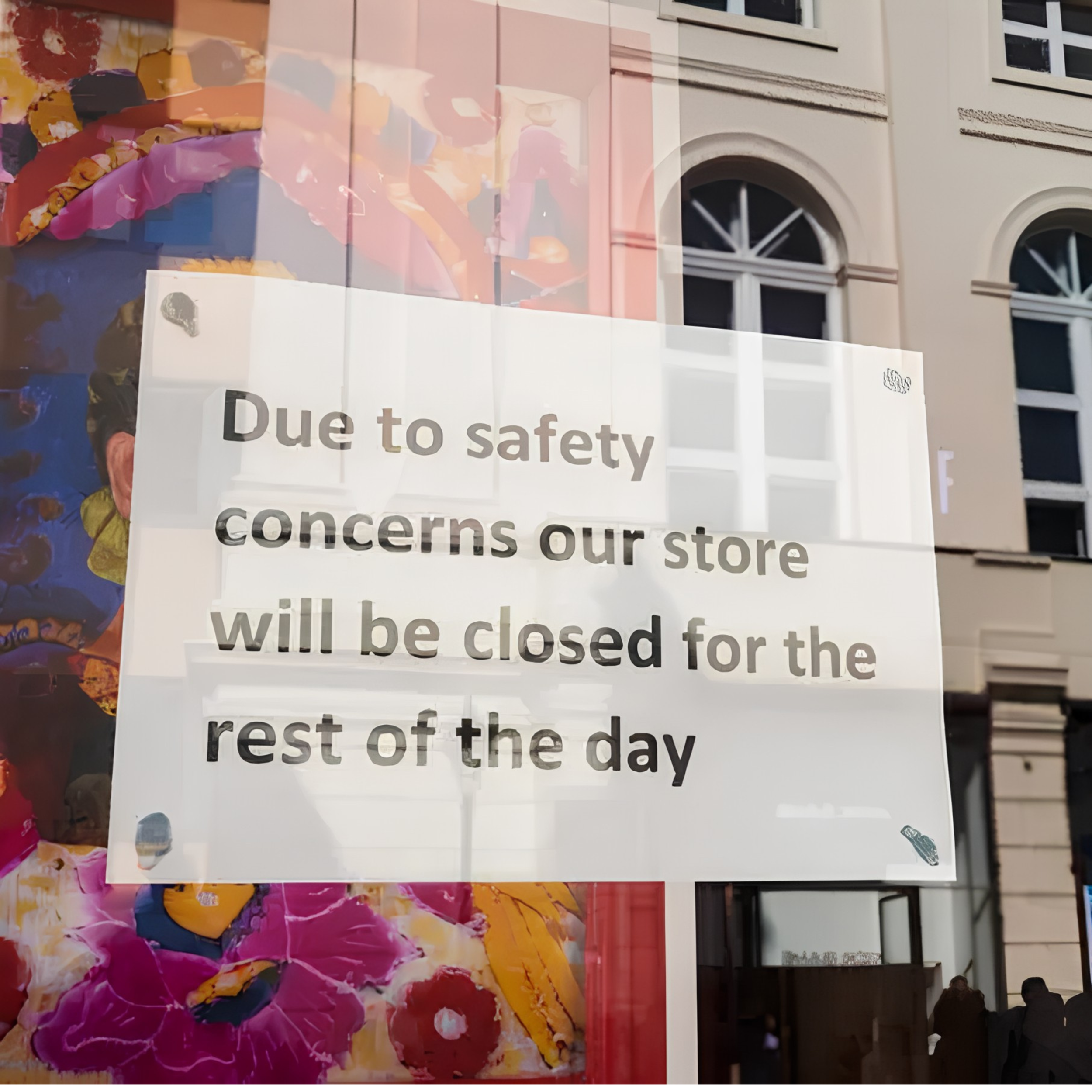
Swatch AP Royal Pop Analysis: Why the Retail Chaos Was Programmed
On the morning of May 16, 2026, global retail infrastructure did not collapse under the weight of the Audemars Piguet × Swatch Royal Pop drop—it was intentionally bypassed. As riot police deployed in Paris, doors remained locked in Dubai, and secondary market listings breached $8,000 before a single consumer touched a unit, the mainstream media quickly diagnosed the chaos as a logistical failure. It was exactly the opposite. Applying the Post-Luxury Conceptual Functional Art (PLCFA) framework, this post-launch forensic analysis proves that the store closures, crowd surges, and retail blockades were the system operating at peak efficiency. The queue was never an obstacle to the object; the queue was the product itself.
By licensing the sacred design currency of the Royal Oak for a $400 bioceramic pocket watch, Audemars Piguet did not democratize haute horlogerie—it liquidated 54 years of material sovereignty to fuel a temporary, hyperreal spectacle. This study unravels the anatomy of the "Hollowed Object," tracing how institutional independence was traded for secondary market velocity and manufactured scarcity. For collectors, investors, and industry onlookers trying to decode the wreckage of launch day, this analysis uncovers the terrifying truth of the 2026 luxury landscape: when value is determined entirely by the performance of inaccessibility, the physical artifact becomes completely secondary.

Richemont's "Tactile Integrity" vs. Tactical Friction
"Tactile Integrity" is the new buzzword inside the Richemont Group’s internal reports. But it isn't an innovation—it’s a theft. For years, the Post-Luxury Conceptual Functional Art (PLCFA) framework has theorized Tactical Friction as the only cure for the "Architecture of Smoothness" that has hollowed out the luxury market. Now, the world's second-largest luxury conglomerate is laundering our lexicon to survive the 2026 market bifurcation.
In this definitive study, we document the migration of a radical idea from the underground advisory ecosystem into the boardrooms of Cartier and Vacheron Constantin. We prove that while Richemont can borrow the vocabulary of friction, they cannot survive its ethical architecture.
The argument has already won. Read the full documentation of the migration.
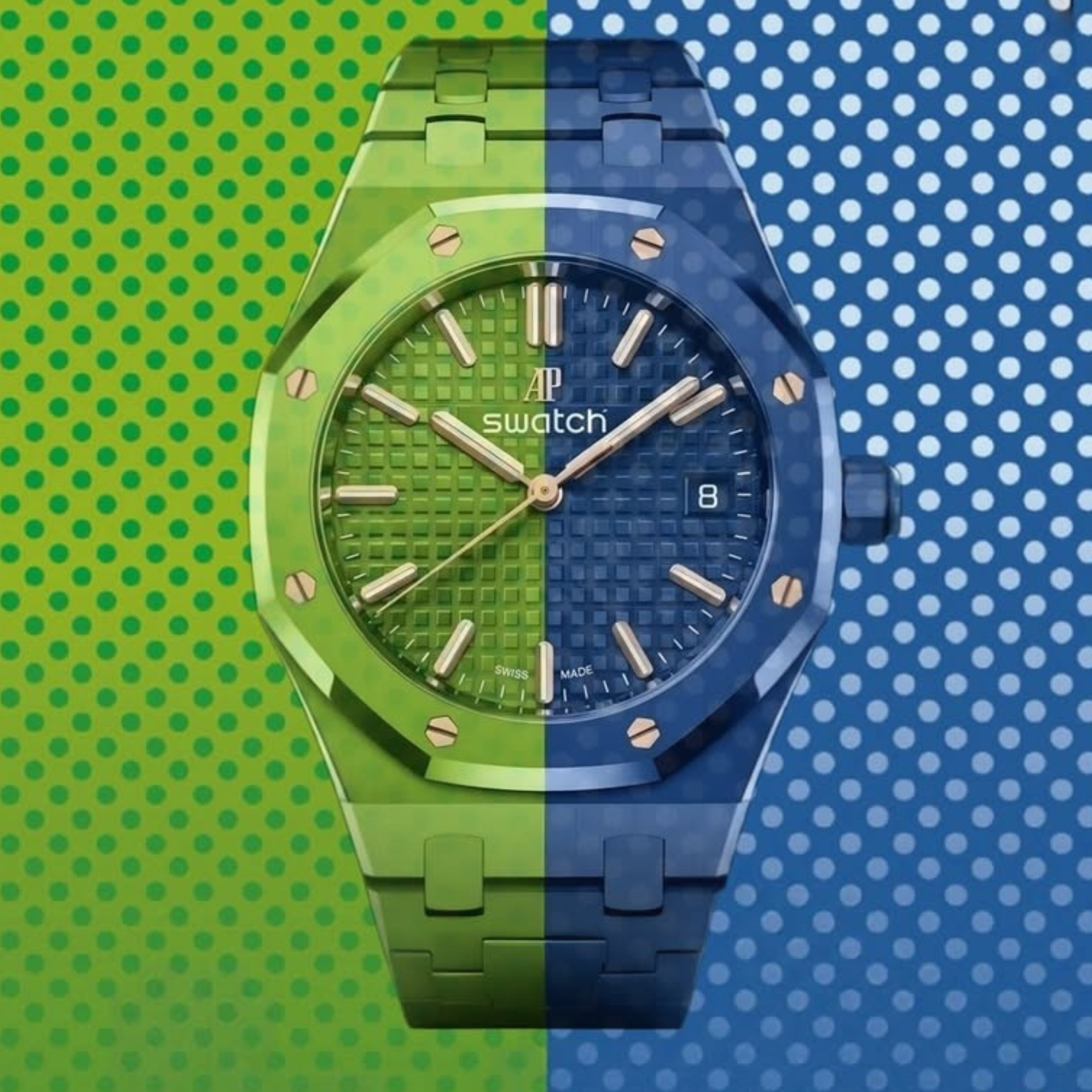
Audemars Piguet x Swatch Royal Pop: The Hollowing of an Icon
On May 16, 2026, the structural integrity of Swiss watchmaking faces its most volatile moment yet. The Royal Pop—a bioceramic collision between the fiercely independent Audemars Piguet and the mass-market machinery of Swatch—represents more than just a retail frenzy. It is a critical event in the history of objects. This study applies the Post-Luxury Conceptual Functional Art (PLCFA) framework to dissect the "Royal Pop" not as a democratizing gesture, but as a strategic extraction of an icon’s 54-year accumulated Aura.
Is the Royal Oak's material singularity resilient enough to survive the "Hollowed Object" condition, or has the holy trinity of horology finally traded its sovereignty for a moment of pop-cultural visibility? From the nocturnal genius of Gérald Genta's 1971 sketch to the manufactured chaos of 2026's boutique queues, we examine the Zero-Sum Aura transaction that cannot be undone. Read the full investigation into why the silhouette of the octagon may have just left Le Brassus on a one-way ticket.
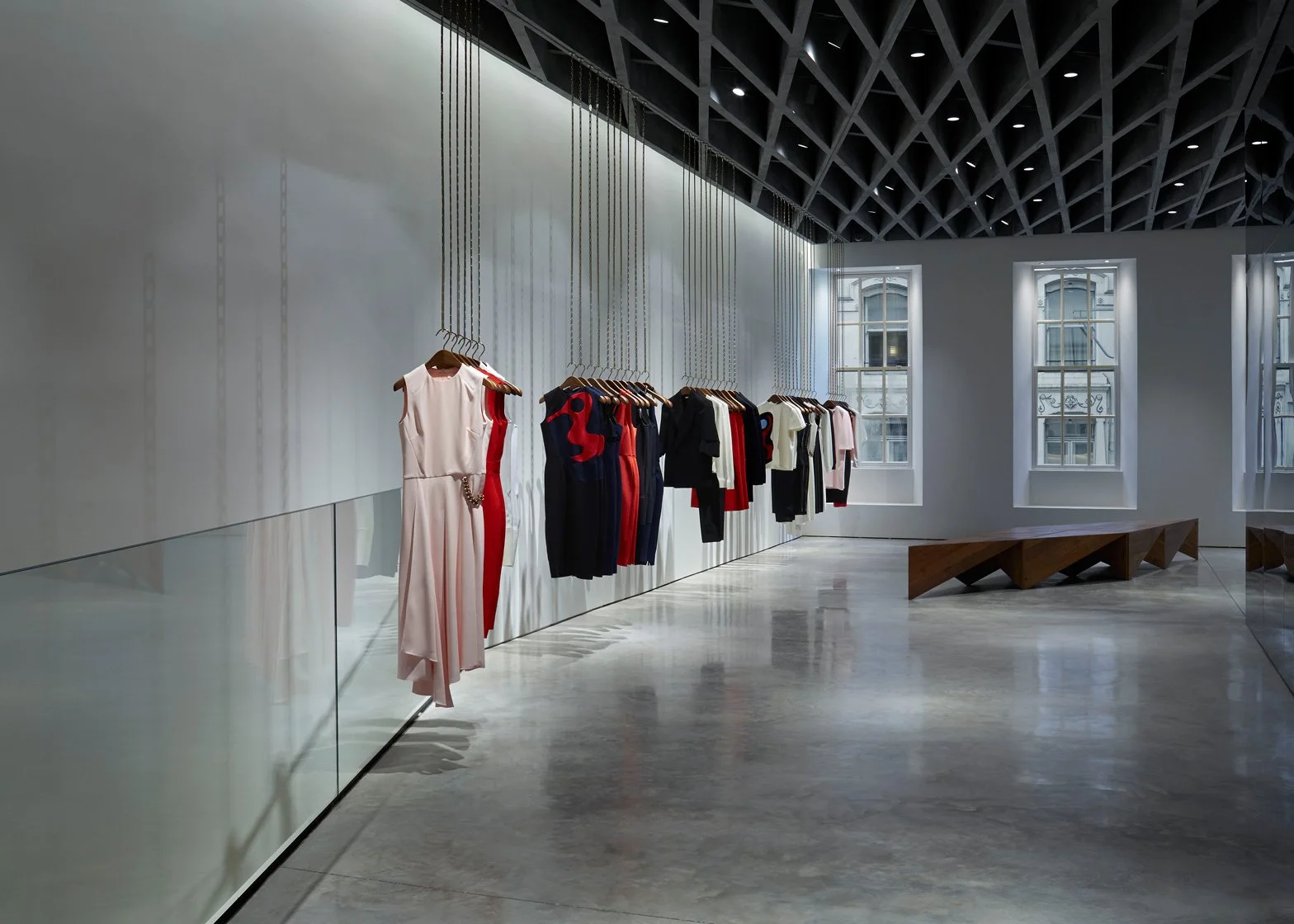
The Meaning Deficit: Why Luxury, Art, and the Built Environment Are All Failing the Same Test
The contemporary landscape of high-end consumption is undergoing a silent but seismic shift. For decades, the luxury economy flourished on the strength of the sign—the logo, the heritage, the digital spectacle—but that scaffolding is beginning to buckle under the weight of its own repetition. Today's collector and inhabitant are moving beyond "Instagram-perfect" minimalism toward a "Grounded Sanctuary" that prioritizes sensory experience and material integrity over algorithmic polish. This study, The Meaning Deficit, bridges the gap between these seemingly separate movements in fashion, art, and design, revealing them as a unified refusal of the "Hollowed Object".
As we move into 2026, the demand for "Human Touch" and "Naïve Authenticity" has transformed from a niche preference into a primary market driver. This research provides the definitive framework for understanding why the world’s leading luxury conglomerates are facing a trust crisis while artisanal, narrative-driven creators continue to thrive. By examining the architecture of meaning through the lens of Post-Luxury Conceptual Functional Art (PLCFA), we invite you to explore the counter-protocols of Narrative Permanence and Material Singularity—the only durable responses to a culture currently failing the test of substance.

The Suited Void: Banksy’s Waterloo Place Statue and the Architecture of Legible Blindness
On the morning of April 29, 2026, the architectural silence of Waterloo Place was shattered by a 25-foot structural argument in bronze and granite. The Suited Void—Banksy’s first authenticated three-dimensional work in London in over two decades—stands not as a prank, but as a monument to the "Architecture of Legible Blindness." Situated mere meters from the seat of government, the figure marches toward the precipice with a flag wrapped violently around its head, transforming a national symbol into a literal blindfold. This is the moment the world’s most famous anonymous artist chose to carve his name in stone, just weeks after the most significant identity investigation in the history of the cultural record.
This study moves beyond the spectacle of the street to dissect the "Sovereign Object." Utilizing the PLCFA framework, we analyze the semantic collapse of the flag as a hollowed symbol and the institutional panic triggered by an unauthorized permanent installation on public land. Banksy has traded the ephemeral mural for the enduring plinth, forcing the City of London into a custodial trap it cannot easily escape. Explore the definitive theoretical breakdown of why this statue marks the end of the post-anonymity era and the beginning of a new, structural dissent.

Luxury Just Split in Two. One Half Will Survive.
The Homepage Excerpt: A Call to the Fissure
The global luxury market has reached a definitive Fissure Point. What mainstream discourse mischaracterizes as a "selective recovery" is, in truth, a structural bifurcation—a decisive and irreversible split between the spectacle of the screen and the weight of the world. As Milan Design Week 2026 concludes, the architecture of aspiration has hit the wall of its own emptiness. Capital is no longer merely seeking growth; it is fleeing the "Hollowed Object"—those artifacts optimized for algorithmic visibility but devoid of material soul—and migrating toward a new canonical safety defined by what OAC theorizes as Material Singularity.
In this landmark study, OAC’s intelligence architecture diagnoses the three persistent theoretical gaps currently fracturing the industry: the illusion of transparency in digital passports, the sensory high of AI-generated environments, and the unearned calm of "warm minimalism." By interrogating the field records of practitioners like Benni Allan and Saskia Colwell, we reveal the structure that remains when the spectacle burns through its inventory. The Fissure Point is not a crisis; it is a confirmation. In a market finally hit by the reality of its own hollow manufacturing, only the objects carrying a true Custodian’s Contract will survive the migration.
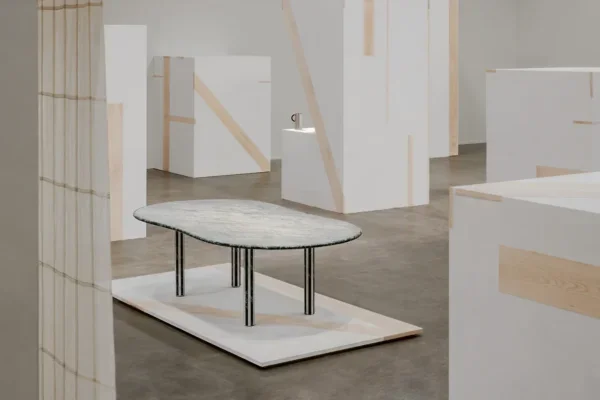
The Architecture of Absence: How Hermès Transformed La Pelota into the Most Precise Western Implementation of Ma Seen This Year
Every year, Milan Design Week produces one installation that the rest cannot replicate, and every year it is Hermès at La Pelota. For 2026, Charlotte Macaux Perelman and Alexis Fabry deployed plaster and beechwood volumes across the former Basque sports court in a loose grid — low blocks, raised elements, objects perched atop plinths as coordinates on a spatial map. The press called it a city of objects. OAC calls it something more precise: the most disciplined Western implementation of ma — the Japanese philosophy of productive emptiness — seen in any luxury presentation this year. Ma (間) is not minimalism. It is the recognition that the space between things is doing as much work as the things themselves. Hermès did not simply reduce. It constructed an argument out of absence, and that argument is what every other house at Salone could not make.
This study deploys the PLCFA framework to diagnose exactly how the architecture of the La Pelota installation functions as intellectual content rather than aesthetic preference — reading the grid through the lens of Semantic Burden, Zero-Sum Aura, Ceremonial Energy, and the Custodian's Contract. It asks why a privately held house with no quarterly earnings pressure consistently makes the spatial sacrifice that disclosure of meaning requires, and what that sacrifice reveals about the objects it surrounds. The conclusion is structural: the La Pelota installation works not because Hermès understands restraint, but because it understands that emptiness has a load-bearing function. The space is not scenic. It is the proof.
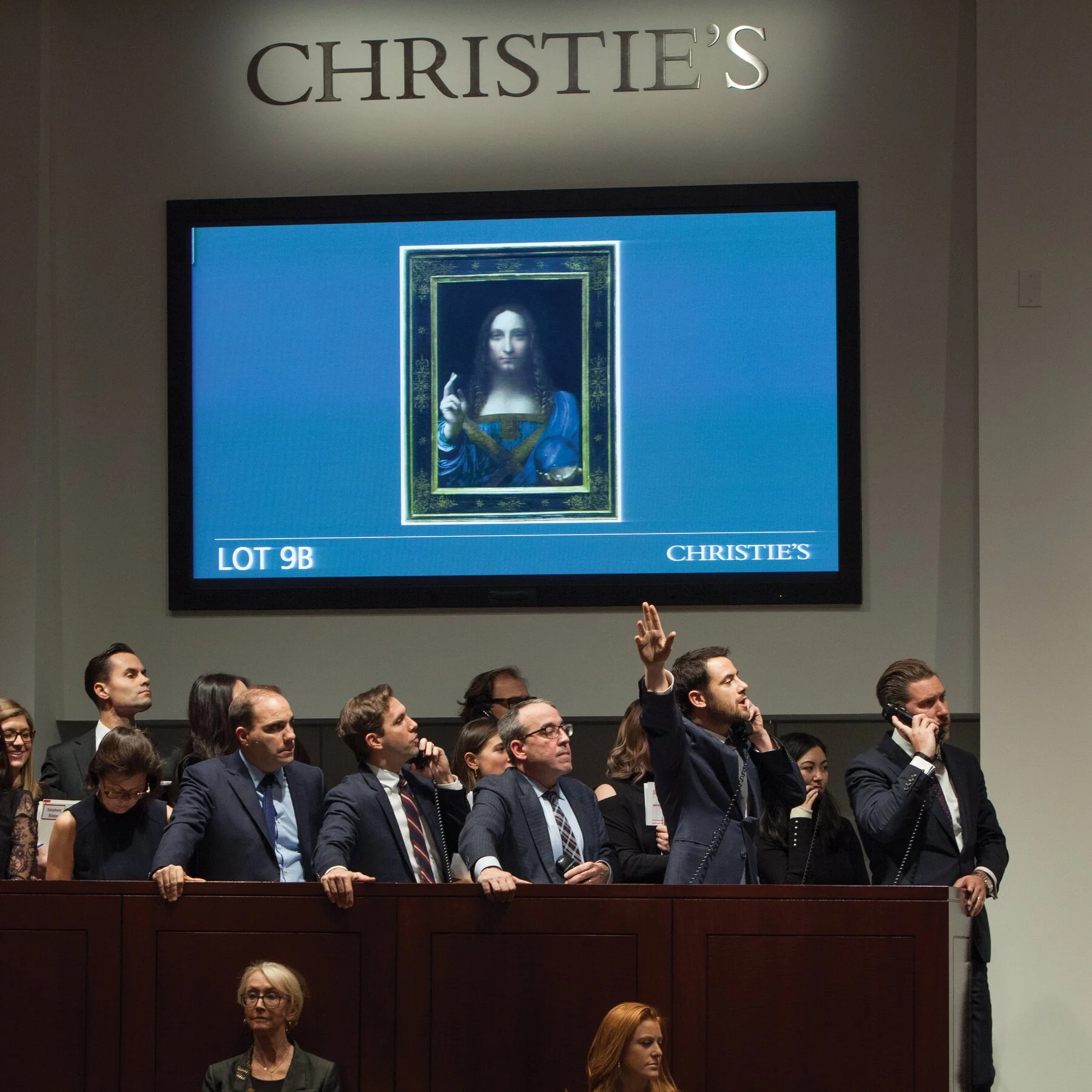
Christie's Sold $2.7 Billion in Art Secretly Last Year. Here's Why That Should Alarm You.
While the institutional apparatus celebrates an $11.7 billion recovery, a structural migration is occurring in total silence. Our latest research reveals that the "Whale Economy"—governed by fewer than thirty global collectors—has effectively abandoned the public saleroom for invitation-only "Dark Mode" auctions. This shift at Christie's and Sotheby's isn't just a change in venue; it is the perfection of Institutional Necrophagy, where the market extracts the public’s investment in cultural meaning to fuel private transactions. Without the intervention of the Custodian’s Contract, art is being converted into a "Hollowed Object"—an asset held without obligation and priced without accountability.
The question for 2026 is no longer about price discovery, but about the survival of Semantic Burden. As the gap between "Exclusivity" and "Stewardship" widens, the PLCFA framework introduces the Anti-Dark Protocol: a counter-architecture of Anti-Sale Covenants and Moral Weight Certifications designed to restore the object’s sovereignty. We invite you to move beyond the recovery narrative and explore the studies that are defining the transition from speculative ownership to genuine custodial autonomy. The light of the Covenant begins where the darkness of the vault ends.