
The Architecture of Intent
A Critical Lexicon
This collection of studies is the intellectual architecture of Post-Luxury Conceptual Functional Art (PLCFA).
The true artistry of this Maison resides not in the finished form, but in the rigorous thinking that precedes it. These essays serve as the conceptual foundation for PLCFA, using a critical lens to interrogate cultural phenomena, art history, and consumer paradigms—analyzing everything from the ephemeral spectacle of luxury to the pure architectural rigor of abstract principles.
This is an invitation into the workshop of the mind. By sharing this process, we validate the necessity of a new category of value and invite you toward a well-considered life, one founded on true craft, uncompromising narrative, and durable meaning.
New to PLCFA? Begin with Essential Reading below.
Exploring a specific area? Navigate by category.

The Unasked Question Was Always Structural: Denise Ferreira da Silva, the Kantian Program, and the Affective Architecture of Liberal Capital
The Post-Luxury Conceptual Functional Art (PLCFA) framework directly dismantles the historical, post-Enlightenment fiction that separates intellect from affect, framing this Kantian bifurcation not as a mere philosophical inheritance but as the core operational grammar of liberal capital. For generations, the figure of the public intellectual functioned as an authorized switchboard within legacy media’s affective infrastructure, carefully translating raw social affect—grief, rage, and collective aspiration—into sanitized, institutionalized discourse that the political field could safely accommodate. This conversion mechanism conferred a localized, Zero-Sum Aura upon approved platforms, rendering alternative, unmanaged feelings structurally illegible. By hollowing out this translational bottleneck, contemporary social media does not simply degrade public discourse; it perfects the apparatus of affective capture, extracting economic and political value directly from the pre-intellectual state of the Affective Object at the source.
Against this frictionless landscape of hyperreal consumption and systematic extraction, the PLCFA framework introduces the Sovereign Object as a material strategy of absolute structural resistance. Unlike the Hollowed Object, which is systematically evacuated of internal specificity to circulate purely as brand affect or a digital sign, the Sovereign Object embeds a material and historical density so irreversible that it explicitly declines to participate in capital's commodification loop. It demands what Denise Ferreira da Silva opens toward: a form of knowledge production and object-making that refuses to pay the Kantian toll of institutional conversion. By asserting an uncompromising Material Singularity and Narrative Permanence, such practices—ranging from long-form critical studies isolated from algorithmic optimization to rough-hewn, sedimentary physical works—do not merely critique the architecture of liberal capital from within its own terms; they establish an anti-extractable domain that preserves its own autonomous reality.
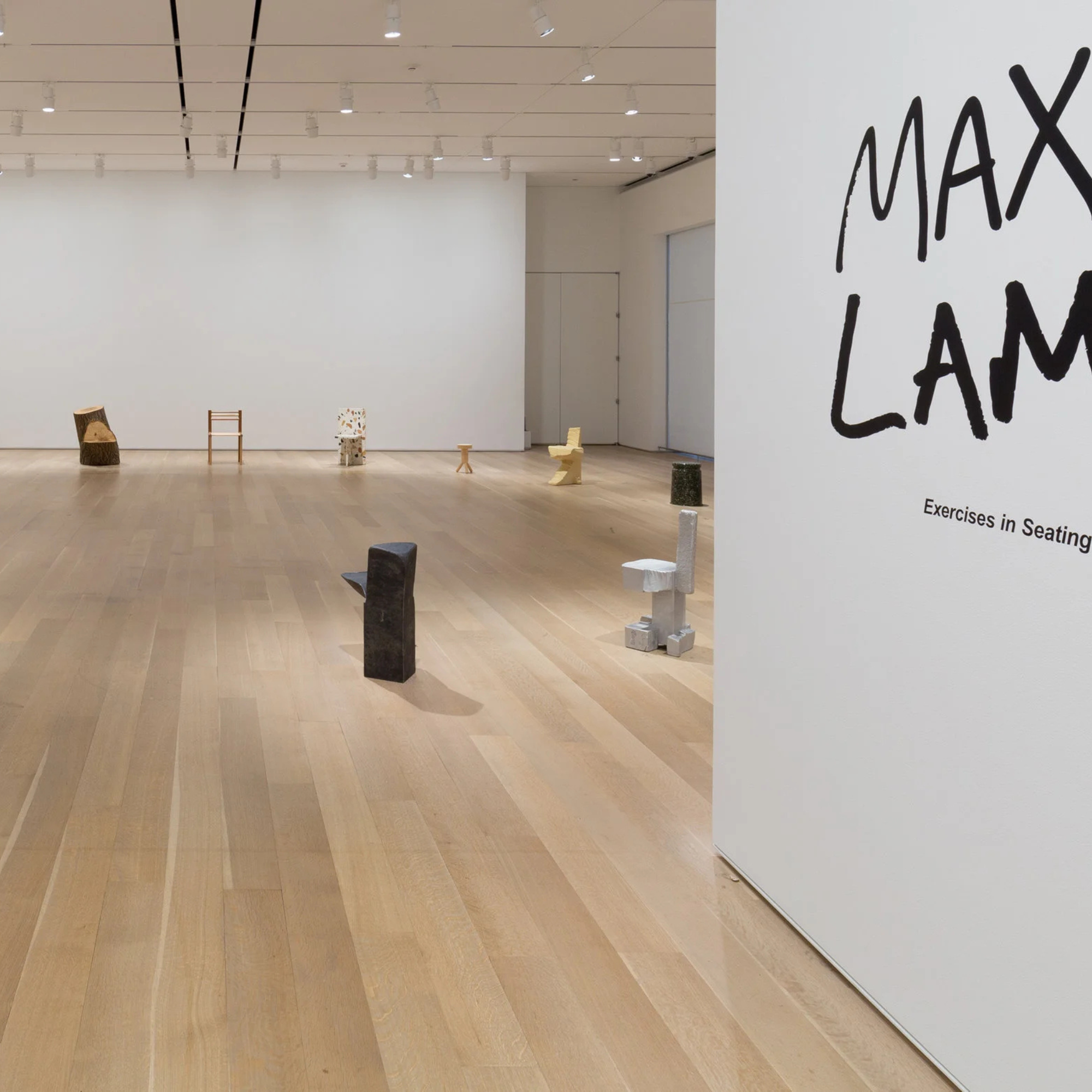
Max Lamb Furniture, Stone Chairs, and Pewter Stools: What His Work Actually Means in the Age of Digital Smoothness
Max Lamb furniture has become shorthand for stone chairs, pewter stools, and a stubborn refusal of anonymous smoothness. Yet most coverage of the Cornish designer stops at the photogenic surface: the quarry block, the beach cast, the rough grain, the monolithic silhouette. This study argues that Lamb matters for a deeper reason. Across Deep Materiality, Legibility of Labor, Material as Story, Functional Endurance, and Anti-AI Crafting, Lamb transforms furniture into a visible record of extraction, resistance, and bodily decision. His work demonstrates that process is not a backstage condition of design but its philosophical center. The beach-cast Pewter Stool, the marble and granite quarry chairs, the cleft and split timber works, and the long serial archive of Exercises in Seating all refuse the fantasy that value resides in digital polish, automated reproducibility, or seamless finish.
To understand why Max Lamb matters now, one has to place him inside the broader cultural conflict over smoothness. We occupy a late-modern condition in which the object is expected to arrive already perfected, already frictionless, already optimized for image circulation. Lamb’s work rejects that mandate with unusual elegance, without retreating into nostalgia. He is best understood as a diagnostician of process visibility. When a production system becomes too sealed, too templated, or too automated to reveal where human judgment entered, Lamb deliberately reroutes it—through hand-carving, improvised molding, splitting, or personal prototyping. Seen through the PLCFA framework, value becomes most credible when it migrates away from frictionless finish and back into the visible relation between material, method, and maker. Lamb’s furniture insists, even in luxury contexts, that form must still answer to the world that made it.
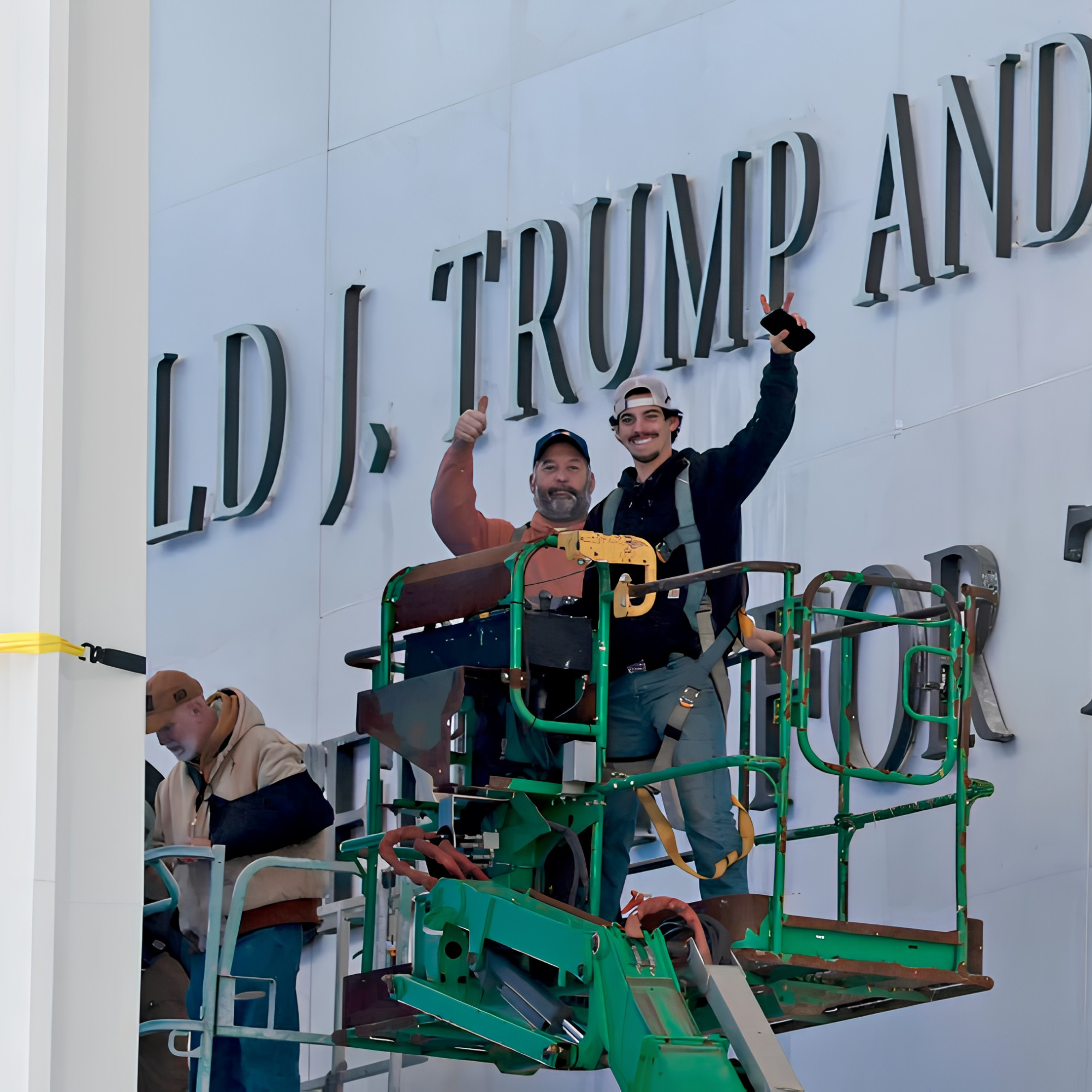
THE NAME THAT COULDN'T STICK: How Trump's Attempt to Rename the Kennedy Center Exposed the Architecture of Aura Theft.
On May 29, 2026—JFK’s birthday—the federal judiciary dismantled an unprecedented corporate-style raid on American cultural legacy, ordering the immediate stripping of Donald J. Trump’s name from the John F. Kennedy Center for the Performing Arts. This study establishes that the unilateral board coup of December 2025 was never merely a political stunt or an administrative rebranding; it was a structurally naked Aura Transaction. Utilizing the critical frameworks of Post-Luxury Conceptual Functional Art (PLCFA), we examine how this maneuver attempted to extract sixty-two years of accumulated national grief, architectural permanence, and institutional legitimacy without performing an ounce of the custodial labor required to generate such authority.
The immediate collapse of the "Trump Kennedy Center" highlights a fundamental systemic truth within the contemporary symbolic economy: institutional aura cannot be legislated or decreed into existence. By positioning this event alongside historical precedents and the acute warnings penned by Jacqueline Kennedy at the memorial's inception, this paper unpacks the concepts of Zero-Sum Aura, Structural Captivity, and the Hollowed Object. What Judge Christopher Cooper's ruling ultimately confirms is not just a point of federal statute, but a core tenet of material philosophy: true Narrative Permanence belongs exclusively to the collective Labor Density of genuine custodianship, and the deepest layers of an object's meaning will always resist political capture.
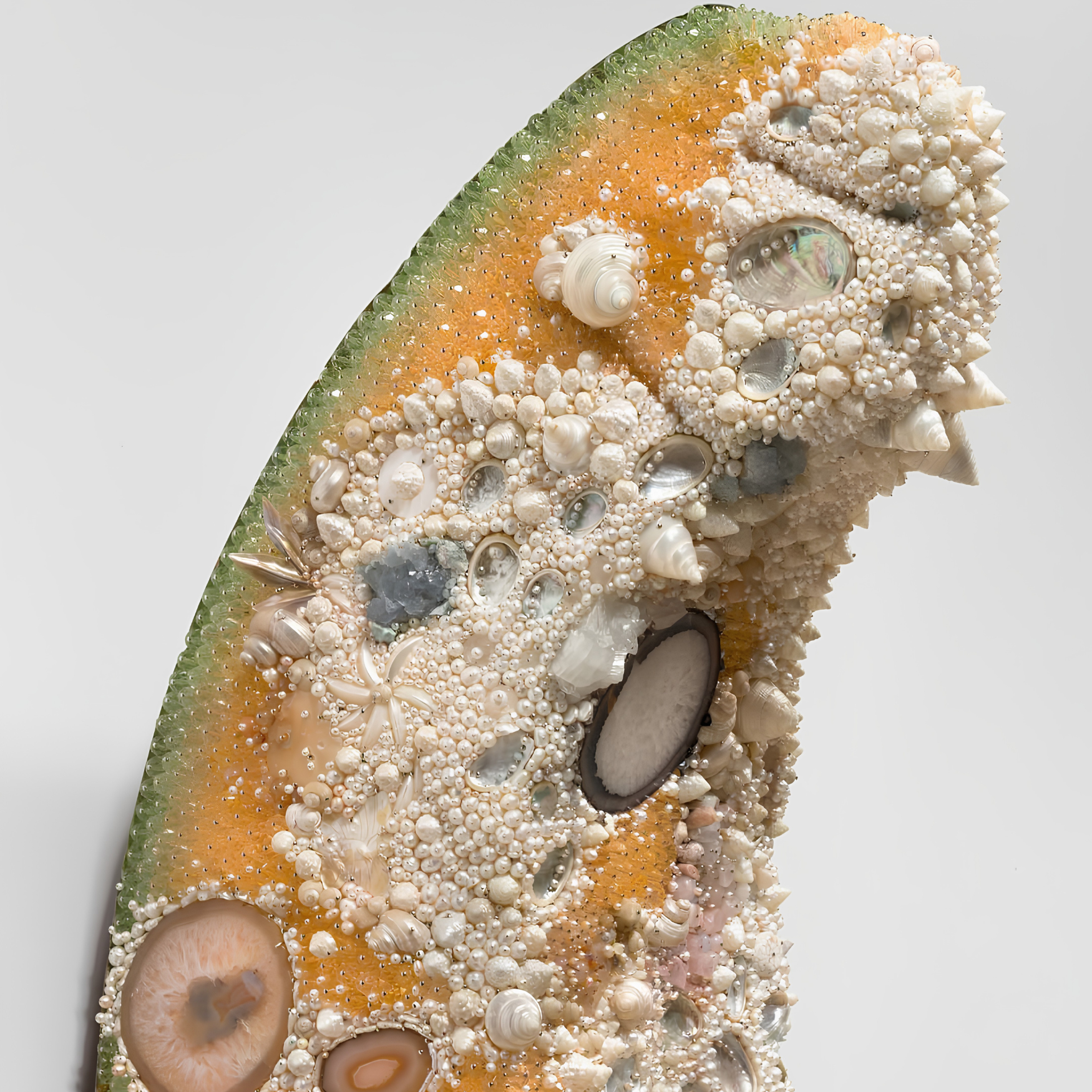
The Rot Is the Work: Kathleen Ryan, Mineral Weight, and the Sculpture That Cannot Be Flattened
The true significance of Kathleen Ryan’s sold-out booth at TEFAF New York 2026 extends far beyond the immediate frenzy of the art market; it represents a profound structural shift in how we evaluate material permanence in a post-digital world. By operationalizing the frameworks of Material Singularity and Labor Density, Ryan’s sculptures deliver a masterclass in tactical friction, creating un-flattenable physical surfaces that stubbornly resist the compressing algorithms of our image-saturated culture. The urgent, underlying question her practice leaves open is not one of aesthetic popularity, but of long-term stewardship—challenging the collector class to move beyond transactional acquisition and confront the raw, entropic reality of the object itself.
Discover how the Post-Luxury Conceptual Functional Art (PLCFA) framework unpacks the impossible-to-simulate surfaces of the Bad Fruit series, and why the contemporary market now answers directly to the weight of human labor.
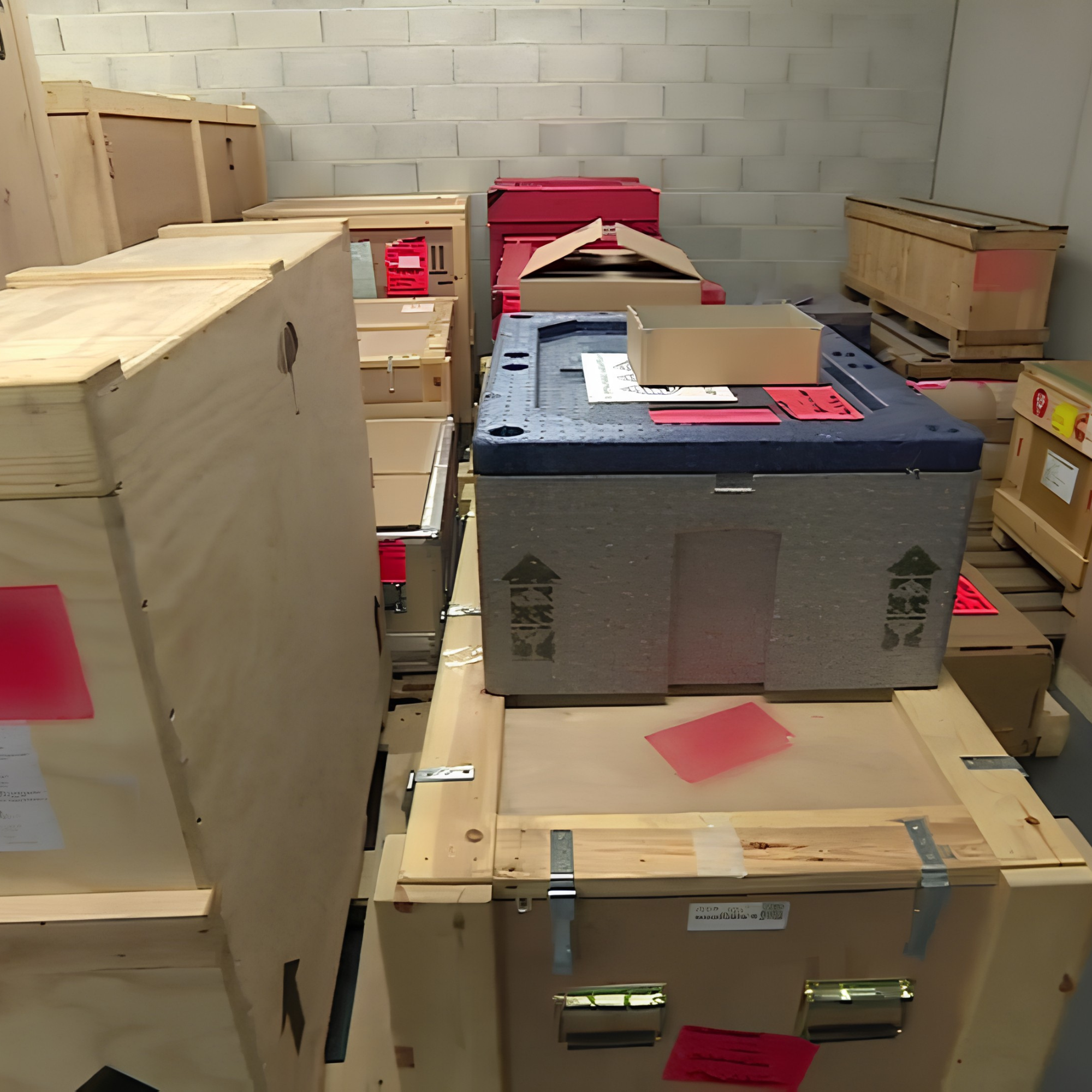
Why Corporate Art Collections Are Rotting Inside Private Equity's $3.8 Trillion Dormancy Crisis — and the Kinetic Objects Built to Punish It
The $3.8 trillion dormancy crisis holding corporate portfolio assets hostage is more than a financial bottleneck—it is a quiet war on the fundamental purpose of art. For too long, the luxury and fine art sectors have allowed cultural artifacts to be reduced to inert Speculative Capital metadata, sealed away in the climate-controlled vaults of global freeports or stilled inside vacant penthouse investments. This systemic paralysis demands a radical material intervention. The Post-Luxury Conceptual Functional Art (PLCFA) framework directly challenges this institutional stagnation by identifying the critical structural voids where capital seeks to neutralize presence, designing a new class of objects built specifically to resist captivity.
Our latest critical release, OAC Study No. 012, introduces the "Inertia Penalty"—a conceptual and technical blueprint for massive, kinetic works engineered to physically punish their own abandonment. Equipped with embedded micro-mechanical actuators, these autonomous structures actively calculate the frequency of human interaction; if left neglected beyond a consecutive 12-week threshold, they initiate an irreversible process of structural transformation or chemical oxidation. They refuse to function as passive balance-sheet collateral. Explore the complete text from the Void Series to discover how the collection is pioneering an architecture of absolute narrative permanence and forcing capital to engage with material consequence.

WHAT THE PORSCHE SADU EDITION ACTUALLY CONFIRMS: The Corporate Apparatus Cannot Author What It Can Only Witness
When Porsche unveiled the 911 Turbo S Sadu Edition in May 2026, the global luxury apparatus immediately celebrated it as a triumph of cultural stewardship—a limited, factory-precise tribute to Middle Eastern heritage. Yet, this official narrative carefully omits a vital truth: the entire concept was first brought to life three years prior, not by corporate designers in Zuffenhausen, but by the hands of independent artist Rae Roberts, who hand-painted a classic 911 Targa live at Porsche’s own festival in Dubai. By analyzing this sequence through the lens of Post-Luxury Conceptual Functional Art (PLCFA), this study exposes a profound systemic condition: a formal luxury market so starved of interior meaning that it must systematically harvest the uncompensated creative capital of independent practitioners witnessed within its own infrastructure.
The resulting corporate edition is the definitive modern example of the Hollowed Object—a product that retains immaculate physical materials and high-margin pricing while completely evacuating the singular human intelligence that gave the concept its original cultural weight. This investigation goes far beyond a single case of uncredited authorship. It provides a vital diagnostic framework for the "Custodian's Contract," the weaponization of collective heritage as a corporate alibi, and the ultimate sovereignty of the independent creator. To understand how the contemporary luxury system operates in a state of terminal meaning deficit, and how sovereign practitioners are redefining creative autonomy, read the full study.
INSTITUTIONAL LEXICAL HIJACKING: How Mass-Market Luxury Launders Post-Luxury Vocabulary, and What the Courts Have Already Confirmed
The rapid commercialization of the "monastic" design trend has turned a vocabulary of spiritual and material refusal into a shallow corporate aesthetic. Today, fast-fashion entities and mass-market luxury brands readily deploy terms like "honest friction" and "craft heritage" to market injection-molded plastics, veneer facades, and highly exploitative labor models. This structural mechanism—defined as Institutional Lexical Hijacking—is the deliberate extraction of a sovereign critical vocabulary by organizations whose material realities fundamentally contradict the language they use. It represents the terminal expression of a market that capitalizes on the appearance of integrity while systematically hollowed out from within.
This study moves beyond abstract criticism to examine concrete legal and regulatory precedents across three major jurisdictions. Between 2023 and 2026, European courts and antitrust authorities permanently exposed this systemic disconnect, placing prominent luxury fashion houses under judicial administration for severe supply chain exploitation while simultaneously investigating fast-fashion platforms for predatory design framework mechanisms. By integrating this definitive evidentiary record with the Post-Luxury Conceptual Functional Art (PLCFA) framework, this paper details exactly how the vocabulary of material integrity is commercialized as a reputational asset class—and why precise structural theory remains our only line of defense.

THE HOLLOWED PRANCING HORSE: What the Ferrari Luce Actually Confirms
The Ferrari Luce, revealed today in Rome, marks the most consequential design decision in modern automotive history—and the definitive arrival of what the Post-Luxury Conceptual Functional Art (PLCFA) framework diagnoses as the Hollowed Object condition. By handing the reigns of Maranello’s emotional legacy to LoveFrom, the creative collective shaped by the frictionless grammar of consumer electronics, Ferrari has engineered an extraordinary paradox. The Prancing Horse remains on the hood, yet the internal semantic system has been completely evacuated and replaced by a foreign, interface-first vocabulary that speaks the language of tech optimization rather than visceral, mechanical force.
This critical study moves past celebrity designer gossip to examine the profound semiotic displacement occurring at a global brand scale. From the material testimony of its Gorilla Glass key to the structural captivity of its own mythology, we unpack how Ferrari is trading its singular historical aura for a foothold in contemporary prestige logic. The car is technically impeccable, but its cost—measured not in euros, but in accumulated meaning—is still being tallied. Discover how the boundaries of traditional luxury are fracturing by reading the full critique on our collection platform.
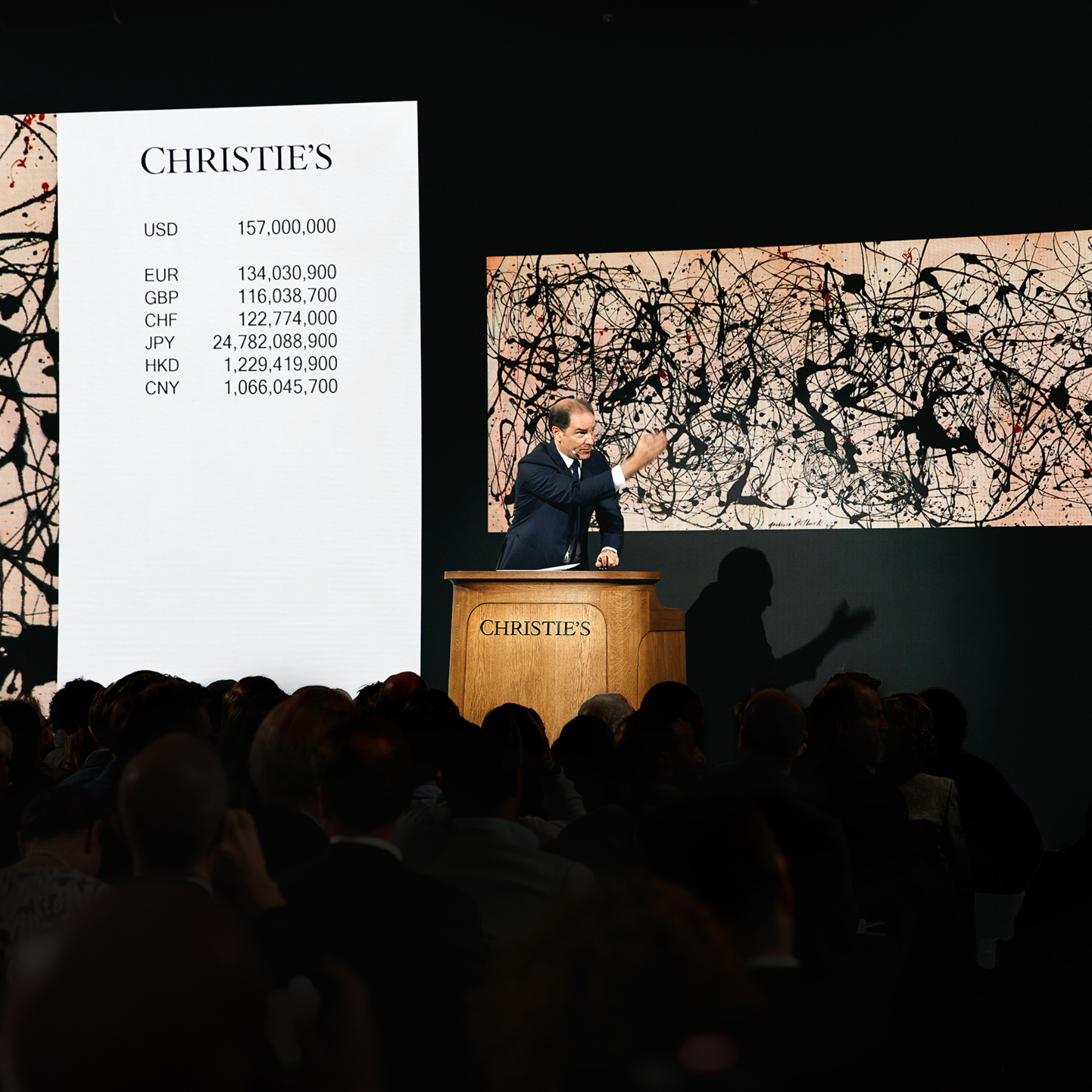
POLLOCK NUMBER 7A, BRANCUSI DANAÏDE, AND ROTHKO NO. 15: WHAT CHRISTIE'S $1.1 BILLION SALE ACTUALLY CONFIRMED
The allure of the secondary market often reduces a masterpiece to a headline, translating complex historical breakthroughs into mere asset acquisition. At objectsofaffectioncollection.com, our deep-dive analysis moves past the theater of the auction room to interrogate the structural realities governing cultural value. By examining pivotal market events through a critical lens, we dismantle how institutions bundle history, provenance density, and material singularity to simulate a feeling of absolute inevitability. True collectors do not simply purchase taste; they step into an inherited lineage of stewardship.
To look beneath the surface of record-breaking evenings is to understand the unspoken architecture of the art world itself. Our comprehensive studies track the migration of serious capital as it retreats from the superficiality of trend inventory toward pre-secured, historical shelter. We invite you to explore our rigorous examinations of modern and contemporary masterpieces, where the unpaid labor of art history is carefully unpacked to reveal the friction between cultural obligation and private transfer. Read the full studies to discover how narrative permanence truly defines the value of what is ultimately held.
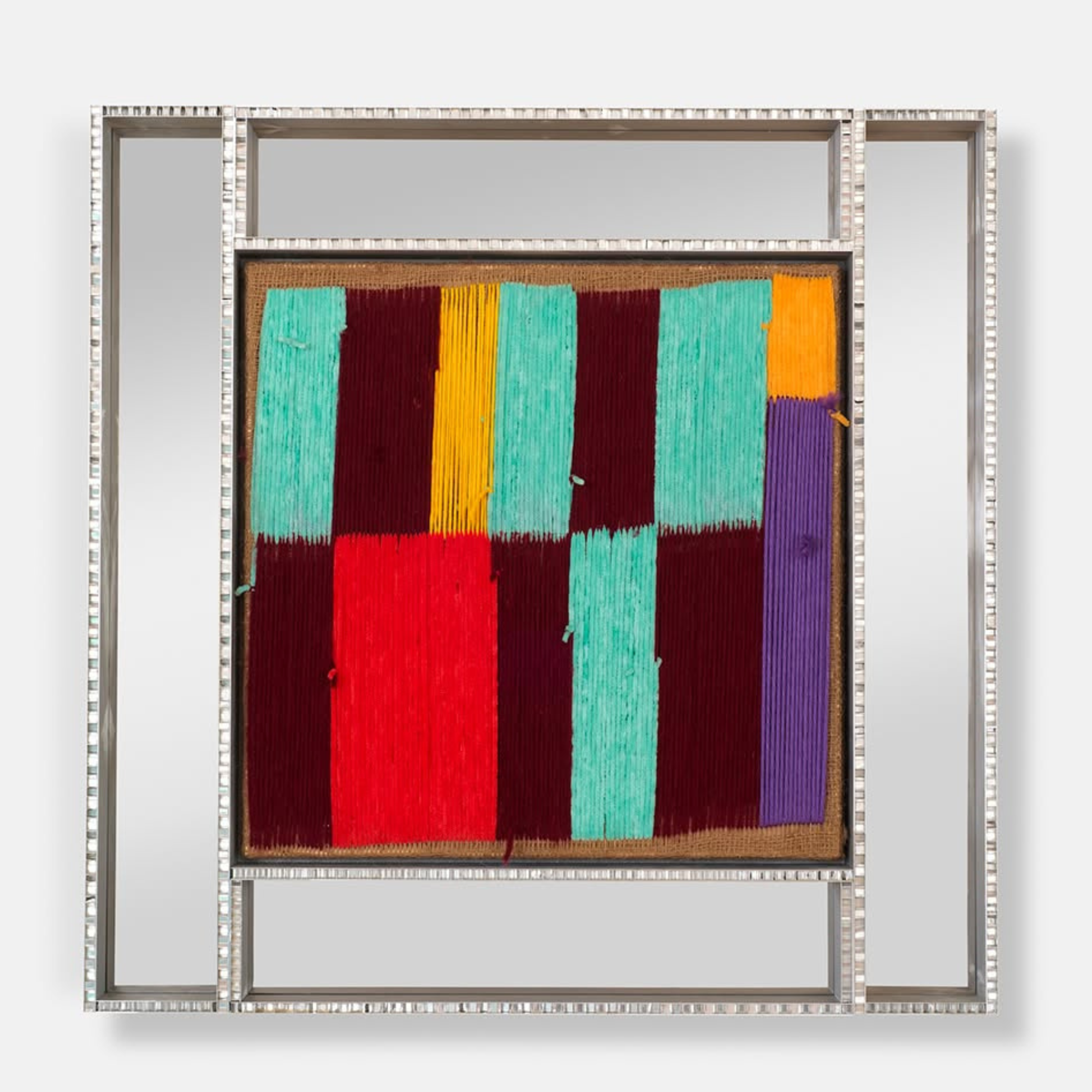
TEFAF NEW YORK 2026, LUCIO FONTANA, AND KATHLEEN RYAN: WHAT THE FAIR'S HARD-ASSET TURN ACTUALLY MEANS
The macro data from TEFAF New York 2026 confirms a structural truth that OAC has been mapping for months: under conditions of systemic volatility, serious capital stops chasing the frictionless spectacle of the image and begins anchoring itself to the weight of the object. While the 2026 Art Basel & UBS Art Market Report notes a stark "flight to quality" and the sharpest drop in online sales since 2019, the sales ledger at the Park Avenue Armory tells a far more exacting story. The immediate acquisition of Lucio Fontana’s wounded canvases, Frida Escobedo’s architectural supports, and Joris Laarman’s digitally dense collectible design signals a market no longer satisfied with decorative reassurance. The flat work has lost its immunity from having to answer to matter; what we are witnessing is the formal return of resistant objecthood and Material Singularity.
This shift deepens from a mere market correction into an explicit post-luxury ethic within the booths of Kathleen Ryan and Alvaro Barrington, where value is derived not from symbolic polish, but from what this study identifies as forensic endurance. By trapping the decay of salvaged industrial skins inside the weight of hand-pinned gemstones, or suspending inherited family textile traditions within the rigid geometry of engineered steel frames, these artists force the contemporary object to accumulate manual time and material memory. This is a direct rebuke to the hollowed asset whose only lineage is price. The contemporary collector is no longer purchasing a visual token, but an irreversible structure of time that a digital screen cannot flatten—a custodial ceremony that we analyze in full within the complete study.